
Last updated: May 16, 2026
In this article
- Crassula Arborescens and Pet Safety at a Glance
- Is Crassula Arborescens Toxic to Cats and Dogs?
- How to Identify Silver Dollar Plant
- Toxic Compounds in Crassula Arborescens
- Symptoms After Silver Dollar Plant Ingestion
- First Aid Steps
- When to Take Your Pet to the Vet
- Why Silver Dollar Plant Catches Pets’ Attention
- Living With Silver Dollar Plant Safely
- Pet-Safe Alternatives
- Silver Dollar Plant in the Broader Crassula Family
- Cats vs Dogs With Silver Dollar Plant
- What to Tell the Vet
- Long-Term Living With Silver Dollar Plant and Pets
- Frequently Asked Questions
Crassula Arborescens and Pet Safety at a Glance
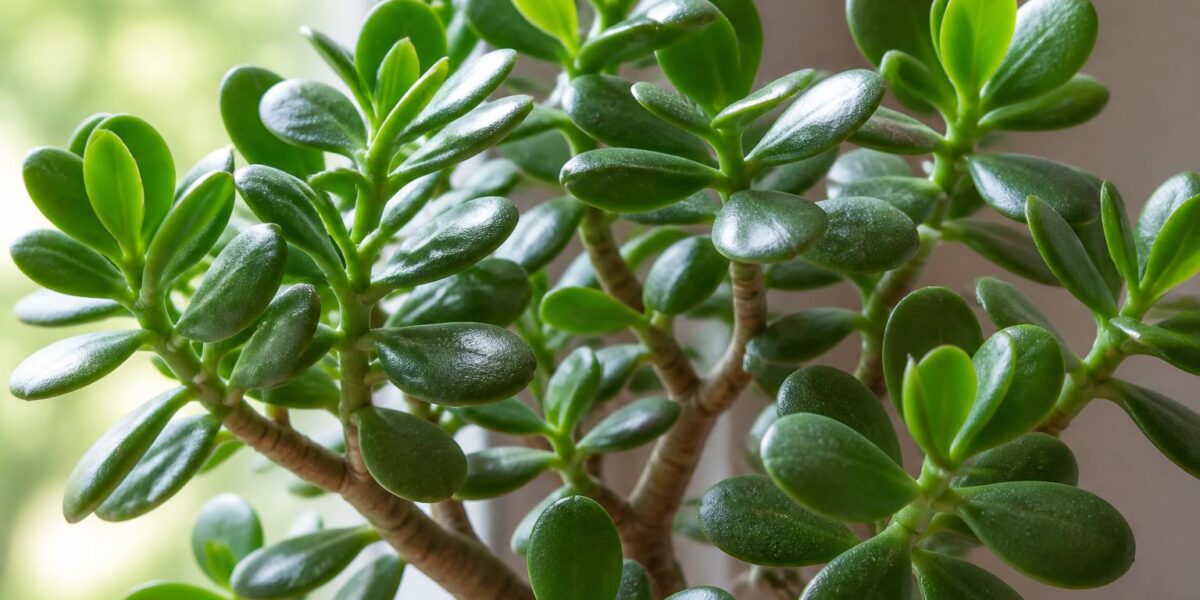
Crassula arborescens, commonly sold as Silver Dollar Plant, Silver Jade Plant, or Chinese Jade, is a close cousin of the standard jade plant (Crassula ovata). It has flat, round, silver-blue leaves with red or burgundy edges, sturdy thick stems, and a slow tree-like growth habit that makes it a popular trained-as-bonsai species. Like every Crassula, it is toxic to cats and dogs — same mechanism, same clinical signs, same family of suspected compounds.
The straight answer to “is Crassula arborescens toxic to pets” is yes, in the mild-to-moderate tier. Exposures typically cause vomiting, lethargy, ataxia, and occasionally a slow heart rate. Most cases resolve within 24–48 hours with supportive care, but every exposure deserves a vet call — especially in small, young, old, or already-fragile pets.
Is Crassula Arborescens Toxic to Cats and Dogs?
Yes. The Crassula genus is on the ASPCA toxic plant list. Silver dollar plant carries the same suspected toxic compounds as Crassula ovata (jade plant): saponins and likely small amounts of bufadienolide-like cardiac glycosides. The clinical pattern across the genus is reproducible — vomiting, depression, ataxia, occasional bradycardia.
For genus-level reference, see are jade plants toxic to cats, are jade plants toxic to dogs, and the umbrella explainer at are jade tree toxic to pets. The bonsai form is covered at jade tree bonsai toxic to pets — identical chemistry to arborescens.
How to Identify Silver Dollar Plant
Crassula arborescens has a distinctive look:
- Round-to-oval flat leaves the size and shape of a silver dollar coin (hence the common name).
- Silver-blue color with a slight powdery coating, often with red or burgundy leaf edges and tips in bright sun.
- Thick woody trunk on mature plants — gives it the small-tree habit that makes it popular for bonsai training.
- Star-shaped pink-to-white flowers on mature plants in cooler months.
- Slow growth — much slower than standard jade plant.
It is sometimes called “Chinese Jade” or “Silver Jade Plant” interchangeably with Crassula ovata, which causes plenty of label confusion at nurseries. Both are toxic; treat them the same.
Toxic Compounds in Crassula Arborescens
Suspected toxins, consistent across the genus, include:
- Saponins — soap-like glycosides that disrupt cell membranes and irritate the GI tract.
- Bufadienolide-like cardiac glycosides — small amounts; the same family as in Kalanchoe but at much lower concentration.
- Unidentified GI irritants — the ASPCA explicitly notes the toxic principle is not fully characterized.
This combination produces mild-to-moderate GI illness with occasional cardiovascular involvement at higher doses or in sensitive patients.
Symptoms After Silver Dollar Plant Ingestion
Within 1–6 hours of exposure, watch for:
- Vomiting (most common sign)
- Lethargy or depression
- Decreased appetite
- Ataxia (wobbly walking, missed jumps, falling sideways)
- Drooling
- Mild diarrhea
- Slow or irregular heartbeat (more often in cats)
Most pets recover within 24–48 hours. Persistent or severe signs — especially any cardiac involvement — warrant an immediate vet visit.
First Aid Steps
Move the plant out of reach. Collect any broken branches and dropped leaves; silver dollar leaves are large and round and easy to spot but also easy for a curious dog to swallow whole. Photograph the plant for your vet.
Offer water but do not force it. Do not induce vomiting at home. Do not give milk, hydrogen peroxide, or any home remedy.
Phone your veterinarian, the ASPCA Animal Poison Control Center at 888-426-4435, or the Pet Poison Helpline at 855-764-7661. Have the species name (Crassula arborescens, silver dollar plant), your pet’s weight, and the time and amount of exposure ready. The poison-control hotlines charge a consultation fee but provide rapid case-specific guidance.
When to Take Your Pet to the Vet
Head to the emergency clinic the same day if you see:
- Repeated vomiting that will not stop
- Profound lethargy or collapse
- Severe ataxia or seizures
- Slow or irregular heartbeat
- Pale gums or signs of shock
- Any cardiac symptom in a pet with known heart disease
Bring a leaf or photo. Veterinary supportive care typically includes anti-emetics, IV fluids, electrocardiogram monitoring if cardiac signs are present, and overnight observation in higher-risk patients.
Why Silver Dollar Plant Catches Pets’ Attention
A few features make arborescens disproportionately accident-prone:
- Tree-like form. Mature plants stand 2–4 feet tall in a pot, with branching trunks and accessible leaves at every level.
- Tabletop or floor placement. Owners often display the plant as a “small tree” — within reach of medium and large dogs.
- Round leaves. The size, shape, and slight powdery texture invite cats to bat and dogs to mouth.
- Easy propagation. Snapped branches root quickly, so a single plant becomes a multi-pot collection.
If you keep more than one Crassula species, see also Crassula perforata toxic to pets (string of buttons) and Crassula tetragona toxic to pets (mini pine tree). All three share the genus toxicity profile.
Living With Silver Dollar Plant Safely
Place the plant on a tall stable shelf with no climb route, or commit to a closed sunroom or office where pets do not enter. The “tree” form can be tempting to display at floor level for visual impact — resist that instinct in a pet home.
Sweep dropped leaves daily. Cover the soil with larger pebbles (quarter-size or bigger) to discourage digging by both cats and small dogs.
If you prune or repot, do it in a separate space and clean up clippings before bringing the plant back. Keep tools, fertilizer, and any pest-control sprays sealed away from pet access.
Pet-Safe Alternatives
If you want a non-toxic plant that fills the same “small succulent tree” role, consider:
- Echeveria rosettes — non-toxic; many cultivars with silver-blue or rosy tones similar to arborescens.
- Haworthia — non-toxic; small, sculptural, and slow-growing.
- Burro’s tail (Sedum morganianum) — non-toxic; trailing succulent with cascading rounded leaves.
- Chinese elm bonsai (Ulmus parvifolia) — for the small-tree look; ASPCA non-toxic. See Chinese elm bonsai safe for pets.
For broader options, see are succulents toxic to cats and are succulents toxic to dogs. Meet adoptable companions at adopt cats and adopt dogs.
Silver Dollar Plant in the Broader Crassula Family
Crassula arborescens is one of several “tree-form” Crassula species commonly trained as small indoor specimens or bonsai. Sister species you might encounter in the same household:
- Crassula ovata (Jade Plant) — the standard jade; oval green leaves, common gift plant.
- Crassula ovata “Gollum” and “Hobbit” — tubular and curled leaf cultivars; trained as bonsai.
- Crassula perforata (String of Buttons) — stacked triangular leaves on upright stems.
- Crassula tetragona (Mini Pine Tree) — needle-like leaves; commonly confused with pine bonsai.
- Crassula capitella (Campfire Plant) — propeller-shaped leaves that turn bright red in sun.
All carry the same suspected toxic compounds. A pet exposure to any of them is treated identically.
Cats vs Dogs With Silver Dollar Plant
Both species can have meaningful exposures, with somewhat different patterns:
- Cats are more likely to bat at the round flat leaves, which break off cleanly when struck. Cats are also slightly more sensitive on a milligram-per-kilogram basis and more prone to bradycardia and ataxia signs.
- Dogs are more likely to mouth a fallen leaf or chew a low branch. Larger dogs may eat more in a single episode but generally tolerate Crassula better than small dogs or cats.
The first-aid plan is the same for both: remove the plant, monitor for signs, and call the vet or poison-control line for case-specific guidance.
Three features make arborescens a popular bonsai choice — and a more dangerous one in pet homes than the same plant on a 6-foot plant stand:
- Naturally tree-like trunk. Mature plants develop a thick woody trunk without aggressive training.
- Slow growth. Less pruning required than the standard jade plant; the form holds for years.
- Distinctive silver-blue color. Visually striking on a tabletop; owners want to display it where it can be seen — which is exactly where pets can reach it.
If you love the look but want to avoid the toxic risk, Chinese elm bonsai (Ulmus parvifolia) is the closest non-toxic substitute for the small-tree aesthetic. See Chinese elm bonsai safe for pets.
What to Tell the Vet
Have ready: your pet’s species, breed, weight, age, and any pre-existing conditions or medications; the plant species (Crassula arborescens, silver dollar plant, silver jade); the exposure time and approximate amount; and any signs observed. Photograph the plant and bring a leaf to the clinic. If you keep multiple Crassula species in the same household, name them all — the toxicity is genus-wide and the vet may want to confirm which plant is the actual culprit.
Long-Term Living With Silver Dollar Plant and Pets
If you have decided to keep your silver dollar plant, build a routine that consistently prevents accidental contact. Daily and weekly habits that help:
- Display on a high stable shelf with no climb route, or commit to a closed sunroom or office that pets do not enter.
- Sweep the area around the pot daily — round leaves are large enough to spot but easy for a curious dog to swallow whole.
- Use a wide flat tray under the pot to catch debris and reduce tip-over risk.
- Cover the soil with larger pebbles to discourage cat digging and dog mouthing.
- Keep propagation trays separate while cuttings root.
- Store fertilizer, pest sprays, and tools sealed and out of pet reach.
Some cats and dogs are persistent plant-eaters. They will find their way to a silver dollar plant on a shelf you thought was secure. If your pet has a history of plant ingestion — past vet visits, repeat episodes — the simplest long-term answer is to rehome the plant. Replace it with a non-toxic alternative like Echeveria, Haworthia, or Chinese elm bonsai. See Chinese elm bonsai safe for pets and our cat-safe houseplants guide.
Frequently Asked Questions
Is Crassula arborescens toxic to pets?
Yes. Silver dollar plant (Crassula arborescens) shares the genus toxicity of jade plant. Ingestion causes vomiting, lethargy, decreased appetite, and occasionally ataxia or slow heart rate.
How is Crassula arborescens different from regular jade plant?
Arborescens has flat, round, silver-blue leaves with red edges; ovata has thicker oval green leaves. Toxicity is identical because both are in the same Crassula genus with the same compounds.
What does silver dollar plant poisoning look like in dogs?
Vomiting and lethargy within a few hours, often with decreased appetite. Severe cases may show ataxia, slow heart rate, or collapse. Call your vet or ASPCA APCC at 888-426-4435 right away.
Should I make my pet vomit if they ate Crassula arborescens?
No. Call ASPCA APCC at 888-426-4435 or Pet Poison Helpline at 855-764-7661 for direction. Home emesis is not safe without veterinary guidance.
What is a non-toxic alternative to silver dollar plant?
Echeveria, Haworthia, and burro’s tail (Sedum morganianum) are non-toxic succulents with similar visual appeal. Chinese elm bonsai is non-toxic if you want a true small-tree look.


