
Last updated: May 16, 2026
In this article
- Crassula Perforata and Pet Safety at a Glance
- Is Crassula Perforata Toxic to Cats and Dogs?
- How to Identify Crassula Perforata
- Toxic Compounds in Crassula Perforata
- Symptoms After Crassula Perforata Ingestion
- First Aid Steps
- When to Go to the Vet
- Crassula Perforata vs Crassula Ovata
- How String of Buttons Looks Like a Pet Toy
- Living With Crassula Perforata Safely
- Pet-Safe Succulent Alternatives
- How String of Buttons Spreads Through a Plant Collection
- What to Tell Your Vet
- Long-Term Care With Pets in the Home
- Frequently Asked Questions
Crassula Perforata and Pet Safety at a Glance
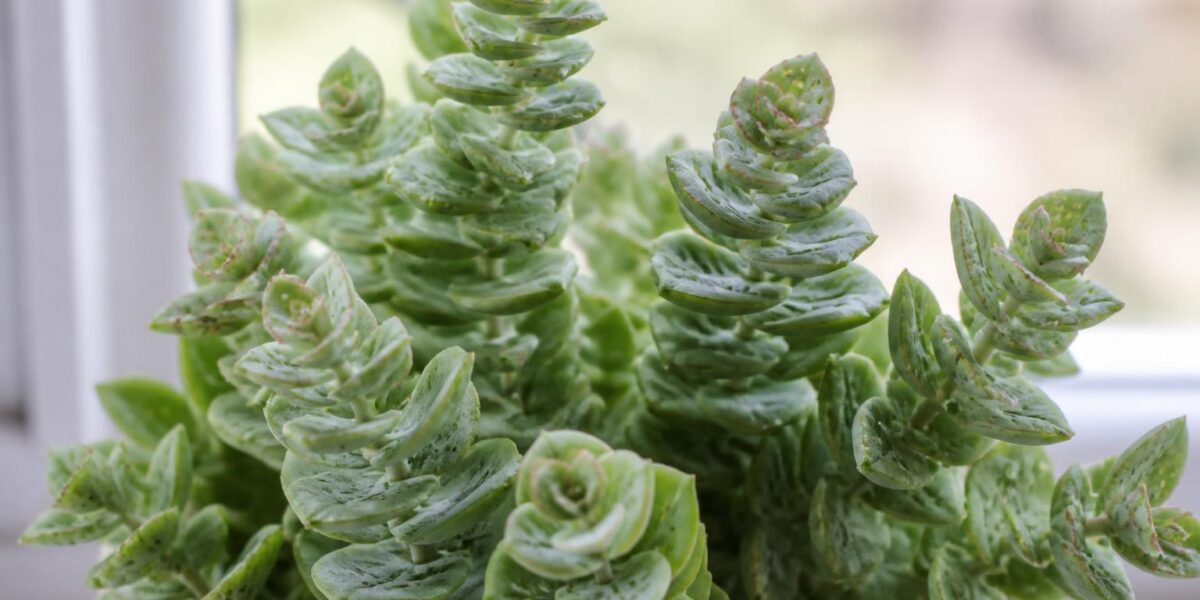
Crassula perforata, sold as String of Buttons, Necklace Vine, or Pagoda Plant, is a stacked-leaf succulent in the same genus as the well-known jade plant (Crassula ovata). Its leaves are small, triangular, blue-green with rosy edges, and they pile up in offset pairs along upright stems that look like beaded necklaces. Like every Crassula species, it is toxic to cats and dogs — sitting in the mild-to-moderate tier, with vomiting, lethargy, and occasional ataxia as the typical signs.
If you are asking “is Crassula perforata toxic to pets,” the simplest answer is yes, and you should treat it the same way you would a jade plant. Crassula species share a genus toxicity profile that includes saponins and likely small amounts of bufadienolide-like cardiac glycoside compounds. The dose-response curve is forgiving compared to azalea or lily of the valley, but exposures still warrant a vet call.
Is Crassula Perforata Toxic to Cats and Dogs?
Yes. The Crassula genus, including the well-documented Crassula ovata and its many cousins, is on the ASPCA toxic plant list for cats and dogs. The exact toxic principle is not fully characterized, but the clinical pattern is reproducible: vomiting, depression, ataxia, and occasionally a slow heart rate. Cats appear slightly more sensitive than dogs on average.
For genus-level reference, see are jade plants toxic to cats, are jade plants toxic to dogs, and the umbrella explainer at are jade tree toxic to pets. The bonsai form of the same genus is covered at jade tree bonsai toxic to pets — the underlying chemistry is identical to perforata.
How to Identify Crassula Perforata
String of buttons has unmistakable visual features:
- Stacked triangular leaves arranged in offset pairs along an upright stem.
- Blue-green coloring with rose-pink margins, especially under bright light.
- “Strung-bead” growth pattern — leaves clasp the stem, giving the impression of beads on a string.
- Small star-shaped white-to-yellow flowers on mature plants in cool months.
- Spreading or sprawling habit — older plants flop over and trail or root along soil contact.
It is sometimes confused with Crassula rupestris (Buttons on a String, Baby Necklace), which is a sister species with similar toxicity. Both are treated identically by veterinary toxicologists.
Toxic Compounds in Crassula Perforata
Suspected toxins, consistent across the genus, include:
- Saponins — soap-like glycosides that disrupt cell membranes and irritate the GI tract on swallowing.
- Bufadienolide-like cardiac glycosides — present in much smaller concentrations than in Kalanchoe (a closely related, more dangerous genus). Most Crassula exposures stop at vomiting and lethargy rather than cardiac collapse.
- Unidentified GI irritants — the ASPCA explicitly notes the toxic principle is not fully characterized.
This is why most Crassula exposures present as mild-to-moderate GI illness rather than severe cardiac emergencies. The category should still be respected, especially in small or fragile patients.
Symptoms After Crassula Perforata Ingestion
Signs typically appear within 1–6 hours and may include:
- Vomiting
- Lethargy or depression
- Decreased appetite
- Ataxia (wobbly walking, missed jumps)
- Drooling
- Mild diarrhea
- Slow heart rate (more often noted in cats)
Most pets recover within 24–48 hours with supportive care. The danger curve rises if your pet is small, very young, very old, or has pre-existing kidney or heart disease.
First Aid Steps
Move the plant out of reach. Pick up dropped leaves and stem fragments — string of buttons leaves snap off easily and roll across hard floors, which makes them magnets for paws. Photograph the plant in its pot for the vet.
Offer water but do not force it. Do not induce vomiting at home. Do not give milk, hydrogen peroxide, or any over-the-counter human medication.
Phone your veterinarian, the ASPCA Animal Poison Control Center at 888-426-4435, or the Pet Poison Helpline at 855-764-7661. Have the species name, your pet’s weight, and an estimate of how much was eaten ready when you call. The poison-control hotlines charge a consultation fee but provide rapid case-specific guidance.
When to Go to the Vet
Head to the clinic the same day if you see:
- Repeated vomiting that will not stop
- Profound lethargy or collapse
- Severe ataxia or seizures
- Slow or irregular heartbeat
- Pale gums or signs of shock
- Any cardiac symptom in a pet with known heart disease
Veterinary care typically includes anti-emetics, IV fluids, electrocardiogram monitoring for any cardiac signs, and supportive care over 12–24 hours.
Crassula Perforata vs Crassula Ovata
Pet owners often want to know whether perforata is “more or less” toxic than the standard jade plant. The honest answer: the same genus, the same toxic mechanism, the same clinical signs. There is no published evidence that one Crassula species is dramatically more or less dangerous than another at typical home doses. Treat all Crassula exposures with the same seriousness.
If you keep multiple Crassula species, also see our guides to Crassula tetragona toxic to pets (mini pine tree) and Crassula arborescens toxic to pets (silver dollar plant). All three share the genus toxicity profile and are best treated as one risk category.
How String of Buttons Looks Like a Pet Toy
Two physical features make perforata especially tempting:
- Trailing stems. Mature plants spill over the pot edge, dangling within easy paw reach. Cats find dangling foliage irresistible.
- Snap-off leaves. The leaf-stack design means individual triangular leaves break off cleanly when batted. They scatter on hard floors and look like little chew toys.
The combination produces a steady stream of “found leaves” on the floor, which a cat or small dog will mouth out of curiosity even if you never see them touch the parent plant.
Living With Crassula Perforata Safely
Place the plant on a high stable shelf with no climb route. A hanging basket out of paw range is a reasonable display option as long as it is hung where a cat cannot leap from a perch above. Avoid coffee-table and windowsill placements at cat or small-dog height.
Sweep dropped leaves daily — this is the single most effective accident prevention. Use a covered seed tray or a closed waste bin near the plant for clippings.
If you propagate string of buttons (it roots eagerly from cuttings), keep the propagation tray on a separate shelf or in a different room while it establishes.
Pet-Safe Succulent Alternatives
If you want a similar trailing or stacked-leaf succulent that is non-toxic to pets, consider:
- Echeveria rosettes — non-toxic; many cultivars with rosy or silver-blue tones.
- Haworthia — non-toxic; small, sculptural, and slow-growing.
- Burro’s tail (Sedum morganianum) — non-toxic; the trailing succulent that fills the same hanging-basket role as perforata.
For broader options, browse are succulents toxic to cats, are succulents toxic to dogs, and our cat-safe houseplants guide. Meet adoptable companions at adopt cats and adopt dogs.
How String of Buttons Spreads Through a Plant Collection
Crassula perforata is one of the easiest succulents to propagate. Single fallen leaves can root in days; broken stems often arrive home from a neighbor in a paper towel and produce a healthy plant within weeks. That ease of spread has practical consequences for pet households:
- Multiple windows, multiple pots — multiple exposure points for a curious cat.
- Propagation trays at low surfaces (kitchen windowsills, bathroom shelves) put the plant in pet reach.
- Unlabeled cuttings traded with friends may not be obviously a Crassula species; it can hide in a “succulent variety” mixed pot from a craft fair.
If you are doing a plant inventory for pet safety, look at every stacked-leaf succulent in your home and confirm its identity. Mixed-pot succulent arrangements from supermarkets and gift shops often contain at least one Crassula species without labels.
The dish-garden trend of the past decade has produced thousands of “fairy garden” or “succulent variety” planters that combine 4–8 species in one shallow pot. These are sold at supermarkets, garden centers, and home goods stores with no individual species labels. A typical arrangement might mix:
- One or two non-toxic species (Echeveria, Haworthia, Sedum morganianum)
- One or two toxic species (a Crassula like perforata, a Kalanchoe, sometimes an Aloe)
- Decorative gravel and a “moss” cap that may or may not be live
For a pet owner, the safest assumption is that any unlabeled mixed planter contains at least one toxic species. Either rehome the planter or break it apart and identify each plant individually. See are succulents toxic to cats for the broader category overview.
What to Tell Your Vet
Have ready: your pet’s species, breed, weight, age, and any pre-existing conditions or medications; the plant species (Crassula perforata, string of buttons); the time and approximate amount of exposure; and any signs observed. Photograph the plant and bring a leaf to the clinic if you can.
If you keep multiple Crassula species or other succulents, name them all. The clinical signs of Crassula exposure overlap with mild Kalanchoe exposure, and the management urgency differs between the two. See our Crassula bonsai guide at jade tree bonsai toxic to pets for the most-relevant cousin.
Long-Term Care With Pets in the Home
If you have decided to keep your string of buttons and you live with cats or dogs, build a routine that consistently keeps the plant out of reach. Daily and weekly habits that work:
- Display on a high stable shelf or hanging basket out of paw range. Cats can reach most indoor shelves, so place it where there is no climb route from a perch above.
- Sweep the area around the pot daily — leaves snap off easily and roll across hard floors.
- Use a wide flat tray under the pot to catch any debris and absorb wobble.
- Cover the soil with larger pebbles to discourage cat digging and dog mouthing.
- Keep propagation trays in a separate room while cuttings root.
- Store fertilizer, pest sprays, and tools sealed and out of pet reach.
For broader pet-safe plant choices, browse our cat-safe houseplants guide and meet adoptable companions on our adopt cats and adopt dogs pages.
Frequently Asked Questions
Is Crassula perforata toxic to pets?
Yes. String of buttons (Crassula perforata) shares the genus toxicity of jade plant. Ingestion causes vomiting, lethargy, and occasionally ataxia or slow heart rate in cats and dogs.
How much Crassula perforata is dangerous for a cat?
Veterinary literature does not give a firm threshold. Even a small amount can cause vomiting and lethargy in a small cat. Treat any ingestion as worth a vet call.
What does Crassula perforata poisoning look like?
Vomiting, depression, decreased appetite, and possible ataxia within a few hours. Severe cases may show slow heart rate or collapse — call ASPCA APCC at 888-426-4435 immediately.
Is Crassula perforata more or less toxic than jade plant?
The same genus, the same mechanism, the same clinical signs. There is no published evidence that one Crassula species is dramatically more dangerous than another at home doses.
What is a pet-safe alternative to string of buttons?
Burro’s tail (Sedum morganianum) is a non-toxic trailing succulent with a similar look, and Echeveria or Haworthia rosettes offer the same compact succulent aesthetic without the toxicity.


