
Last updated: April 10, 2026
In this article
Are Schefflera Toxic to Dogs?
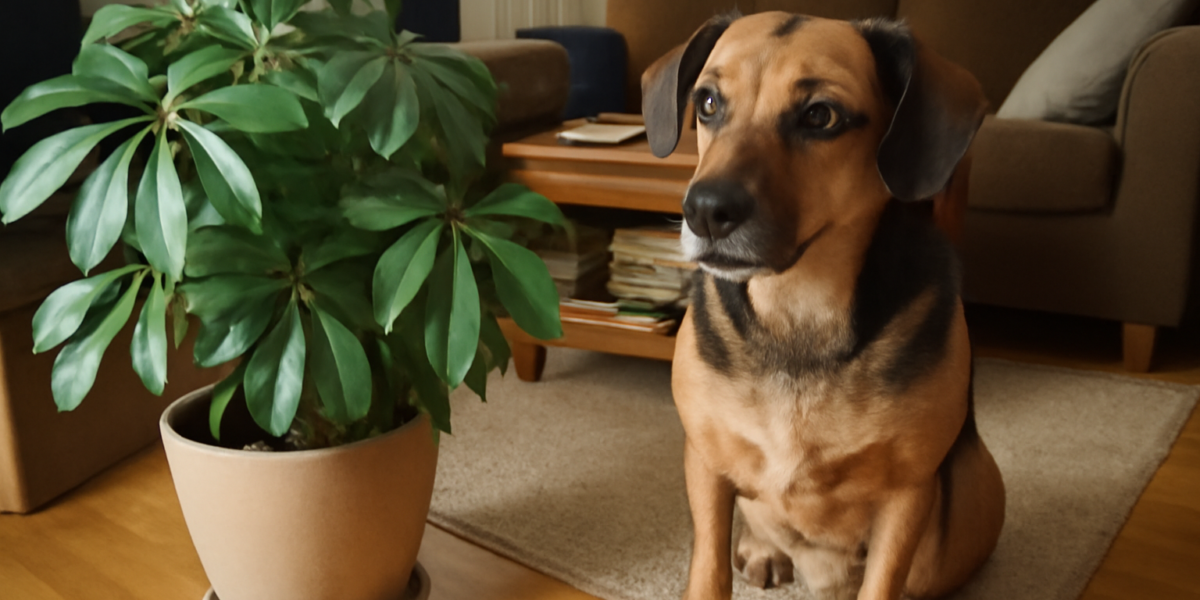
Yes, schefflera plants are toxic to dogs. Commonly known as the umbrella plant or umbrella tree, schefflera contains insoluble calcium oxalate crystals that cause painful oral irritation, swelling, and gastrointestinal distress when ingested. Schefflera toxic to dogs is a concern every pet owner should be aware of, especially since these popular houseplants are found in homes and offices everywhere.
Both the dwarf schefflera (Schefflera arboricola) and the larger Australian umbrella tree (Schefflera actinophylla) are toxic to dogs. All parts of the plant, including the glossy leaves, stems, and roots, contain the harmful crystals. Symptoms can appear within minutes of your dog chewing on the plant.
How Schefflera Plants Harm Dogs
Like dieffenbachia and other aroids, schefflera plants store microscopic needle-shaped calcium oxalate crystals called raphides throughout their tissues. These crystals are bundled inside specialized cells that act like tiny spring-loaded weapons.
When your dog chews on a schefflera leaf or stem, the pressure from biting ruptures these cells and launches the crystals into the soft tissue of the mouth, tongue, and gums. The crystals physically penetrate the mucous membranes, causing immediate pain, inflammation, and swelling.
The damage is mechanical rather than chemical, which means the severity depends on how much plant material your dog chews and how long they continue chewing. Most dogs drop the plant quickly due to the intense burning sensation, which limits the amount of crystal exposure.
Symptoms of Schefflera Poisoning
Symptoms of schefflera poisoning develop rapidly after ingestion. Here is what to watch for if your dog has chewed on an umbrella plant:
- Immediate pawing at the mouth and face
- Excessive drooling that may appear foamy
- Swelling of the lips, tongue, and oral tissues
- Difficulty swallowing or refusing to eat
- Whimpering or crying, especially when trying to eat or drink
- Vomiting
- Decreased appetite lasting up to 48 hours
In rare but serious cases, significant swelling of the tongue and throat can affect your dog’s ability to breathe. If you notice any signs of respiratory distress, such as labored breathing, wheezing, or your dog appearing panicked, seek emergency veterinary care immediately.
Skin and eye contact with schefflera sap can also cause irritation. If sap gets in your dog’s eyes, you may notice squinting, redness, and tearing. Flush the eyes gently with clean water and consult your veterinarian.
What to Do If Your Dog Eats Schefflera
Remove any remaining plant material from your dog’s mouth right away. Be gentle and cautious, as your dog may snap or resist due to pain. Move the plant to a location your dog cannot access.
Offer your dog cool water or ice chips to help rinse the crystals from the mouth and soothe the burning. Some veterinarians suggest offering a small amount of plain yogurt or milk, which may help coat the irritated tissues. Do not force anything into your dog’s mouth if they are unwilling.
Contact your veterinarian to report the ingestion. Describe what happened, how much plant material your dog consumed, and any symptoms you are observing. Your vet will advise whether home monitoring is sufficient or if your dog needs to be seen.
Do not induce vomiting unless specifically directed by your veterinarian. The calcium oxalate crystals can cause additional damage to the esophagus on the way back up, potentially making the situation worse rather than better.
Veterinary Treatment Options
For mild cases where your dog only took a small bite, home monitoring with supportive care may be all that is needed. Most dogs recover from minor schefflera exposure within 12 to 24 hours as the oral irritation subsides.
More significant exposures may require veterinary treatment including anti-inflammatory medications to reduce swelling, pain relief, and possibly antihistamines. If your dog is unable to eat or drink due to mouth pain, your vet may administer IV fluids to prevent dehydration.
Your vet may also examine your dog’s mouth and throat to assess the extent of the irritation and rule out any airway concerns. In most cases, the prognosis is excellent and full recovery is expected within a day or two with appropriate care.
Making Your Home Safe From Schefflera
If you have a schefflera plant and a dog, you have several options for keeping everyone safe. The simplest solution is to move the plant to a room your dog does not have access to, such as a home office that stays closed.
Placing schefflera on high shelves or tall plant stands can work for larger dogs but may not deter smaller, climbing-inclined dogs. Remember that fallen leaves on the floor are just as dangerous as the plant itself, so check around the base of elevated schefflera plants regularly.
Training your dog to leave houseplants alone is helpful but should not be your only line of defense. Even well-trained dogs can be tempted by a dangling leaf when you are not home. A bitter apple spray on leaves can add an additional deterrent, though it is not foolproof.
If rehoming the plant is the safest option, consider replacing it with dog-safe alternatives like Christmas cactus, spider plants, Boston ferns, or prayer plants. These options offer similar lush, green aesthetics without the toxicity risk.
Other Common Houseplants With Similar Toxicity
Schefflera is far from the only common houseplant that contains calcium oxalate crystals. Being aware of these plants helps you make safer choices for your home:
- Dieffenbachia (Dumb Cane) — Contains the same calcium oxalate crystals and causes identical symptoms
- Philodendron — All varieties contain oxalate crystals and are toxic to dogs
- Pothos — Another popular trailing plant with calcium oxalate toxicity
- Caladium — Brightly colored leaves that are highly toxic to dogs
- Elephant Ear — Large tropical leaves packed with calcium oxalate crystals
If you are building a pet-friendly plant collection, understanding which common houseplants contain these crystals is essential. Always research a plant’s toxicity before bringing it into a home with pets.
Frequently Asked Questions
Are mini schefflera plants less toxic than full-sized ones?
No, the dwarf or mini schefflera (Schefflera arboricola) contains the same calcium oxalate crystals as the larger species. Size does not affect toxicity. Even a small schefflera plant has enough crystals in its leaves to cause a painful reaction in your dog.
Can my dog get sick from just touching a schefflera plant?
Simply brushing against a schefflera is unlikely to cause problems. The calcium oxalate crystals are released when the plant tissue is broken, such as by chewing or crushing. However, if your dog breaks a stem or leaf and gets sap on their skin, mild irritation is possible. The real danger comes from chewing and ingesting the plant.
How long does it take for a dog to recover from schefflera poisoning?
Most dogs recover from mild schefflera exposure within 12 to 24 hours. Oral irritation and reduced appetite may linger for up to 48 hours in moderate cases. Dogs that receive prompt veterinary treatment for more severe reactions typically recover fully within two to three days.
Is schefflera toxic to cats too?
Yes, schefflera is toxic to cats and causes the same calcium oxalate crystal irritation. Cats may be at higher risk since they tend to chew on houseplants more frequently and can access elevated plants more easily. If you have cats, it is safest to avoid all calcium oxalate-containing plants in your home.


