
Last updated: May 16, 2026
In this article
- The Quick Answer: Cymbidium Orchids Are Non-Toxic to Cats and Dogs
- Where Cymbidium Sits on the ASPCA Non-Toxic List
- Boat Orchid as a Cut Flower: The Bouquet Hazard Map
- What Happens If a Pet Eats a Cymbidium Bloom
- Pesticide Residues on Shop-Bought Cymbidiums
- Bark, Inorganic Mix, and the Repotting Mess
- Long Spike Hazards: When Flowers Become Cat Toys
- Where Cymbidium Fits Among Pet-Safe Orchids
- Setting Up a Cymbidium Without Pet Drama
- If a Pet Has Already Eaten Plant Material
- Curiosity-Proofing Without Removing the Plant
- Frequently Asked Questions
The Quick Answer: Cymbidium Orchids Are Non-Toxic to Cats and Dogs
If your home includes a cool-growing cymbidium with its long arching flower spike and a household that includes pets, you can stop worrying about the plant. Cymbidium orchids are listed as non-toxic to cats and dogs by the ASPCA Animal Poison Control Center. The genus contains roughly fifty-two species and many thousands of registered hybrids; all carry the same green-light status. Flowers, strap-shaped leaves, fat low-profile pseudobulbs, and roots do not contain alkaloids, calcium oxalate raphides, latex enzymes, or any other compound documented to poison companion animals at household exposure levels.
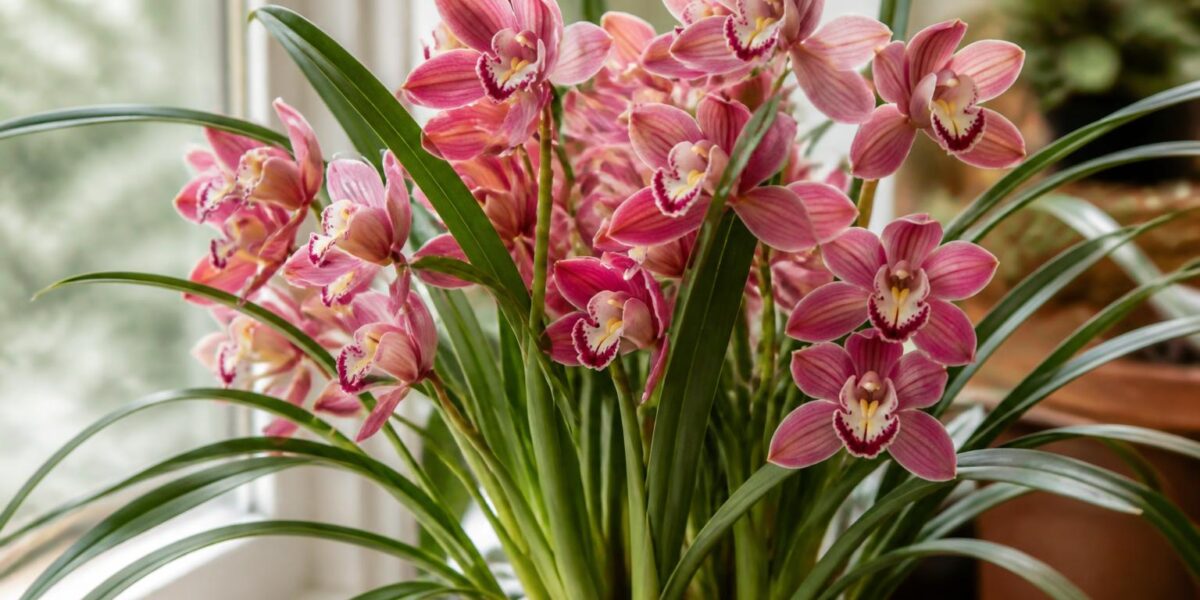
Cymbidium is sometimes called the “boat orchid” because the lip of the flower curves into a small canoe shape. It is also one of the most prolific cut-flower orchids on earth — long-lasting spikes ship globally for floral arrangements, weddings, and supermarket bouquets. That cut-flower context is part of why understanding cymbidium orchids safe for pets matters: the plant is benign, but the vase water, floral foam, and decorative wires that come with bouquet presentations introduce hazards the orchid itself never would. The rest of this guide explains the safety picture in detail and shows where genuine, smaller risks deserve calm attention.
Where Cymbidium Sits on the ASPCA Non-Toxic List
The ASPCA’s plant safety database covers thousands of common ornamental species. Cymbidium appears on the non-toxic side, alongside the rest of the Orchidaceae family. There are no cardiac glycosides like those in foxglove or lily of the valley, no needle-like calcium oxalate raphides like those in dieffenbachia or alocasia, no glycoalkaloids like those in solanum vines, no proteolytic latex like the ficin in weeping fig, and no cycasin like the lethal compound in sago palm. The whole plant is biochemically benign at the doses any pet would casually ingest.
Some Cymbidium hybrids carry a fresh, slightly grassy fragrance during the day. Those aroma compounds — esters and small terpenes — are perfectly safe for pets to breathe. There is no inhalation hazard, no contact dermatitis profile, and no documented allergic reaction in cats and dogs from Cymbidium fragrance. For broader cross-genus context, see the umbrella article are orchids safe for dogs. Cat-side readers can also visit are orchids toxic to cats, where despite the slug the conclusion confirms the same non-toxic outcome.
Boat Orchid as a Cut Flower: The Bouquet Hazard Map
Cymbidium spikes hold their bloom shape for six to ten weeks, which makes them a darling of the cut-flower trade. If your encounter with the genus is mostly through bouquets and floral arrangements, three accessory hazards deserve more attention than the orchid.
Floral foam
The green block holding stems in arrangements is a phenolic resin called floral foam (sometimes branded “Oasis”). Pets that chew the foam can develop persistent vomiting and gut obstruction. The foam is not biologically toxic in the alkaloid sense, but it absorbs water poorly in the gut and crumbles into fragments. Discard foam blocks securely.
Vase water with preservatives
Cymbidium spike-keeping is so important commercially that florists often add preservative powders to vase water — bleach, sugar, citric acid, biocides. Pets that drink from vases can experience mouth and stomach irritation from the additives, not from the orchid. Keep arrangements out of drinking range, and choose covered vases when households include determined sippers.
Floral wire and tape
Heavy Cymbidium spikes are sometimes propped up with green floral wire wrapped in floral tape. After an arrangement is dismantled and discarded, that wire goes with it. Wire ingestion is a surgical emergency. Bag and seal old arrangements before placing in a pet-accessible bin.
What Happens If a Pet Eats a Cymbidium Bloom
For most cats and dogs, very little. A cat that bats off a flower and crunches a petal usually shows no reaction. A dog that grabs a fallen spike and chews soft tissue may have a moment of weird-taste face and move on. The risk arrives when the volume eaten is large enough to act on the gut mechanically.
Possible symptoms after a larger ingestion:
- One or two episodes of vomiting in the first several hours
- Soft stool or short-lived diarrhea the next day
- Drooling or lip-smacking right after the meal
- Brief loss of appetite that resolves with the next normal feeding
These reflect the gut’s response to a sudden plant-fiber load, not a poisoning. They typically clear without treatment. Persistent symptoms past about twelve hours, forceful or bloody vomiting, lethargy, abdominal pain, or refusal to drink are signals to call a veterinarian regardless of the non-toxic listing.
Pesticide Residues on Shop-Bought Cymbidiums
Most retail Cymbidium plants come through cool-growing nurseries that spray for thrips, mites, mealybug, and assorted leaf-spot fungi. Many of those compounds are systemic, meaning they sit inside leaf and pseudobulb tissue for weeks after the plant arrives in your home. Cats that lick freshly misted leaves and dogs that chew older pseudobulbs are the most exposed.
Practical steps include wiping the leaves with a damp cloth on arrival, watering generously through the bark or inorganic medium during the first week, and quarantining new plants on a high shelf for two to four weeks. Hobby growers and specialty nurseries generally use lighter chemistry than big-box production stock, and that is a worthwhile consideration in homes with confirmed leaf-chewers.
Bark, Inorganic Mix, and the Repotting Mess
Cymbidiums grow in coarse bark or in inorganic mixes (LECA balls, perlite, charcoal). All these materials are choking and intestinal-obstruction risks if a curious dog raids the pot. Bark wedges between molars or lodges in the small intestine of a small breed or puppy. LECA balls roll across hard floors and become unauthorized chew toys.
The plant body remains the safe part. Keep medium out of reach. Heavy ceramic outer pots, elevated shelving, and saucer arrangements that catch fallen bark all work. After watering and especially after repotting, sweep the floor before pets return to the room.
Long Spike Hazards: When Flowers Become Cat Toys
Cymbidium spikes are dramatic — tall, arching, sometimes nearly horizontal under the weight of opening blooms. To a young cat, that arrangement is irresistible. Even though the flowers are non-toxic, repeated swatting can break the spike, scatter petals, and prompt a chewing habit you would rather avoid.
Two solutions work: stake the spike with a slim bamboo cane and tie loosely with floral tape so the arrangement holds together when batted, and elevate the plant above reliable jumping range. The plant looks better unbroken, the household calms down, and the cat finds something else to chase. If your cat still gravitates toward the orchid window, redirect with a pot of pet grass on a separate, lower windowsill where chewing is fine.
Where Cymbidium Fits Among Pet-Safe Orchids
From a toxicology standpoint Cymbidium is identical to every other major indoor orchid genus. The differences are care preferences. Cymbidiums prefer cooler nights than tropical orchids, a noticeable temperature drop in autumn to trigger flowering, and a watering rhythm that runs slightly drier in winter. They are excellent pot plants for unheated sun-rooms and conservatories where Phalaenopsis would sulk.
For households building a mixed pet-safe orchid collection, you can pair Cymbidium with any other genus on safety grounds. Compare care notes in our companion guides at phalaenopsis orchids safe for pets, vanda orchids safe for pets, and lady slipper orchids safe for pets. Lady slipper orchids (Paphiopedilum) often share Cymbidium’s cooler-loving care profile, which makes them natural collection companions.
Setting Up a Cymbidium Without Pet Drama
A handful of placement and care choices keep the plant beautiful and the household calm.
- Pick a bright east or shaded south window with cooler nighttime temperatures. The temperature differential drives bloom set.
- Stake the flower spike before the buds open. A staked spike flexes rather than breaking when batted.
- Use a heavy outer cachepot. Cymbidium pots are top-heavy when in flower, and a fall scatters bark across the floor.
- Skip leaf-shine sprays and foliar feed mists in households with reliable lickers. None of those products are pet-tested.
- Repot every two to three years using fresh, sealed-bag orchid bark — never garden soil or scavenged moss.
If a Pet Has Already Eaten Plant Material
The plant is non-toxic, so the situation is rarely an emergency. Remove remaining material from reach. Offer fresh water without forcing it. Watch the next twenty-four hours for vomiting, diarrhea, drooling, or unusual quiet behavior.
Lower your threshold to call a veterinarian if the pet is very small, very young, very old, or has a chronic illness. A two-pound kitten that eats a whole flower spike has consumed a much larger share of body weight in plant fiber than a thirty-pound dog eating the same volume. The standard contacts are:
- Your regular veterinary practice during business hours
- ASPCA Animal Poison Control Center at 888-426-4435 (consultation fee may apply)
- Pet Poison Helpline at 855-764-7661 (consultation fee may apply)
- Your nearest emergency veterinary hospital after hours for severe symptoms
Do not induce vomiting at home without specific instructions from a veterinarian. Hydrogen peroxide dosing in cats can damage the stomach lining; in dogs the timing and dose matter and require professional input.
Curiosity-Proofing Without Removing the Plant
Most pets test an unfamiliar houseplant once and lose interest. The few who develop a habit are usually expressing something: cats often crave fiber and texture, dogs often crave attention or chewing outlets. A separate pot of pet grass solves the cat’s fiber impulse. A training session and an appropriately sized chew toy redirect the dog’s nip-and-grab pattern.
Round out a pet-safe home with reference lists at cat-safe houseplants and cat-safe flowers. New cat and dog owners can also browse our adopt a cat and adopt a dog hubs for matching tips and household setup advice.
Frequently Asked Questions
My cat ate part of a cymbidium leaf — should I be worried?
The leaf is non-toxic. Watch for vomiting or diarrhea over the next twelve to twenty-four hours. A single chewed leaf is not a medical event in itself.
Are cymbidium pseudobulbs (the fat low canes) safe for dogs to chew?
They are non-toxic. The mechanical risk is the bigger issue — fibrous tissue can splinter and scrape gums, or a chunk can wedge in the gut. Discourage chewing and trim splintered areas cleanly.
Is cymbidium pollen dangerous like lily pollen?
No. Orchid pollen comes in solid waxy pollinia and is not airborne. The pollen risk that affects cats is unique to true lilies (Lilium and Hemerocallis), not orchids.
The vase from my cymbidium bouquet has flower-food in the water — is that safe if the dog drinks it?
Plain vase water is fine. Floral preservative powders contain biocides and citric acid that can cause mouth and stomach irritation if dogs drink the dosed water. Keep arrangements out of reach and rinse vases before reuse.
Are dyed cymbidium spikes (the rainbow ones at florists) safe for cats?
The plant tissue underneath remains non-toxic. The injected dye is generally considered harmless in small amounts, but most veterinarians prefer pets not ingest dyed petals. Choose undyed spikes if you have a known leaf-chewer at home.


