
Last updated: May 16, 2026
In this article
- The Short Answer: Phalaenopsis Orchids Are Safe for Pets
- Why Phalaenopsis Orchids Are Considered Non-Toxic
- What Happens If a Cat or Dog Eats a Moth Orchid
- The Real Risks Hiding in Your Orchid Pot
- Why Phalaenopsis Sap Is Not Like Ficus Sap
- Phalaenopsis Compared with Other Pet-Safe Orchid Genera
- Setting Up a Pet-Friendly Phalaenopsis Display
- If Your Pet Has Already Eaten a Large Amount
- Prevention: Curiosity-Proofing Without Banishing the Orchid
- What Veterinarians Watch for When You Call
- Frequently Asked Questions
The Short Answer: Phalaenopsis Orchids Are Safe for Pets
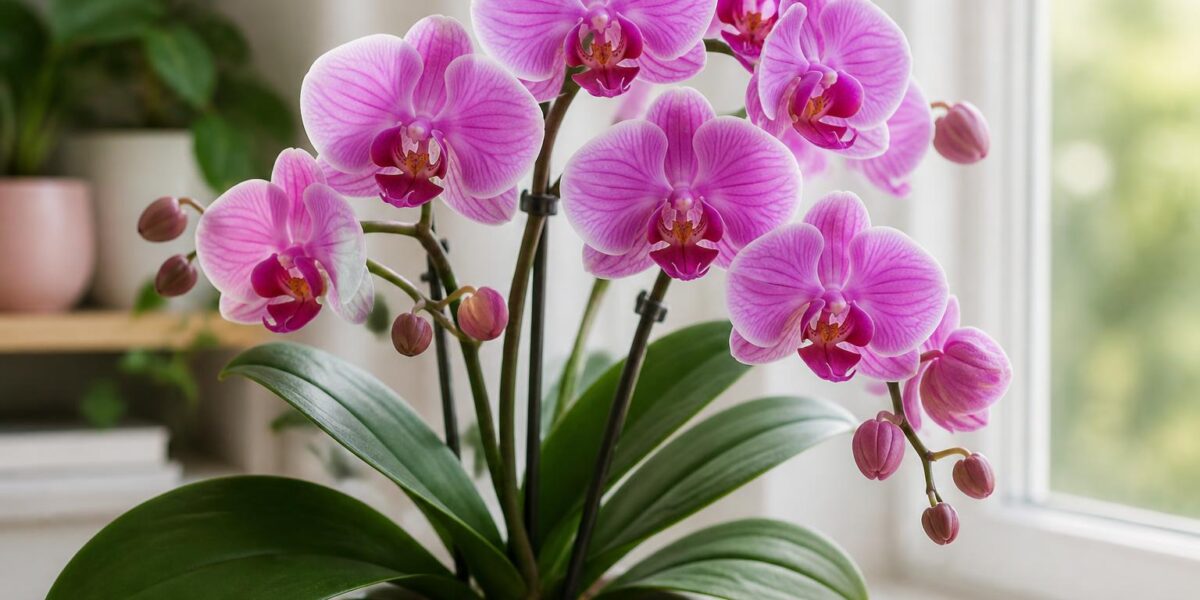
If your cat or dog just nibbled the petal of a moth orchid on the dining table, take a breath. Phalaenopsis orchids are listed as non-toxic to cats and dogs by the ASPCA Animal Poison Control Center. The plant body — leaves, stems, flowers, and roots — does not contain cardiac glycosides, alkaloids, calcium oxalate raphides, or any other compound known to cause systemic poisoning in companion animals. That makes the popular moth orchid one of the few showy flowering houseplants you can keep around curious pets without panic.
This does not mean your pet should treat the orchid like a salad bar. Even safe plants can cause mild stomach upset when a curious cat or dog crunches through enough leaf tissue, and the bark or sphagnum moss in the pot poses a separate chewing and swallowing concern. The most underappreciated worry is what was sprayed on the plant before you brought it home — supermarket and garden-center orchids are routinely treated with systemic insecticides and fungicides whose residues can linger for weeks. With that context in mind, here is a complete guide to keeping phalaenopsis orchids safe for pets in your home.
Why Phalaenopsis Orchids Are Considered Non-Toxic
The ASPCA maintains an extensive list of plants tested or documented as non-toxic to dogs, cats, and horses, and Phalaenopsis (along with the rest of the Orchidaceae family) sits comfortably on that list. The genus contains roughly seventy species and tens of thousands of registered hybrids, all of which share the same basic chemistry. Unlike lilies, which can devastate a cat’s kidneys with a few licks of pollen, or sago palms, which carry life-threatening cycasin in every part, the moth orchid simply has no documented toxin profile in pets.
Phalaenopsis is the most popular indoor orchid in the world for good reason. The flat, rounded blooms float on long arching spikes for two to four months, the strap-shaped leaves stay glossy year-round, and the plant tolerates the warm, dim conditions inside an apartment far better than most species. That popularity matters here, because veterinary toxicology databases have decades of data on accidental ingestion — and the moth orchid simply does not appear in serious-poisoning case reports.
For broader context on the orchid family across species, see our umbrella overview are orchids safe for dogs. Cat owners can also visit are orchids toxic to cats, which despite the slug confirms the same non-toxic conclusion under ASPCA criteria.
What Happens If a Cat or Dog Eats a Moth Orchid
For most pets, the answer is “very little.” A cat that swats off a flower and nibbles a petal usually shows no reaction at all. A dog that grabs a fallen bloom and chews it before you can intervene is unlikely to need anything beyond a careful watch for the next twenty-four hours. The blooms are about ninety percent water and contain no harsh tannins, no acrid latex, and no needle-like crystals, so the mouth and throat stay comfortable.
That said, any plant material is fiber, and fiber in volume can cause gastrointestinal upset. Symptoms to monitor for after a larger ingestion include:
- Mild vomiting once or twice within a few hours
- Soft stool or short-lived diarrhea the next day
- Drooling or lip-smacking right after the meal
- Brief loss of appetite that resolves by the next feeding
If any of these signs persist beyond about twelve hours, become forceful or bloody, or are accompanied by lethargy, abdominal pain, or refusal to drink, that is no longer “just a little plant” and your veterinarian should weigh in. The phalaenopsis itself is not the danger in that scenario — the persistence of symptoms is the signal.
The Real Risks Hiding in Your Orchid Pot
The plant is safe; the production system around the plant is the part that deserves attention. Three practical hazards account for most pet-related orchid problems.
Pesticide and fungicide residues
Commercial growers use systemic neonicotinoids, miticides, and fungicides to deliver perfect blooms to retail. These compounds penetrate the leaf and root tissue and can persist for weeks. A cat that habitually licks orchid leaves — some do, especially after misting — may ingest small but repeated doses of chemistry that was never tested for pet safety. Wipe leaves with a damp cloth when you bring the plant home, water the orchid thoroughly to flush the medium, and consider quarantining it from determined chewers for the first month.
Bark, sphagnum moss, and perlite
Orchids are typically potted in chunky fir bark or long-fiber sphagnum rather than soil. Both materials are choking and obstruction risks if a dog decides to dig out the pot. Bark chunks especially can lodge between molars, scrape the esophagus on the way down, or block the small intestine in tiny breeds and kittens. Use a heavy ceramic outer pot and place orchids well above floor level for households with enthusiastic diggers.
Cut-flower preservatives
If your orchid arrived as a cut spike or a bouquet rather than a potted plant, the water in the vase often contains floral preservative powders. Those mixtures can include bleach, sugar, and citric acid, and pets who drink from vases may experience mouth and stomach irritation that has nothing to do with the orchid itself. Keep vase water out of reach.
Why Phalaenopsis Sap Is Not Like Ficus Sap
People sometimes assume that all houseplants with thick, fleshy leaves leak something irritating. That is true for the Ficus genus, where ficin and psoralens make the milky latex of weeping fig and rubber tree distinctly unfriendly to mucous membranes. Phalaenopsis is a completely different chemical world. The watery exudate that beads on a freshly cut leaf or pseudobulb is essentially plant juice — no milky appearance, no enzymatic bite, no documented contact dermatitis in animals. If a dog chews off a flower spike and the cut end weeps a little clear sap, you do not need to scrub the muzzle or rush for milk.
This contrast also explains why orchids belong on the “safe houseplants” shortlist while figs do not. For the comparison, see our guides on are fiddle-leaf figs toxic to cats and are rubber plants toxic to dogs.
Phalaenopsis Compared with Other Pet-Safe Orchid Genera
If you love orchids and want to expand the collection without worrying about toxicity, the entire Orchidaceae family is on the same green-light list. Cymbidium (boat orchid), Dendrobium, Cattleya (corsage orchid), Oncidium (dancing lady), Vanda, Miltonia (pansy orchid), and Paphiopedilum (lady slipper) all share the same non-toxic status. The differences are cultural — light levels, watering rhythm, repotting needs — not toxicological.
For a quick orientation across the most popular genera, browse our companion guides on cymbidium orchids safe for pets and dendrobium orchids safe for pets. Each follows the same structure and reaches the same reassuring conclusion, with genus-specific care notes.
Setting Up a Pet-Friendly Phalaenopsis Display
Even safe plants benefit from a little household choreography. A few placement rules will save your blooms and your nerves.
- Choose a windowsill or bookshelf out of jumping range for cats. Phalaenopsis flowers are dramatic enough to draw paw-swat attention, and a single swipe can knock a bloom into reach.
- Use a saucer that is wider than the pot to catch tipped water and stray bark. Cats sometimes drink from saucers; fresh tap water is fine, but stagnant runoff with fertilizer residue is not ideal.
- Avoid hanging baskets directly over a feeding area. Petals drop, and a curious nose appreciates a fallen flower far more than you do.
- Skip glitter sprays, dyes, and “blue orchid” treatments. The blue variants you see at supermarkets are dyed white plants — the dye is mostly cosmetic, but pets are better off without ingesting it.
- Repot using bagged orchid bark from a sealed bag, not garden compost or scavenged moss, both of which can carry pesticides or molds.
If Your Pet Has Already Eaten a Large Amount
The phalaenopsis itself is not poisonous, so you are not racing the clock the way you would with a true toxin. Still, sensible monitoring matters. Remove any remaining plant material from your pet’s reach. Offer a small amount of fresh water but do not force it. Watch for vomiting, diarrhea, drooling, or unusual quietness over the next twenty-four hours.
If your pet is very small (under five pounds), very young, very old, or already has a chronic condition like inflammatory bowel disease or kidney disease, lower your threshold to call. A teacup kitten that eats a whole flower spike has consumed a much larger fraction of body weight in plant fiber than a Labrador eating the same volume.
Reach a veterinarian by:
- Calling your regular practice during business hours
- Phoning the ASPCA Animal Poison Control Center at 888-426-4435 (a consultation fee may apply)
- Phoning the Pet Poison Helpline at 855-764-7661 (a consultation fee may apply)
- Going to the nearest emergency veterinary hospital after hours if symptoms are severe
Do not induce vomiting at home unless a veterinarian instructs you to do so. Hydrogen peroxide given without guidance can cause its own complications, especially in cats, who tolerate it poorly.
Prevention: Curiosity-Proofing Without Banishing the Orchid
Most pets test a houseplant once and lose interest. A few — bored adolescent cats, oral-fixated puppies, certain herding breeds — keep coming back. The trick is to make your orchid less interesting before it becomes a habit.
Provide alternatives. Cats with a leaf-chewing fetish are usually expressing a need for fiber and texture; offering pet grass on a separate windowsill can redirect the impulse. Dogs that nip blooms during play often calm down with a short training session and a chew toy of similar size and weight. Rotate enrichment so the orchid never becomes the most novel object in the room.
For broader pet-safe greenery options, see our curated lists at cat-safe houseplants and cat-safe flowers. If you are still building your home around a new dog or cat, our adopt a cat and adopt a dog hubs collect setup tips alongside available pets.
What Veterinarians Watch for When You Call
When you describe a phalaenopsis ingestion to a veterinary nurse on the phone, the triage questions will be straightforward: species, weight, what part of the plant was eaten, how much, when, and what symptoms you have observed so far. The non-toxic listing means most calls end with home-monitoring advice rather than a same-day appointment. If a hospital visit is recommended, it is usually because of the volume eaten (large amount of fiber) or because your pet has another underlying condition that complicates a small upset stomach.
Bring a leaf, a flower, or a clear photo of the plant if you do go in. Even though the toxicology is well known, identification rules out the occasional mistake — sometimes what people think is an orchid is in fact a flowering bromeliad, an anthurium, or a peace lily. The first two are also non-toxic; the last is mildly irritating thanks to oxalates. A quick ID puts everyone on the same page.
Frequently Asked Questions
Are phalaenopsis orchid flowers safe for cats to chew?
The flowers themselves are non-toxic. A cat that chews a petal will not be poisoned. Watch for mild stomach upset if a large amount is eaten, and discourage the habit so your blooms last and your cat does not get into a leaf-chewing pattern.
What about phalaenopsis roots and bark mix — are they safe?
The roots are non-toxic, but bark and sphagnum moss are choking and intestinal-obstruction risks if a dog eats them in volume. Keep the pot out of reach, and pick up any bark that scatters when you water.
My dog drank water from the orchid saucer. Should I worry?
Plain runoff is fine. If you recently fertilized or used a leaf-shine product, dump the saucer and rinse it. Persistent vomiting or diarrhea after fertilizer-laced water warrants a vet call.
Can phalaenopsis pollen cause problems for cats the way lily pollen does?
No. Phalaenopsis pollen is bundled into waxy structures called pollinia and is not released into the air the way lily pollen is. There is no documented kidney risk from any orchid genus, unlike true lilies (Lilium and Hemerocallis), which are catastrophic for cats.
Is the dyed blue phalaenopsis at the supermarket also safe?
The plant is the same non-toxic species. The blue color is a dye injected into the flower spike. The dye itself is generally regarded as harmless in small amounts, but most veterinarians prefer pets not ingest dyed petals. Choose an undyed plant if you have a known leaf-chewer at home.


