
Last updated: May 16, 2026
In this article
- The Short Answer on Daphne and Cats
- What Daphne Actually Is
- The Toxic Compounds That Matter
- Symptoms in Cats
- How Much Daphne Is Dangerous to a Cat?
- What to Do If Your Cat Chewed Daphne
- What the Vet Will Likely Do
- Look-Alike and Name Confusion
- Cat-Safer Garden Alternatives
- Living With Daphne and a Cat
- When to Skip the Wait-and-See
- Sibling-Tier Hazards Worth Knowing
- The Bigger Picture for Cat Households
- Frequently Asked Questions
The Short Answer on Daphne and Cats
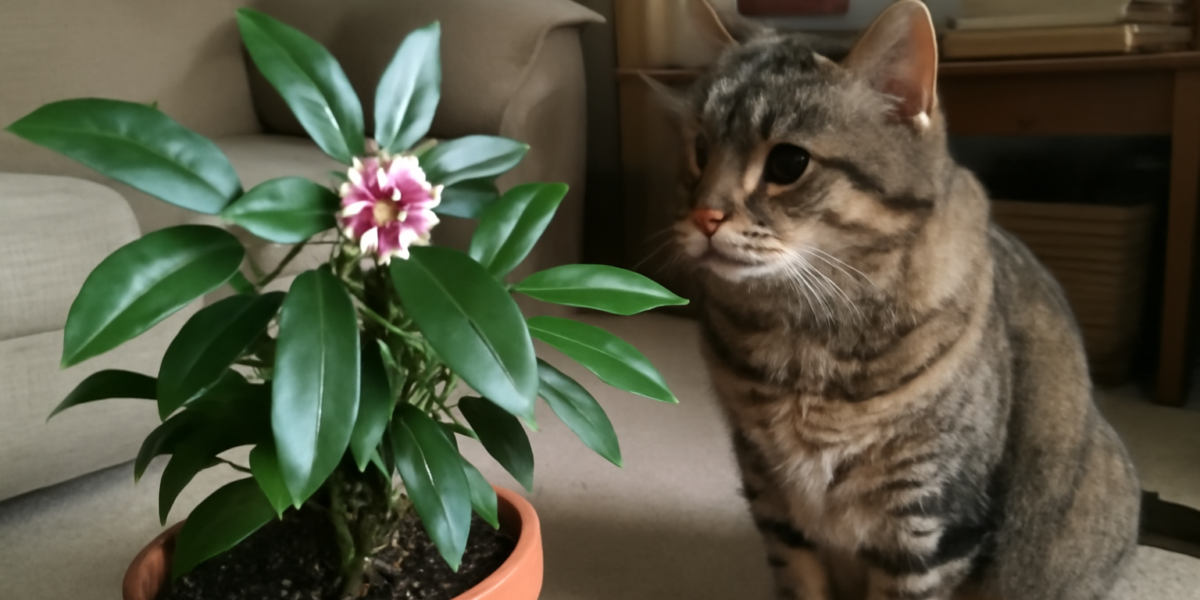
Daphne is severely toxic to cats. Among ornamental UK and European garden shrubs, Daphne ranks alongside oleander, foxglove, and yew as one of the most dangerous you can plant near a curious cat. Every part of the plant is toxic, with the bright red, orange, or yellow berries especially hazardous because they look snackable. The active compounds are daphnin (a coumarin glycoside), mezerein (a diterpene ester), and related irritants. Severity sits at the severe to life-threatening end of the spectrum, and any suspected exposure deserves emergency veterinary care.
If your cat just chewed a Daphne leaf, swallowed a berry, or licked the milky sap from a snapped twig, do not wait for symptoms. Move the plant out of reach, photograph what was eaten, and call your veterinarian, the ASPCA Animal Poison Control Center at 888-426-4435 (consultation fee applies), or the Pet Poison Helpline at 855-764-7661 (consultation fee applies) immediately. Daphne poisoning can produce severe oral burning, vomiting, bloody diarrhea, and possible cardiac complications, and time is the variable that determines how the case unfolds.
What Daphne Actually Is
Daphne is a genus of about seventy small to medium evergreen and deciduous shrubs in the family Thymelaeaceae, native to Europe, Asia, and North Africa. The most commonly planted species in gardens are Daphne mezereum (mezereon, February daphne), Daphne laureola (spurge laurel), and Daphne odora (winter daphne, fragrant daphne). All three are popular for their early spring flowers and intensely fragrant, almost cloying perfume. The flowers cluster along bare or leafy stems in pink, white, or yellow, depending on species and cultivar.
Mezereon is the species most associated with severe pet poisoning because of its bright red berries that follow the spring bloom. Spurge laurel, common in British and Irish hedgerows and woodland gardens, produces glossy black berries with similar chemistry. Winter daphne is more often grown for its dense scented flowers and matures into a low evergreen mound that fits neatly into shrub borders. Whichever species you have, all parts are toxic.
Despite the common names, Daphne is unrelated to bay laurel (Laurus nobilis), to mountain laurel (Kalmia latifolia), and to cherry laurel (Prunus laurocerasus). The “laurel” naming is purely visual and has nothing to do with botanical relationship. Spurge laurel is also unrelated to true spurge (Euphorbia). The naming chaos is part of why pet exposures get misidentified.
The Toxic Compounds That Matter
Daphne toxicity is driven by two main compound classes. The first is daphnin and related coumarin glycosides, which cause severe irritation of the mucous membranes from mouth to anus. Cats who chew leaves develop immediate oral burning, drooling, and pain that often escalates to vomiting and diarrhea. The second is mezerein and related diterpene esters, which are extremely irritating to skin and mucous membranes and have been associated with more serious systemic effects including effects on heart rhythm at high doses.
The toxin distribution across the plant is broad. Sap from broken stems, leaves chewed and swallowed, and especially the bright berries are all dangerous. Berries contain the highest concentration of mezerein in many species, which is why the documented severe poisonings often involve a cat or dog eating fallen ripe fruit. The toxin is stable to drying and not destroyed by typical cooking temperatures, although a cat is unlikely to encounter cooked Daphne.
The chemistry is similar in spirit to other severe-tier garden hazards. Compare with the cardiac glycoside chemistry of oleander in cats and foxglove in cats. Daphne’s mechanism is different (severe local irritation plus possible systemic effects rather than direct cardiac glycosides), but the practical clinical experience for the owner and the urgency of veterinary care are similar.
Symptoms in Cats
Signs typically begin within thirty minutes to a few hours of ingestion. Cats often show a striking oral phase before any GI involvement because the mouth is the first contact point. Watch for:
- Sudden, intense drooling and pawing at the mouth
- Visible lip swelling, redness, or blistering of the gums and tongue
- Loss of appetite and refusal to drink
- Vocalizing, hiding, or unusual restlessness from oral pain
- Repeated vomiting, sometimes with blood or shredded plant fragments
- Diarrhea, often watery, sometimes bloody
- Dehydration developing within hours from fluid losses
- Lethargy and weakness
- Tremors, ataxia, or in severe cases collapse
- Possible cardiac signs including a weak or irregular pulse
The combination of severe oral pain followed by hemorrhagic GI signs is the clinical hallmark of Daphne ingestion in a small animal. The pain is intense enough that cats often refuse to allow the owner to look in the mouth, which is a useful diagnostic clue compared with milder calcium oxalate plants where the cat is uncomfortable but tolerates handling.
How Much Daphne Is Dangerous to a Cat?
Even small amounts of Daphne can produce significant illness. Two or three berries have been described in old veterinary references as sufficient to produce severe poisoning in dogs and cats. There is no safe nibble. Cats are smaller and more sensitive than dogs in many toxicology scenarios, and a single berry chewed and swallowed warrants urgent evaluation.
The intense pain and bitterness of the plant is partial natural protection because most cats spit it out, but reliance on bitterness is unwise. Kittens, indoor-outdoor cats with a habit of nibbling new plants, and cats living in households with multiple ornamental shrubs lose this caution. Cats who have already chewed the plant are also more likely to drink from any nearby water source, including vase water from cut Daphne, which is itself contaminated.
What to Do If Your Cat Chewed Daphne
Treat as an emergency. Step by step:
- Move the cat to a different room and remove any remaining plant material from the floor.
- Gently rinse the mouth with cool water if the cat will tolerate it. Do not force the cat’s jaw open.
- Photograph the plant and any chewed material so the vet can confirm species. Bring a leaf or berry sample if you can collect it safely.
- Call your vet, the ASPCA APCC at 888-426-4435, or Pet Poison Helpline at 855-764-7661. Do not wait for symptoms.
- Drive to the clinic. Do not give food or milk on the way.
- Do not induce vomiting at home. Re-exposing the esophagus to mezerein on the way back up worsens the burning, and hydrogen peroxide is unsafe in cats.
If your cat is already showing severe signs such as collapse, vomiting blood, or breathing difficulty, drive directly to the nearest emergency clinic. Tell the front desk on arrival that you suspect Daphne poisoning so the team can prepare fluids, anti-emetics, and monitoring on your way through the door.
What the Vet Will Likely Do
There is no specific antidote. Treatment is aggressive supportive care aimed at controlling pain, replacing fluid losses, and protecting the GI tract. Standard care typically includes:
Pain control, often with opioids, because oral and esophageal burning is severe. Intravenous fluid therapy to replace losses from vomiting and diarrhea and to support blood pressure. Anti-emetic medication. Gastric protectants such as proton pump inhibitors. Activated charcoal if ingestion was recent and the cat is alert enough to receive it safely. Cardiac monitoring during the most dangerous window. Soft, bland food once the cat can eat again, often two or three days after exposure.
Most cats who reach the clinic within a few hours of ingestion and receive aggressive supportive care recover, though hospitalization for two to five days is common. Prognosis worsens for cats whose poisoning is not recognized for a day or more, or who arrive already showing systemic signs.
Look-Alike and Name Confusion
The “laurel” common names cause real trouble. Spurge laurel (Daphne laureola) is sometimes confused with cherry laurel (Prunus laurocerasus) and with bay laurel (Laurus nobilis). Cherry laurel has its own toxicity profile based on cyanogenic glycosides, while bay laurel is a much milder GI irritant. The mechanisms are completely different. If a cat chews “the laurel hedge out front,” species identification is essential before the vet can choose appropriate treatment.
Daphne odora is sometimes mistaken for a small-leaf rhododendron or for skimmia at first glance. Skimmia (Skimmia japonica), covered in a sibling B114 article, is a separate genus with milder alkaloid-based toxicity. Sibling articles on skimmia in pets and Pieris in cats cover other UK garden shrubs that share planting beds with Daphne.
Mezereon flowers in late winter on bare wood, which is unusual enough that it tends to make the plant identifiable to attentive gardeners. The combination of fragrant pink-purple flowers on bare twigs in February is essentially a Daphne mezereum signature.
Cat-Safer Garden Alternatives
If you love the early spring fragrance and color that draws people to Daphne, several alternative shrubs give you a similar effect with much less risk. Witch hazel (Hamamelis) flowers in late winter on bare wood and is generally considered low-risk for casual exposure. Camellia japonica is another reasonable choice. For evergreen mounded form, low-growing junipers and certain pet-friendly box alternatives work well.
Our pet-safe garden plants roundup covers options for shaded borders and fragrant gardens. For indoor display, our cat-safe houseplants guide lists trailing and flowering options that the ASPCA explicitly considers non-toxic.
Living With Daphne and a Cat
The most honest assessment is that Daphne is one of the few ornamental shrubs where removal is often the right answer in households with cats. The combination of intense fragrance, attractive berries, severe toxicity, and dense planting habit makes containment unreliable. If you choose to keep the plant, fence it off, remove fallen berries daily during fruiting season, and keep the cat indoors during peak bloom and fruit season.
For indoor display, never bring Daphne cuttings into the house. The vase water alone is contaminated, the broken stems leak irritant sap, and a curious cat tipping the vase can find a meaningful exposure. Use other fragrant cut flowers for spring arrangements. Sweet peas and stocks give similar fragrance with much lower toxicity risk.
When to Skip the Wait-and-See
Get to a vet immediately, not in the morning, if any of the following are true: you saw or strongly suspect Daphne ingestion of any quantity; the cat is showing oral pain, drooling, or pawing at the mouth; the cat is a kitten, senior, or has pre-existing heart, kidney, or liver disease; you cannot identify a chewed garden shrub but the suspect plants include Daphne. Daphne is on the short list of ornamental shrubs where the precautionary vet visit is overwhelmingly worth the cost.
If you find a partly chewed berry or leaf with feline tooth marks and cannot find your cat, search the house thoroughly. Cats hide when in pain, and the pain from Daphne mucosal burning is significant. The earlier the cat reaches IV fluids and pain control, the easier the recovery.
Sibling-Tier Hazards Worth Knowing
Daphne sits firmly in the severe-tier list of ornamental garden shrubs. Other members of this group include oleander, foxglove, yew, and the Ericaceae shrubs covered in our Pieris in cats sibling article. The B113 article on bluebells in cats covers another spring-bloom UK garden hazard worth knowing about.
The pattern across all of these severe-tier shrubs is the same: small ingestion, big consequences, no specific antidote, supportive veterinary care. Treating the entire group as zero-access for cats simplifies daily yard safety planning enormously and removes the need to memorize individual species details under pressure.
The Bigger Picture for Cat Households
Daphne is one of those plants whose reputation has faded over decades because it is no longer the household name it was a century ago, but the toxicity has not faded. Old gardening books call it “deadly Daphne” for good reason. Walking the borders of an inherited garden, identifying every shrub, and cross-referencing against ASPCA and other reputable poison databases is the single most useful exercise a new cat owner can do.
If you are setting up a home for a cat you are about to bring home, our cat adoption hub includes a household-prep checklist for plants, foods, and yard hazards. The afternoon you spend cat-proofing the yard is a small investment for years of peace of mind.
Frequently Asked Questions
How many Daphne berries are dangerous to a cat?
Old veterinary references describe two or three berries as enough to produce severe poisoning in small animals. There is no safe number. Treat any berry ingestion as a vet call regardless of count.
My cat licked Daphne sap from a broken stem. Do I need to call the vet?
Yes. Mezerein is intensely irritating even from sap contact alone. Even small amounts can cause significant oral and skin burning. Call your vet or the ASPCA APCC immediately.
How long after Daphne ingestion will symptoms appear?
Most cats develop oral signs within thirty minutes to a few hours. GI signs typically follow within a few hours after the oral phase. Cardiac and neurological signs, when they occur, can be delayed by a day. Veterinary evaluation should not wait for full symptoms.
Is winter daphne (Daphne odora) safer than mezereon?
No. All Daphne species share the same toxic compound classes. The relative concentrations vary by species, but no Daphne should be considered safe around cats.
Can I keep my Daphne if I plant it in a fenced area my cat cannot reach?
It can work, but maintenance is unforgiving. Fallen berries blow into accessible parts of the yard, contaminated mulch can be carried by paws, and any breakdown of the fence creates risk. For most households, removing the plant and replacing it with a non-toxic shrub is the simpler long-term answer.


