
Last updated: May 16, 2026
In this article
- The Quick Answer on Douglas Fir Trees and Pets
- What Douglas Fir Trees Actually Are
- Why Douglas Fir Is Considered Low-Risk
- What Could Still Go Wrong
- Symptoms to Watch For After a Nibble
- What to Do if Your Pet Eats Douglas Fir
- Douglas Fir as a Christmas Tree
- Douglas Fir Versus True Firs and Other Conifers
- Placing Douglas Fir in a Pet-Friendly Yard
- Caring for Douglas Fir in a Pet Household
- Adoption and Pet-Safe Living
- Frequently Asked Questions
The Quick Answer on Douglas Fir Trees and Pets
If your dog has been chewing fallen Douglas fir twigs in the side yard or your cat has batted at a needle-covered Christmas tree base, take a breath. Douglas fir trees are safe for pets in the casual-exposure form most cats and dogs encounter, which is one of the most widely planted Christmas trees and timber conifers in North America. Pseudotsuga menziesii is not flagged on the ASPCA toxic plant database for cats, dogs, or horses, and ASPCA-specific data is limited but reassuring. The Pacific Northwest’s signature timber tree is one of the more pet-tolerant conifers in the broader pine family.
That comforting profile applies to plant material a curious pet would chew or graze. The realistic concerns with Douglas fir are mechanical and minor: stiff needles that can poke a soft palate or scratch a paw pad, distinctive three-pronged “mouse-tail” cone bracts that can wedge in fur or teeth, sticky aromatic resin that catches in fur, and the holiday-season concern of preservative-laced tree water for cut Christmas trees. The realistic outcome of a pet sampling a Douglas fir needle or twig is no symptoms at all or a brief, self-resolving bout of mild stomach upset.
What Douglas Fir Trees Actually Are
Despite the common name, Douglas fir is not a true fir. The species sits in its own genus Pseudotsuga, which translates as “false hemlock,” in the family Pinaceae alongside true firs (Abies), spruces (Picea), pines (Pinus), and hemlocks (Tsuga). The botanical confusion stretches back to early European explorers who could not place the tree in any of the existing genera and eventually gave up and made a new one. The common name honors David Douglas, the Scottish botanist who introduced the species to Western horticulture in the 1820s.
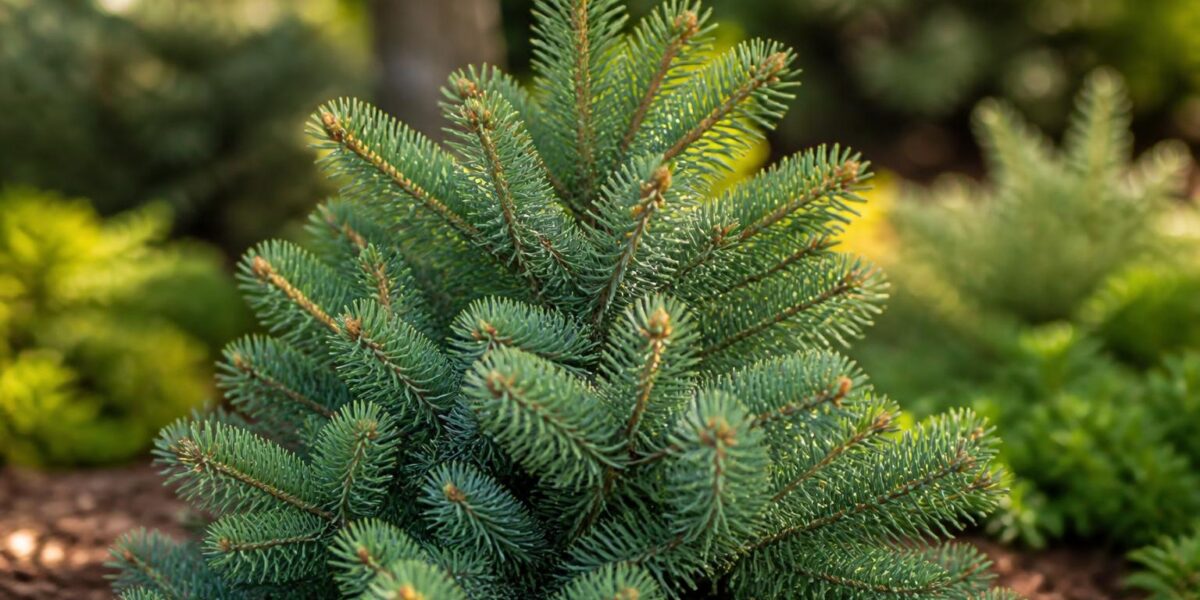
You will recognize Douglas fir by the soft flat needles arranged spirally on the twigs, fragrant when crushed, and most distinctively by the pendant cones with their three-pronged “snake tongue” or “mouse-tail” bracts that protrude between the cone scales. No other conifer cone in the temperate Northern Hemisphere has those distinctive bracts, so a fallen cone is the quickest way to confirm identification. The bark on mature trees is deeply furrowed and corky, often a foot thick on old-growth specimens, and the heartwood is the most important commercial softwood lumber in the western United States and Canada.
Where Douglas fir thrives is the Pacific Northwest, the Rocky Mountains, and increasingly as a planted ornamental and Christmas tree across the eastern United States, Europe, and parts of New Zealand. The coastal variety (Pseudotsuga menziesii var. menziesii) is the giant Pacific Northwest timber tree, while the Rocky Mountain variety (var. glauca) is smaller, hardier, and more drought-tolerant. Both varieties are used for Christmas trees, with coastal Douglas fir dominating the western market and Rocky Mountain Douglas fir grown in plantations across the upper Midwest and Northeast.
Why Douglas Fir Is Considered Low-Risk
Most plant safety lists place Douglas fir alongside the broader Pinaceae family as low-toxicity for cats and dogs. The foliage and bark do not contain calcium oxalate raphides, cardiac glycosides, taxine alkaloids (the dangerous compound in yew), or grayanotoxins. Douglas fir foliage carries low levels of aromatic terpene compounds and resins typical of conifers, but the foraging-dose levels a pet would consume from fallen sprays do not deliver a clinically significant load. Decades of cohabitation with cats, dogs, livestock, and grazing wildlife have not produced poison-control case patterns that flag Douglas fir as a concerning species.
If you grow Douglas fir as a specimen or buy one as a Christmas tree, the broader temperate-tree neighbors covered in the rest of this batch include sibling conifers like spruce, cypress, redwood, and the popular Christmas tree species Fraser fir and balsam fir. For broadleaf pairings, our guides on magnolia, cottonwood, and willow map other safe shade options. The contrast worth knowing is the mildly toxic Norfolk pine, which despite the common name is not actually a true conifer.
What Could Still Go Wrong
The realistic problems with Douglas fir are mechanical and seasonal rather than chemical. The needles are softer than spruce and shorter than most pines, but they can still mildly scratch a soft mouth or wedge between paw pads, especially when dried needles accumulate on a cut Christmas tree. Watch for any signs of mouth pain like reluctance to eat, drooling, or pawing at the face after a chewing session, and check inside the mouth for stuck needles.
The distinctive three-pronged cone bracts are the most Douglas fir-specific concern. The bracts are stiff, slightly hooked at the tips, and just the right size and shape to catch in long fur or wedge between teeth. A determined cone-chewer can also break off bract fragments that splinter rather than dissolve, which can scratch the throat or GI lining if swallowed. Pick up dropped cones from active play areas, and watch a habitual cone-chewer for signs of GI obstruction like persistent vomiting, abdominal tenderness, or refusal to eat over more than a single missed meal.
The Christmas-tree-specific concerns are the most common Douglas fir incidents in pet households. A cut Douglas fir sheds needles steadily across a typical four to six week display, and accumulated dry needles in carpet or under the tree are the highest-volume needle-exposure window of the year. Tree-water preservatives often contain commercial fertilizer (sometimes labeled as “tree extender”) or sugar-based additives, which can cause GI upset if a thirsty dog or cat drinks from the basin. Cover the basin with a tree skirt or a fitted cover from the day the tree comes inside.
Symptoms to Watch For After a Nibble
Most pets that taste a Douglas fir needle or chew a fallen twig will show no signs at all. If symptoms appear, they tend to be mild and short-lived, usually within a few hours of grazing. Possible signs include:
- Drooling or repeated lip-licking
- One or two episodes of vomiting
- Soft stool or mild diarrhea
- Reduced appetite for the next meal
- Briefly subdued mood after a large mouthful
- Mild gum irritation from stiff needle fragments
What you should not see from a chewed Douglas fir is severe weakness, collapse, blood in vomit or stool, persistent tremors, or breathing trouble. If any of those appear, the plant is unlikely to be the only thing your pet got into and you need urgent veterinary care regardless of which tree they sampled. The most likely Douglas fir scenario that warrants prompt clinical attention is a swallowed cone or a large drink of preservative-laced tree water on a holiday weekend.
What to Do if Your Pet Eats Douglas Fir
Start with calm observation. Remove any chewed sprays or cones from your pet’s reach, wipe their mouth with a damp cloth to clear residual resin, and offer a small drink of fresh water. Do not give milk, do not try to make your pet vomit at home, and do not give activated charcoal or human medications without veterinary guidance.
Call your own veterinarian if your pet is small, very young, very old, has existing health issues, ate a substantial portion of the plant, swallowed a whole cone, drank a meaningful amount of tree water, or shows symptoms that last more than a few hours. For after-hours guidance, the ASPCA Animal Poison Control Center is reachable at (888) 426-4435, and the Pet Poison Helpline is at (855) 764-7661. Both lines charge a consultation fee but can give you species-specific advice and a case number your regular vet can follow up with.
For sticky resin contact, wash the affected fur or paw pads with mild dish detergent and lukewarm water. A small amount of vegetable oil works to loosen stubborn resin before the soap step. Bring a cone, twig, or photo of the tree to any clinic visit, since species identification helps the team estimate concern level — confirming the tree is a Douglas fir and not a yew is genuinely useful for the triage team. The distinctive three-pronged bracts make Douglas fir cones one of the easiest conifer cones to identify at a glance.
Douglas Fir as a Christmas Tree
Douglas fir is one of the three most popular Christmas tree species in North America, alongside Fraser fir and balsam fir. The combination of soft non-prickly needles, strong fragrance, good needle retention, and consistent farmed availability makes it a workhorse of the cut-tree market. From a pet-safety standpoint Douglas fir sits in the same low-risk category as the other major Christmas conifers, with the universal Christmas-tree caveats around tree water, ornaments, and tinsel.
The pet-safe Christmas tree routine for any conifer is the same. Set the tree in a stable stand, anchor it to a wall or ceiling hook if your cat is a climber, cover the water basin with a tree skirt or a fitted cover, skip tinsel and ribbon (linear-foreign-body risk for cats), and choose unbreakable ornaments for the lower third of the tree. Sweep up dropped needles daily on hard floors and run the vacuum on carpet to keep accumulation low. Live trees produce less needle drop than precut trees, so a balled-and-burlapped Douglas fir or potted living tree is a slightly tidier option for a pet household.
Douglas Fir Versus True Firs and Other Conifers
The “Douglas fir is not a true fir” technicality matters less for pet safety than for botanical accuracy. True firs (Abies species, including Fraser fir and balsam fir) and Douglas fir share the same low-toxicity profile, the same general needle and cone considerations, and the same Christmas-tree caveats. The differences worth knowing are practical: Douglas fir cones hang downward and shed whole, while true fir cones sit upright on the branch and disintegrate scale by scale, dropping fewer cones intact for pets to find.
Across the broader conifer group, the dangerous outliers are yew (taxine alkaloids, severe) and ornamental Thuja western red cedar (mildly toxic). Our companion guides on pine needles in cats and pine needles in dogs cover the broader needle and oil considerations across the pine family. For garden planning, Douglas fir is a long-term commitment to a very large tree if grown as a specimen — coastal Douglas fir reaches over two hundred feet on a good site — but Rocky Mountain Douglas fir is more manageable in a residential yard at sixty to a hundred feet.
Placing Douglas Fir in a Pet-Friendly Yard
For new plantings, the pet-friendly siting principles for Douglas fir are about the structural side rather than chemistry. Plan for the mature size, set the tree well away from septic and foundation lines, and leave room beneath for grass or pet-safe groundcovers rather than dense shade-loving plants that struggle in dry conifer canopies. A young Douglas fir grows quickly — three to four feet a year is typical on a good site — so the planning horizon is shorter than for slower conifers.
For a pet-friendly windbreak or screen, Douglas fir works well as part of a mixed conifer planting on larger lots. Pair Douglas fir with spruce or cypress for visual variety, set the row well back from active dog runs to avoid root compaction, and use a wood-chip mulch path along the base to catch dropped needles and cones. A mass planting of three to seven Douglas firs on a larger lot delivers significant shade, year-round screening, and habitat structure for songbirds and small mammals.
Caring for Douglas Fir in a Pet Household
A well-managed Douglas fir is a calmer Douglas fir, and that means scheduling occasional structural pruning, monitoring for the pests and diseases that affect Pinaceae, and keeping the base of the tree clean. Douglas fir is susceptible to needle cast diseases (Rhabdocline, Swiss needle cast) that can cause heavy needle drop into the dog-active zone. A certified arborist can confirm the diagnosis and recommend appropriate management.
Sweep paths and dog runs after windstorms to clear dropped sprays and cones, especially during late autumn cone shed. Cone pickup is the single most useful Douglas fir-specific chore in a pet household because the cones are mid-sized and stiff. Avoid foliar pesticides that could transfer to a chewing pet, and use selective tree-injection treatments only when an arborist confirms a specific disease that warrants them. For Christmas trees, change the water frequently, top up with plain water (no commercial preservatives once it is in the house with pets), and switch to a fitted basin cover for the duration of the display.
Adoption and Pet-Safe Living
If you are reading this because you are pet-proofing in advance of bringing home a new companion, that is exactly the level of care a rescue animal deserves. Walk Me Home Rescue connects people with pets through our adopt cats and adopt dogs hubs, and a thoughtfully managed Christmas tree or yard conifer is one small but meaningful piece of a welcoming home.
Most adopters with established Douglas fir trees find them worth keeping because the structural beauty, shade, and wildlife value far outweigh the modest pet-safety overhead. Pair the specimen tree with a regular arborist visit, a cone-pickup pass during late autumn, and a careful holiday-season tree-water routine if you bring a cut Douglas fir indoors, and the conifer corner of the yard becomes a comfortable, low-stress part of daily life. Our master list of pet-safe garden plants can help you finish out the rest of the landscape.
Frequently Asked Questions
Is Douglas fir safe for cats specifically?
Douglas fir (Pseudotsuga menziesii) is generally considered low-toxicity to cats based on available data, though ASPCA-specific listings are limited. A small graze of needles is unlikely to cause more than briefly mild stomach upset. Cats are more sensitive than dogs to monoterpene essential oils, but the foraging-dose levels from a fallen Douglas fir spray are well below what would cause systemic concern. Watch for needle ingestion or tree-water drinking around an indoor Christmas tree.
Can dogs eat Douglas fir needles or cones?
An occasional nibble of Douglas fir needles is unlikely to cause more than mild stomach upset in most dogs. Whole cones are an obstruction risk for small dogs because of size and the stiff three-pronged bracts. Skip the next meal if your dog seems queasy, offer plenty of water, and call your veterinarian if symptoms last more than a few hours or if you suspect a swallowed whole cone.
Is Douglas fir safe to use as a Christmas tree with pets?
Yes, Douglas fir is one of the more pet-tolerant Christmas tree species and sits in the same low-risk category as Fraser fir and balsam fir. The Christmas-tree caveats that matter are not Douglas fir-specific: cover the water basin to keep pets out of preservative-laced water, anchor the tree firmly against climbing accidents, skip tinsel and ribbon, and use unbreakable ornaments on the lower third of the tree.
Why does Douglas fir tree water concern vets?
Commercial Christmas tree preservatives often contain fertilizer, sugar, or other additives that prolong needle retention but can cause GI upset if a pet drinks from the basin. The needles and bark themselves shed natural resins and microorganisms into the water over a four-to-six-week display, which can also cause stomach upset on its own. The standard advice is to cover the basin with a tree skirt or fitted cover and to change the water frequently with plain water once the tree is in a pet household.
Should I plant Douglas fir in a small yard with a dog?
Coastal Douglas fir is too large for most residential lots, but Rocky Mountain Douglas fir or compact cultivars like ‘Fastigiata’ (narrow upright) and ‘Glauca Pendula’ (weeping blue form) work in mid-sized yards. Choose a cultivar matched to the space rather than fighting a two-hundred-foot timber tree on a quarter-acre lot.


