
Last updated: May 16, 2026
In this article
- The Short Answer for Hoya Linearis
- What Hoya Linearis Looks Like
- Why Hoya Linearis Sits in the Low-Risk Category
- The Realistic Hazards With a Chewed String Plant
- Symptoms to Watch After a Nibble
- What to Do if Your Pet Eats Hoya Linearis
- Where to Hang the String Plant in a Pet Home
- Pet-Safe Alternatives for Determined Chewers
- Care That Keeps Strands Off the Floor
- Adoption and Pet-Safe Living
- Frequently Asked Questions
The Short Answer for Hoya Linearis
The fine, dangling strands of the string plant look like the world’s most tempting cat toy, but the news is reassuring. Most veterinary plant references and houseplant safety lists treat Hoya linearis as low-risk, and the ASPCA toxic plant database does not specifically list this species. The framing hoya linearis safe for pets is supported by the same logic that applies across the wider Hoya genus: no documented severe toxin, decades of indoor culture without poison-control flagging, and a chemistry that lacks the calcium oxalate crystals or systemic alkaloids found in genuinely dangerous houseplants.
The realistic risks are mild and mechanical. Thin needle-like leaves can scratch gums, the milky latex inside the strands can briefly irritate lips and mouths, and any volume of plant matter eaten in one go can trigger a short bout of vomiting or loose stool. Call your veterinarian if your pet is small, very young, very old, has health issues, or shows symptoms that last past a few hours. The ASPCA Animal Poison Control Center is at (888) 426-4435 and the Pet Poison Helpline is at (855) 764-7661.
What Hoya Linearis Looks Like
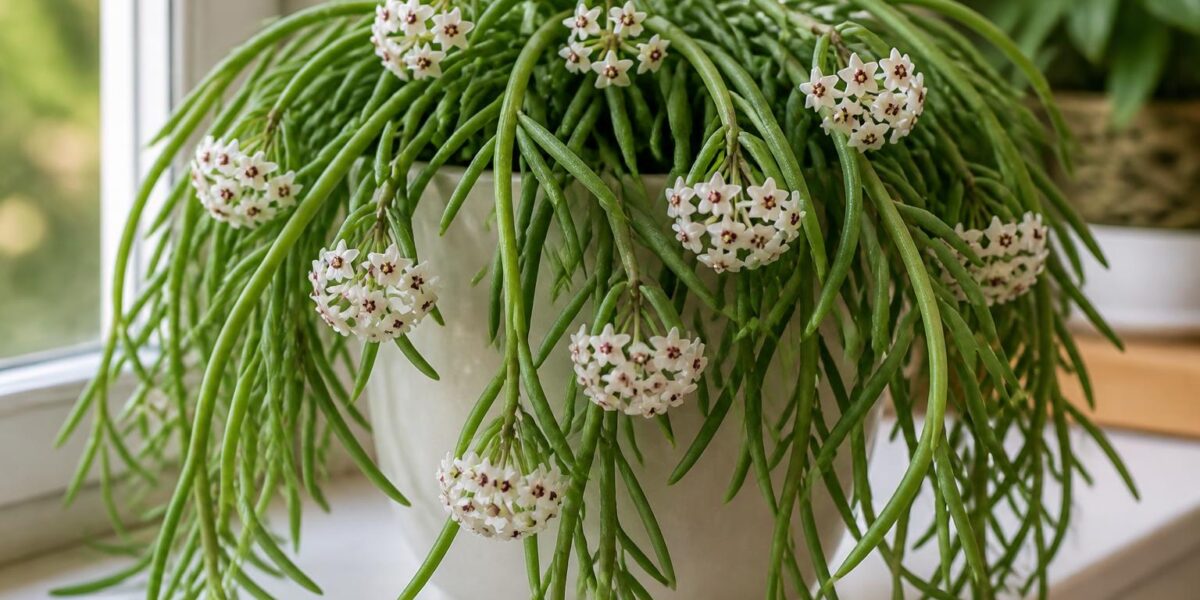
Hoya linearis is the most cascading, fern-like Hoya in common cultivation. Native to the foothills of the Himalayas, it grows as an epiphyte in cool, humid mountain forests, draping its long thin stems from tree branches. The leaves are softly fuzzy, less than two inches long, and only a few millimeters wide, giving the plant a string-of-pearls energy without actually being one. Mature specimens produce small white star-shaped flowers in summer, fragrant in the evening.
The string plant is famous for two things in plant collector circles: long pendant strands that can drape three feet or more from a hanging basket, and a reputation for fussiness compared with sister species like Hoya carnosa or Hoya pubicalyx. It prefers cooler temperatures and higher humidity than most Hoya, which makes it a bathroom or kitchen plant in many homes. The good news for pet households is that the same hanging-basket habit that suits the plant’s culture also keeps it well above curious mouths.
Why Hoya Linearis Sits in the Low-Risk Category
Hoya linearis belongs to the milkweed family Apocynaceae, but unlike the toxic milkweeds of pasture-poisoning fame, the Hoya genus has a remarkably clean safety record. The plant does not produce the calcium oxalate raphides that make aroids like philodendron, pothos, or dieffenbachia such painful chewing hazards. It does not contain the cardiac glycosides of true milkweed (Asclepias) or oleander. It does not produce grayanotoxins, alkaloids, or any of the high-priority compounds tracked by veterinary toxicology resources.
Our umbrella article on whether Hoya is toxic to cats walks through the limited published data and the gap between formal testing and decades of casual exposure. The practical conclusion is the same for Hoya linearis as for the broader genus: low risk, mild GI signs in the worst realistic case, and no pattern of severe poisoning. That is a very different risk profile from the houseplants veterinarians actually worry about.
The Realistic Hazards With a Chewed String Plant
What can actually go wrong falls into mechanical and mild GI categories rather than chemical poisoning. The needle-shaped leaves can scratch gums, especially in cats that thoroughly bite long strands. The white latex sap inside the stems is mildly irritating to mucous membranes and can cause drooling, lip-licking, or brief mouth discomfort. A pet that eats a substantial volume of strands may experience a short episode of vomiting or loose stool simply because plant fiber is hard for carnivores to digest.
Cats are the most likely instigators here. The thin trailing strands of Hoya linearis are practically engineered to look like a cat toy. Bored cats will leap, bat, and chew through hanging vines, sometimes pulling the entire plant off its hook. Dogs are far less interested in dangling foliage, but a dog who finds a strand on the floor after a knockdown might gulp a mouthful before you can intervene. The hazard for dogs is more often the soil and broken pot than the plant itself.
Pesticide and miticide residue on shop-bought specimens can be a hidden risk. Mealybugs love Hoya, and growers treat plants accordingly. Quarantine new specimens for two weeks, rinse foliage gently, and avoid systemic insecticides on plants that share space with chewing pets.
Symptoms to Watch After a Nibble
Most pets that taste a strand of Hoya linearis will show no signs at all. When symptoms appear, they tend to be mild and short. Watch for:
- Drooling or repeated lip-licking for an hour or two
- One or two episodes of vomiting
- Soft stool or mild diarrhea over a day
- Reduced interest in the next meal
- A briefly subdued mood
What you should not see is severe weakness, tremors, seizures, collapse, pale gums, breathing trouble, or blood in vomit or stool. Those signs do not match the Hoya linearis picture and suggest your pet got into something more dangerous, possibly a different plant or household substance. Treat severe signs as a same-day veterinary emergency regardless of what you think your pet ate.
What to Do if Your Pet Eats Hoya Linearis
Move your pet away from the plant, pick up loose strands, and wipe the muzzle and paws with a damp cloth to clear any sticky latex. Offer fresh water. Do not try to make your pet vomit at home, do not give activated charcoal without veterinary direction, and do not give human medications such as ibuprofen, acetaminophen, or antihistamines as a guess.
Call your veterinarian for triage if your pet is very small, very young, very old, has chronic health issues, or ate what looks like a meaningful quantity of strands. Mention the species, an estimate of how much was eaten, and any symptoms you have observed. The ASPCA Animal Poison Control Center at (888) 426-4435 and the Pet Poison Helpline at (855) 764-7661 are both available around the clock and can issue a case number that your regular clinic can follow up with later.
Bring a photo of the plant or a pinch of strands to any in-clinic visit. Hoya linearis is unusual enough that an emergency veterinarian may not recognize chewed fragments, and confirming the species rules out the look-alike trailing succulents that occasionally get mislabeled.
Where to Hang the String Plant in a Pet Home
The simplest pet-friendly placement is a ceiling-mounted hanging basket in front of a bright cool window. A strand that ends six feet off the ground discourages even the most acrobatic cat, and dogs cannot reach hanging plants at all. Avoid window-mounted plant shelves where a cat can climb into the basket from above, and avoid plant stands shorter than four feet, since enthusiastic chewers can usually clear that height.
Hoya linearis prefers cooler temperatures and humid air, so a kitchen, bathroom, or shaded north-facing window often suits the plant’s needs and the household’s safety needs at the same time. Trim trailing strands once they reach the floor, since long contact with floor surfaces is both bad for the plant and a flag for floor-level chewers.
Pet-Safe Alternatives for Determined Chewers
If your cat or dog has a history of pulling down anything that hangs, consider a confirmed pet-safe trailing plant rather than fighting the placement battle every week. Our guide to string of turtles covers a small succulent vine with similar trailing energy and a low-risk profile. Watermelon peperomia and the baby rubber plant deliver compact pet-safe foliage on a tabletop scale.
The wider cat-safe houseplants roundup pulls together more options for multi-pet homes, and our cultivar siblings Pilea peperomioides and Haworthia for cats and Haworthia for dogs add architectural shapes that don’t dangle.
Care That Keeps Strands Off the Floor
A healthy Hoya linearis is also a tidy one. Give the plant bright indirect light, water when the chunky succulent mix is mostly dry, and increase humidity in winter when home heating dries the air. The species drops papery dead leaves when stressed, and floor-level dropped leaves are an open invitation for opportunistic chewers, so consistent culture is part of pet safety as well as plant health.
Use a heavy ceramic basket or a hanging pot with a sturdy hook rated for at least double the wet weight of the plant. Hoya linearis is not a heavy plant, but a lunging cat exerts surprising force, and a hook that fails sends the whole basket and all the trailing strands directly to the floor. Replace lightweight S-hooks with screw-in ceiling hooks for any hanging plant in a multi-pet home.
Adoption and Pet-Safe Living
If you are pet-proofing in advance of bringing home a rescue, that level of preparation is exactly the kind of thoughtful welcome a rescue animal deserves. The Walk Me Home Rescue adopt cats hub and adopt dogs hub list dogs and cats waiting for that kind of home. A hanging Hoya linearis in a sunny window, a few smart placements, and a couple of pet-safe ground-level alternatives are almost always enough to make a plant collection compatible with a new four-legged housemate.
The string plant rewards thoughtful care with cascading green strands and the occasional cluster of fragrant white flowers. With sensible placement and a quick plan for what to do if a pet does manage a chew, Hoya linearis can stay in your collection without giving you a single midnight worry.
Frequently Asked Questions
Is Hoya linearis safe for cats specifically?
Hoya linearis is generally considered non-toxic to cats per most plant safety references and is not on the ASPCA toxic plant list. The needle-like strands can scratch gums and cause mild GI upset if a cat eats a meaningful quantity, but serious poisoning is not part of the documented picture. Hang the plant high and call your veterinarian if symptoms last more than a few hours.
The strands look like cat toys. Is that a real problem?
It can be a behavior problem more than a toxicity problem. Cats batting at hanging strands can pull the plant down and may chew leaves while playing. Mount baskets on ceiling hooks rather than window brackets, trim strands so they end well above floor level, and offer cat grass or alternative chew toys to redirect the urge.
What if my dog ate a chunk of broken-off Hoya linearis?
A small amount is unlikely to cause more than mild stomach upset. Watch for vomiting, diarrhea, or reduced appetite over the next twelve hours, offer plenty of water, and call your veterinarian or the Pet Poison Helpline at (855) 764-7661 if symptoms persist or your dog is small, very young, or has existing health issues.
Is the milky sap dangerous?
The white latex from a broken Hoya linearis stem is mildly irritating but not associated with significant systemic toxicity. Wipe any sap off your pet’s lips and paws, rinse with water, and watch for brief drooling or mild mouth discomfort.
What about pesticide residue from the nursery?
Mealybug treatments are common on commercial Hoya. Quarantine new plants for two weeks, rinse foliage with plain water, and avoid systemic insecticides on plants that share space with chewing pets. Pesticide residue is more likely to cause symptoms than the plant itself in many newly purchased specimens.


