
Last updated: May 16, 2026
In this article
- Are Italian Cypress Trees Safe for Pets?
- Meet Italian Cypress: Cupressus Sempervirens
- Why Italian Cypress Is Considered Safe for Pets
- Mechanical and Practical Caveats
- Italian Cypress in the Landscape
- What If My Pet Chews Italian Cypress?
- When to Call the Vet
- Italian Cypress vs Other Cypress and Juniper Species
- Mediterranean Garden and Pet-Safe Companions
- Care Considerations for the Pet-Aware Household
- Frequently Asked Questions
Are Italian Cypress Trees Safe for Pets?
Yes, Italian cypress trees are generally safe for pets. The ASPCA does not list Cupressus sempervirens — the botanical name for Italian cypress — as toxic to dogs or cats. There is no documented systemic poisoning from chewing the scale-like foliage, bark, or mature cones. The plant earns a place on the list of pet-tolerable conifers alongside other cypress and juniper species, with the same general framing: mild GI irritation possible from chewing the aromatic foliage, but no organ-system risk from typical exposures.
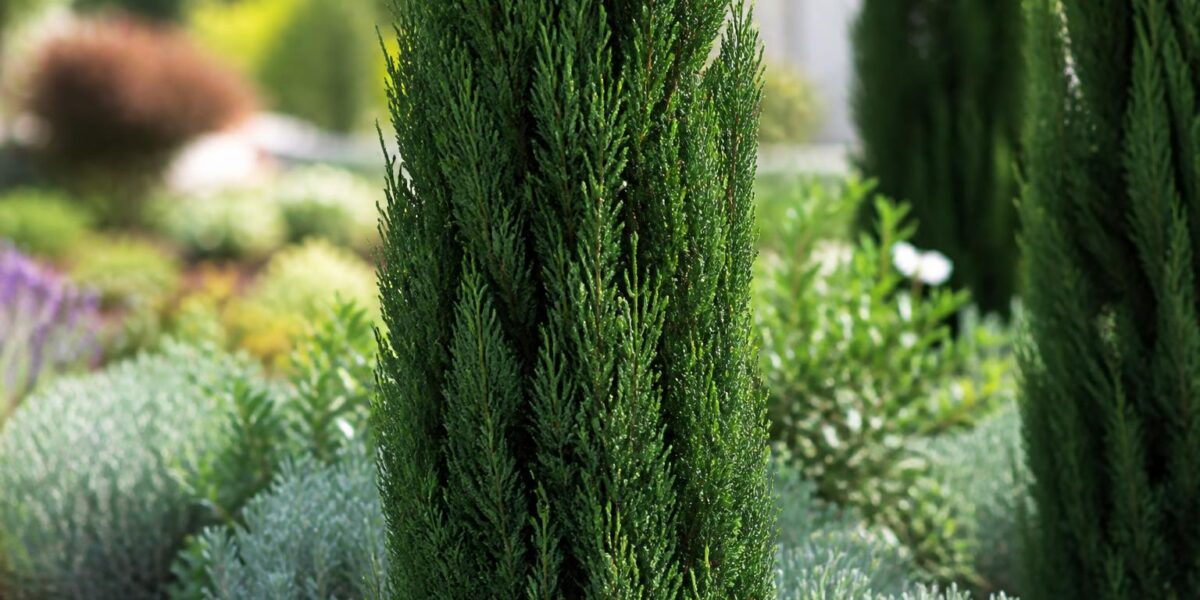
Italian cypress is one of the iconic Mediterranean landscape trees — the tall, narrow, columnar evergreens you see lining driveways in Tuscany, framing villa entrances, and adorning many drought-tolerant landscapes in California, Arizona, and parts of the southern US. The slim columnar form (often 30 to 60 feet tall and only three to five feet wide at the base) makes it a favorite for formal gardens and dramatic vertical accents. This guide walks through the toxicity framing, the practical mechanical caveats, and the landscape considerations for pet households.
Meet Italian Cypress: Cupressus Sempervirens
Cupressus sempervirens is an evergreen conifer native to the eastern Mediterranean, from southern Greece and Turkey through Cyprus and parts of the Middle East. The species name “sempervirens” means “always green,” reflecting its evergreen nature. The tree has been cultivated for thousands of years — it appears in ancient Greek and Roman literature, lines historic graveyards across Mediterranean Europe, and provides timber that is famously durable (the original doors of St. Peter’s Basilica in Rome are reportedly Italian cypress wood, still functional after more than a thousand years).
The columnar form most familiar to gardeners is technically the cultivar ‘Stricta’ (also called ‘Pyramidalis’ or ‘Sempervirens Stricta’), the form selected for its narrow upright habit. Wild Italian cypress is more open and broadly conical. Other cultivars in the trade include ‘Glauca’ (with bluish-green foliage) and dwarf ‘Tiny Tower’ types for smaller gardens. All Cupressus sempervirens forms share the same non-toxic chemistry framing.
Why Italian Cypress Is Considered Safe for Pets
The ASPCA toxic plant database does not list Cupressus sempervirens as toxic. The Cupressaceae family — cypresses, junipers, redwoods, arborvitae — is generally classified as low-toxicity for dogs and cats at typical exposure levels. The plants do contain aromatic essential oils (the source of cypress’s distinctive Mediterranean scent), and these oils can cause mild GI upset in pets that chew foliage in volume, but there is no documented systemic poisoning.
The aromatic oils are concentrated in the foliage and twigs, which is why a pet that chews a sprig may have a brief drooling response or one episode of vomiting from the irritating taste. Whole-tree exposure (a dog walking through a hedge, sniffing the trunk) is essentially risk-free. The plant earns its safe-around-pets reputation for the same reason it earns its place in formal gardens: it is sturdy, common, and chemically non-threatening within reason.
Mechanical and Practical Caveats
Italian cypress has fewer mechanical hazards than spruce or fir species. The foliage is scale-like rather than needle-like, soft to the touch, and not sharp. Cones are small (one inch or less in diameter), woody, and round. Sap is present but in much smaller quantities than spruce or pine, and is less sticky. The realistic pet considerations:
- Aromatic essential oils. Cypress foliage smells distinctly resinous when crushed. Pets that chew significant amounts can have brief GI irritation from the oils. Concentrated cypress essential oil (from aromatherapy products) is more concerning than the live foliage and should never be applied to pets.
- Cones and seeds. Small but woody. A small dog that swallows a few cones can have brief GI upset from the bulk; cones are unlikely to cause obstruction the way larger spruce or pine cones can.
- Pollen. Italian cypress is a notable pollen producer in early spring. Some pets with environmental allergies may sneeze or have eye irritation during pollen season.
None of these issues rise to chemical-toxicity emergency level. They make Italian cypress one of the easier conifers to keep in a pet household.
Italian Cypress in the Landscape
Italian cypress is usually planted as a structural element — pairs flanking entryways, rows along property lines, single specimens punctuating Mediterranean-style gardens. The tree drops minimal debris compared to spruces and pines (small scale-leaf shed rather than long needle drop), so the lawn or paved area underneath stays cleaner. Pets walking past mature Italian cypresses generally do not interact with them much; the tall columnar form gives no low branches to chew.
Pet-related considerations in landscape: avoid placing dog runs immediately under cypress drip lines if the dog is a known plant-chewer (a sprig of fallen foliage can tempt some dogs), and keep concentrated cypress essential oil products away from pets (do not diffuse essential oils continuously in rooms with cats; cats are particularly sensitive to many essential-oil compounds). The companion cypress trees and pets overview covers the broader Cupressus genus, including bald cypress (Taxodium distichum), Monterey cypress, and Leyland cypress hybrids.
What If My Pet Chews Italian Cypress?
If your dog or cat chews Italian cypress foliage, the realistic outcomes are: a bad taste from the aromatic oils, possibly one episode of vomiting, possibly a brief drool. None of these typically require emergency treatment.
Step one: remove plant material from the mouth. Wipe with a damp cloth if there is sap residue. The scale-like foliage is unlikely to lodge in the throat the way stiff needles can.
Step two: monitor. Most pets show no signs after chewing cypress foliage briefly. If mild vomiting or loose stool appears, offer fresh water and watch for the next 12 hours. Persistent vomiting beyond two episodes warrants a vet call, particularly if you suspect a large quantity was eaten or your pet is small.
Step three: think about source. If your pet is chewing cypress foliage repeatedly, consider whether they are reaching trimmings or fallen branches you can clean up. Most dogs lose interest after one bad-tasting bite; cats are generally less interested in cypress foliage than in grass-like or ribbon-like leaves.
When to Call the Vet
Even with a non-toxic conifer, vet contact is appropriate if anything unusual is happening. Your safety net is three calls deep. Start with your own veterinarian — they know your pet’s history. If your regular clinic is closed, the nearest 24-hour emergency vet is the next stop. Two specialty poison hotlines are staffed around the clock and worth keeping in your phone:
- ASPCA Animal Poison Control Center: 888-426-4435 (a per-call consultation fee applies; the team can guide you and call your vet directly with treatment advice).
- Pet Poison Helpline: 855-764-7661 (also fee-based, also 24/7).
Practical reasons to call: a kitten or puppy that swallowed a quantity of foliage, persistent vomiting beyond one or two episodes, blood in stool or vomit, exposure to concentrated cypress essential oil products (oral or topical), or any pet that ate cypress mulch in volume (the bulk and any treatment chemicals on commercial mulch can cause GI upset).
Italian Cypress vs Other Cypress and Juniper Species
The cypress and juniper world includes several species pet owners may encounter. Italian cypress (Cupressus sempervirens) is non-toxic per ASPCA. Monterey cypress (Cupressus macrocarpa) and Leyland cypress (a hybrid of Monterey cypress and Nootka cypress) share the same general framing. Bald cypress (Taxodium distichum), the deciduous cypress of southern US wetlands, is also generally not on toxic lists.
Juniper species (Juniperus) are in the same family. Most junipers are low-toxicity for pets, but juniper berries can cause GI irritation in larger ingestions, and concentrated juniper essential oil can be toxic. Our juniper berries and cats and juniper berries and dogs guides cover the berry question, and a separate guide covers indoor juniper bonsai.
Important distinction: arborvitae (Thuja species), often confused with juniper or cypress in casual conversation, contains thujone — a compound that can cause GI signs and rare neurological signs in larger ingestions. We cover the arborvitae details separately. Yew (Taxus species), often planted as a hedge in cooler climates and visually similar to a young cypress at a distance, is severely toxic to pets — see our yew articles for the species-specific risks.
Mediterranean Garden and Pet-Safe Companions
Italian cypress is the visual anchor of many Mediterranean-style gardens. Pet-safe companion plants that pair well in similar conditions include rosemary (which our rosemary and dogs guide covers), bay laurel (note: bay laurel needs species-specific verification before declaring safe), olive trees (Olea europaea, generally not on toxic lists), and many ornamental grasses.
For pet households building Mediterranean-style landscapes, our dog-safe plant guide and the cat-safe houseplant collection can help you identify safe choices. Italian cypress as the structural element plus one or two pet-safe herb beds plus drought-tolerant ornamental grasses gives you a Mediterranean look that does not require constant pet supervision.
Care Considerations for the Pet-Aware Household
For a yard with mature Italian cypresses and pets: rake fallen foliage seasonally (the small scale-leaf shed is less dramatic than spruce or pine needle drop), avoid spraying pesticides or sap solvents that pets might lick from the bark, and keep concentrated essential oil products away from pets entirely. Standard horticultural maintenance is fine.
For pruning: Italian cypress is often shaped lightly to maintain the columnar form. Trimmings can be hauled to compost or yard waste, ideally not piled where pets play. Fresh-cut foliage is slightly more aromatic and slightly more taste-attractive than weathered foliage on the tree itself, though most pets still avoid it after a single chew.
Frequently Asked Questions
Is Italian cypress on the ASPCA toxic plant list?
No. The ASPCA does not list Cupressus sempervirens (Italian cypress) as toxic to dogs or cats. The Cupressaceae family is broadly low-toxicity, with mild GI irritation possible from chewing aromatic foliage in volume but no documented systemic poisoning.
My dog chewed an Italian cypress sprig and seems fine. Should I worry?
If your dog is acting normal — eating, drinking, alert, no vomiting — there is no urgent reason to worry. Italian cypress is not on the ASPCA toxic list. Monitor for vomiting or loose stool over the next 12 hours. Call your vet if symptoms develop, if your dog is very small or has health conditions, or if you suspect a large amount was eaten.
Is concentrated cypress essential oil safe for pets?
No. Concentrated essential oils — including cypress oil from aromatherapy products — should never be applied to pets and should be diffused with caution around them. Cats are particularly sensitive to many essential-oil compounds and can develop liver toxicity from prolonged exposure. The live tree foliage is not the same hazard as concentrated oil.
Are Italian cypress cones dangerous if my pet swallows one?
The cones are not chemically toxic. They are small (around an inch in diameter) and woody, so a pet that swallows a few may have brief GI upset from the bulk but is unlikely to develop an obstruction. Larger dogs may pass cones uneventfully; small dogs that swallow several cones warrant a vet check.
What other Mediterranean landscape plants are pet-safe?
Confirmed pet-safe Mediterranean choices include rosemary (with species-specific guidance — see our rosemary articles), olive trees (Olea europaea, generally not on toxic lists), and many ornamental grasses. Avoid Spanish lavender, oleander (severely toxic), and sago palms (severely toxic). Consult your vet about specific landscape plans for your yard and pets.


