
Last updated: May 16, 2026
In this article
- Are Leyland Cypress Trees Safe for Pets? The Short Answer
- What Is x Cupressocyparis Leylandii?
- Why Leyland Cypress Is Considered Non-Toxic
- The Real Risks: Foliage, Sap, and Hedge Density
- Privacy Hedge Use and Pet Considerations
- Don’t Confuse Leyland Cypress With Yew
- Cypress Family Cousins for Pet-Safe Hedging
- Symptoms to Watch For After Ingestion
- What to Do If Your Pet Eats Leyland Cypress
- Long-Term Coexistence With a Leyland Cypress Hedge
- Frequently Asked Questions
Are Leyland Cypress Trees Safe for Pets? The Short Answer
Yes, Leyland cypress trees (x Cupressocyparis leylandii) are generally considered safe for pets. The Leyland cypress — possibly the most popular fast-growing privacy hedge in suburban America — is not listed by the ASPCA as toxic to dogs or cats. Its scaly evergreen foliage, dense growth habit, and tolerance of most soils have made it a default choice for property-line screening, and pets in tens of millions of suburban yards live in close quotidian contact with this tree.
Pet owners who reach this page are usually asking one of three questions: “My dog brushes through our Leyland cypress hedge daily, is that fine?” — yes, generally; “My cat chewed a sprig that fell from a recent pruning, is that an emergency?” — no, expect mild GI upset at most; “Is the foliage I’m composting safe to mulch with the dog around?” — generally yes, with mechanical caveats. The realistic risks are mechanical and digestive, not chemical.
What Is x Cupressocyparis Leylandii?
Leyland cypress is an intergeneric hybrid between Monterey cypress (Hesperocyparis macrocarpa, formerly Cupressus macrocarpa) and Nootka cypress (Callitropsis nootkatensis, formerly Chamaecyparis nootkatensis). The original cross occurred accidentally on a British estate in 1888 and the resulting hybrid combined fast growth, columnar form, dense foliage, soil tolerance, and good cold hardiness — making it a near-perfect privacy hedge. The “x” in front of the genus name denotes intergeneric hybrid origin.
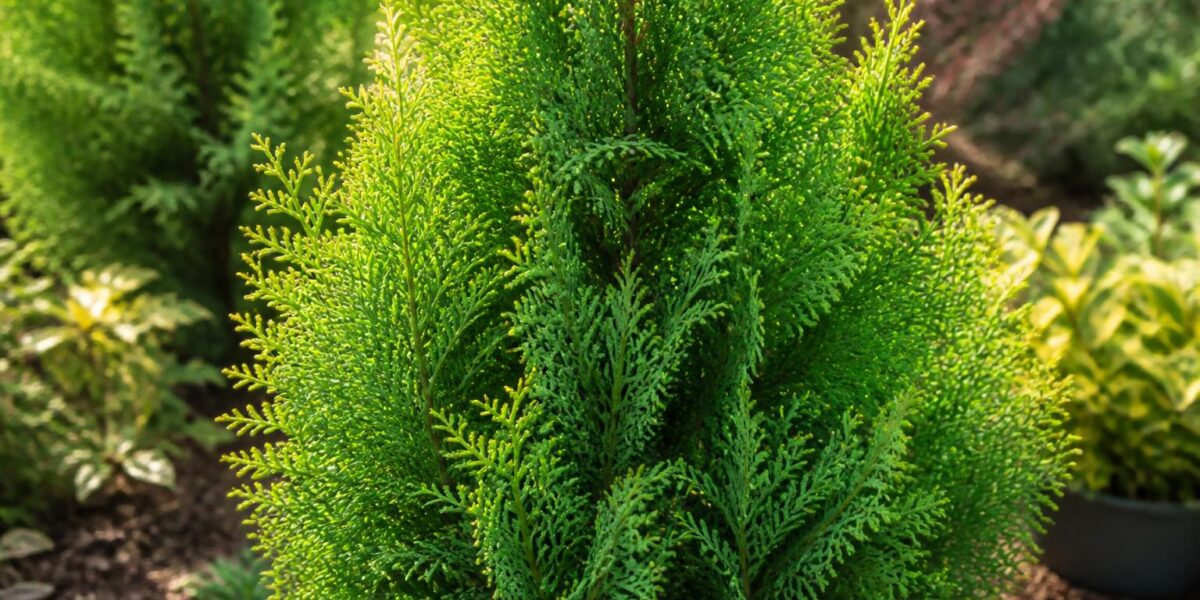
Identification: Leyland cypress has scale-like needles (not the long needle-like leaves of pines or spruces) arranged in flattened sprays of branchlets, dark green to slightly blue-green, fine-textured. The whole tree has a soft, feathery appearance compared to the bristly look of a pine. Cones are small (less than 1 inch), round, brown, with a few visible scales. The tree typically grows 60 to 90 feet tall if untrimmed but is almost universally maintained as a pruned hedge or screen at 8 to 25 feet.
Why Leyland Cypress Is Considered Non-Toxic
Leyland cypress foliage, bark, and wood are dominated by terpene compounds (alpha-pinene, beta-pinene, limonene, camphor-like compounds, and various sesquiterpenes) and resin acids. These compounds are mildly irritant in concentrated form but are not systemically toxic at the doses pets actually consume from chewing branches. The tree does not contain taxine alkaloids (yew), cardiac glycosides (oleander, foxglove), cyanogenic glycosides (cherry laurel), or insoluble calcium oxalate raphides (dieffenbachia, philodendron).
The ASPCA does not include Leyland cypress on its toxic plant list for dogs or cats. Veterinary toxicology references treat cypress family ingestion as a generally mild GI upset case, not an ER-level event. This places Leyland cypress alongside other cypress varieties, Italian cypress, and arborvitae as a low-toxicity landscape conifer.
The Real Risks: Foliage, Sap, and Hedge Density
Realistic Leyland cypress concerns for pets:
- Foliage ingestion. The most common pet-medicine outcome of any cypress chewing is mild GI upset — vomiting, loose stool, decreased appetite for 12 to 24 hours. Most cases self-resolve.
- Mild oral irritation from concentrated terpene compounds in the resinous foliage. Drooling, pawing at the mouth, mild gum redness — usually self-limits within an hour.
- Sap and resin in fur or on paws. Sticky and stubborn but not poisonous. Use warm soapy water; do not use solvents like acetone or paint thinner on a pet.
- Mechanical hedge density. A dog rushing through dense Leyland cypress can pick up minor scratches; a cat hiding in the hedge can collect tangled foliage in fur. These are nuisance issues rather than medical emergencies.
- Dust and sawdust during pruning. Cypress dust contains the same volatile terpenes; brief incidental contact is fine but pets should not be in the area during heavy power-trimming or chipping work — the airborne dust can irritate eyes and respiratory passages.
- Cones. Small woody Leyland cypress cones at ground level are minor choking and dental fracture risks for chewers. Pick up promptly.
Privacy Hedge Use and Pet Considerations
Most Leyland cypress in pet households is not a single specimen tree but a hedge running along a property line. The hedge context introduces some specific behaviors and risks:
- Dogs use hedges to mark and patrol. Daily contact is fine; the foliage is non-toxic. Sap may transfer to fur on the underside but cleans up with warm water.
- Cats use hedges as cover and stalking blinds. Outdoor cats spend hours in dense hedges; same answer — the foliage is non-toxic and incidental ingestion (e.g., from grooming sap-coated fur) is mild GI upset at worst.
- Hedge pruning generates clippings. Fresh clippings on the lawn are tempting for chewers and can be ingested in larger quantities than would happen with intact growing branches. Bag and remove clippings promptly.
- Composting Leyland cypress. Cypress foliage decomposes slowly and the resin lingers; if pets dig in compost piles, mix the cypress clippings deep into the pile or use a closed bin.
- Mulch use. Some commercial cedar/cypress mulches include Leyland cypress wood. The mulch is generally non-toxic but some pets are tempted to chew on chunks; watch for wood splinter ingestion.
Don’t Confuse Leyland Cypress With Yew
Leyland cypress and yew are both dense dark-green hedge plants and can both be planted along property lines. Yew (Taxus species) is SEVERE-tier toxic — taxine alkaloids in needles, bark, and seeds can cause sudden cardiac collapse in dogs and cats with little warning vomiting first. Distinguishing the two is important for pet safety.
Quick differences:
- Leyland cypress: Scale-like foliage in flattened sprays of branchlets — not individual needle-like leaves. Soft and feathery to the touch. Cones small, round, woody, brown with visible scales.
- Yew (Taxus species): Individual needle-like leaves (less than 1 inch), flat, dark green on top with paler underside, attached singly along the stem. Distinctive red berry-like aril (no woody cone). SEVERE-tier toxic.
The scale-like vs needle-like foliage distinction is the easiest tell. If you can run your fingers through dark green hedge foliage and feel small individual flat needles, it is probably yew or a true conifer like spruce — not a cypress family member. If the foliage feels like fine-textured flattened sprays, it is cypress family. See our pillar guides on yew and cats and yew and dogs if uncertain.
Cypress Family Cousins for Pet-Safe Hedging
If Leyland cypress is not the right choice for your specific microclimate, related pet-safe hedge conifers include:
- Italian cypress (Cupressus sempervirens) — Mediterranean classic, taller and more columnar.
- Bald cypress and other cypress varieties — broader cypress-family overview.
- Arborvitae (Thuja species) — close cypress-family relative, slightly different scale-leaf texture.
- Cedar trees and dogs — true cedar (Cedrus) is different from Eastern red cedar (Juniperus virginiana), but both are generally low-toxicity.
- Juniper berries and cats and juniper berries and dogs — junipers are also cypress family but the berries warrant a separate look.
Symptoms to Watch For After Ingestion
Over the 24 to 48 hours after a known or suspected Leyland cypress ingestion, monitor for:
- Vomiting (especially repeated)
- Diarrhea or loose stool
- Drooling, pawing at the mouth, head-shaking
- Decreased appetite or lethargy
- Coughing or repeated gagging
- Straining to defecate or signs of obstruction
- Any blood in vomit or stool
Most healthy adult pets that nibble Leyland cypress never develop noticeable symptoms or have only one mild episode. Persistent or escalating symptoms, blood, or any sign of obstruction warrant a vet visit.
What to Do If Your Pet Eats Leyland Cypress
If your dog or cat eats Leyland cypress foliage, branch tips, sap, or cones:
- Stay calm. Leyland cypress is non-toxic chemically. Mild GI upset is the realistic worst case.
- Remove access by leashing the pet or moving away from the hedge.
- Estimate quantity and note the time.
- Inspect the mouth for any embedded foliage scales or stuck cone fragments.
- Offer fresh water and a small bland meal after any vomiting subsides.
- Call your veterinarian if your pet is small, very young, very old, has a chronic illness, ate a large quantity, or shows symptoms beyond a single mild episode.
For 24/7 toxicology guidance: ASPCA Animal Poison Control Center at (888) 426-4435 (per-call consultation fee applies) or Pet Poison Helpline at (855) 764-7661. Your own vet or the nearest emergency animal hospital should be your first call for any pet showing active symptoms.
Long-Term Coexistence With a Leyland Cypress Hedge
If you have an established Leyland cypress hedge and a pet, sensible long-term management:
- Bag and remove pruning clippings promptly — fresh clippings are more chewable than living foliage.
- Pick up dropped cones from yard areas the pet uses.
- Keep pets out of the immediate work area during power-pruning to avoid airborne dust irritation.
- Avoid pesticide or fungicide treatments on accessible foliage; choose pet-safe formulations if treatment is needed.
- Pair the outdoor hedge with genuinely cat-safe houseplants or items from a dog-safe houseplants guide indoors so the hedge is not the most interesting greenery in the pet’s life.
Frequently Asked Questions
Is Leyland cypress toxic to dogs?
No, Leyland cypress (x Cupressocyparis leylandii) is not on the ASPCA toxic plant list for dogs. The realistic risk from brushing through a hedge or nibbling foliage is mild GI upset (vomiting, loose stool) at worst. Watch for 24 hours and call your vet if symptoms persist.
Is Leyland cypress toxic to cats?
No, Leyland cypress is not chemically toxic to cats either. Cats that hide and stalk in cypress hedges occasionally pick up sticky sap on fur, which can cause mild GI upset if ingested during grooming. Otherwise the species is not a poisoning concern.
Can my dog drink water that has run off a freshly trimmed Leyland cypress hedge?
Run-off water from a trimmed hedge can pick up small amounts of cypress resin and dust. A small drink is usually limited to mild GI upset. The bigger concern is whether the hedge has been recently treated with pesticide or fertilizer — in which case the run-off may contain those products, which can be much more dangerous than the cypress itself.
Are Leyland cypress clippings safe to compost with my dog around?
Yes, with mechanical caveats. The clippings are non-toxic, but fresh aromatic clippings are tempting for some chewers and can be ingested in quantities larger than would happen from intact growing branches. Use a closed compost bin or mix the clippings deep into a pile to discourage exploration.
How do I tell Leyland cypress from yew or other dangerous hedge plants?
Leyland cypress has scale-like foliage in fine-textured flattened sprays — not individual needle-like leaves. Yew has individual flat needles attached singly along the stem and produces a red berry-like aril. If the foliage is scale-like and feels feathery, you are likely looking at a cypress family member. If the foliage is needle-like with red berry-like fruits, treat as yew (SEVERE-tier toxic) until confirmed otherwise. See our yew safety guide for ID details.


