
Last updated: May 16, 2026
In this article
- The Quick Answer: Miltonia Orchids Are Non-Toxic to Cats and Dogs
- Where Miltonia Sits on the ASPCA Non-Toxic List
- Pansy Orchid: Why the Common Name Matters
- What Happens If a Pet Eats a Miltonia Bloom
- Pesticide Residues and Production Chemistry
- Bark, Sphagnum, and the Repotting Mess
- Leaf Tip Burn: Why Healthy Miltonia Looks Fragile
- Where Miltonia Fits Among Pet-Safe Orchids
- Setting Up a Miltonia Without Pet Drama
- If a Pet Has Already Eaten Plant Material
- Curiosity-Proofing Without Removing the Plant
- Frequently Asked Questions
The Quick Answer: Miltonia Orchids Are Non-Toxic to Cats and Dogs
If you have a pansy orchid in bloom and a cat or dog who keeps stepping on the windowsill to investigate, you can stop worrying about the plant. Miltonia orchids — the pansy orchids — are listed as non-toxic to cats and dogs by the ASPCA Animal Poison Control Center. The genus and its close cousin Miltoniopsis (sometimes treated as a separate genus, sometimes lumped under Miltonia in the trade) carry the same green-light status, and both are part of the broader Orchidaceae family that sits comfortably on the safe list. Flowers, leaves, pseudobulbs, and roots do not contain alkaloids, calcium oxalate raphides, latex enzymes, or any other compound documented to poison companion animals at household exposure levels.
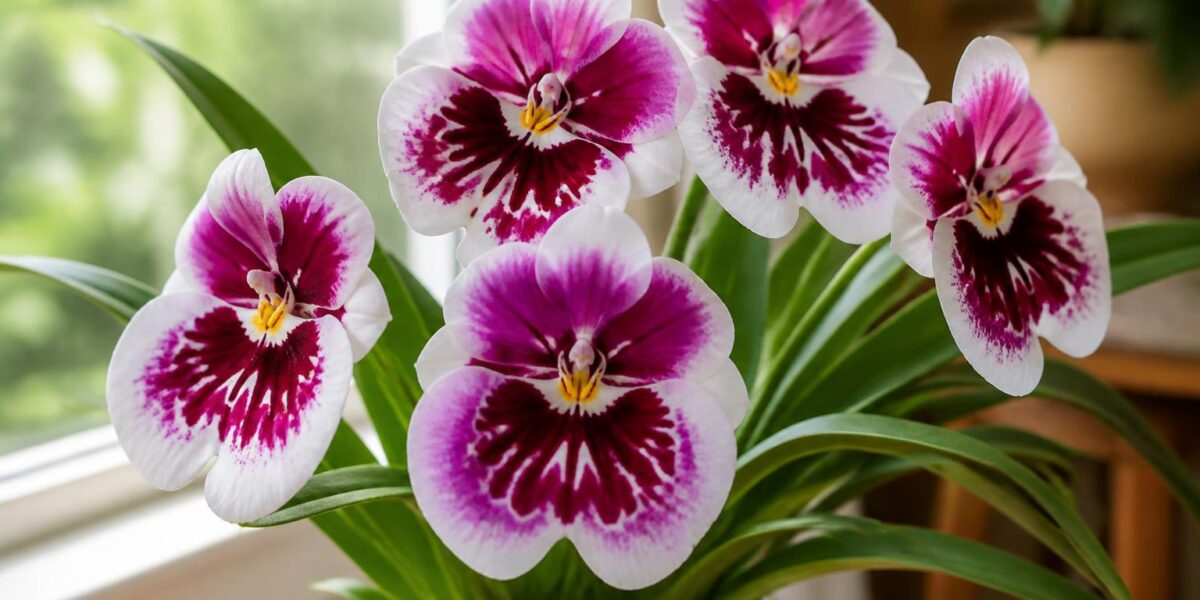
The “pansy orchid” common name is the most useful tell about why Miltonia draws so much pet attention. The flowers are flat-faced and almost a perfect copy of garden pansy blossoms — broad rounded petals, a bold splash pattern in the throat, and a soft fragrance that sometimes carries hints of rose. To a cat or dog those features read exactly like the pansies in the spring garden, which means a pet that has nibbled a pansy outdoors will often try a Miltonia indoors. The good news is that pansies themselves are also non-toxic, and so is Miltonia. Understanding why miltonia orchids are safe for pets lets you keep this striking flower without panic.
Where Miltonia Sits on the ASPCA Non-Toxic List
The ASPCA evaluates plants based on documented toxicology and decades of veterinary case data. Miltonia and Miltoniopsis sit on the non-toxic side along with the rest of the Orchidaceae family — Phalaenopsis, Dendrobium, Cattleya, Cymbidium, Oncidium, Vanda, and the lady slipper orchids. There are no cardiac glycosides like those in foxglove, no needle-like calcium oxalate raphides like those in dieffenbachia or peace lily, no glycoalkaloids like those in solanum vines, no proteolytic latex like the ficin in weeping fig, and no cycasin like the lethal compound in sago palm. Every part of the plant is biochemically benign at the doses any pet would casually ingest.
Miltonia and Miltoniopsis fragrance, when present, comes from gentle rose-and-citrus esters that are perfectly safe for pets to be around. There is no inhalation hazard, no contact dermatitis profile, and no documented allergic reaction in cats and dogs. For broader cross-genus context, see the umbrella article are orchids safe for dogs. Cat-side readers can also visit are orchids toxic to cats, which despite the slug confirms the non-toxic conclusion under ASPCA criteria.
Pansy Orchid: Why the Common Name Matters
The flat-faced flowers of Miltoniopsis and the looser-petaled flowers of true Miltonia have generated an unfortunate amount of common-name confusion in retail. “Pansy orchid” usually means Miltoniopsis (the cooler-growing, frilly version with the strongest pansy resemblance) but can also refer to true Miltonia (the warmer-growing, flatter-petaled version). Both are non-toxic, so for pet safety the label question is academic. For care, it matters more — Miltoniopsis prefers cool nights and intermediate light, while true Miltonia prefers warmer temperatures and tolerates lower humidity.
One naming clarification deserves emphasis: the “pansy orchid” is not a true pansy and not a violet. Garden pansies (Viola tricolor and cultivars) and violets (Viola odorata and others) are also ASPCA non-toxic, so a household that confuses one with the other is not at risk on safety grounds. But never extrapolate the safe label of one plant to another based purely on a shared common name; the toxicology lookups matter.
What Happens If a Pet Eats a Miltonia Bloom
For most pets, very little. A cat that bats off a flower and chews briefly usually shows no reaction. A dog that grabs a fallen bloom and crunches the soft tissue may have a moment of weird-taste face and walk away. Risk arrives when the volume eaten is large enough to act on the gut mechanically — a whole flower spike rather than a single bloom.
Possible symptoms after a larger ingestion include:
- One or two episodes of vomiting in the first several hours
- Soft stool or short-lived diarrhea the next day
- Drooling or lip-smacking right after the meal
- Brief loss of appetite that resolves with the next normal feeding
These reflect the gut’s response to a sudden plant-fiber load, not poisoning. They typically clear without treatment. If symptoms persist beyond about twelve hours, become forceful or bloody, or come with lethargy, abdominal pain, or refusal to drink, escalate to a veterinary call regardless of the non-toxic listing.
Pesticide Residues and Production Chemistry
Miltonia and Miltoniopsis ship through several growers before reaching retail. Production chemistry — systemic insecticides, miticides, fungicides — sits in leaf and pseudobulb tissue for weeks after the plant arrives in your home. Cats that lick freshly misted leaves and dogs that chew older pseudobulbs are the most exposed to those residues.
Practical mitigation: wipe the leaves with a damp cloth on arrival, water generously through the bark medium during the first week to flush, and quarantine new orchids on a high shelf for two to four weeks while residues dissipate. Hobby growers and specialty orchid greenhouses generally use lighter chemistry than big-box production stock, and that is worth a small premium for households with confirmed leaf-chewers.
Bark, Sphagnum, and the Repotting Mess
Miltonias are typically potted in a sphagnum-and-bark mix that holds slightly more moisture than a Cattleya mix but still drains freely. Both materials are choking and intestinal-obstruction risks if a curious dog raids the pot. Bark wedges between molars or lodges in the small intestine of a small breed or puppy. Sphagnum is less hazardous chunk by chunk but still not edible.
The plant body remains the safe part. Keep the medium out of reach. Heavy ceramic outer pots, elevated shelving, and saucer arrangements that catch fallen bark all work. After watering and especially after repotting, a quick floor sweep beats fishing material out of a kitten.
Leaf Tip Burn: Why Healthy Miltonia Looks Fragile
Miltoniopsis pansy orchids are notorious for “accordion pleating” of the leaves — horizontal grooves that develop when the plant gets too dry between waterings. Leaf-tip browning is also extremely common. Both are aesthetic issues, not safety issues, but they can confuse new owners who think the plant is “shedding something” toxic onto the floor. Brown leaf tips are non-toxic dead tissue. Trim them with clean scissors if you want a tidy look. Pleated leaves can be hidden behind newer growth and are a reminder to water more consistently.
The mechanical fragility of pansy orchid leaves does mean they break and fall more readily than the leathery leaves of Phalaenopsis or Cymbidium. A determined cat that bats the foliage can shatter several leaves in a single session. The lost leaves slow the plant’s growth but are not poisonous.
Where Miltonia Fits Among Pet-Safe Orchids
From a toxicology standpoint Miltonia is identical to every other major indoor orchid genus. The differences are care preferences. Miltoniopsis prefers cooler temperatures, indirect light, and steady moisture. True Miltonia tolerates a wider range. Both are easier in greenhouses or sunrooms than in dry centrally heated apartments.
For households building a pet-safe orchid collection, you can mix Miltonia with any other genus on safety grounds. Compare care notes in our companion guides at oncidium orchids safe for pets (Miltonia and Oncidium often intercross, producing the popular Miltonidium hybrids), cymbidium orchids safe for pets, and lady slipper orchids safe for pets.
Setting Up a Miltonia Without Pet Drama
Practical placement and care choices keep both plant and pets happy.
- Pick a bright east window with consistent moderate temperatures. Miltoniopsis especially dislikes hot afternoon sun.
- Use a humidity tray or pebble tray under the pot rather than overhead misting in households with reliable lickers.
- Use a heavy outer cachepot. Miltonias have small pseudobulbs and topple easily, scattering bark.
- Skip leaf-shine sprays and foliar feed mists. None of those products are pet-tested.
- Repot every two years using fresh, sealed-bag orchid bark and sphagnum — never garden soil or scavenged moss.
If a Pet Has Already Eaten Plant Material
The plant is non-toxic, so the situation is rarely an emergency. Remove remaining plant material from reach. Offer fresh water without forcing it. Watch the next twenty-four hours for vomiting, diarrhea, drooling, or unusual quiet behavior.
Lower your threshold to call a veterinarian if your pet is very small, very young, very old, or has a chronic illness. A two-pound kitten that eats a whole flower spike has consumed a much larger fraction of body weight in plant fiber than a thirty-pound dog eating the same volume. The standard contacts are:
- Your regular veterinary practice during business hours
- ASPCA Animal Poison Control Center at 888-426-4435 (consultation fee may apply)
- Pet Poison Helpline at 855-764-7661 (consultation fee may apply)
- Your nearest emergency veterinary hospital after hours for severe symptoms
Do not induce vomiting at home without specific instructions from a veterinarian. Hydrogen peroxide given to cats without supervision can damage the stomach lining; in dogs the timing and dose matter and require professional input.
Curiosity-Proofing Without Removing the Plant
Most pets test an unfamiliar plant once and lose interest. The few who develop a habit need an environmental redirect rather than discipline. Cats with a chewing pattern often crave fiber and texture; a separate pot of pet grass on a low windowsill solves that craving. Dogs that grab fallen petals during play usually settle with a quick training session and a chew toy of similar size.
Round out a pet-safe home with reference lists at cat-safe houseplants and cat-safe flowers. New cat and dog owners can also browse our adopt a cat and adopt a dog hubs for setup tips alongside available pets.
Frequently Asked Questions
Are pansy orchid blooms safe for cats to chew?
Yes. The blooms are non-toxic. A larger ingestion can cause mild stomach upset from fiber volume, but no poisoning will occur.
Why are the leaves on my Miltoniopsis pleated — is the plant releasing something toxic?
No. Pleated leaves are a watering and humidity issue, not a chemistry issue. The leaves are non-toxic regardless.
My dog ate three whole flowers off the spike — should we go to the vet?
Probably not. The flowers are non-toxic. Watch for vomiting or diarrhea over the next twelve to twenty-four hours and call the vet if symptoms appear and persist.
Is Miltonia pollen dangerous like lily pollen?
No. Orchid pollen comes in solid waxy pollinia and is not airborne. The pollen risk that affects cats is unique to true lilies (Lilium and Hemerocallis), not orchids.
Are Miltonidium hybrids (the Miltonia x Oncidium crosses) also non-toxic?
Yes. Both parent genera are non-toxic, and intergeneric orchid hybrids share the safety profile of their parents. The same applies to other Miltonia crosses sold in retail.


