
Last updated: May 16, 2026
In this article
- The Short Answer: Potato Leaves Are Toxic to Pets
- Plant vs. Food: The Critical Distinction
- The Toxic Chemistry: Solanine and Chaconine
- Symptoms of Potato-Plant Poisoning
- What to Do If Your Pet Ate Potato Leaves or Sprouts
- Where Potato Toxin Hides in a Pet Household
- Potato Plants in the Wider Solanaceae Family
- Sprouted Potatoes and Indoor Pets
- Garden Setup for Potato + Pets
- Why Cooking Doesn’t Help with Sprouted or Green Potatoes
- Potato Greening, Chits, and the “Eyes”: A Quick Glossary
- Frequently Asked Questions
The Short Answer: Potato Leaves Are Toxic to Pets
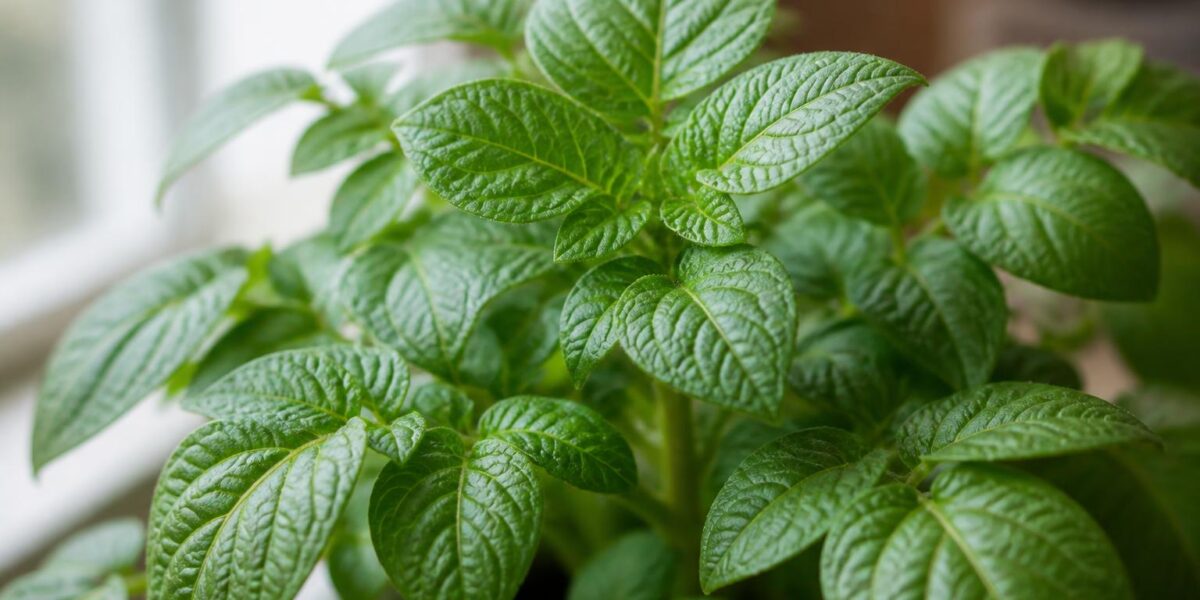
Potato leaves, vines, stems, sprouts (the “eyes” that grow on stored tubers), and any green-skinned potato tubers are toxic to dogs and cats at a mild-to-moderate tier. The green parts and sprouts of the potato plant (Solanum tuberosum) contain solanine and chaconine — steroidal glycoalkaloids that irritate the gastrointestinal tract and, at higher doses, can affect the nervous system and heart. The cooked, plain, fully-skinned tuber is a different story and is the focus of our food-safety articles.
If your pet has eaten potato leaves, vines, sprouted potatoes, or green-skinned tubers, contact your veterinarian, the ASPCA Animal Poison Control Center at 888-426-4435 (per-call fee), or the Pet Poison Helpline at 855-764-7661. Most exposures are mild and self-limiting, but small dogs and cats are at higher per-pound risk and any symptomatic ingestion is worth a professional eye.
Plant vs. Food: The Critical Distinction
This article is about the PLANT and the toxic parts of stored tubers. The cooked, edible tuber is covered separately. The distinction matters because pet owners often search “are potatoes toxic to dogs” and find conflicting answers.
- Plain, peeled, cooked white potato in small amounts is generally moderate-OK. See can dogs eat potatoes and can cats eat potatoes for portion guidance.
- The leaves, stems, vines, sprouts, and any green-tinted skin or flesh contain solanine and chaconine and are toxic per ASPCA framing. This article covers that side.
The shorthand: cooked tuber yes (in moderation); raw plant material, sprouts, and green tubers no.
The Toxic Chemistry: Solanine and Chaconine
Solanine and chaconine are the two dominant glycoalkaloids in the potato plant. Concentrations are highest in:
- Young leaves and stems
- Flowers and the small green fruit (potato berries) that sometimes form
- Sprouts (“eyes”) on stored tubers
- Tubers with green-tinted skin from sun exposure
- Damaged or bruised areas of tubers
The compounds work the same way at high enough doses: they irritate the gastrointestinal lining, disrupt cell membranes, and at extreme exposures interfere with the central nervous system and heart rhythm. Cooking does not destroy meaningful amounts of these compounds, which is why the rule “if it has green or sprouts, do not feed” applies even after boiling or baking.
Symptoms of Potato-Plant Poisoning
Signs typically begin within a few hours of ingestion. Watch for:
- Drooling, vomiting
- Diarrhea, sometimes with mucus or blood
- Loss of appetite
- Lethargy and weakness
- Mild abdominal discomfort
- In larger ingestions: dilated pupils, slow heart rate, tremors, confusion, fever
- Rarely, with very large ingestions: collapse, seizures
Most home-garden and pantry exposures stay in the mild-to-moderate GI range. Severe systemic toxicity is uncommon but possible — especially if a small pet eats many sprouted potatoes or a large amount of green plant material.
What to Do If Your Pet Ate Potato Leaves or Sprouts
Take these steps:
- Remove your pet from the source. Sweep visible plant material or sprouts from the mouth if it is safe to do so.
- Estimate amount eaten. A bite of leaf is different from a bowl of sprouted potatoes.
- Bag a sample of plant or sprouts if identification is uncertain.
- Call your veterinarian. Mention “potato plant,” “potato sprouts,” or “green potato skins.”
- For toxicology backup, call ASPCA APCC at 888-426-4435 or Pet Poison Helpline at 855-764-7661.
- Do not induce vomiting at home unless instructed. Most mild ingestions need only home monitoring with a vet’s blessing.
For symptomatic pets, treatment is supportive: anti-nausea medication, IV fluids if needed, and monitoring until signs resolve. Severe ingestions may require longer in-clinic care.
Where Potato Toxin Hides in a Pet Household
Potato exposure is not just a vegetable-garden issue. Common pet-accessible sources include:
- The vegetable garden itself — pets chewing on leaves, flowers, or pulling young plants.
- Pantries and storage bins — sprouted potatoes are a leading exposure for indoor pets, especially when bins are at floor level.
- Compost piles — potato peels, sprouted tubers, and discarded greens can attract scavenging dogs.
- Dropped peelings during food prep — small pieces hit the floor and pets vacuum them up.
- Garden volunteers — last year’s missed tubers re-sprout on their own and can grow large vines.
Storage in a cool, dark, dry place (not on a sunny counter) prevents most green-skin and sprouting issues. Check stored potatoes every couple of weeks and remove any that have gone green or sprouted before pets can find them.
Potato Plants in the Wider Solanaceae Family
The potato is in the genus Solanum and shares green-parts chemistry with many garden cousins:
- The tomato plant for cats and tomato plant for dogs — same family, similar concerns.
- Tomato leaves overview — companion guide.
- Eggplant plants — same green-parts solanine concern.
- Bell pepper plants — generally safer leaves.
- Chili pepper plants — capsaicin adds an extra irritant layer.
- Wild Solanum cousins: bittersweet nightshade and black nightshade.
The pattern is consistent: the green parts of nightshade-family plants concentrate glycoalkaloids and are at minimum mild-to-moderate toxic to pets.
Sprouted Potatoes and Indoor Pets
Sprouting is the most common source of household pet exposure to potato toxins. A potato that has sat in a pantry for weeks may develop white or green sprouts and a green tint on the skin where light reached it. Both are signs of elevated solanine and chaconine. Discard those potatoes — do not peel and eat them — and especially do not give the trimmings to pets.
If you find a half-eaten sprouted potato in a kitchen corner, treat it as ingestion and call your vet. The amount your pet ate may be small, but a small pet on a green sprout is a credible mild-to-moderate concern.
Garden Setup for Potato + Pets
Many pet households grow potatoes successfully. Practical tips to keep it that way:
- Use a low fence or raised bed to keep dogs out of the rows.
- Remove flowers and any small green “potato berries” that form — these are concentrated and visually appealing to cats.
- Pick up volunteer plants in subsequent years; they can grow vigorously from missed tubers.
- Bag pruned and end-of-season vines for yard waste rather than composting in pet-accessible bins.
- Hill or mulch potato rows well to prevent sun-greened tubers — both better food and safer if your dog digs.
Harvest cleanly, and store the harvest in pet-inaccessible areas.
Why Cooking Doesn’t Help with Sprouted or Green Potatoes
A common owner misconception is that boiling, baking, or frying will neutralize the toxins in sprouted or green potatoes. It does not. Solanine and chaconine are stable across normal cooking temperatures and are only minimally reduced by extended high-temperature processing. The amount removed by home cooking is not enough to make a sprouted or visibly green potato safe for pets — or for people, for that matter.
The practical rule: discard whole tubers that show meaningful greening or sprouting. Trimming around small sprouts on otherwise sound tubers is acceptable for human use according to most food-safety guidance, but the trimmings themselves should never be fed to pets and should go in a sealed bin where pets cannot reach.
Potato Greening, Chits, and the “Eyes”: A Quick Glossary
Owners new to potato growing or storage may run into terms worth knowing for safety:
- Greening — the green tint that develops on tubers exposed to light. Signal of elevated solanine/chaconine. Discard.
- Sprouts (“eyes” growing into shoots) — concentrated alkaloid tissue. Cut deep and discard, or discard whole tuber.
- Chits — small sprouts deliberately encouraged before planting; same chemistry as eyes. Keep away from pets.
- Potato berries — small green tomato-like fruit on potato plants in some seasons. Toxic. Remove.
- Volunteers — plants that grow on their own from missed tubers. Pull or fence off.
None of these are food for pets in any form, even cooked.
Frequently Asked Questions
Is cooked potato safe for my dog?
Plain, peeled, fully-cooked white potato in small amounts is generally moderate-OK for most dogs. See can dogs eat potatoes for portion size and prep details. Avoid butter, oil, salt, garlic, and onion. Never feed raw potato, sprouted potato, green-skinned potato, or peelings.
What about cooked sweet potatoes?
Sweet potatoes are a different species (Ipomoea batatas) — not in the nightshade family — and are generally moderate-safe when cooked plain. The plant has its own caveats; see our companion guide on sweet potato plants if you grow them.
What if my pet ate a green-tinted potato or a sprouted one?
Treat as a mild-to-moderate ingestion. Call your vet, ASPCA APCC at 888-426-4435, or Pet Poison Helpline at 855-764-7661, especially for small dogs, cats, puppies, kittens, or pets with other health issues.
Will boiling sprouts neutralize the toxins?
No. Solanine and chaconine are heat-stable at typical cooking temperatures. The rule is the same: if a tuber is sprouted or green, discard it rather than try to cook the toxin out.
Can my pet’s diet include “potato starch” or “potato flour”?
Refined potato starch and potato flour from properly processed tubers are common in commercial pet foods and are generally considered safe at the doses used in those formulas. The caution in this article is about raw plant material, sprouts, and green tubers — not refined ingredients in formulated diets. If you have specific concerns about an ingredient, ask your veterinarian or a board-certified veterinary nutritionist.
What about french fries, mashed potatoes, or other prepared dishes?
Restaurant and home-prepared potato dishes are typically heavy in salt, oil, butter, garlic, and onion — all of which create independent issues for pets. Even a small piece of properly cooked plain potato is fine in moderation per the food-safety guides, but seasoned dishes should not be fed. Fried preparations also pose pancreatitis risk for some dogs.


