
Last updated: May 16, 2026
In this article
- Are Eggplant Plants Toxic to Pets? The Bottom Line
- The Plant vs the Fruit: A Critical Distinction
- Solanine and Glycoalkaloids: What Makes the Plant Toxic
- Symptoms in Cats and Dogs After Eggplant Plant Exposure
- Identifying Eggplant Plants in the Garden
- What to Do If Your Pet Chews an Eggplant Plant
- Why Pets Sample Eggplant Plants
- Other Solanaceae Family Plants to Watch
- Pet-Proofing a Garden With Eggplant
- Safer Plant Swaps for Edible Pet-Friendly Gardens
- Long-Term Prevention and Vet Routing
- Frequently Asked Questions
Are Eggplant Plants Toxic to Pets? The Bottom Line
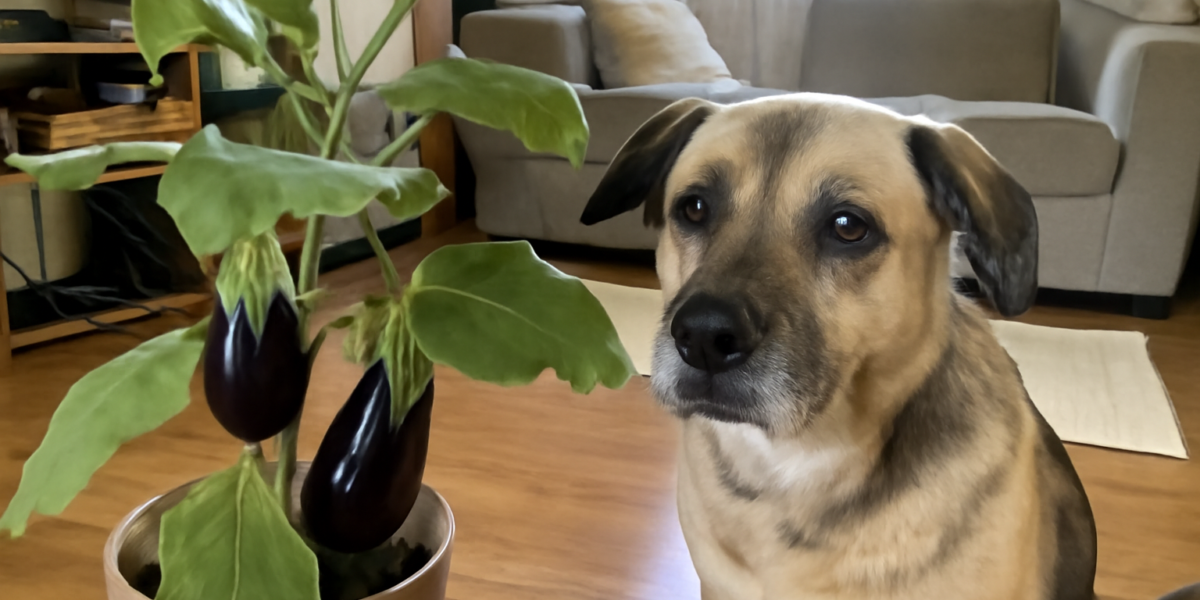
Yes, eggplant plants are toxic to pets when it comes to the leaves and stems, with toxicity in the mild to moderate range. The active compounds are solanine and related glycoalkaloids, the same family of nightshade toxins found in tomato plants and green potatoes. Cats and dogs that chew the foliage commonly develop drooling, vomiting, diarrhea, and a temporarily upset belly. Severe ingestion can produce weakness, dilated pupils, slowed heart rate, and central nervous system depression, but these heavier signs are uncommon in pets that grab a mouthful and then move on.
The botanical name is Solanum melongena, and it sits squarely in the nightshade family Solanaceae alongside tomato, potato, and chili pepper. The important framing for this article is that the PLANT — leaves, stems, flowers, sepals, and unripe green fruit — is toxic, while the ripe purple fruit you slice for dinner is generally safe in moderation. This is the same split familiar to anyone who has read about tomato plants and cats or tomato plants and dogs: the plant is the concern, the fruit is mostly fine. This article focuses on the plant. For whether the cooked food is okay in tiny amounts, that is a separate question handled in the can-dogs-eat and can-cats-eat categories on the food side.
The Plant vs the Fruit: A Critical Distinction
Eggplant fruit is what most people picture — the glossy deep-purple oval that anchors ratatouille and moussaka. The fruit is technically a berry, and once it ripens to its full color, the solanine content drops to negligible levels. Small amounts of cooked ripe eggplant are widely tolerated by dogs and cats, though some pets are sensitive to nightshade family vegetables and develop digestive upset even from the fruit. Always introduce new foods slowly.
The PLANT material — leaves, stems, the green calyx (the leafy cap on top of the fruit), and any unripe green eggplant — contains meaningful amounts of solanine. The young leaves at the growing tips concentrate the highest levels. This is where pet exposure usually happens: a foraging dog brushing through a patch and gnawing a leaf, or a cat batting at low foliage. Telling pet owners that “eggplant is fine” without this distinction creates real confusion, which is why labeling the plant carefully matters.
Solanine and Glycoalkaloids: What Makes the Plant Toxic
Solanine is a steroidal glycoalkaloid that nightshade plants produce as a defense against insects and grazing animals. It works partly by inhibiting acetylcholinesterase — an enzyme involved in nerve signal regulation — and partly by disrupting cell membranes in the gut lining. The result for pets is gastrointestinal irritation as the main effect, with neurological signs only at higher doses.
The same chemistry runs through tomato plants, potato sprouts and skins, and many ornamental nightshades. Eggplant leaves carry slightly less solanine than tomato leaves on average, but enough to cause meaningful symptoms in a determined chewer. Cats are slightly more sensitive than dogs at the same dose, partly due to differences in liver metabolism and partly because their smaller body weight concentrates any ingested toxin. Cooking does not destroy solanine reliably, which is why even cooked unripe eggplant or eggplant leaves are not a safe snack.
Symptoms in Cats and Dogs After Eggplant Plant Exposure
Most pets show signs within a few hours of chewing eggplant foliage, although onset can take longer if the pet ate only a small amount. The classic picture is gastrointestinal: drooling, lip licking, mild oral discomfort, then vomiting and loose stool that may continue into the next day. Some pets develop a tender belly, refuse food for half a day, and seem subdued. Reluctance to eat dinner that evening is one of the most common subtle signs.
Heavier ingestions can produce weakness, ataxia (a wobbly gait), dilated pupils, slowed heart rate, and central nervous system depression. These signs are rare in casual garden encounters and usually occur only if a pet has eaten a substantial volume of leafy material. Symptoms typically begin within two to twelve hours and resolve within twenty-four to forty-eight hours once the plant is out of reach. Most pets recover fully without aggressive treatment. Red flags that warrant a same-day vet call include persistent vomiting, dehydration, lethargy beyond the first day, neurological signs, or any animal that seems unable to swallow normally.
Identifying Eggplant Plants in the Garden
Eggplant is a warm-season annual in most North American climates, grown from seed or transplants and set out after the last frost. The mature plant reaches two to four feet tall with sturdy branched stems that often have small thorny bumps on older specimens. The leaves are large, oval to lobed, gray-green with a fine fuzz on the underside, and three to six inches long. They give off a faintly bitter herbaceous smell when bruised.
The flowers are showy lavender to violet stars about an inch across, with bright yellow central anthers. The fruits are the giveaway. Common Italian-style eggplants are the deep purple oval most shoppers recognize, but cultivars also include long slender Asian eggplants, white eggs (the original “egg” namesake), striped graffiti varieties, and small round Indian types. All cultivars share the same solanine chemistry in the foliage. The leafy cap or calyx that sits on top of the fruit is part of the plant material, not the fruit, and is best removed before any pet sees a fallen vegetable.
What to Do If Your Pet Chews an Eggplant Plant
Stay calm and act methodically. Remove your pet from the plant, take any chewed pieces out of the mouth if you can do so safely, and wipe the muzzle with a soft damp cloth to clear residual sap and chlorophyll. Offer fresh water and, if your pet is willing, a small amount of bland food like plain cooked rice to coat the stomach. Do not try to make your pet vomit at home, do not give milk hoping to neutralize the alkaloids, and do not apply human anti-nausea medications without veterinary guidance.
Take a clear photo of the plant, estimate how much was eaten, note the time, and call your own veterinarian, the ASPCA Animal Poison Control Center at 888-426-4435, or the Pet Poison Helpline at 855-764-7661. The poison-control lines are staffed twenty-four hours a day and can advise on whether you need an in-person visit. If your pet is showing neurological signs like wobbliness, dilated pupils, or unusual drowsiness, treat that as an emergency rather than waiting it out.
Why Pets Sample Eggplant Plants
Pets explore the world by smell and taste, and eggplant foliage smells distinctly herbaceous during the growing season. Puppies and kittens are especially indiscriminate, but adult cats and dogs can develop garden-grazing habits during boring afternoons or when their stomachs feel off. Some animals eat plant matter to settle a queasy gut, others chew because the texture is satisfying, and a few are simply bored.
Eggplant fruits hanging at sniffing height are also tempting. The shape and weight resemble a ball or a chew toy, and a foraging dog may grab a fruit before recognizing the bitter calyx and stem flavor. Once the alkaloid taste hits, most pets drop the fruit, but the brief contact is enough to produce mild oral irritation. Increasing enrichment, structured exercise, and access to safer chewable greens like pet grass reduces garden-grazing dramatically. Our pet-safe garden plants guide can help you redesign a planted area around tolerant species.
Other Solanaceae Family Plants to Watch
The nightshade family Solanaceae is large, and several members share overlapping pet-safety concerns. Tomato plants and tomato plants for cats share the exact solanine chemistry — leaves toxic, ripe red fruit generally safe in moderation. Chili pepper plants add capsaicin to the picture, with active irritation in foliage and especially fruit. Bell pepper plants are the exception in the family, with low capsaicin and low solanine, generally well-tolerated by pets.
Other Solanaceae plants in landscapes include potato (foliage and green tubers toxic), tobacco, jimsonweed, deadly nightshade (a serious toxic concern), petunias (mostly mild), and many ornamental flowering nightshades. If your pet shows sensitivity to any one Solanaceae plant, assume the others may also cause reactions and avoid them across the whole family. Plan your kitchen garden with this awareness in mind.
Pet-Proofing a Garden With Eggplant
You do not have to dig out a productive eggplant patch, but you do need physical distance between the plants and your pet. Fencing the bed with a low garden barrier or growing eggplant in tall raised beds puts foliage and ripening fruit out of muzzle range. Cats benefit from being kept indoors when supervised garden access cannot be arranged, and dogs do best when designated pathways direct them away from the nightshade bed.
Pick up dropped fruit promptly, especially overripe specimens that may have fallen and started to soften. Trim out yellowing lower leaves regularly and dispose of clippings where your dog cannot dig them up. Wash your hands after handling eggplant before greeting your pet, since the leaves leave a faint bitter residue. After the growing season, pull the spent plants and remove all foliage rather than letting it overwinter as accessible compost. Long-line training during the first weeks with a new dog helps establish off-limits zones around vegetable beds.
Safer Plant Swaps for Edible Pet-Friendly Gardens
If eggplant feels like more trouble than it is worth in a pet household, several non-toxic vegetable alternatives keep the garden productive without the alkaloid concern. Cucurbit-family crops are a great place to start: zucchini plants, cucumber plants, pumpkin plants, and squash plants are all ASPCA non-toxic. Bell peppers from the same family are also a much milder alternative.
For aromatic culinary value, the basil, parsley, dill, fennel, and cilantro herbs are all pet-friendly. Whatever you pick, double-check the species against the ASPCA database before bringing it home. Our pet-safe garden plants guide rounds out the picture with broader inspiration. Pet-friendly kitchen gardens are entirely achievable with a little planning around the nightshade family.
Long-Term Prevention and Vet Routing
Living happily with pets and an eggplant patch is mostly about layout and habits. Keep eggplant in beds that are fenced, raised, or otherwise off-limits to your dog, and supervise outdoor cats whenever possible. Walk through your yard from a pet’s-eye view once a season, paying attention to dangling fruit, fallen produce, and freshly pruned material that a curious nose could investigate. Keep your veterinarian’s after-hours line, the ASPCA APCC at 888-426-4435, and the Pet Poison Helpline at 855-764-7661 stored in your phone alongside your nearest emergency clinic address.
If you are still in the early days of bringing a pet home, our adopt-a-cat hub and adopt-a-dog hub cover preparation tips that include garden and plant audits. A short afternoon spent rearranging the eggplant bed is much less disruptive than an emergency visit, and most plant-related accidents are entirely preventable with a little forethought and the right substitutions.
Frequently Asked Questions
Is the ripe purple eggplant fruit safe to feed my dog or cat?
Cooked, ripe eggplant fruit in small amounts is generally tolerated by most pets, but some animals are sensitive to nightshade vegetables and develop GI upset even from the fruit. The leafy green calyx on top should always be removed first. Always introduce a new food slowly and watch for reactions. The food-side question is separate from the plant-toxicity question covered here.
What about the small white-and-purple flowers on the plant?
The flowers contain glycoalkaloids similar to the leaves and are not safe for pets to chew. The amounts ingested from a single bloom are small, but flowers are best treated as part of the toxic plant material rather than a safe garnish.
Are decorative ornamental eggplant varieties safer or more toxic?
Ornamental eggplants and small-fruited cultivars share the same Solanum melongena chemistry as edible varieties. Some ornamental varieties are bitter and may have higher solanine in the fruit itself, since they were not bred for low alkaloid content. Treat all eggplant cultivars the same for pet safety purposes.
How does eggplant compare to tomato plants for pet toxicity?
The chemistry is essentially identical — both contain solanine glycoalkaloids in foliage with safe ripe fruit. Tomato plants tend to have slightly higher concentrations in the youngest leaves, but the symptoms, severity range, and management are the same. Our tomato plant guides cover the parallel picture in detail.
Should I dig out my eggplant if I have a new puppy?
You can usually manage with fencing, raised beds, training, and prompt fruit cleanup. If you have an aggressive plant chewer, a young teething puppy, or a small yard where avoidance is impractical, swapping the eggplant patch for cucurbits or peppers is the simplest long-term solution.


