
Last updated: May 16, 2026
In this article
- Are Tomato Plants Toxic to Cats? The Quick Answer
- What Tomato Plants Look Like and Where Cats Encounter Them
- Solanine and Tomatine: The Toxic Compounds
- Symptoms of Tomato Plant Ingestion in Cats
- How Much Tomato Plant Is Dangerous?
- Are Ripe Red Tomatoes Safe for Cats?
- Tomato Plants for Cats vs Dogs: Different Picture
- What to Do If Your Cat Eats Tomato Plant
- Garden Cats and Tomato Beds: Practical Prevention
- Other Garden Vegetables and Cat Safety
- Cat-Safe Houseplant and Indoor Greenery Choices
- Frequently Asked Questions
Are Tomato Plants Toxic to Cats? The Quick Answer
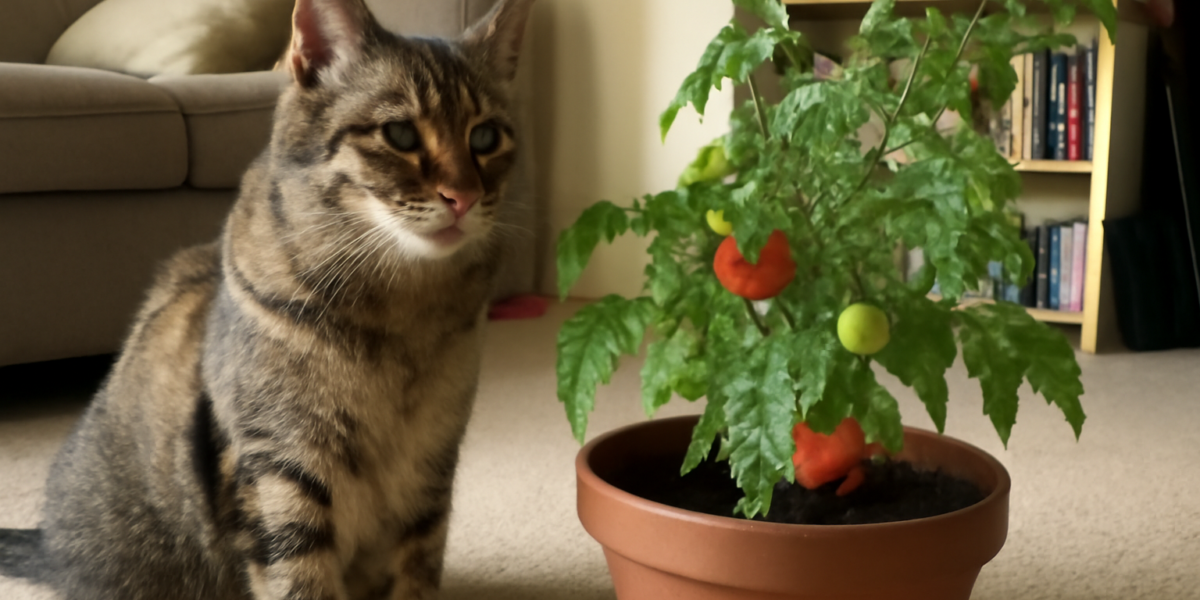
Yes, tomato plants are toxic to cats, with the green parts of the plant — the leaves, stems, vines, and unripe green fruit — being the part to worry about. The ASPCA lists tomato (Solanum lycopersicum) as toxic to cats and dogs because it contains glycoalkaloids called solanine and tomatine, concentrated in the green tissue. The bright red ripe fruit, on the other hand, is generally considered safe in small amounts because solanine drops to negligible levels as the tomato ripens. Most tomato plant ingestions in cats fall into the mild-to-moderate gastrointestinal-upset tier rather than life-threatening.
If your cat has chewed a tomato vine, sampled an unripe green tomato in the garden, or batted at a leaf and licked their paw, watch for vomiting, diarrhea, drooling, lethargy, and weakness over the next several hours. Call your veterinarian, the ASPCA Animal Poison Control Center at 888-426-4435 (fee applies), or the Pet Poison Helpline at 855-764-7661 (fee applies) for guidance, especially if your cat is small, young, or already has health issues. Tomato ingestion is not usually a drop-everything emergency, but it is also not “wait and see” without a phone call.
What Tomato Plants Look Like and Where Cats Encounter Them
Tomato plants are sprawling, hairy-stemmed members of the nightshade family (Solanaceae), with deeply lobed compound leaves and clusters of small yellow flowers that develop into the familiar red, yellow, orange, or purple fruit. Cherry tomatoes, beefsteak tomatoes, heirlooms, plum tomatoes, and grape tomatoes are all the same species; the toxic principles are the same across cultivars.
Indoor and balcony exposure is more common than people realize. Many cat parents grow potted tomatoes on patios and apartment balconies, and a determined cat can absolutely reach a leafy tomato cage on a small balcony. Indoor cats may sample seedlings on a sunny windowsill in spring. The bigger exposure window is the outdoor garden — indoor-outdoor cats and outdoor-only cats often investigate raised beds, and tomato vines grow at exactly the height where a cat will brush against them while patrolling.
Cats are generally less inclined than dogs to actively eat plants, but they do graze, mouth, and chew foliage out of curiosity, especially young cats. Most tomato-plant ingestions in cats are small, exploratory bites rather than full meals. That distinction is part of why most cases stay mild.
Solanine and Tomatine: The Toxic Compounds
The two glycoalkaloids of practical concern in tomato plants are tomatine and solanine. These are bitter, naturally occurring chemical defenses that the plant produces to discourage insect herbivores. They are present throughout the green tissue of the tomato plant — the leaves, stems, suckers, vines, and unripe fruit — and they break down dramatically as the fruit ripens. A fully red, fully ripe tomato has very low alkaloid content; a green, hard tomato still on the vine has more.
In mammals, glycoalkaloids irritate the gastrointestinal tract directly and can also affect the nervous system at higher doses. They are not absorbed efficiently from the gut, which is one reason why most ingestions cause mild GI signs rather than systemic poisoning, but enough plant material can produce more concerning effects including weakness, ataxia, and central nervous system depression.
Cats process some plant compounds differently than dogs do because of their unique liver enzyme profile, but for tomato glycoalkaloids the species difference is less dramatic than it is for, say, essential oils. A cat ingesting tomato leaves will look much like a small dog ingesting tomato leaves: GI signs first, with worse signs only at larger ingestions.
Symptoms of Tomato Plant Ingestion in Cats
The most common signs after a cat chews tomato foliage or eats unripe tomato are gastrointestinal: drooling, vomiting, soft stool or watery diarrhea, abdominal discomfort, and a temporary loss of appetite. Some cats develop pawing at the mouth or lip-smacking from oral irritation. These typically appear within a few hours and resolve within a day or two with supportive care.
With more substantial ingestions, additional signs become possible. Watch for noticeable lethargy, weakness, ataxia (wobbly walking), pupil changes, and in rare cases CNS depression where a cat seems unusually sluggish or unresponsive. Slow heart rate has been reported with very large glycoalkaloid exposures. These higher-tier signs are uncommon in pet cats but warrant immediate veterinary attention if they appear.
Sap contact during chewing can also cause local oral irritation. If your cat has been investigating a tomato plant, you may see them rubbing their face, drooling more than usual, or pawing at the mouth even without eating much. A gentle wipe of the mouth and a phone call to your vet is the right first move.
How Much Tomato Plant Is Dangerous?
There is no published mg-per-kilogram threshold for tomato glycoalkaloid toxicity in cats, and the dose required to cause more than mild GI signs is generally large relative to a cat’s typical exploratory chewing. A single small leaf nibble in an average adult cat is very unlikely to cause more than a brief upset stomach. Eating a substantial amount of leaves or several unripe green tomatoes moves the picture toward an actual vet visit.
Body size and overall health matter. Kittens, small adult cats, and cats with chronic health issues have less margin for any toxicity. A cat with kidney disease, liver disease, or a sensitive digestive tract can be hit harder by an ingestion that another cat might shrug off.
The honest takeaway is the same one we apply across the toxic-plant database: when you cannot estimate the amount, treat it as enough to matter and call. A short consult with a poison-control hotline costs less than a hospital workup that you needed because you waited.
Are Ripe Red Tomatoes Safe for Cats?
Ripe red tomato fruit is generally considered safe for cats in very small amounts. Solanine and tomatine drop to negligible levels as the fruit ripens fully, and a small bite of ripe tomato in a tuna salad or a piece of pizza topping is not going to poison an adult cat. That said, ripe tomato is not a recommended cat food.
Cats are obligate carnivores. They do not need produce in their diet, and tomato is acidic enough to cause some cats stomach upset even when it is fully ripe. There are also worries about salt, sugar, garlic, onion, and other ingredients in tomato-based human foods (sauces, soups, ketchup), most of which are far more concerning than the tomato itself. Garlic and onion in particular are toxic to cats, so a cat who licks pasta sauce off the floor has a meaningful exposure to think through, even setting tomato aside.
If you want to share a small amount of plain ripe tomato with a cat who is curious about it, a tiny piece of the flesh (no skin, no seeds for the picky eaters, no salt or seasoning) is unlikely to cause a problem. Most cats will sniff and walk away.
Tomato Plants for Cats vs Dogs: Different Picture
Tomato plants are toxic to both species, and the underlying chemistry is the same. The practical risk pictures differ mainly because of behavior. Dogs are more likely to actually eat plant material in volume and to swallow whole unripe tomatoes off the vine. Cats are more likely to nibble foliage and play with leaves without consuming much. Our companion piece on tomato plants and dogs covers the dog-side picture in more detail.
Body mass is the other difference. A cat weighing eight to twelve pounds is hit harder per gram of plant material than a sixty-pound dog, so what looks like a “small ingestion” can land relatively heavy in a cat. Conversely, a dog who eats half a tomato plant has eaten far more total alkaloid than a cat who chewed two leaves.
For households with both species, the practical garden management is similar: fence the tomato bed, train both species away from it, and pick fallen unripe fruit promptly. Garden cats benefit from a designated cat-grass corner that satisfies the urge to graze without sending them into the tomato cage.
What to Do If Your Cat Eats Tomato Plant
The first move is to remove your cat from the plant and check their mouth gently for any plant material still stuck. Wipe the muzzle with a damp cloth if there is sap residue. Try to estimate how much your cat actually ate — a single chewed leaf, a quarter of a green tomato, several leaves — because the amount changes the urgency.
Then call. Tell the veterinary team or poison-control hotline what your cat looks like (species, weight, age, health background), what part of the tomato plant was ingested, the approximate amount, and the time of ingestion. Have the plant or a clear photograph available so the staff can confirm species. Do not induce vomiting at home unless directly instructed by a veterinary professional.
If you are advised to bring your cat in, expect an exam, possibly anti-nausea medication, IV fluid support if vomiting has been substantial, and observation. Bloodwork is a reasonable precaution after a larger ingestion to make sure the kidneys and liver are not affected. Most cats who get prompt care recover fully within a day or two.
Garden Cats and Tomato Beds: Practical Prevention
If you grow tomatoes and have outdoor cats, a few practical steps go a long way. Caging tomato plants in tall sturdy enclosures keeps cats from brushing against the foliage. Mulching with materials cats dislike — coarse pine bark, citrus peels, or commercial cat-deterrent mulch — discourages garden patrols. Picking up fallen unripe fruit daily eliminates a common ingestion source.
For indoor and balcony tomato gardening, position pots out of jumping range. A leaf-tasting attempt during a five-minute moment of cat curiosity is hard to predict; physical separation is more reliable than training. Consider growing tomatoes in a screened area or sun room your cat does not access.
Providing safe forage for your cat redirects the urge to taste plants. A tray of cat grass, catnip, or cat-safe herbs near a sunny window often satisfies that grazing instinct. Our roundup of cat-safe houseplants includes multiple options that give your cat something to chew on without risking poisoning.
Other Garden Vegetables and Cat Safety
While we are on the subject of tomato plants, several other common garden plants share the nightshade family and similar concerns. Potato plants (Solanum tuberosum) contain solanine in their green parts and unripe tubers. Eggplant foliage is similar. Pepper plants in the same family have lower alkaloid content but still benefit from cat-safe positioning. Rhubarb is in a different family but has its own toxicity concern; see our rhubarb leaves and cats guide.
Onion, garlic, leek, and chive plants in the allium family are dramatically more dangerous to cats than tomato is, causing oxidative damage to red blood cells. A garden cat investigating a chive bed is a much bigger problem than a cat sniffing a tomato vine. If your garden has alliums, that is the priority for fencing.
Many ornamental landscape plants are also toxic. Junipers, holly, mistletoe, and several flowering bulbs are all on the cat-watch list. Sibling articles in our toxic-plant series cover the seasonal landscape plants you are most likely to encounter, and our pet-safe garden plants roundup is a practical starting point if you are designing a cat-friendly outdoor space.
Cat-Safe Houseplant and Indoor Greenery Choices
If you want indoor greenery and have cats who chew, the safer move is to fill your home with plants the ASPCA lists as non-toxic. Spider plants, parlor palms, Boston ferns, calatheas, peperomias, hoyas, and African violets are all reasonable starting points. None of these will give you a tomato harvest, but they offer the visual richness most plant lovers are looking for without the alkaloid worry.
For a tomato-like culinary experience, you can grow tomatoes outdoors or in a separate room and bring just the harvested fruit indoors. Caged ripe red tomatoes on the kitchen counter pose negligible risk to a curious cat compared with a vining tomato plant in the living room.
Our team at Walk Me Home Rescue’s cat adoption page regularly walks adopters through indoor-greenery decisions before homecoming day. A short plant audit catches most of the avoidable risks. Cats vary individually in how much they chew plants; you cannot tell on day one which kind of cat you have, so default to safe options for the first few months.
Frequently Asked Questions
Are ripe tomatoes safe for cats to eat?
Ripe red tomato fruit in tiny amounts is generally considered safe for cats, because the solanine and tomatine drop to negligible levels as the fruit ripens. Cats do not need tomato in their diet, though, and tomato can cause mild stomach upset in some individuals. Avoid sauces and prepared tomato products that contain garlic, onion, or salt.
What about cherry tomatoes specifically?
Ripe cherry tomatoes are the same species and follow the same rules: ripe fruit is low risk, green unripe cherry tomatoes contain solanine and are the part to keep away from cats. The whole-fruit shape of cherry tomatoes also creates a small choking risk in kittens or rapid eaters.
Will my cat get sick from licking tomato sauce off the floor?
Plain ripe tomato sauce in a tiny amount is unlikely to cause poisoning, but most prepared tomato sauces include onion, garlic, and salt — all of which are concerning for cats. If your cat has licked up a meaningful amount of pasta sauce, call your vet for guidance, focusing the conversation on the allium content rather than the tomato.
How long after my cat eats tomato leaves should I worry?
Symptoms typically appear within a few hours of ingestion. Most mild cases resolve within 24 to 48 hours. Persistent vomiting, lethargy lasting more than a day, blood in stool, or any neurological signs warrant a same-day vet visit.
Are there any pet-safe tomato-like plants I can grow indoors?
For visual appeal without toxicity, consider non-fruiting houseplants that the ASPCA lists as non-toxic to cats. If you want fruit, growing tomato plants in a separate cat-free room or outdoor space and bringing only the harvested ripe fruit indoors is the safest approach. Always check ASPCA toxicity lists before adopting a new plant into a home with cats.


