
Last updated: April 10, 2026
In this article
Yes, Rhubarb Leaves Are Toxic to Cats
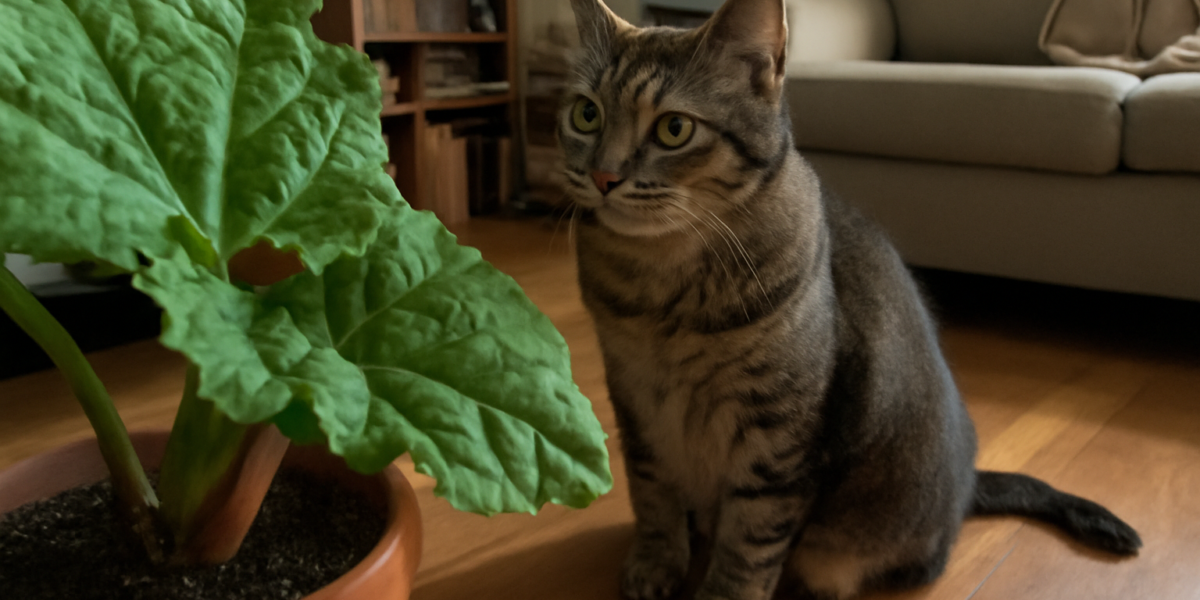
Rhubarb leaves are toxic to cats, and the risk is significant enough that any confirmed or suspected ingestion should be treated as a veterinary emergency. The problem lies in soluble calcium oxalates and oxalic acid, which the leaves contain in high concentrations. When a cat eats rhubarb leaves, these compounds bind with calcium in the bloodstream and form crystals that can damage the kidneys, cause painful swelling in the mouth and throat, and disrupt normal muscle and nerve function.
Rhubarb (Rheum rhabarbarum) is a common garden plant in temperate climates, valued for its tart red stalks used in pies and jams. The stalks are safe for humans when cooked, but the leaves are toxic to humans and pets alike. In the garden, cats can encounter rhubarb by brushing against the large leaves, chewing on them out of curiosity, or nibbling on fallen leaf fragments. The good news is that the bitter taste discourages most cats from eating large amounts voluntarily.
Severity rating: Moderate to severe. Even small amounts can cause oral irritation and kidney strain. Large ingestions can be life-threatening without prompt care.
Why Oxalates Are So Dangerous
Rhubarb leaves contain two main forms of oxalates that affect cats differently:
- Insoluble calcium oxalate crystals: Sharp, microscopic crystals that embed in the soft tissues of the mouth, tongue, and throat, causing immediate pain and swelling.
- Soluble oxalates: Oxalic acid and related compounds that are absorbed into the bloodstream, bind with calcium in the body, and form new crystals in the kidneys and urinary tract.
The soluble oxalates are the bigger systemic threat. Once absorbed, they can cause a drop in blood calcium levels (hypocalcemia), which affects muscle function and the heart. They also crystallize in the kidneys, causing acute kidney injury that may become permanent if treatment is delayed.
Clinical Symptoms of Rhubarb Leaf Poisoning
Symptoms usually appear within a few hours of ingestion. Early signs reflect the oral irritation from insoluble crystals:
- Excessive drooling
- Pawing at the mouth
- Swelling of the lips, tongue, or throat
- Vocalizing from mouth pain
- Refusing to eat or drink
- Vomiting
More serious systemic symptoms develop as soluble oxalates are absorbed:
- Lethargy and weakness
- Tremors or muscle twitching
- Difficulty walking or standing
- Increased thirst and urination, then decreased urination (kidney damage)
- Blood in the urine
- Abdominal pain
- Seizures
- Collapse
The most concerning long-term effect is acute kidney injury, which can be fatal or lead to lasting kidney disease. Cats are already prone to kidney problems, and oxalate damage can accelerate that process significantly.
What to Do If Your Cat Ate Rhubarb Leaves
Treat this as an emergency. Take these steps immediately:
- Remove any remaining leaf material from your cat’s mouth and the surrounding area.
- Check for obvious swelling in the mouth and offer cool water to soothe oral irritation.
- Do not induce vomiting at home. Vomiting brings oxalate crystals back through the throat and can worsen damage.
- Call your veterinarian or emergency clinic immediately. Do not wait to see if symptoms develop.
- Contact the ASPCA Animal Poison Control Center at 888-426-4435 or the Pet Poison Helpline at 855-764-7661 for 24/7 guidance.
- Transport your cat to the vet even if you only suspect ingestion.
The sooner treatment begins, the better the prognosis. Every hour counts with oxalate toxicity because kidney damage becomes harder to reverse as time passes.
Veterinary Treatment for Oxalate Toxicity
Veterinary care for rhubarb leaf poisoning is aggressive and supportive. Treatment typically includes:
- Induced vomiting under veterinary supervision if ingestion was very recent and the cat is stable
- Activated charcoal (though it does not bind oxalates well, it may help with other compounds)
- Aggressive IV fluid therapy to protect the kidneys and flush oxalates
- Calcium supplementation to counter hypocalcemia from oxalate binding
- Blood work and urinalysis to monitor kidney function and calcium levels
- Anti-nausea medications
- Pain management for oral irritation and abdominal discomfort
- Hospitalization for 48 to 72 hours with continuous monitoring
Cats with early, aggressive treatment typically recover well. Those with delayed care may develop lasting kidney damage and require ongoing management, including prescription diets and regular blood work.
Preventing Rhubarb Exposure
If you grow rhubarb or have it in your yard, take steps to keep cats away from it:
- Fence off rhubarb plants with cat-proof barriers
- Keep harvested leaves out of compost piles cats can access
- Dispose of leaves directly in sealed trash
- Supervise outdoor cats in garden areas
- Consider growing rhubarb in a greenhouse or contained space if you have free-roaming cats
- Check for wild or volunteer rhubarb plants in any yard you cat-sit or visit
Rhubarb is just one of several oxalate-containing plants to watch for. Others include Dieffenbachia, philodendron, pothos, peace lily, and elephant ear. Our guides on mistletoe and cats, pine needles and cats, and cedar and cats cover more common household plant dangers.
Emergency Vet Signs
Do not delay veterinary care if your cat:
- Is drooling heavily or has visible mouth swelling
- Cannot eat or drink comfortably
- Is vomiting or has diarrhea
- Seems weak, wobbly, or disoriented
- Has tremors, twitching, or seizures
- Has blood in urine or has stopped urinating
- Is a kitten, senior, or has existing kidney issues
For immediate toxicology advice, call the ASPCA Animal Poison Control Center (888-426-4435) or Pet Poison Helpline (855-764-7661). Both are staffed by veterinary toxicologists who can provide treatment recommendations to your regular vet in real time. Time is critical with rhubarb exposure, so save these numbers in your phone before you need them.
Frequently Asked Questions
How much rhubarb leaf is toxic to a cat?
Even small amounts can cause oral irritation and systemic symptoms in cats because of their small size and sensitivity to oxalates. Any confirmed or suspected ingestion warrants immediate veterinary attention.
Are rhubarb stalks safe for cats?
The red stalks contain much lower oxalate levels than the leaves and are not significantly toxic. However, they offer no nutritional benefit to cats and can still cause stomach upset. Avoid sharing rhubarb in any form.
Can cooking neutralize oxalates in rhubarb leaves?
No. Cooking does not destroy oxalates, and rhubarb leaves should never be fed to pets or humans regardless of preparation.
Are other oxalate-containing plants equally dangerous?
Some are even more dangerous. Dieffenbachia, pothos, and peace lily contain highly concentrated insoluble calcium oxalate crystals that cause severe oral pain and swelling.
What are the long-term effects of oxalate poisoning in cats?
Cats that survive severe oxalate toxicity may develop chronic kidney disease, requiring dietary management and regular veterinary monitoring for the rest of their lives. Early treatment dramatically improves the prognosis. For more plant dangers, see our guide on delphinium and cats.


