
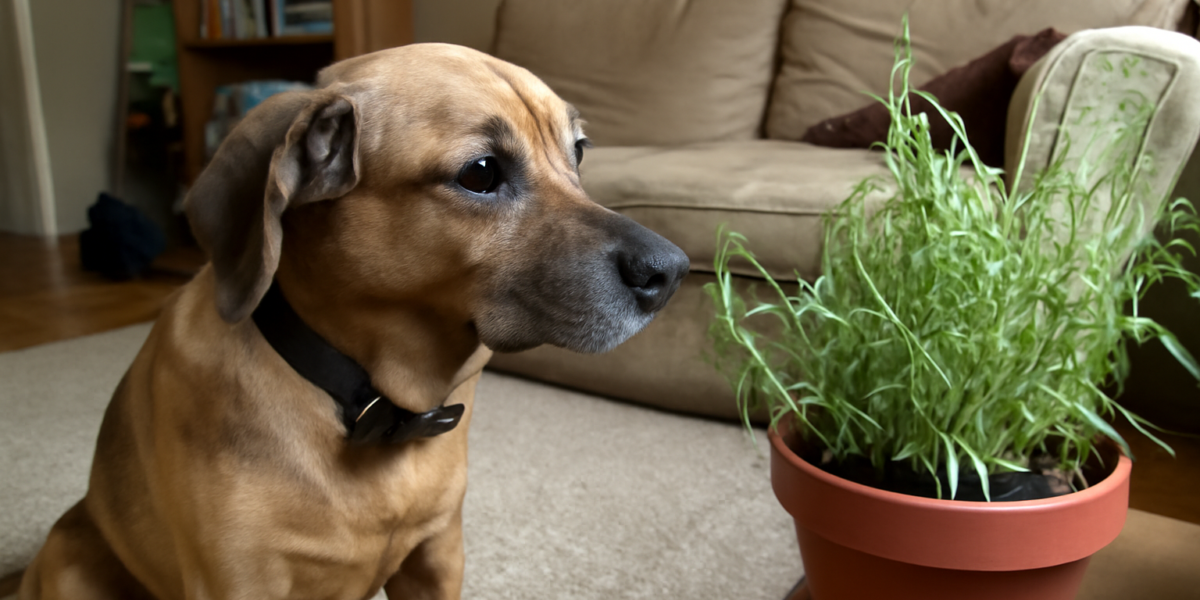
Tarragon and Pets: Mildly Toxic with One Specific Compound to Know
Culinary tarragon (Artemisia dracunculus) is in the mildly toxic range for both cats and dogs, with most fresh-leaf or culinary ingestions causing nothing worse than transient gastrointestinal upset. The compound that gets the most attention in tarragon discussions is estragole (also called methylchavicol), an aromatic phenylpropanoid that has been studied for theoretical hepatic concerns at chronic high doses. For ordinary pet exposures — a stolen pinch of seasoned food, a nibble from a kitchen herb pot — estragole-related toxicity is not a realistic worry.
In this article
- Tarragon and Pets: Mildly Toxic with One Specific Compound to Know
- What Tarragon Is and Why the Species Matters
- The Estragole Question
- Symptoms in Cats and Dogs After Tarragon Ingestion
- How Cats and Dogs Differ Here
- What to Do If Your Pet Eats Tarragon
- Other Artemisia Species to Be Aware Of
- Tarragon Compared with Other Garden Herbs
- Designing a Pet-Friendly Tarragon Garden
- When the Real Issue Is Something Else
- Frequently Asked Questions
Where the picture changes is with very large ingestions of fresh tarragon (a dog or cat that destroyed an entire established plant), with concentrated tarragon essential oil exposure, or with related Artemisia species that have different chemistry. If your pet has had any of those exposures, contact your veterinarian, the ASPCA Animal Poison Control Center at 888-426-4435, or the Pet Poison Helpline at 855-764-7661 (consultation fees apply).
What Tarragon Is and Why the Species Matters
Culinary tarragon — sometimes called French tarragon or true tarragon — is Artemisia dracunculus, a slender perennial herb with narrow lance-shaped leaves and a distinct anise-like flavor. It is the tarragon you find in spice racks, in classic French sauces like béarnaise, and in herbal vinegars. French tarragon rarely produces viable seed and is propagated by division or cuttings.
The genus Artemisia is much larger than just culinary tarragon, and it includes:
- Russian tarragon (Artemisia dracunculoides) — coarser flavor, sometimes substituted for French tarragon
- Mugwort (Artemisia vulgaris) — roadside weed with stronger essential oil chemistry
- Wormwood (Artemisia absinthium) — significantly higher thujone content, more concerning
- Sweet wormwood (Artemisia annua) — used in traditional medicine
- Sagebrush (Artemisia tridentata) — North American shrub
The article focuses on culinary tarragon, but if your pet may have gotten into a different Artemisia species, the chemistry can be considerably different. Wormwood in particular contains higher concentrations of thujone and is more concerning. Identify the species before assuming culinary-tarragon safety applies.
The Estragole Question
Estragole (methylchavicol) is the principal aromatic compound in tarragon and is responsible for the herb’s anise-like character. Estragole has been studied in laboratory animal models at chronic high doses for potential hepatic effects, including liver enzyme changes and theoretical carcinogenic concerns. These studies have been done at doses far higher than any pet would encounter from culinary or accidental garden exposure.
For ordinary pet exposures, the practical estragole concern is essentially zero. A dog or cat that nibbles a fresh tarragon leaf, or that eats a piece of food with tarragon seasoning, is not at meaningful risk for hepatic effects. The compound matters more for chronic high-dose intake (think laboratory study conditions) than for occasional household exposure.
The compound becomes more relevant at concentrated essential oil levels and in chronic supplementation situations. If a pet ingests a tarragon essential oil bottle, eats a large quantity of high-essential-oil leaves over a short period, or is given herbal supplements containing concentrated tarragon extract, the effective estragole dose climbs into a range where the studies start to matter.
Symptoms in Cats and Dogs After Tarragon Ingestion
Most pets that eat fresh tarragon show mild gastrointestinal symptoms or none:
- Mild vomiting, usually one or two episodes
- Soft stool or short-lived diarrhea
- Reduced appetite for one or two meals
- Drooling immediately after the ingestion
- Mild lethargy
These signs typically resolve within 24 hours. Cats may show somewhat more pronounced or prolonged symptoms than dogs after equivalent exposure because of their slower metabolic clearance of phenolic and phenylpropanoid compounds.
For very large ingestions, essential oil exposure, or wormwood/mugwort/other Artemisia ingestion, more serious signs are possible, including weakness, ataxia, tremors, breathing changes, and changes in liver function over the following days. Wormwood in particular has caused seizure activity in dogs and cats with significant exposure due to thujone content.
How Cats and Dogs Differ Here
The cat-versus-dog gap with tarragon is similar to the gap with other essential-oil-bearing herbs. Cats process phenolic and phenylpropanoid compounds more slowly than dogs because of reduced hepatic glucuronyl transferase activity. The same fresh-leaf nibble that produces a transient dog stomach ache can produce a longer or more pronounced cat reaction.
For tarragon specifically, this means that small ingestions are similarly forgivable in both species, but larger ingestions and any essential oil exposure should be treated more seriously in cats. Read our companion guides on the related Mediterranean herbs for a feel of the pattern: thyme and cats, oregano and cats, sage and cats, and marjoram and pets.
Tarragon does not have the high carvacrol or thymol content that makes oregano specifically more concerning than thyme. The chemistry is different (phenylpropanoid rather than phenolic), so the comparison is approximate. The general “cats are more sensitive than dogs to essential-oil-type compounds” pattern still applies.
What to Do If Your Pet Eats Tarragon
For a small fresh-leaf nibble in a healthy adult pet, monitoring at home is usually appropriate. Provide fresh water, hold off on the next meal until any nausea has settled, and watch over the next 12 to 24 hours.
For larger ingestions, ingestion of related Artemisia species other than culinary tarragon, dried herb consumed in quantity, or essential oil involvement:
- Move your pet away from the plant or product.
- Identify exactly what was ingested. The botanical species name matters more than the common name for tarragon questions.
- Call your veterinarian or one of the poison control services.
- Bring the plant or product label to the appointment.
- Do not induce vomiting at home.
If you suspect the plant might have been wormwood (Artemisia absinthium) rather than culinary tarragon, treat the situation as more urgent. Wormwood has caused seizures in dogs and warrants prompt veterinary attention even when the pet looks fine in the moment.
Other Artemisia Species to Be Aware Of
Because Artemisia is a large genus, the common-name confusion is significant. Wormwood (Artemisia absinthium) contains substantially higher levels of thujone than culinary tarragon and has been associated with more serious neurologic toxicity in pets. Mugwort (Artemisia vulgaris) contains thujone as well, although usually at lower levels than wormwood.
Sagebrush species (Artemisia tridentata and relatives) are common in arid regions of the western United States and have caused toxicity in livestock with chronic high-dose grazing exposure. For household pets, sagebrush exposure tends to be casual rather than chronic, but a dog that has eaten significant amounts of sagebrush leaves is worth a veterinary call.
Russian tarragon is similar to French tarragon in toxicity profile but has lower estragole content and different overall chemistry. It is sometimes substituted for culinary tarragon in cooking, although the flavor is different.
Tarragon Compared with Other Garden Herbs
For broader context, our companion guides cover the rest of the herb cabinet. Thyme and dogs covers a non-toxic Lamiaceae cousin. Oregano and dogs covers a mildly toxic cousin. Sage and dogs covers culinary and ornamental Salvias. Marjoram and pets covers a mild Origanum cousin.
Other useful reads include rosemary and dogs, rosemary safety in cats, mint and cats, mint safety in dogs, and lavender and dogs. The pattern across these articles is consistent: fresh herbs in modest amounts are usually fine, concentrated essential oils are a separate and more important concern, and species-level identification matters.
For broader landscape planning, browse pet-safe garden plants and cat-safe houseplants. Most household herb gardens can be made pet-friendly with sensible placement and avoidance of essential oil products.
Designing a Pet-Friendly Tarragon Garden
French tarragon is a relatively well-behaved garden herb. The plants are small, slow-growing, and not particularly attractive to chewing pets. Most pet encounters with tarragon are casual rather than destructive.
Practical setup tips:
- Identify ornamental Artemisia species in your garden before assuming culinary tarragon safety applies
- Keep essential oil bottles in cabinets, not on counters
- Avoid wormwood ornamentals in yards with pets that wander
- Cover compost bins where herb cuttings concentrate
- Watch for “fines herbes” or “herbes de Provence” mixes that may include tarragon alongside other herbs
For pet parents bringing home a new dog or cat, our dog adoption hub and cat adoption hub include preparation resources that fold plant safety into the bring-them-home checklist. A few minutes of plant inventory before homecoming day prevents most avoidable issues.
When the Real Issue Is Something Else
One scenario worth flagging is “tarragon vinegar” or other tarragon-flavored products that may contain alcohol, vinegar, or other ingredients more concerning than the herb itself. Pets that ingest tarragon-vinegar dressings or alcohol-based herbal extracts are dealing with multiple risk factors at once.
Similarly, some traditional liqueurs, particularly absinthe, are based on wormwood and contain alcohol at high concentrations. A pet that gets into absinthe is dealing with alcohol toxicity primarily, with thujone exposure as a secondary concern. Triage on the alcohol first.
“Tarragon-scented” candles, soaps, and personal care products vary widely in actual essential oil content. Read labels for “concentrated essential oil” or specific compound names if you are unsure. The product matters more than the scent name.
Frequently Asked Questions
Is tarragon poisonous to dogs and cats?
Culinary tarragon (Artemisia dracunculus) is in the mild concern range for both species. Small fresh-leaf encounters and culinary amounts are usually well tolerated. Larger ingestions can cause GI upset, and concentrated essential oils are more concerning.
What is estragole and should I worry about it?
Estragole is the principal aromatic compound in tarragon. Studies in laboratory animals have raised theoretical hepatic and carcinogenic concerns at chronic high doses. For ordinary pet exposures (a stolen pinch of food, a nibble of fresh leaf), estragole is not a realistic worry. The compound matters more in concentrated essential oil and chronic supplementation contexts.
Is wormwood the same as tarragon for pet purposes?
No. Wormwood (Artemisia absinthium) is a different species in the same genus, with significantly higher thujone content and more concerning chemistry for pets. Wormwood ingestion has caused seizures in dogs and cats. If your pet may have gotten into wormwood rather than culinary tarragon, treat the situation as more urgent.
Can I cook with tarragon around my dog or cat?
Yes. Cooking with tarragon, including using fresh sprigs in sauces, is fine in homes with pets. The fresh and dried herb at culinary amounts is well within safe limits for most healthy animals. Concentrated essential oils are the form to keep separate.
What about tarragon supplements or herbal extracts for pets?
Concentrated herbal extracts and supplements containing tarragon should not be given to pets without veterinary guidance. The estragole and essential oil concentrations in supplements can be much higher than in the fresh herb, and the doses are not designed for animal physiology.


