
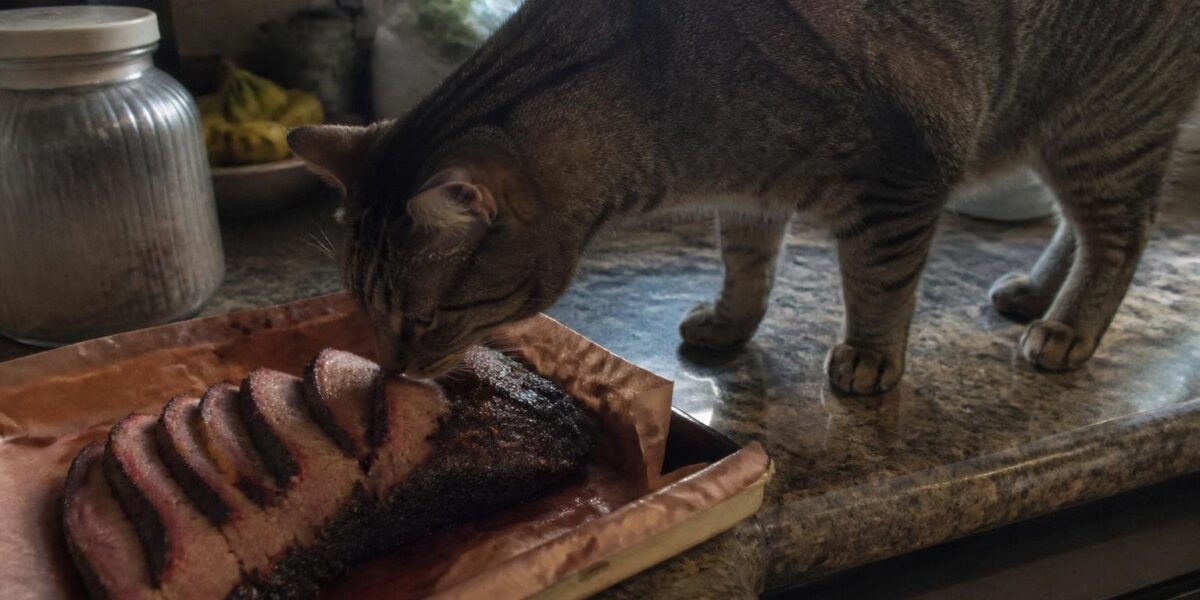
The Short Answer
Can cats eat brisket? Only plain, lean, cooked brisket in moderation. Brisket is a beef cut, so the meat itself is not toxic to cats, but it is a fatty cut that is usually smoked, salted, or coated in spice rubs and barbecue sauce. Those preparations make typical brisket unsafe to share. A small bite of plain, trimmed, well-cooked brisket is acceptable as an occasional treat, but the fat and seasonings are the reasons to keep it rare and carefully prepared.
In this article
The brisket on most tables is heavily seasoned, so the version you are eating is almost never appropriate for your cat. If you want to share, you will need to set aside a plain, unseasoned piece before adding rubs or sauce.
Is Brisket Safe for Cats?
Beef, including brisket, is a species-appropriate protein for cats, who are obligate carnivores. The meat provides protein and amino acids cats need, including some taurine. So in its plainest form, brisket is not poisonous.
The catch is that brisket is a fatty cut, and it is almost always cooked in ways that add risk. Smoked brisket is high in salt and smoke compounds. Barbecue brisket is coated in sugary, often onion- and garlic-laden sauce. Dry-rubbed brisket carries spices and salt. All of these additions are harmful to cats, and they are difficult to remove once cooked into the meat.
Only plain brisket, trimmed of fat and cooked without seasoning, should ever be offered, and even then only in small amounts. Because brisket is traditionally cooked low and slow to break down its fat and connective tissue, the finished meat is still richer than leaner cuts.
Brisket is also a cut with a pronounced fat cap and heavy internal marbling, which is what gives barbecue brisket its tenderness and flavor. For a cat, that marbling is the problem rather than the appeal. Even the leanest portion of a cooked brisket carries more fat than a trimmed cut of steak or a piece of poultry, so the trimming step is doing more work here than it would with a naturally lean meat. The richness is built into the cut, not just added in the cooking, which is why brisket sits in the moderation-only category even when prepared perfectly plainly.
The Fat, Salt, and Seasoning Risks
Brisket brings several overlapping concerns:
- High fat: Excess fat can cause digestive upset or pancreatitis, with symptoms like vomiting, diarrhea, and abdominal pain.
- Salt: Smoked and seasoned brisket is high in sodium, which can cause excessive thirst and, in larger amounts, salt toxicity.
- Barbecue sauce: Sweet sauces often contain onion and garlic powder, which are toxic to cats, plus heavy sugar.
- Spice rubs: Paprika, pepper, and other spices can irritate a cat’s stomach.
Because so many brisket preparations include onion and garlic, it is worth remembering that these alliums damage a cat’s red blood cells and should always be avoided. You can learn more about why onions are toxic to cats, a danger that applies to the powders hidden in many barbecue rubs and sauces.
How to Serve Brisket Safely
If you want to offer a rare taste, prepare it the right way:
- Use plain, unseasoned beef. Choose a piece cooked without rub, sauce, or smoke if possible.
- Trim the fat. Cut away the fatty layers and use only the leanest meat.
- Cook thoroughly. Make sure it is fully cooked, with no seasoning added.
- Cool and cut small. Let it cool and chop into tiny, bite-sized pieces.
- Keep the portion tiny. A teaspoon of lean meat is plenty.
Introduce it slowly and watch for any stomach upset over the next day, particularly because brisket is richer than leaner cuts. If your cat handles a small taste well, you can offer it occasionally, but it should never replace a meal or become a habit.
Keep in mind that the trimming step matters more with brisket than with leaner meats. Brisket has a thick fat cap and significant marbling, and leaving that fat on can easily turn a small treat into a heavy, rich serving. Slicing away the visible fat and choosing only the leanest interior portion keeps the treat gentle on your cat’s stomach and reduces the risk of a pancreatitis flare-up.
Why Barbecue Brisket Is the Riskiest Version
Of all the ways brisket is prepared, barbecue is the most dangerous for cats. Barbecue brisket combines several hazards in one bite: a sugary, salty sauce that frequently contains onion and garlic powder, a smoky crust heavy in sodium, and the cut’s natural fat. A cat that licks barbecue sauce or eats a saucy piece could be exposed to alliums, excess salt, and sugar all at once.
If your cat manages to eat barbecue brisket, the sauce is the part to worry about most because of the onion and garlic. Provide fresh water, watch closely, and contact your veterinarian, especially if your cat ate a meaningful amount or shows signs of illness over the following days.
The smoke ring and bark that barbecue enthusiasts prize add yet another layer of concern. The dark, flavorful crust on a smoked brisket is where salt, spice rub, and smoke compounds concentrate most heavily, so a cat that nibbles the exterior is getting the most intense dose of everything you want to keep away from them. Even setting aside the sauce, the bark alone makes smoked brisket a poor choice. If a cat does eat barbecue brisket, remember that allium symptoms from the sauce can take a day or more to appear, so continue watching for pale gums, weakness, and lethargy beyond the first evening.
How to Set Aside a Cat-Safe Portion
If you are cooking brisket and want your cat to share in the moment, the trick is to plan ahead before any seasoning goes on. Brisket is usually rubbed, brined, or sauced early in the process, so once cooking is underway it is hard to find a truly plain piece. The simplest approach is to cut off a small chunk of raw, lean meat before you season the rest.
Cook that piece separately in plain water or in a dry pan with no oil, salt, or spices, until it is fully done. Let it cool, trim away any fat, and chop it into tiny pieces. This gives your cat a genuinely safe taste of beef while the rest of your brisket gets the full treatment for the human table.
This habit of setting aside a plain portion works for almost any meat dish. It lets your cat feel included at mealtime without exposing them to the salt, sugar, onion, and garlic that make the seasoned version unsafe. A little forethought turns a risky food into a safe shared moment.
If cutting raw meat in advance is not practical, another option is to keep a small stash of plain cooked meat on hand specifically for your cat. A few pieces of unseasoned cooked chicken or trimmed beef stored in the refrigerator give you something safe to offer whenever your cat comes begging during a barbecue or a brisket dinner. That way you are never tempted to hand over a saucy, seasoned scrap just because nothing plain is available at the moment.
Leaner Beef Treats for Cats
Since brisket is fatty and usually seasoned, leaner beef options are easier to share safely. Plain cooked steak trimmed of fat is a cleaner choice, and nutrient-dense organ treats like beef heart provide taurine in moderation.
For everyday treats, lean poultry such as chicken or turkey is gentle and easy to digest. Keep all treats plain, cooked, and boneless, and limit them to about 10 percent of daily calories to protect your cat’s balanced nutrition.
Ready to welcome a cat into your home? Visit our adopt a cat hub to meet rescue felines hoping to find a loving family.
Frequently Asked Questions
Can cats eat smoked or barbecue brisket?
No. Smoked brisket is very salty, and barbecue versions often contain onion, garlic, and sugar. Only plain, unseasoned, lean brisket is appropriate in tiny amounts.
Is the fat on brisket bad for cats?
Yes. Brisket fat can cause digestive upset or pancreatitis. Always trim away the fat and offer only lean meat in small portions.
My cat ate barbecue brisket with sauce. What should I do?
Provide fresh water and contact your veterinarian, since barbecue sauce often contains onion and garlic. Watch for vomiting, lethargy, and pale gums over the next few days.
How often can my cat have plain brisket?
Only occasionally and in tiny amounts because of the fat content. Leaner cuts make better regular treats, and your vet can advise on what suits your cat.
Can cats eat the smoky crust or bark on brisket?
No. The bark is where salt and spice rub concentrate the most. Stick to a plain, unseasoned, trimmed piece of the lean interior if you share any at all.
Is corned beef brisket safe for cats?
No. Corned beef is brisket that has been brined and cured in heavy salt and spices, making it even saltier than smoked or barbecue brisket. It is one of the least suitable forms of beef to share, so it should be kept entirely away from your cat.
How can I tell if a piece of brisket is lean enough for my cat?
Choose meat from the leaner flat portion rather than the fatty point, and trim away any visible fat and the fat cap entirely. The piece you offer should look like clean, lean muscle with no white marbling streaks if possible. When in doubt, a naturally leaner meat like plain chicken or trimmed steak is an easier safe choice.


