
Last updated: March 31, 2026
In this article
Can Cats Eat Cashews? What You Need to Know Before Sharing
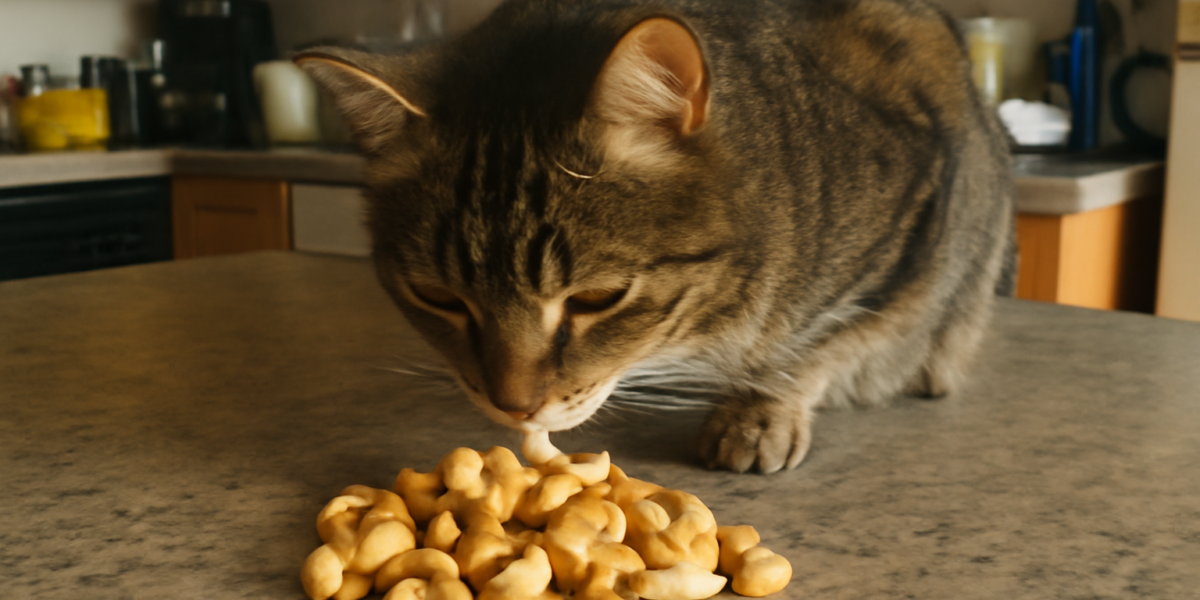
Cashews are a popular, creamy-tasting nut that many people enjoy as a snack. If you’ve been munching on a handful and your cat wanders over with that curious look, you might wonder: can cats eat cashews? The straightforward answer is that cashews are not toxic to cats, so a tiny piece is unlikely to cause an emergency. However, cashews are far from an ideal treat for felines and can actually cause health issues if fed regularly or in large amounts.
Cats are obligate carnivores with metabolic systems designed for processing animal protein and fat. Nuts like cashews don’t fit naturally into this biological framework, and the high fat content, calorie density, and potential additives in cashews make them a risky snack for your cat. In this article, we’ll explore exactly why cashews aren’t great for cats, what could happen if your cat eats them, and what better alternatives you can offer instead.
Are Cashews Safe for Cats?
Cashews are not on any list of foods toxic to cats. Unlike macadamia nuts, which are known to be toxic to dogs and potentially harmful to cats, cashews do not contain compounds that are inherently poisonous to felines. A single cashew or a small fragment is very unlikely to cause a serious health problem in most healthy adult cats.
That said, “not toxic” is a low bar, and it doesn’t make cashews a good or appropriate treat for cats. There are several reasons why cashews are a poor nutritional fit for feline biology, even though they won’t cause immediate poisoning.
High fat content: Cashews are high in fat, with approximately 12 grams of fat per one-ounce serving (about 18 cashews). While cats do need fat in their diet, they need it from animal-based sources that come packaged with the amino acids and other nutrients their bodies are designed to process. The plant-based fats in cashews are not nutritionally equivalent to the animal fats cats thrive on, and excessive fat intake from any source can lead to digestive upset, pancreatitis, and weight gain.
High calorie density: At roughly 157 calories per ounce, cashews are one of the more calorie-dense snacks you could offer your cat. For a 10-pound cat that needs only 200 to 250 calories per day, even a small handful of cashews represents a massive caloric load. Five or six cashews could account for 25 to 30% of a cat’s daily calorie needs.
Plant-based protein: While cashews contain protein (about 5 grams per ounce), it’s plant-based protein that lacks the complete amino acid profile cats need. Cats require specific amino acids, particularly taurine and arginine, that are found abundantly in animal tissue but are absent or insufficient in nuts.
Sodium and seasonings: Many commercially available cashews are roasted and salted, flavored with garlic or onion powder, honey-glazed, or coated with various seasonings. Salted cashews deliver far more sodium than cats should consume, and garlic and onion flavorings are toxic to cats. Only plain, unsalted, unflavored cashews should ever be considered for cats.
For more on what nuts and similar foods cats can and can’t eat, see our articles on whether cats can eat peanut butter and whether cats can eat coconut.
What Happens If Your Cat Eats Cashews
The effects of a cat eating cashews depend on the amount consumed, the type of cashews (plain vs. seasoned), and your individual cat’s digestive sensitivity.
A single cashew or small piece: For most cats, eating a single plain cashew or a small fragment will produce no noticeable effects. The amount of fat and calories from one cashew is too small to cause problems in the short term. You may not need to take any action beyond making a mental note not to make it a regular occurrence.
Several cashews: If your cat ate a small handful of cashews (five to ten), you may notice mild to moderate digestive upset. The high fat content can cause nausea, vomiting, diarrhea, or soft stools. Some cats may also experience gas or abdominal discomfort. These symptoms are usually self-limiting and resolve within 12 to 24 hours, but you should monitor your cat and ensure they stay hydrated.
A large amount: If your cat somehow consumed a large quantity of cashews, the high fat load is the biggest concern. Excessive fat intake can trigger acute pancreatitis, an inflammation of the pancreas that causes severe abdominal pain, persistent vomiting, diarrhea, loss of appetite, lethargy, and potentially life-threatening complications. Pancreatitis requires veterinary treatment and can be a serious, painful condition.
Salted or flavored cashews: Salted cashews introduce excessive sodium, which can cause increased thirst, frequent urination, and in larger amounts, sodium ion toxicity with symptoms including vomiting, diarrhea, tremors, and seizures. Cashews flavored with garlic or onion are directly toxic, as allium compounds damage red blood cells and can cause hemolytic anemia. Honey-roasted or sugar-coated cashews add unnecessary sugar that can contribute to weight gain and metabolic issues.
Cashew butter: Cashew butter has the same nutritional concerns as whole cashews, with the added consideration that its smooth, sticky texture can be a choking hazard for cats. It can adhere to the roof of the mouth and throat, making it difficult for a cat to swallow properly. Cashew butter may also contain added salt, sugar, or oils that are not appropriate for cats.
Nutritional Mismatch: Why Cashews Don’t Fit Feline Needs
To understand why cashews aren’t suitable for cats, it helps to look at the fundamental differences between what cashews provide and what cats need.
Cats evolved as strict carnivores, meaning their entire metabolic system is optimized for digesting and utilizing animal-based nutrition. Their short digestive tracts, highly acidic stomach environments, and specific enzyme profiles are all adapted for processing meat, organs, and bone. They have limited ability to process plant-based foods, including nuts.
Protein needs: Cats require approximately 2 to 3 grams of protein per pound of body weight per day, and this protein should ideally come from animal sources. The protein in cashews is plant-based, incomplete in its amino acid profile, and less bioavailable to cats. It cannot substitute for the animal protein cats need to maintain muscle mass, organ function, and overall health.
Fat metabolism: Cats can metabolize fat efficiently, but they’re designed to process animal fats, which contain specific fatty acid profiles that support their biology. The fat in cashews is primarily unsaturated plant fat, which, while not harmful in small amounts, doesn’t provide the same nutritional value as animal fat for cats. Cats specifically need arachidonic acid, an omega-6 fatty acid found in animal tissue but not in nuts.
Carbohydrate handling: Cashews contain approximately 8 to 9 grams of carbohydrates per ounce. Cats have limited carbohydrate-processing capacity, with lower levels of carbohydrate-digesting enzymes and a metabolic preference for deriving energy from protein and fat. The carbohydrates in cashews provide energy that cats don’t need and can contribute to weight gain.
Missing essential nutrients: Cashews contain zero taurine, inadequate arachidonic acid, and no preformed vitamin A, all of which are nutrients cats must get from their diet and which are only found in adequate quantities in animal-based foods.
Portion Guidelines If You Choose to Share
If your cat shows interest in cashews and you’d like to offer a tiny taste, here’s how to do so as safely as possible.
Choose plain, unsalted, unflavored cashews only: This is non-negotiable. Salted, roasted, flavored, honey-glazed, or any other variety of prepared cashews contains additives that can be harmful to cats. Only raw or dry-roasted plain cashews without any added ingredients should be considered.
Limit to a tiny amount: For an average-sized cat, a single cashew broken into two or three small pieces is the maximum appropriate portion. This provides a taste experience without a meaningful caloric or fat impact. For small cats, half a cashew is plenty.
Offer very rarely: Cashews should not be a regular treat. If you offer cashew at all, limit it to once a week at most, and ideally even less frequently. There are so many better treat options for cats that there’s really no reason to make cashews a recurring snack.
Monitor after first exposure: The first time your cat tries cashew, watch for any signs of digestive upset or allergic reaction over the following 24 hours. If your cat tolerates it well, you can offer it again on a future occasion. If you notice vomiting, diarrhea, or any other concerning symptoms, cross cashews off the treat list.
Never offer as a meal replacement: Cashews should never replace any portion of your cat’s regular, balanced cat food. They are a novelty at best, not a nutritional contribution to your cat’s diet.
Safer and More Nutritious Alternatives
Rather than offering cashews, consider these alternatives that are more aligned with your cat’s nutritional needs and biological design.
Cooked chicken or turkey: Small pieces of plain, boneless, skinless cooked chicken or turkey breast are high in protein, low in fat, and contain the animal-based amino acids cats need, including taurine. Most cats find poultry irresistible, and it’s one of the most nutritionally appropriate treats you can offer.
Cooked fish: Small portions of plain cooked salmon, tuna, or white fish provide protein and omega-3 fatty acids that support skin, coat, and cardiovascular health. Keep portions small and don’t rely on fish as the primary treat, as excessive fish consumption can lead to thiamine deficiency and mercury accumulation.
Freeze-dried meat treats: Commercially available freeze-dried chicken, salmon, turkey, or other single-protein treats offer concentrated flavor and nutrition in a shelf-stable, convenient format. Many cats go wild for these, and they’re far superior to any nut-based snack.
Lickable cat treats: Meat-based puree tubes provide a creamy, indulgent treat experience that’s specifically formulated for feline nutrition. They’re an excellent substitute if you’re looking for something that feels like a special indulgence for your cat.
Small amounts of cooked egg: Plain scrambled or hard-boiled egg provides high-quality protein and is generally well-tolerated by cats. A teaspoon of scrambled egg makes a nutritious occasional treat.
For a complete list of foods that pose dangers to cats, check out our comprehensive guide to foods toxic to cats.
When to Call the Veterinarian
A cat that ate a single plain cashew almost certainly doesn’t need veterinary attention. However, there are scenarios where you should contact your vet.
Call your veterinarian if your cat consumed a large quantity of cashews, particularly if they were salted, flavored, or contained garlic or onion seasoning. Your vet can advise on monitoring and whether any intervention is needed based on the specific amount and type consumed.
Seek veterinary attention if your cat develops signs of pancreatitis after eating cashews, including persistent vomiting, severe diarrhea, abdominal pain (evidenced by hunching, reluctance to be touched on the belly, or vocalization), loss of appetite, lethargy, or fever. Pancreatitis can be a serious condition requiring hospitalization, IV fluids, pain management, and supportive care.
Contact your vet if your cat shows signs of an allergic reaction after eating cashews, such as hives, facial swelling, intense itching, vomiting, or difficulty breathing. While true nut allergies are uncommon in cats, they can occur and may be serious.
Reach out to your veterinarian if your cat consumed cashews coated with chocolate, as chocolate is toxic to cats. Dark chocolate is more dangerous than milk chocolate, but all chocolate should be treated as a potential toxicity risk.
Seek advice if your cat ate salted cashews and develops signs of sodium toxicity, including excessive thirst, frequent urination, vomiting, diarrhea, lethargy, tremors, or seizures. Small cats are more susceptible to sodium overload than larger cats.
Frequently Asked Questions
Can cats eat cashew butter?
Cashew butter is not recommended for cats. While it shares the same basic nutritional concerns as whole cashews (high fat, high calories, plant-based protein), its sticky, paste-like texture creates additional risks. Cashew butter can adhere to the roof of a cat’s mouth, their tongue, and throat, potentially causing distress and difficulty swallowing. In rare cases, it could contribute to choking. Many commercial cashew butters also contain added salt, sugar, or oils that are not appropriate for cats. Some brands may include xylitol, an artificial sweetener that is extremely dangerous for pets. If your cat accidentally licks a small amount of plain cashew butter, it’s unlikely to cause a problem, but it should not be offered intentionally as a treat.
Are any nuts safe for cats?
Most common nuts, including cashews, almonds, pecans, and pistachios, are not technically toxic to cats, but none of them are recommended as treats due to their high fat content, calorie density, and lack of nutritional alignment with feline dietary needs. Macadamia nuts are the most concerning, as they are known to be toxic to dogs and their effects on cats are not fully studied, so they should be strictly avoided. Walnuts can sometimes harbor mold that produces tremorgenic mycotoxins, making them particularly risky. The bottom line is that no nuts are “good” for cats. Cats have zero nutritional need for nuts, and the risks, including digestive upset, pancreatitis, weight gain, and potential toxicity, outweigh any pleasure your cat might get from the occasional nibble. Stick to meat-based treats that actually serve your cat’s biology.
My cat stole a cashew off the counter. Should I be worried?
If your cat ate a single plain cashew, there is almost certainly no reason to worry. One cashew contains a small enough amount of fat and calories that it’s very unlikely to cause any noticeable effects in a healthy adult cat. You don’t need to induce vomiting or rush to the vet. Simply monitor your cat over the next 12 to 24 hours for any signs of digestive upset, such as vomiting or diarrhea, and make a note to keep cashews out of reach in the future. The main concern would be if the cashew was salted, flavored with garlic or onion, or coated with chocolate, in which case you should check the ingredient label and contact your vet if any toxic ingredients were involved. For a single plain cashew, your cat will almost certainly be perfectly fine.


