
Last updated: April 9, 2026
In this article
Can Cats Eat Durian? Safety Guide and Tips
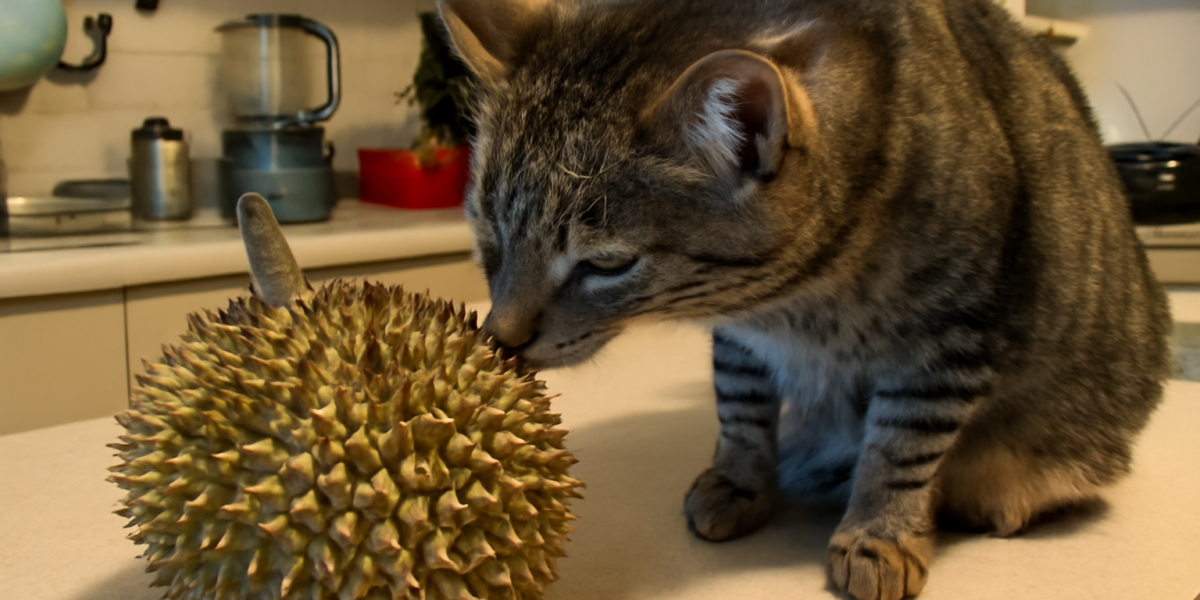
Known as the “king of fruits” in Southeast Asia, durian is famous for its powerful aroma and rich, custard-like flesh. If you have ever cracked open a durian at home, you may have noticed your cat reacting strongly to the smell — either running toward it with curiosity or fleeing in the opposite direction. Either way, you might wonder whether it is safe for your cat to eat durian.
As obligate carnivores, cats have evolved to derive their nutrition almost exclusively from animal-based proteins and fats. Their digestive systems are not designed to process the complex sugars, plant fibers, and unique compounds found in fruits like durian. While durian is celebrated for its nutritional density among humans, the picture is quite different when it comes to your feline companion.
Quick Answer: Can Cats Eat Durian?
No, cats should not eat durian. This tropical fruit poses several risks to feline health and offers no meaningful nutritional benefit for cats. The high natural sugar content, significant fat levels, and sulfur-containing compounds in durian make it unsuitable for your cat’s digestive system.
Durian is one of the fattiest fruits available, with a typical serving containing around 5 grams of fat and 27 grams of carbohydrates. Cats have very limited ability to metabolize carbohydrates efficiently, and their bodies are designed to get energy primarily from protein and animal fats. The sugars in durian can contribute to weight gain, dental problems, and potentially even diabetes in cats over time.
Perhaps most concerning are the sulfur-containing volatile compounds that give durian its distinctive aroma. These compounds can be particularly irritating to a cat’s sensitive digestive tract. Cats also have a much more acute sense of smell than humans, and the powerful odor of durian can cause stress and discomfort in some felines even before they take a bite. If your cat has already consumed a small amount of durian flesh, monitor them for digestive upset and contact your veterinarian if symptoms develop.
Nutritional Profile of Durian
Durian is nutrient-dense for humans, but its nutritional profile does not align well with feline dietary needs. A 100-gram serving of fresh durian flesh contains approximately:
- Calories: 147 kcal — very high for a fruit and significant relative to a cat’s daily needs of 200 to 300 calories
- Fat: 5.3 grams, including both saturated and monounsaturated fats
- Carbohydrates: 27 grams, with 3.8 grams of fiber and over 20 grams of natural sugars
- Protein: 1.5 grams — negligible and plant-based, lacking the amino acid profile cats require
- Vitamin C: 19.7 milligrams — cats produce their own vitamin C and do not need dietary supplementation
- Potassium: 436 milligrams — while important for cats, they obtain adequate potassium from balanced cat food
- Thiamine (Vitamin B1): 0.37 milligrams
- Sulfur compounds: Various volatile sulfur-containing compounds responsible for durian’s intense smell
While durian contains vitamins and minerals that sound beneficial on paper, cats have very specific requirements for nutrients like taurine, arachidonic acid, and preformed vitamin A that are only found in animal tissues. No amount of durian can compensate for these essential nutrients, and the high sugar and fat content of the fruit creates more problems than any potential micronutrient benefits could solve.
Benefits and Risks of Durian for Cats
Benefits
- Small amounts of potassium: Potassium supports heart and muscle function, though cats get plenty from their regular food
- Trace B vitamins: Durian contains thiamine and other B vitamins, though in forms and amounts not optimized for feline absorption
- Dietary fiber: A small amount of fiber could theoretically support digestive motility, but cats need very little fiber compared to omnivores
- Hydration: Durian flesh contains water, but there are far better ways to keep your cat hydrated
Risks
- High sugar content: Over 20 grams of sugar per 100 grams of flesh can contribute to obesity, diabetes, and dental issues in cats
- Sulfur compounds: The volatile sulfur-containing compounds in durian can irritate the gastrointestinal tract, causing nausea, vomiting, and diarrhea
- High caloric density: The combination of fat and sugar makes durian extremely calorie-dense, which is dangerous for cats prone to weight gain
- Digestive upset: Cats lack the digestive enzymes needed to efficiently break down the complex sugars and fibers in durian
- Potential allergic reaction: Some cats may develop allergic responses to exotic fruits, manifesting as skin irritation, swelling, or gastrointestinal distress
- Seeds are a choking hazard: Durian seeds are large and hard, posing a serious choking risk and potential intestinal blockage if swallowed
How to Serve Durian Safely to Your Cat
The safest approach is to not serve durian to your cat at all. Veterinary nutritionists consistently advise against feeding exotic, high-sugar fruits to felines. However, if you want to understand the absolute safest way to handle a situation where your cat has expressed intense curiosity, here are some guidelines.
If you feel you must allow your cat the tiniest taste, offer no more than a pea-sized piece of the soft flesh — roughly half a teaspoon at most. Make sure it contains no seed fragments, no rind, and no fibrous strands. The rind and seeds are never safe for cats and should be kept well out of reach.
Do not make this a repeated event. A one-time taste test is very different from regular feeding. Monitor your cat for at least 24 hours afterward for any signs of digestive distress. Keep fresh water readily available, as the strong flavors and compounds in durian may cause increased thirst.
Store durian securely when you have it in your home. The strong smell can attract curious cats, and the spiky exterior of the whole fruit can cause mouth and paw injuries if your cat investigates it too aggressively. Always dispose of rinds and seeds in a sealed container that your cat cannot access.
Signs of Problems After Eating Durian
If your cat has consumed durian, be vigilant for the following symptoms that may indicate a negative reaction:
Mild symptoms (within 1 to 6 hours): Drooling, lip licking, loss of appetite, or turning away from their regular food. The strong flavor and sulfur compounds in durian can cause nausea even in small amounts. These mild symptoms usually resolve on their own as the fruit passes through the digestive system.
Moderate symptoms (6 to 24 hours): Vomiting, diarrhea, excessive gas, bloating, and general discomfort. Your cat may seek out hiding spots or refuse to be handled. These symptoms indicate gastrointestinal irritation and should be monitored carefully. Ensure your cat stays hydrated and offer small amounts of their regular food if they seem interested.
Severe symptoms (seek immediate veterinary care): Repeated vomiting, bloody diarrhea, difficulty breathing, facial swelling, extreme lethargy, or signs of abdominal pain such as a hunched posture or crying when touched. These could indicate a serious allergic reaction, intestinal obstruction from a seed fragment, or acute gastrointestinal distress requiring professional treatment.
If your cat has consumed a durian seed or a large piece of the rind, contact your veterinarian immediately regardless of whether symptoms are present, as these parts pose a risk of intestinal blockage.
Healthy Alternatives to Durian
Rather than sharing exotic fruits with your cat, consider these feline-friendly alternatives that provide genuine nutritional value:
- Cooked chicken breast: Plain, unseasoned chicken is a protein-rich treat that aligns perfectly with your cat’s carnivorous needs
- Canned pumpkin (plain): A tiny spoonful of plain pumpkin puree can support digestive health with gentle fiber — just make sure it contains no spices or added sugar
- Cooked fish: Small portions of cooked salmon or whitefish provide omega-3 fatty acids and high-quality protein
- Commercial cat treats: Treats designed specifically for cats are formulated to be nutritionally appropriate and safe
- Freeze-dried meat: Single-ingredient freeze-dried chicken, turkey, or fish treats satisfy your cat’s carnivorous instincts without any additives
- Small pieces of cooked egg: Scrambled or hard-boiled eggs without seasoning offer an easily digestible protein source
Thinking about adding a new feline friend to your family? Visit our adoption page to meet cats who are looking for their forever homes.
Frequently Asked Questions
Can cats smell durian from far away?
Yes, cats have an extraordinarily keen sense of smell — roughly 14 times more sensitive than a human’s. The potent sulfur compounds in durian are easily detectable by cats from across the room or even from another part of the house. Some cats are attracted by the smell, while others find it repulsive and may avoid the area entirely. If your cat seems stressed by the smell of durian, it is best to enjoy it in a well-ventilated area away from your pet.
Is durian toxic to cats?
Durian is not classified as toxic to cats in the way that grapes, onions, or chocolate are. However, “not toxic” does not mean “safe” or “recommended.” The high sugar content, fat levels, and sulfur compounds can all cause significant digestive distress and contribute to long-term health problems if consumed regularly. It is best treated as a food to avoid rather than one to share.
What if my cat licks durian juice?
A small lick of durian juice is unlikely to cause serious harm, but the concentrated sugars and volatile compounds may cause mild nausea or digestive discomfort. Monitor your cat for any unusual behavior and ensure fresh water is available. If your cat shows signs of distress, contact your veterinarian for advice.
Can durian seeds harm cats?
Absolutely. Durian seeds are large, hard, and represent a significant choking hazard for cats. If a cat manages to swallow a seed or piece of a seed, it could cause an intestinal blockage requiring emergency surgery. Always keep durian seeds securely disposed of and away from your cat’s reach.
Are there any fruits that are safe for cats?
A few fruits can be offered to cats in very small amounts as occasional treats. Small pieces of seedless watermelon, blueberries, or cantaloupe are generally considered safe. However, fruits should never make up more than a tiny fraction of your cat’s diet. Cats derive virtually no nutritional benefit from fruit, and their primary diet should consist of high-quality, meat-based cat food.
My cat ate durian and is vomiting — what should I do?
If your cat vomits once or twice after eating durian and then returns to normal behavior, it is likely a mild reaction that will resolve on its own. Withhold food for a few hours to let the stomach settle, then offer a small amount of their regular food. If vomiting continues for more than 24 hours, if there is blood in the vomit, or if your cat becomes lethargic, seek veterinary care promptly. Bring information about how much durian your cat consumed to help your vet assess the situation.
Every cat deserves a safe, loving home where their dietary needs are understood and met. If you are considering adding a feline companion to your family, please visit our adoption page to find a rescue cat waiting for their chance at a happy life with you.


