
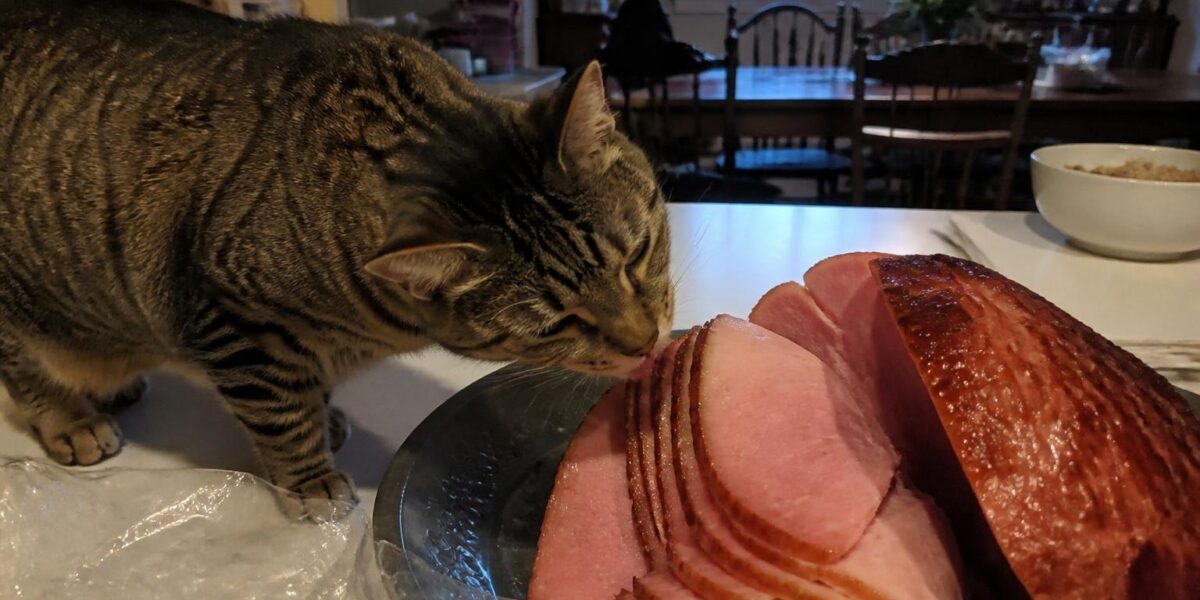
The Short Answer
Can cats eat Easter ham? It is best avoided. Easter ham is cured, which means it is extremely high in salt, and it is often coated in a sugary glaze and seasoned with cloves, brown sugar, or other spices. None of that suits a cat’s carnivore diet. At most, a cat could have a tiny, rare nibble of plain unglazed ham, but the salt and seasonings make it a poor and risky choice. For most cats, the safest answer is to skip the holiday ham entirely.
In this article
A festive table is full of temptations, so it helps to plan a safer treat for your cat rather than sharing from your plate. The strong, savory aroma of ham is hard for a cat to resist, which is why so many cats come begging the moment it comes out of the oven.
Why Easter Ham Is a Problem for Cats
Ham starts as pork, which on its own can be a fine treat in small amounts. The problem is everything that happens during curing and glazing:
- Extreme salt content: Curing relies on heavy salt. Too much sodium can cause excessive thirst, vomiting, and in severe cases salt poisoning.
- Sugary glaze: Honey, brown sugar, and maple glazes add sugar cats cannot use and do not need.
- Spices and seasonings: Cloves, mustard, and other flavorings can irritate a cat’s stomach or be toxic.
- Nitrates and preservatives: Cured meats contain additives that are not ideal for cats.
- High fat: Rich, fatty ham can trigger digestive upset or pancreatitis.
Together, these turn an otherwise simple meat into a salty, sugary, seasoned dish that is hard on a cat’s system. The curing process is the heart of the problem, since it concentrates sodium far beyond what a small carnivore can handle comfortably.
The Salt Concern
Salt is the biggest single issue with Easter ham. Cats need only a tiny amount of sodium, and cured ham contains far more than is safe. Signs of too much salt include increased thirst and urination, vomiting, diarrhea, lethargy, and tremors. In extreme cases, salt toxicity can lead to seizures and requires emergency care.
Because a single slice of glazed ham can contain a large amount of sodium relative to a cat’s small body, even a modest portion can cause problems. This is why we recommend avoiding it rather than treating it as a regular snack. A cat that eats salty ham will likely become very thirsty, so always make sure fresh water is available if any was consumed.
Glazes compound the issue. The sweet coating not only adds sugar but often soaks salt and spices deep into the meat, so even trimming the outside may not remove the seasoning entirely.
It helps to picture just how little sodium a cat is built to handle. A cat in the wild gets its salt from fresh prey, where sodium is present in small, steady amounts bound up in the meat itself. A single bite of cured, glazed ham can deliver more sodium than a cat would naturally take in over a much longer period. Because the kidneys then have to work to flush that excess, a salty treat that seems trivial to us puts real strain on a small carnivore. This mismatch between human and feline tolerances is the whole reason cured meats sit on the avoid list.
If Your Cat Sneaks a Bite
A single small bite of plain ham is unlikely to cause an emergency, but watch your cat over the next several hours. Make sure fresh water is always available, since they will likely be thirsty. Monitor for:
- Excessive drinking
- Vomiting or diarrhea
- Lethargy or restlessness
- Tremors or unsteadiness
- Loss of appetite for normal food
If your cat ate a large amount, or if the ham was heavily glazed or spiced, contact your veterinarian. If you see tremors, seizures, or collapse, treat it as an emergency and call a clinic right away. When you call, it helps to describe how much your cat ate and whether the ham was glazed or seasoned.
Watch Out for the Ham Bone
The ham bone deserves its own warning. Cooked bones become brittle and can splinter into sharp fragments, posing a serious risk of choking, mouth injuries, or damage to the digestive tract. A cat gnawing on a discarded ham bone can also ingest concentrated fat and salt from the surrounding meat.
Dispose of ham bones in a secured trash can that your cat cannot open. Many cats are drawn to the lingering smell of a bone in the garbage, so a lidded or covered bin is a sensible precaution during and after a holiday meal.
The fat and salt clinging to a ham bone create a double hazard beyond the bone itself. Even if a cat does not manage to break off a sharp fragment, gnawing on the bone lets them ingest concentrated grease and sodium that can upset the stomach or trigger a pancreatitis flare. For this reason, it is not enough to simply take the bone away once a cat starts chewing; the bone should never be offered as a chew or left where a determined cat can reach it in the first place. A countertop, a covered bin, or the refrigerator are all safer homes for a ham bone than a plate left within jumping distance.
Why Cats Cannot Handle Salty Foods Well
Cats evolved eating fresh prey, which is naturally low in sodium. Their bodies are tuned to a diet where salt comes in small, steady amounts from meat, not from cured or processed foods. As a result, a cat’s kidneys and circulatory system are not built to cope with the salt loads that human foods like ham deliver.
When a cat takes in too much sodium at once, the body tries to balance it by drawing water and increasing thirst, which is why a cat that eats ham will often head straight for the water bowl. In larger amounts, the imbalance can affect the nervous system, leading to the tremors and disorientation seen in salt toxicity. This is why even foods that are not technically poisonous, like ham, can still make a cat seriously unwell when the salt is high enough.
Understanding this helps explain why so many cured and processed meats land on the avoid list. It is rarely the meat itself that is the problem, but the salt, sugar, and seasoning layered on top during processing.
Hidden Ham in Holiday Leftovers
The risk from Easter ham does not end when the main meal is cleared away. Ham has a way of turning up in leftovers and side dishes for days afterward, and those hidden forms can be just as salty and seasoned as the original roast. Scalloped potatoes with ham, ham and bean soup, quiches, omelets, and sandwiches all carry the same sodium and often add cheese, cream, or onion on top. A cat that misses the main dish may still find an opportunity at a leftover plate.
Be especially careful with the small scraps that accumulate during carving and cleanup. Trimmed fat, the salty exterior of the roast, and bits clinging to a cutting board are exactly the kind of high-salt, high-fat morsels that a counter-surfing cat will target. Wiping down surfaces promptly and storing leftovers in sealed containers removes the temptation.
If you want to give your cat something during the days of leftovers, set aside a few small pieces of plain meat before the ham is glazed or seasoned, or simply offer a bite of plain cooked chicken or turkey instead. That way your cat can share in the leftovers spirit without the salt, sugar, and seasoning that make ham itself a poor choice.
Safer Ways to Share Meat With Your Cat
Cats are carnivores, so they truly do enjoy meat. The trick is offering it plain and unseasoned. Instead of cured ham, you can share plain cooked pork in small amounts, or stick with leaner options like chicken and turkey.
If you want to understand why cured and processed meats are riskier, compare ham with regular ham guidance. The pattern is consistent: plain and fresh is always better than cured and salty. Setting aside a small unseasoned piece of meat before you glaze or season your dish lets your cat join the meal safely.
Celebrating the season with a new feline friend in mind? Visit our adopt a cat hub to meet rescue cats waiting for a forever home.
Frequently Asked Questions
Can cats eat a tiny piece of plain ham?
A very small, rare piece of plain, unglazed, low-salt ham is unlikely to harm a healthy cat, but it is still salty and best avoided. Plain cooked chicken or turkey is a far safer choice.
What makes Easter ham more dangerous than plain pork?
Curing adds heavy salt and preservatives, and the glaze adds sugar and spices. Plain cooked pork in small amounts is much gentler on a cat’s system.
My cat ate glazed ham. What should I do?
Provide fresh water and watch for excessive thirst, vomiting, or lethargy. Call your vet if your cat ate a large amount or shows tremors, weakness, or other concerning signs.
Is ham bone safe for cats?
No. Cooked bones can splinter and cause choking or internal injury. Always keep ham bones away from your cat and dispose of them securely.
Can kittens have any Easter ham?
No. Kittens are even more sensitive to salt and fat than adult cats. They should stick to their regular kitten food and vet-approved treats.
Is honey-baked or maple-glazed ham worse than plain ham?
Yes. The glaze adds sugar on top of the curing salt, and it often drives salt and spices deeper into the meat. Glazed hams are among the least suitable forms to share, so they are best kept entirely away from your cat.
How much salt is dangerous for a cat?
There is no exact threshold, since it depends on the cat’s size and health, but a small carnivore needs only a tiny amount of sodium daily. A single slice of cured ham can far exceed that, which is why even a modest portion can cause excessive thirst and stomach upset. Cats with kidney or heart conditions are at higher risk and should avoid it completely.


