
Last updated: May 4, 2026
In this article
- Quick Answer: Yes, Lamb Organs Are Safe for Cats in Moderation
- Why Lamb Organs Belong in a Whole-Prey Conversation
- Lamb Liver: Tiny Amounts, Big Nutrient Density
- Lamb Heart: A Taurine Powerhouse
- Lamb Kidney: Modest Amounts, Rotated With Other Organs
- Cooked Versus Raw Lamb Organs
- Lamb as a Novel Protein for Allergic Cats
- Sourcing Lamb Organs Safely
- Portion Math for an Average Adult Cat
- Signs Your Cat Is Tolerating Lamb Organs Well
- When to Skip Lamb Organs Entirely
- Frequently Asked Questions
Quick Answer: Yes, Lamb Organs Are Safe for Cats in Moderation
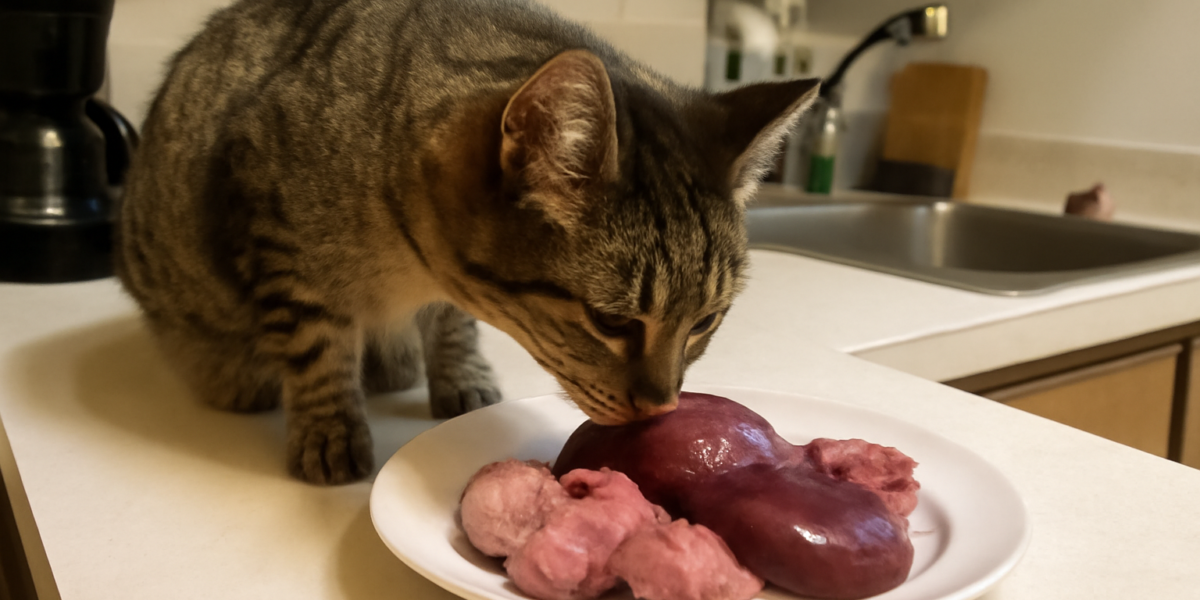
Cats can eat lamb organs in moderation, and many obligate-carnivore feeders deliberately include them as part of a whole-prey nutritional model. Lamb liver, heart, and kidney are nutrient-dense organ meats that provide concentrated levels of taurine, B vitamins, iron, copper, and fat-soluble vitamins your cat cannot synthesize from plant sources. The most important rule is portion control. Lamb liver in particular is so rich in vitamin A that it can cause toxicity if it climbs above five percent of total intake, so the goal is to feed a small variety of organs in rotation rather than relying on liver alone.
If you are using lamb as a novel protein because your cat reacts to chicken or beef, organs from the same species fit naturally into that elimination plan. Cook the organs thoroughly when you are unsure of sourcing. Source from a butcher, BARF supplier, or grocer with reliable parasite testing if you intend to feed any of it raw. Always introduce organ meat gradually, watch the litter box for soft stool, and check with your veterinarian before making organs a regular part of the bowl.
Why Lamb Organs Belong in a Whole-Prey Conversation
Cats evolved eating small whole prey: a mouse, a vole, a small bird. Those animals were consumed in their entirety, organs included. The result is that a cat’s nutritional requirements are calibrated to organ-rich meals, not the muscle-meat-only meals many household cats receive. Whole-prey and BARF nutritional models attempt to recreate that balance by feeding a defined ratio of muscle meat, raw meaty bone, and secreting organs, with liver typically capped at five percent and other organs filling another five percent.
Lamb is a useful species for this approach because lamb is widely available, the cuts are easy to source, and lamb is a less common protein in commercial cat food than chicken or beef. That novelty can be helpful for cats with food sensitivities. The liver, heart, and kidney each contribute different nutrients, which is why rotating among them is more nutritionally sound than feeding the same organ every day. Even cats fed primarily commercial diet can benefit from a small organ rotation as a topper a few times per week.
Organs also pull double duty as enrichment. Slowly thawed lamb heart in a slow feeder takes longer to chew, supports dental health, and burns calories your indoor cat would otherwise store. Lean toward small, frequent introductions rather than a once-monthly feast.
Lamb Liver: Tiny Amounts, Big Nutrient Density
Lamb liver is the highest-density nutrient package in the lamb carcass. A teaspoon of cooked lamb liver delivers far more vitamin A than your cat needs for a week, along with copper, iron, riboflavin, and B12. That density is exactly why portion discipline matters. Vitamin A toxicity (hypervitaminosis A) in cats causes painful bone deformities, especially in the cervical spine, lameness, and lethargy. The condition develops slowly over months of overfeeding liver, and it is largely irreversible once it sets in.
Practical guidance: keep liver to roughly five percent of your cat’s total food intake by weight. For an average ten-pound adult cat eating about four to five ounces of food daily, that translates to roughly a quarter teaspoon of cooked lamb liver, two or three times a week, not every day. If you are using lamb liver as a topper for picky eaters, freeze portion-sized pieces in an ice cube tray so you do not improvise the dose.
Cook lamb liver gently in water or a dry pan with no oil, salt, garlic, or onion. Garlic and onion are toxic to cats at very low doses, so any seasoning must be left off. The same caution we discuss in our chicken liver pate guide applies to lamb liver: human pates are seasoned and unsuitable, and even commercial pet pates can be richer than your cat needs as a daily food.
Lamb Heart: A Taurine Powerhouse
Heart is technically a muscle, not a secreting organ, but in BARF planning it is grouped with organs because of its dense micronutrient profile. Lamb heart is unusually rich in taurine, the sulfur amino acid cats must obtain from their diet because they cannot synthesize enough on their own. Taurine deficiency is the documented cause of feline dilated cardiomyopathy and a contributor to retinal degeneration. Diets built around heart muscle are protective against both conditions when designed properly.
Lamb heart is also rich in CoQ10, B vitamins, and iron. Unlike liver, you do not need to limit lamb heart to a tiny percentage. Many whole-prey feeders use heart as a component of the muscle-meat portion, not the organ portion. A reasonable serving is a teaspoon of cooked, finely diced lamb heart for an average adult cat, offered a few times per week, fitting within total daily calories.
Trim large fat caps and silver skin before cooking. Dice into pieces small enough that your cat chews rather than gulps, since hearts are dense and can lodge in a hurried eater’s throat. If you also feed beef, our beef liver feeding guide covers liver-versus-heart math you can apply to lamb the same way.
Lamb Kidney: Modest Amounts, Rotated With Other Organs
Lamb kidney is a secreting organ and counts toward the organ-meat percentage along with liver. Kidney is rich in selenium, B12, riboflavin, and iron, but lower in vitamin A than liver, which makes it a good rotation partner. In whole-prey planning, kidney typically makes up part of the second five percent of organs, with liver in the first five percent.
Kidney has a stronger smell than liver or heart and a slightly chewier texture. Some cats love it, some refuse it. Soaking lamb kidney briefly in cold water before cooking pulls some of the strong odor compounds out and tends to improve acceptance. Cook gently, dice small, and feed a quarter teaspoon a couple of times per week.
Cats with diagnosed chronic kidney disease should not eat extra kidney as a treat without a vet’s approval. Organ meats are higher in phosphorus, and phosphorus restriction is the cornerstone of feline kidney disease management. Read our chronic kidney disease in cats overview to understand why phosphorus matters before adding any organ meat to a CKD cat’s plan.
Cooked Versus Raw Lamb Organs
You will see strong opinions on both sides of the cooked-versus-raw question. Both can work, and both have failure modes. Cooked lamb organs are pasteurized, kill any bacteria or parasites that survived processing, and are the safer default for households with babies, immunocompromised people, or older adults. Cook gently to preserve heat-sensitive nutrients. A quick simmer or pan-warm to an internal temperature of 165 degrees Fahrenheit is enough.
Raw feeding can be done safely if you source from a BARF supplier with documented parasite testing and pathogen screening. Lamb is generally a low-risk parasite host compared to pork or wild game, but salmonella and E. coli on the organ surface remain real concerns. Freezing at minus four degrees Fahrenheit for at least two weeks reduces the parasite risk further. Never improvise raw lamb from a regular grocery counter; that meat is intended for human cooking and is not screened the same way.
Whichever method you choose, keep prep surfaces, knives, and bowls dedicated to pet food, wash hands thoroughly, and refrigerate thawed organ meat for no longer than 24 hours.
Lamb as a Novel Protein for Allergic Cats
Food allergies in cats most often present as itchy skin, ear infections, or chronic GI symptoms. Chicken, beef, and fish are the most common culprits because they dominate commercial cat food. When a vet recommends an elimination diet, the strategy is to feed a single protein the cat has never eaten before, watch for symptoms to clear over six to twelve weeks, then provoke with the suspected allergen to confirm.
Lamb has historically been used as a novel protein, although that role has eroded as more commercial diets include lamb. Still, for many indoor cats raised on chicken, lamb organs paired with lamb muscle meat can serve as a true elimination ingredient. Other novel-protein routes include rabbit, venison, kangaroo, and ostrich. Cross-link to other novel proteins like rabbit organs if you suspect your cat reacts to lamb as well, since some cats sensitize to lamb after long-term exposure.
Sourcing Lamb Organs Safely
Buy lamb organs from sources you trust. A local butcher who sells lamb tongue, heart, and kidney for human cooking is usually fine, especially if you ask whether the lamb was domestically raised. BARF and raw-pet-food suppliers are explicitly geared to organs and tend to provide hearts, livers, and kidneys in pet-portion sizes, sometimes already minced.
Avoid imported lamb organs from unverified sources, lamb organs that smell off, and any lamb organ that has been stored loose in a warm display case. Color is a useful tip: lamb liver should be a deep mahogany red, lamb heart a darker purple-red, lamb kidney a dark brick red. Gray, green, or strongly sour-smelling organ meat goes in the trash, not the cat bowl.
Once home, freeze portions immediately if you do not plan to feed within 48 hours. Thaw in the refrigerator overnight, never on the counter.
Portion Math for an Average Adult Cat
An average ten-pound adult cat eats about 200 to 240 calories a day, depending on body condition and activity. If five percent of that comes from liver, you are looking at roughly ten to twelve calories of liver, which is a quarter teaspoon of cooked lamb liver. Another five percent for kidney is roughly the same volume. Heart, when treated as muscle meat, can take a larger share, perhaps a teaspoon a few times per week.
If your cat is overweight, work with your vet on calorie restriction first; you do not want to add organ-meat treats on top of an already-overfed cat. If your cat has heart disease, especially hypertrophic cardiomyopathy, organ portions should be reviewed in the context of overall sodium and protein management. See our hypertrophic cardiomyopathy guide for a primer on why diet decisions matter for HCM cats.
Signs Your Cat Is Tolerating Lamb Organs Well
The reassuring signs are the boring ones. Stool stays well-formed, energy stays normal, coat stays shiny, and your cat returns enthusiastically for the next portion. Slight stool softening for the first day or two is common as gut bacteria adjust to the new food. That should resolve within 48 hours.
Stop and reassess if you see persistent diarrhea, vomiting more than once, lethargy, or any sign of itchiness or skin reaction over the following two weeks. Food intolerances and food allergies can develop with repeated exposure even to a novel protein, so keep a small food diary if you are introducing lamb as part of an elimination workup.
When to Skip Lamb Organs Entirely
Some cats should not eat extra organ meat at all. Cats with chronic kidney disease need phosphorus-controlled diets that organ meats undermine. Cats with confirmed lamb allergy will react regardless of the cut. Kittens under four months are still developing tolerance and should stay on a complete and balanced kitten diet rather than improvised organ feeding. Cats on prescription therapeutic diets for IBD, urinary stones, or hepatic disease should not have organ toppers added without veterinary approval.
If you are unsure where your cat falls, ask your vet at the next wellness visit. A quick conversation can save months of trial and error.
Frequently Asked Questions
How often can I feed lamb liver to my cat?
Two or three times per week, in portions of about a quarter teaspoon for an average ten-pound adult cat. Keep liver under five percent of total intake to avoid vitamin A toxicity.
Is raw lamb heart safe for cats?
Raw lamb heart can be safe if sourced from a BARF supplier that performs pathogen testing. Otherwise, simmer briefly to 165 degrees Fahrenheit. Either way, dice small to prevent gulping.
Can kittens eat lamb organs?
Kittens over four months can have small amounts of cooked lamb heart as a treat, but their primary diet should remain a complete and balanced kitten food. Save the wider organ rotation for adult cats.
Are lamb organs a true novel protein?
Lamb used to be reliably novel, but many commercial cat foods now include lamb. Check your cat’s food history before using lamb in an elimination diet, and ask your vet about confirmed novel options like rabbit or kangaroo if your cat has eaten lamb before.
What if my cat refuses lamb organs?
Try a different organ first, since some cats prefer heart over liver or kidney. Mix a tiny amount into your cat’s regular food rather than serving it on its own. If your cat continues to refuse, do not force it; lamb organs are not nutritionally required.


