
Last updated: May 4, 2026
In this article
- Can Cats Eat Ostrich Safely?
- Why Ostrich Is a Strong Novel Protein
- Elimination Diet Considerations
- Safe Serving Size for Cats
- How to Prepare Ostrich for Your Cat
- Why Cooked Rather Than Raw
- Ostrich Products to Avoid
- Comparing Ostrich to Other Cat Proteins
- When to Hold Off on Ostrich
- Frequently Asked Questions
Can Cats Eat Ostrich Safely?
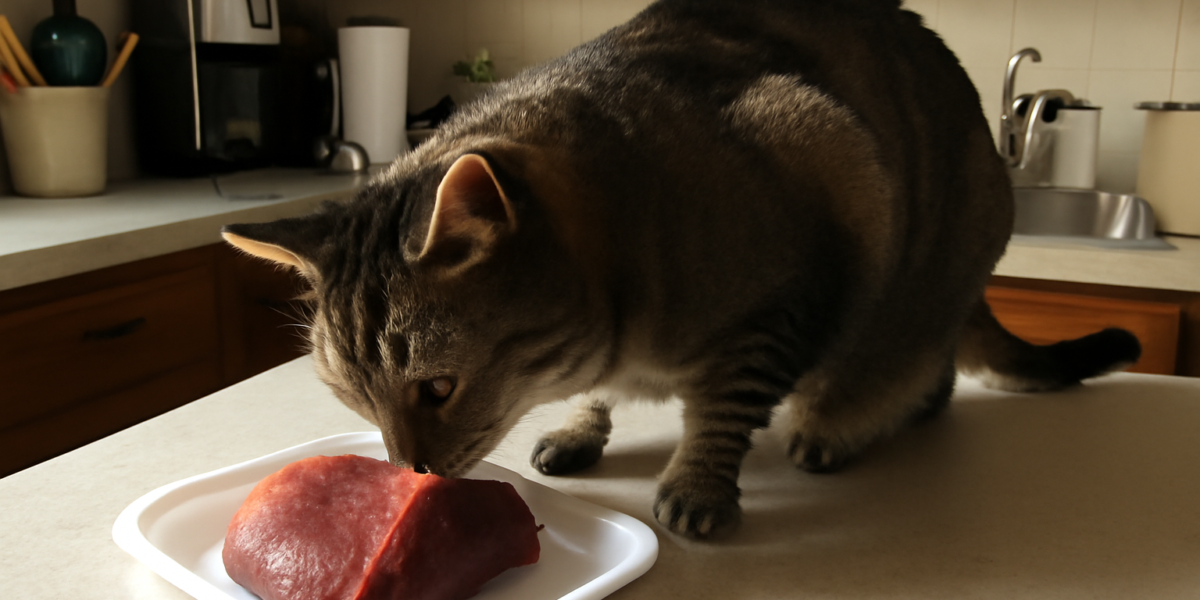
Yes, cats can eat ostrich meat in moderation when it is fully cooked and served plain. Ostrich is one of the leanest red meats available, with about 3 percent fat by weight, and it is a useful novel protein for cats with food sensitivities. Like emu, it is increasingly featured in commercial cat foods designed for elimination diets and rotation feeding, and it offers a clean source of complete animal protein that obligate-carnivore cats are built to use.
The ground rules are the same as for any meat shared with a cat: cook to a safe internal temperature, no salt or seasoning, no oil or butter, and offer in modest amounts as part of an overall balanced diet rather than as a stand-alone meal source. Plain ostrich does not provide the full vitamin and mineral profile a cat needs over the long term; that comes from a complete commercial diet, formulated by veterinary nutritionists, with ostrich appearing as either the main protein in a balanced formula or as an occasional fresh-food topping.
For cats with diagnosed or suspected food allergies, ostrich is one of several proteins veterinarians use in elimination trials. The protein is novel for most cats, meaning their immune systems have not been exposed to it and are unlikely to react. If you are exploring ostrich for an allergy workup, do it under veterinary direction rather than improvising.
Why Ostrich Is a Strong Novel Protein
Most domestic cats grow up eating chicken, beef, fish, and lamb in some combination, since those are the proteins that dominate commercial cat food. Over time, some cats develop a sensitivity to one or more of those proteins, expressing as itchy skin, recurrent ear infections, chronic vomiting, or chronic loose stool. Switching to a protein the cat has never encountered, a true novel protein, can break the immune-reactivity cycle.
Ostrich is novel for the great majority of cats. It is biochemically distinct enough from poultry and from beef to be unlikely to cross-react with sensitivities to those proteins, though every cat is an individual and rare cross-reactions do occur. The lean profile is a bonus for cats on weight-management plans or cats prone to gastrointestinal upset from rich, fatty foods.
Nutritionally, ostrich provides high-quality complete protein, iron, zinc, B vitamins (especially B12), and small amounts of beneficial fatty acids. Cooking does not significantly diminish these nutrients. The flavor is described as similar to lean beef, which most cats accept once they get used to it.
Elimination Diet Considerations
If your veterinarian has recommended a strict elimination diet to identify a food allergy, the protocol typically requires 8 to 12 weeks on a single novel protein with no other foods, treats, flavored medications, or table scraps. Even tiny variations can confuse the result, so following the protocol strictly matters more than which specific novel protein you use.
Ostrich-based prescription cat foods are available from several veterinary brands, often paired with a single carbohydrate like green pea or sweet potato. These are designed to be complete and balanced for the duration of the trial. Home-cooked ostrich during a strict elimination trial should only be used with a veterinary nutritionist’s guidance, since balancing a single-protein, single-carb diet from scratch requires expertise.
For cats not on an elimination trial, ostrich can be a fresh-food topping or rotation protein offered in moderation. Many cats benefit from variety in their diet, and ostrich slots in nicely alongside other proteins in a balanced rotation.
Safe Serving Size for Cats
Plain cooked ostrich should fit within the 10 percent rule for treats and extras. For most adult cats, this works out to a tablespoon or less per day, less if your cat already gets other treats.
- Average adult cat (8 to 12 pounds): 1 to 2 teaspoons of cooked ostrich, two to three times a week.
- Larger adult cat (12 pounds plus): Up to 1 tablespoon, two to three times a week.
- Senior cats: Same portions, watch for digestive changes; check with vet if cat has kidney or thyroid concerns.
- Kittens: Tiny tastes only after weaning, with veterinary input. Kittens need complete kitten food as their main diet.
Introduce ostrich gradually. Offer a few small pieces the first time and watch for 24 hours. If your cat shows no vomiting, no diarrhea, and no skin reaction, you can build up to a full portion.
How to Prepare Ostrich for Your Cat
Source fresh, human-grade ostrich from a reputable supplier. Some upscale grocery stores, specialty butchers, and online retailers carry ostrich; in countries like Australia and South Africa, it is more widely available. Choose plain cuts (steaks, ground meat, or roast pieces) without marinades, salt rubs, or processing.
Cook ostrich to an internal temperature of 165 degrees Fahrenheit. Pan-sear in a dry or very lightly oiled pan, bake, or boil. Avoid frying in oil, butter, or fat. No salt, no pepper, no garlic, no onion, no marinades, no sauces. Cool the cooked meat to a safe handling temperature and chop or shred into bite-sized pieces.
Refrigerate leftovers in a sealed container for up to three days. Discard any meat that has been at room temperature for more than two hours. Frozen pre-cooked portions in single-serving sizes can be a convenient way to manage portions for a single cat.
Why Cooked Rather Than Raw
Raw ostrich, like other raw meats, can carry Salmonella, Campylobacter, Listeria, and other pathogens that pose risks to cats and to humans in the household. Cats with weakened immune systems, kidney disease, IBD, pancreatitis, or any chronic illness are particularly vulnerable to raw-meat-borne infections.
Even the strictest BARF-grade raw suppliers cannot fully eliminate these risks, and cross-contamination during preparation is a concern in any kitchen. Cooking ostrich to a safe internal temperature kills these pathogens without significantly reducing the nutrient value of the meat.
If you are committed to raw feeding, work with a veterinary nutritionist, source from a supplier with documented safety protocols, and recognize that the practice is not appropriate for every cat or every household. For most pet parents, plain cooked ostrich is the simpler and safer route.
Ostrich Products to Avoid
Several ostrich products on the market are not appropriate for cats:
- Ostrich jerky: High sodium, often seasoned with garlic, onion, or other spices. Skip.
- Ostrich sausages and burgers: Often blended with pork fat, fillers, salt, and spices that are inappropriate for cats.
- Pre-marinated cuts: Marinades typically contain salt, sugar, soy sauce, garlic, onion, or vinegar.
- Ostrich-flavored treats not formulated for cats: Read labels carefully; some contain only minimal ostrich plus fillers and additives that cats do not need.
- Ostrich bones: Cooked bones of any kind can splinter and cause serious injury. Even raw ostrich bones are large, dense, and not suitable for cat feeding.
Stick to plain fresh or frozen ostrich meat cooked at home. Commercial cat foods featuring ostrich as the main protein, formulated by veterinary nutritionists for completeness and balance, are also a fine option for the long-term diet.
Comparing Ostrich to Other Cat Proteins
Ostrich and emu are essentially interchangeable for most purposes, both lean ratite-bird red meats useful as novel proteins. Some cats may tolerate one and not the other, which is one reason rotating between similar novel proteins can be helpful.
For familiar proteins, chicken remains the most common cat protein and is generally well-tolerated when cooked plain. Rabbit is another popular novel protein that some cats love. Quail is a smaller game bird with similar lean characteristics.
For variety in cat diets, working with two or three different protein sources across the week is a reasonable approach. The goal is balanced nutrition over time, not perfect rotation, and your cat’s regular complete commercial food does the heavy lifting; treats and toppings like cooked ostrich add variety and enrichment.
When to Hold Off on Ostrich
Most healthy cats handle ostrich well. Cats who should have a veterinary conversation before adding ostrich include those with diagnosed chronic kidney disease on a prescription renal diet, cats with inflammatory bowel disease, cats with a history of pancreatitis, and any cat on a strict elimination diet trial.
If your cat shows vomiting, diarrhea, itching, ear redness, or changes in coat after introducing ostrich, stop the new food and consult your veterinarian. Adverse reactions to a novel protein on first exposure are uncommon but possible, especially in cats with a history of allergic responses.
For cats fed only commercial complete diets without any treats or table foods, adding ostrich requires the same care as adding any new ingredient: small amounts, slow introduction, and observation. Even a “safe” food can trigger reactions in individual cats.
Frequently Asked Questions
Is ostrich better for cats than chicken?
Better is situational. For cats with chicken sensitivity or for elimination diets, ostrich is a useful novel option. For cats without allergies, plain cooked chicken is equally good and far more accessible. Both are appropriate cat-friendly proteins when cooked plain.
Can cats eat ostrich eggs?
Cooked ostrich eggs in tiny amounts are likely safe for cats, but a single ostrich egg is roughly the equivalent of two dozen chicken eggs, so the practical use is limited. Raw ostrich eggs carry the same Salmonella concerns as other raw eggs and should be avoided.
How often can my cat have ostrich?
Two to three times a week as a treat or topper is reasonable for most adult cats. If ostrich is the primary protein in a complete commercial cat food, daily feeding per the manufacturer’s guidelines is appropriate.
What if my cat refuses to eat ostrich?
Cats can be picky, especially with new flavors. Try mixing a small amount of cooked ostrich into their regular food, warming it slightly to release aroma, or offering it shredded rather than chunked. If your cat continues to refuse, offer a different novel protein instead.
Where can I find ostrich for my cat?
Specialty butchers, exotic meat retailers, and some upscale grocery stores carry ostrich, particularly in the United States, Australia, and South Africa. Online retailers ship frozen ostrich nationwide. Several commercial cat foods now feature ostrich as a primary protein.
Is ostrich safe for cats with kidney disease?
Cats with chronic kidney disease are usually on prescription renal diets that limit protein and phosphorus to specific levels. Adding rich protein toppings like ostrich can disrupt that balance and stress the kidneys. Always check with the veterinarian managing your cat’s kidney care before introducing any new protein source.
Can ostrich cause an allergic reaction in cats?
Any protein can theoretically trigger a reaction, including novel proteins like ostrich. The chance of reaction is low for most cats on first exposure, which is why ostrich is useful for elimination diets. If your cat shows itching, ear redness, vomiting, or diarrhea after eating ostrich, stop the food and consult your veterinarian.


