
Last updated: May 4, 2026
In this article
- The Short Answer on Cats and Snails
- Why Snails Are a Parasite Problem for Cats
- Garlic, Butter, and Escargot Risks
- What About Pet Snails or Garden Snails?
- Symptoms to Watch For After Snail Exposure
- Bacterial and Other Risks Beyond Lungworm
- How to Reduce Snail Exposure for Outdoor Cats
- Comparing Cat and Dog Snail Risks
- Better Treats for Cats Than Snails
- Diagnosis and Treatment of Feline Lungworm
- Frequently Asked Questions
The Short Answer on Cats and Snails
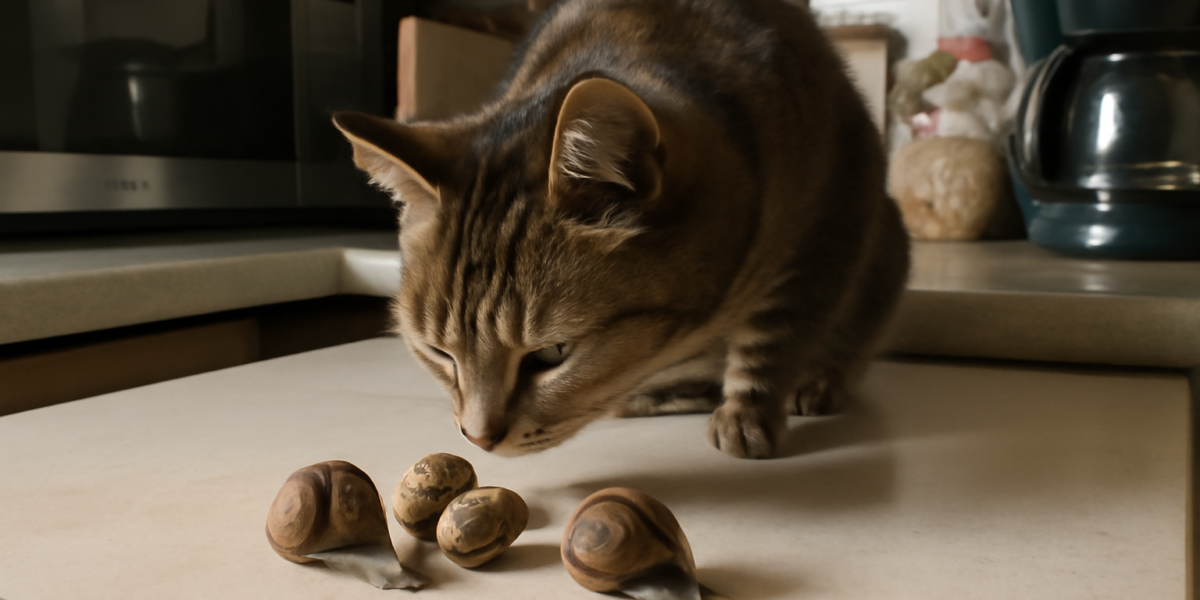
Cats should not eat snails. The biggest concern is not poisoning but parasites — specifically Aelurostrongylus abstrusus, the feline lungworm, which uses snails and slugs as intermediate hosts. A cat that eats an infected snail (or sometimes a frog or lizard that ate one) can develop a chronic respiratory infection that smolders for months before symptoms appear. The cooked culinary version, escargot, is also off the table because it is almost always prepared with garlic butter, and garlic is toxic to cats.
If you have an indoor cat that has never been outside, your snail risk is low but not zero — snails occasionally hitch rides indoors on potted plants or shoes, and curious cats will chase anything that moves. Outdoor and indoor-outdoor cats have a much higher exposure rate, especially in damp climates and after rain. The safest answer to “can cats eat snails” is no, and the safest practice is to discourage snail hunting altogether.
Why Snails Are a Parasite Problem for Cats
Most healthy cats survive eating a snail. The problem is the small percentage that do not, and the chronic illness that follows when one of those snails carried lungworm larvae. Aelurostrongylus abstrusus is a feline-specific lungworm — meaning it has evolved specifically to use cats as its definitive host. Adult worms live in the bronchioles and alveoli of the cat’s lungs, and they shed eggs that the cat coughs up, swallows, and passes in the feces. Snails and slugs eat the larvae from the feces, and the cycle continues.
Cats sometimes get infected directly by eating snails, but more often they catch a “paratenic” host — a frog, lizard, bird, or rodent that ate the snail first. This is why limiting your cat’s hunting in general matters more than just keeping snails out of the yard. Cats that hunt regularly in the same garden, especially in humid or coastal areas, accumulate exposure over time.
Symptoms can take six weeks to several months to appear after exposure, which makes the link easy to miss. Many infections are subclinical — your cat looks healthy but is shedding larvae. Symptomatic cats develop a chronic dry cough, bronchitis, increased respiratory effort, and in severe cases lung consolidation that mimics asthma or pneumonia.
Garlic, Butter, and Escargot Risks
If you cook snails the French way, you are stuffing them with garlic, parsley, butter, salt, and often white wine. Every one of those ingredients except parsley is a problem for cats. Garlic is in the allium family along with onions, leeks, and chives, and it causes oxidative damage to feline red blood cells — a condition called Heinz body anemia. Cats are roughly two to three times more sensitive to allium toxicity than dogs. For more on this risk, see our cat garlic guide and the related onion safety overview.
Butter is mostly fat and lactose. Most adult cats lose much of their lactase enzyme after weaning, so a butter-soaked snail can trigger diarrhea or vomiting. Salt levels in restaurant escargot are also high enough to matter for a small carnivore. If your cat steals a single escargot off your plate, watch for vomiting, lethargy, pale gums, weakness, dark urine, or rapid breathing over the next 24 to 72 hours and call your vet — the garlic dose, not the snail itself, is the most urgent concern.
What About Pet Snails or Garden Snails?
Pet snails kept in well-maintained terrariums have a lower parasite burden than wild snails because they are not exposed to cat or fox feces, but the risk is not zero, and most pet-snail owners do not test their animals for lungworm carriage. Garden snails, slugs, and the slime trails they leave behind are all potentially infectious. Cats can pick up lungworm larvae just by licking a surface a snail has crawled across, though direct ingestion is the higher-risk route.
If your cat is a confirmed snail-hunter, talk with your vet about a routine fecal test that specifically looks for Aelurostrongylus larvae using the Baermann technique — standard fecal floats can miss it. Some monthly parasite preventatives include moxidectin or other macrocyclic lactones that cover lungworm; ask your vet what makes sense for your cat’s lifestyle.
Symptoms to Watch For After Snail Exposure
Acute symptoms after eating a snail are usually GI: drooling, vomiting, gagging, or refusing food. These often pass within a day. The symptoms that matter long-term are respiratory and they appear weeks to months later.
- Persistent dry cough, especially at rest or after light play
- Wheezing or whistling sounds from the chest
- Increased respiratory rate (more than 30 to 35 breaths per minute at rest)
- Open-mouth breathing or visible effort with each breath
- Gradual weight loss or reduced exercise tolerance
- Sneezing fits paired with the cough
Chronic lungworm disease in cats is often misdiagnosed as feline asthma initially. If your cat has cough symptoms and any history of outdoor access, mention the snail and slug exposure specifically when you talk to your vet — it changes the diagnostic plan. For more on respiratory disease in cats, our feline asthma overview covers symptom overlap.
Bacterial and Other Risks Beyond Lungworm
Snails can also carry bacteria like Salmonella and E. coli, especially if they have been crawling through compost or contaminated soil. Healthy adult cats with strong stomach acid usually clear these without problem, but kittens, seniors, and immunocompromised cats are more vulnerable to bacterial gastroenteritis. Snails picked up near gardens treated with metaldehyde slug bait are doubly dangerous — metaldehyde is a potent neurotoxin that causes tremors and seizures in cats within hours.
Rat lungworm (Angiostrongylus cantonensis) is a separate parasite that primarily affects rats and humans, but cats can be incidental hosts in tropical regions. It is much less common than feline lungworm but worth knowing about if you live in Hawaii, Southeast Asia, the Caribbean, or other endemic zones.
How to Reduce Snail Exposure for Outdoor Cats
You will not eliminate snail risk for an outdoor cat, but you can lower it significantly. Keep grass short — long damp grass is snail habitat. Reduce hiding spots like piles of damp leaves, wood, and stones near the house. Avoid pesticide slug baits that contain metaldehyde; use iron-phosphate-based products instead, which are far less toxic to mammals. Bring outdoor water bowls inside between uses so snails do not crawl into them overnight.
For dedicated indoor-outdoor cats, scheduled access during daylight hours and dry weather reduces snail encounters dramatically — snails are most active at dusk, dawn, and after rain. A securely fenced catio gives outdoor enrichment with much less wildlife exposure. Indoor enrichment alternatives like puzzle feeders and structured indoor play can satisfy hunting drive without parasite risk.
Comparing Cat and Dog Snail Risks
Dogs and cats both can pick up lungworm from snails, but the species are different. Dogs catch Angiostrongylus vasorum (“French heartworm”) and Crenosoma vulpis, both of which can cause severe cardiopulmonary disease. Cats catch Aelurostrongylus abstrusus, which usually stays confined to the lungs. The treatment drugs overlap somewhat (fenbendazole, moxidectin), but the dosing, monitoring, and prognosis differ. For the canine perspective, our dog snail safety guide walks through the dog-specific parasites.
One practical takeaway: in households with both species, treat snail hunting as a whole-household problem. The same garden that infects your dog can infect your cat, and the parasite eggs and larvae they shed continue the cycle for any other pet that ingests an infected mollusk.
Better Treats for Cats Than Snails
Cats are obligate carnivores that thrive on muscle meat, organ meat, and species-appropriate animal protein. There is no nutritional reason to feed snails, and many safer ways to deliver novel protein. Plain cooked chicken, plain cooked shrimp, or a small piece of plain cooked salmon all give a similar “treat” value without parasite risk. Commercial freeze-dried treats from a reputable manufacturer are tested for pathogens and are a safer way to add variety than wild-caught food.
For seafood-curious cats, our guides on cooked octopus, clams, and anchovies cover the safer mollusks and small fish that work as occasional treats. Stick to commercial sources with food-safety controls rather than anything you find in the garden.
Diagnosis and Treatment of Feline Lungworm
Diagnosing Aelurostrongylus abstrusus requires a Baermann technique fecal exam, which uses water to encourage larvae to migrate out of fecal material so they can be examined microscopically. Standard fecal flotation tests miss lungworm larvae because they sink rather than float. If your vet suspects lungworm, request the Baermann specifically — and ask about repeat testing, because larvae shedding is intermittent and a single negative does not rule out infection. Three samples collected on different days improves sensitivity considerably.
Treatment typically involves fenbendazole given orally for 10 to 14 days, sometimes longer for chronic cases. Topical moxidectin (a key ingredient in some monthly parasite preventives) is also effective and is sometimes used as an alternative. Severely affected cats with bronchospasm or pneumonia may need supportive care including bronchodilators, oxygen therapy, and antibiotics if secondary bacterial infection is present. Most cats clear the infection with treatment, but cats with significant lung tissue damage may have permanent reduction in respiratory capacity. Recovery is monitored via repeat Baermann tests and clinical improvement in cough frequency and respiratory rate.
Frequently Asked Questions
My cat ate a snail in the yard. What should I do?
Note the time, take a photo of what is left of the snail if possible, and watch for vomiting, drooling, or breathing changes. If the snail came from an area where slug bait may have been used, call your vet or the Pet Poison Helpline immediately — metaldehyde poisoning is a same-day emergency. Otherwise, schedule a Baermann fecal test in 6 to 8 weeks to check for lungworm larvae.
Can indoor cats get lungworm?
It is uncommon but possible. Snails occasionally come indoors on potted plants, garden vegetables, or shoes, and indoor cats sometimes catch and eat them. Strict indoor cats with no plant or yard exposure are at very low risk.
Is escargot safe if I scrape off the garlic butter?
No. Cats can taste and absorb residual garlic compounds even from “wiped clean” portions, and the salt and fat in restaurant preparations are problematic on their own. Skip it.
How is feline lungworm treated?
Veterinarians typically prescribe fenbendazole over several weeks, sometimes paired with topical moxidectin. Severely affected cats may also need bronchodilators, oxygen therapy, or short-course corticosteroids. Most cats clear the infection with treatment, but lung damage from chronic cases can persist.
Can I prevent lungworm with a routine flea and tick product?
Some monthly topical parasite products that contain moxidectin do cover lungworm. Standard flea-only or tick-only products do not. Ask your vet whether your cat’s preventative includes lungworm coverage, especially if your cat hunts.


