
The Short Answer
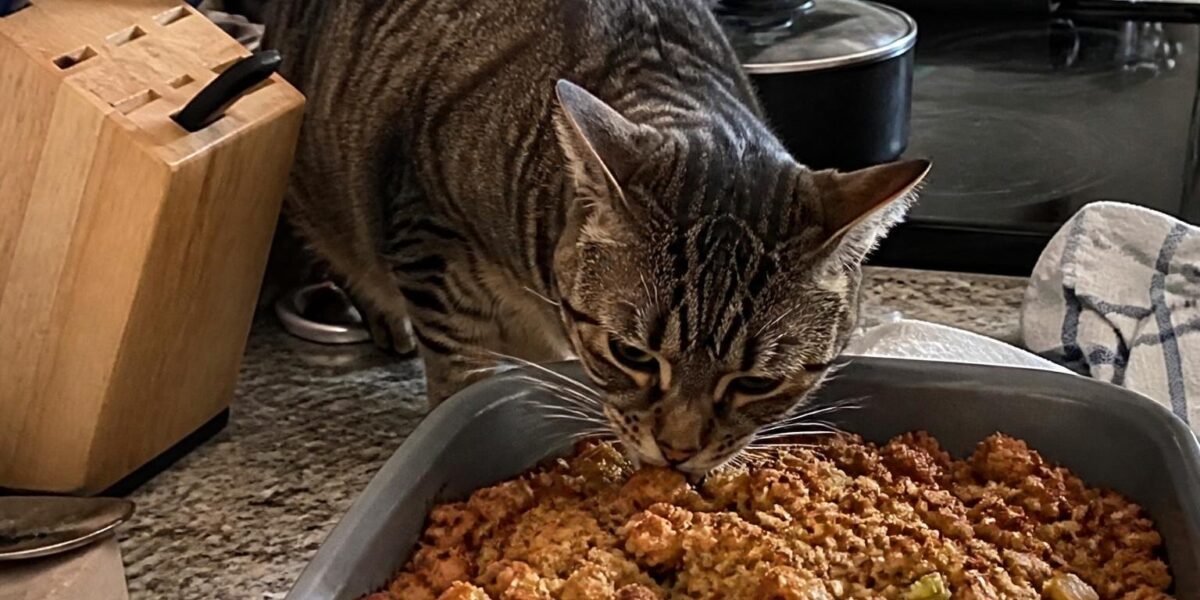
Can cats eat Thanksgiving stuffing? No. Stuffing should never be shared with cats. Traditional recipes are built around onions and garlic, both of which are toxic to cats and can damage their red blood cells. Add in sage, butter, salty broth, and seasonings, and stuffing becomes one of the most hazardous dishes on the holiday table for a feline. There is no safe serving of stuffing for cats.
In this article
- The Short Answer
- Why Stuffing Is Dangerous for Cats
- The Other Hazards in Stuffing
- Symptoms of Allium Toxicity
- What to Do If Your Cat Eats Stuffing
- Keeping the Holiday Table Cat-Safe
- Why Powdered Onion and Garlic Are the Worst Offenders
- Other Thanksgiving Dishes That Share the Same Risk
- Safe Holiday Treats for Your Cat
- Frequently Asked Questions
With so much food out during the holidays, it is easy for a cat to grab a bite from an unattended plate or counter, so keeping stuffing out of reach matters. Stuffing’s savory, buttery smell is exactly the kind of aroma that draws a curious cat, which makes it all the more important to be careful.
Why Stuffing Is Dangerous for Cats
The defining ingredients of stuffing are exactly the ones cats cannot tolerate. Onions and garlic belong to the allium family, which is toxic to cats. These ingredients damage red blood cells and can lead to a condition called Heinz-body anemia, where the body destroys its own blood cells faster than it can make new ones.
You can read more about why onions are toxic to cats and how garlic poses an even stronger version of the same risk. Stuffing typically contains both, often in concentrated amounts from sauteed onions, onion powder, and garlic powder. Powdered forms are especially potent, because drying concentrates the harmful compounds, so even a small amount of seasoning carries a real dose.
The Other Hazards in Stuffing
Beyond alliums, stuffing piles on additional problems:
- Sage and herbs: Sage in large amounts can upset a cat’s stomach, and some herbs are not cat-friendly.
- Butter and fat: Rich, fatty stuffing can cause digestive upset or pancreatitis.
- Salty broth: Store-bought broths are often high in sodium and may contain onion or garlic as well.
- Bread: Plain bread is not toxic, but it offers no nutrition and adds empty carbohydrates.
- Sausage or giblets: Some recipes add seasoned meats that bring even more salt and spice.
Even a small spoonful can deliver a worrying combination of these ingredients. The fact that stuffing absorbs broth, butter, and pan drippings means the harmful flavorings are spread throughout every bite, not just on the surface.
Stuffing cooked inside the bird is a particular concern, because it soaks up the turkey’s juices along with whatever the cavity was seasoned with. Many cooks rub the inside of the turkey with garlic, onion, and herbs, and place aromatics like onion halves directly in the cavity, all of which leach into the stuffing as it cooks. So even a spoonful of stuffing that looks like plain bread can be saturated with allium-laden drippings. There is no practical way to separate the safe bread from the dangerous seasoning once it has cooked together.
Symptoms of Allium Toxicity
Onion and garlic poisoning may not show up right away. Symptoms can appear over one to several days and include:
- Weakness and lethargy
- Pale gums
- Rapid breathing or increased heart rate
- Vomiting and diarrhea
- Reduced appetite
- Reddish or brown urine
- Reduced interest in play or grooming
Because anemia develops gradually, a cat may seem fine at first and then grow noticeably weaker. This delayed effect is why prompt veterinary attention is so important after any allium exposure. Do not be reassured by a cat that appears normal the same evening, since the most serious effects can take a day or more to surface.
The underlying problem is that onions and garlic contain compounds that damage the membranes of a cat’s red blood cells, causing them to rupture or to form clumps called Heinz bodies that the body then removes from circulation. As those damaged cells are cleared, the cat becomes anemic, which is why the gums turn pale and the cat grows weak and tired. The reddish or brown tint to the urine that some owners notice comes from the breakdown products of those destroyed blood cells. Understanding this mechanism helps explain why the symptoms are delayed: it takes time for enough blood cells to be affected before the cat looks unwell.
What to Do If Your Cat Eats Stuffing
If your cat eats stuffing, act quickly:
- Remove the food and prevent further access.
- Estimate how much they ate and note the ingredients, especially onion and garlic content.
- Call your veterinarian or an emergency clinic. Allium toxicity is dose-dependent, and your vet can advise based on your cat’s size and the amount eaten.
- Do not induce vomiting at home unless your vet directs you to.
- Watch for delayed symptoms over the next few days even if your cat seems fine at first.
Do not wait for symptoms to appear before reaching out, since early care leads to better outcomes. Bringing the recipe or a list of ingredients can help your vet judge how much onion and garlic your cat may have eaten.
Keeping the Holiday Table Cat-Safe
Thanksgiving is a wonderful time, and a few simple habits keep it safe for your cat. Ask guests not to slip your cat food from their plates, since well-meaning relatives may not know which foods are dangerous. Cover dishes when they are not being served, and clear plates promptly rather than leaving them where a cat can reach.
It also helps to give your cat a quiet space away from the bustle, with their own food, water, and a favorite resting spot. A calm, separate area reduces the chance of counter-surfing and gives an overwhelmed cat somewhere to retreat. With a little planning, you can enjoy the feast while keeping your cat out of harm’s way.
Why Powdered Onion and Garlic Are the Worst Offenders
Stuffing recipes lean heavily on onion and garlic, and they often use the powdered forms in addition to fresh, sauteed pieces. This is worth highlighting because powdered alliums are more concentrated and therefore more dangerous than the fresh vegetables, ounce for ounce. Drying removes the water and leaves behind a higher proportion of the compounds that harm a cat’s red blood cells.
A spoonful of stuffing seasoned with onion and garlic powder can deliver more allium toxicity than you might expect from such a small serving. Because the powders are mixed evenly throughout the bread and soaked in with the broth and butter, there is no way to pick them out or rinse them off.
This is why we treat all stuffing as unsafe, regardless of how little a cat eats. The same caution extends to gravies, seasoned broths, and many savory side dishes that rely on onion and garlic powder for flavor. Whenever you see these ingredients on a label or in a recipe, consider the food off-limits for your cat.
Other Thanksgiving Dishes That Share the Same Risk
Stuffing is rarely the only allium-laden dish on a Thanksgiving table, so the same caution that applies to it extends across much of the meal. Gravy is built on the same drippings, broth, and often onion and garlic, making it just as dangerous despite its innocent-looking pourable form. Green bean casserole typically includes fried onions and a creamy, salty base. Mashed potatoes are frequently seasoned with garlic and butter, and many vegetable sides are sauteed in onion.
The practical lesson is that a cat’s safety on Thanksgiving depends less on avoiding one named dish and more on recognizing a pattern. Savory holiday cooking leans heavily on onion, garlic, salt, and butter to build flavor, and those four ingredients turn up in dish after dish. If a food smells rich and seasoned, it almost certainly contains something a cat should not have.
This is why the simplest and safest approach is to feed your cat only foods you have set aside and prepared plainly yourself, rather than trying to judge each dish on the table. A small portion of unseasoned turkey carved off before any rub, gravy, or stuffing contact is a reliable treat, while anything that has been part of the seasoned meal is best considered off-limits.
Safe Holiday Treats for Your Cat
Your cat can still join the holiday spirit with safe foods. A small piece of plain, unseasoned cooked turkey is the perfect feline-friendly treat, just be sure it comes from a part of the bird that was not cooked with onion, garlic, or gravy.
Plain cooked chicken is another reliable option, and a tiny bit of plain pumpkin can be a gentle seasonal treat that is easy on the stomach. Always keep your cat away from seasoned dishes and set aside their portion before adding any flavorings.
Hoping to add a cat to your family gatherings? Our adopt a cat hub is full of rescue felines ready to share the holidays with a loving home.
Frequently Asked Questions
Is a small bite of stuffing really that dangerous?
It can be. Stuffing concentrates onion and garlic, which are toxic to cats even in modest amounts. It is safest to treat any stuffing ingestion as a reason to call your vet.
Why are onions and garlic so harmful to cats?
They damage a cat’s red blood cells and can cause Heinz-body anemia. Cats are more sensitive to alliums than many other animals, so even small amounts add up.
How soon will I see symptoms after my cat eats stuffing?
Digestive upset may appear within hours, but signs of anemia from onions and garlic can take one to several days to develop. Monitor closely and consult your vet.
Can I give my cat plain bread instead?
Plain bread is not toxic, but it has no nutritional value for a carnivore. A small bite of plain cooked meat is a much better treat.
What about cornbread or sausage stuffing?
These versions are just as risky. They still contain onion, garlic, salt, and fat, and sausage adds more seasoning. All stuffing types should be kept away from cats.


