
Last updated: May 16, 2026
In this article
- Asclepias and Pets: The Honest Answer
- Why Asclepias Is Planted Despite the Toxicity
- The Cardenolide and Galitoxin Chemistry
- Severity Tier and What Symptoms Look Like
- What To Do If Your Pet Chewed Milkweed
- Common Asclepias Species in Home Gardens
- Monarch-Friendly Garden Layout for Pet Households
- Look-Alike and Adjacent Toxic Plants
- If You Want a Native Pollinator Bed Without the Risk
- What “First Aid” Looks Like at Home
- Frequently Asked Questions
Asclepias and Pets: The Honest Answer
If you have planted a butterfly garden full of milkweed and you are now wondering whether your dog or cat can sniff around it safely, here is the straightforward answer: Asclepias plants are toxic to pets. The American Society for the Prevention of Cruelty to Animals (ASPCA) lists milkweed as toxic to dogs, cats, and horses, and the toxicity is driven by a class of compounds called cardenolides — cardiac glycosides chemically related to those found in oleander and foxglove. A second toxin called galitoxin, present in some species, contributes neurologic signs.
This article uses asclepias plants toxic to pets as the focus phrase because the genus name often appears on plant tags and seed packets at native-plant nurseries. If you are looking at the common-name version of the same warning, our two milkweed pillars cover the same ground from a slightly different angle: are milkweed toxic to cats and are milkweed toxic to dogs. The chemistry and the advice are identical because the plants are identical — only the search terminology changes.
The good news is that most companion animals find milkweed bitter and disagreeable, so unprovoked grazing is uncommon. The bad news is that bored, curious, or under-stimulated pets — especially puppies and indoor-outdoor cats — sometimes chew anyway, and the cardiac glycosides do not need a large dose to cause measurable trouble. Treat your milkweed planting the way you would treat any other ornamental in the cardiac-glycoside category: a beautiful plant your pet should never chew.
Why Asclepias Is Planted Despite the Toxicity
Asclepias is the obligate host plant for the monarch butterfly (Danaus plexippus). Monarch caterpillars cannot complete their life cycle on anything else, and the population of eastern monarchs has dropped sharply over the past several decades because of habitat loss across breeding and overwintering ranges. When a homeowner plants milkweed, that planting is usually a deliberate, conservation-driven choice rather than a casual border-fill.
We want to honor that motivation. You do not need to rip out your milkweed to keep your pet safe, and this article is not telling you to do that. What you do need is awareness — the same kind of awareness any responsible monarch gardener already brings to the project. Plant milkweed for the butterflies, manage your pet’s access the way you would manage access to a tomato cage or a compost pile, and you can keep both the conservation goal and the pet-safety goal intact.
This is the same balance owners strike with other deliberate-purpose toxic plants in the garden, like foxglove for cats, foxglove for dogs, and the cardiac-glycoside cousin lily of the valley for cats. The plant has a place in your landscape; the pet has a place in your home; the management lives in between.
The Cardenolide and Galitoxin Chemistry
Asclepias species produce two distinct categories of toxic compounds. Cardenolides are the headliners — they are cardiac glycosides that bind to and inhibit the sodium-potassium ATPase pump on cell membranes. Inhibiting that pump disrupts the electrical conduction system of the heart and produces arrhythmias, slowed or irregular heart rate, and in severe cases cardiac arrest. The same mechanism is exploited therapeutically in human medicine with digoxin, but the doses and monitoring required are nothing a household pet should ever encounter accidentally.
Galitoxin is the second category and is found primarily in the more arid-adapted species (some western and desert milkweeds). Galitoxin produces neurologic signs — tremors, weakness, seizures — rather than the strictly cardiac signature of the cardenolides. Different Asclepias species emphasize one chemistry or the other, and concentrations vary by species, plant part, season, and growing conditions. From the pet-owner perspective, the practical takeaway is that any Asclepias should be treated as both a cardiac and a neurologic risk.
The white milky sap that gives milkweed its common name is the most concentrated reservoir of these compounds, but every part of the plant — leaves, stems, flowers, seed pods, and the floss inside ripe pods — contains them. The dried plant in winter is still toxic. Cut stems brought in for a flower arrangement are still toxic. Hay or grass clippings contaminated with milkweed are still toxic.
Severity Tier and What Symptoms Look Like
The realistic clinical-severity tier for milkweed ingestion in pets is moderate to severe. A small mouthful of leaf material from a typical eastern Asclepias species will usually produce GI signs without progressing further; a larger ingestion, or any ingestion of a high-cardenolide species, can move into cardiac territory quickly. Cats are generally more sensitive to cardiac glycosides than dogs on a per-kilogram basis, so a “small” exposure for a Labrador is not necessarily small for a cat.
Early signs (typically within the first 1 to 4 hours) include drooling, vomiting, diarrhea, and reluctance to eat. Cardiac involvement, when it happens, shows up as a slow heart rate, an irregular pulse, weakness, collapse, or sudden distress. Neurologic involvement (more typical with galitoxin-heavy species) shows up as tremors, ataxia (a wobbly, drunk-looking gait), dilated pupils, or seizures. Any cardiac or neurologic sign is an emergency. Do not wait it out.
The hardest cases to recognize are the ones where the dog or cat seemed fine at the time of the chew and only develops signs hours later. If you saw your pet near the milkweed and there is leaf debris or sap on the muzzle, treat that as the moment that started the clock — not the moment the first symptom appears.
What To Do If Your Pet Chewed Milkweed
Move quickly. The cardiac glycoside category is one where a pre-symptomatic call is genuinely useful — your veterinarian or a poison-control hotline can tell you whether to induce vomiting at home, whether to drive in immediately, or whether the species and quantity make this a watch-and-wait situation. The wrong move is sitting at home Googling for two hours.
Call one of the following:
- Your own veterinarian or the nearest emergency veterinary hospital. They know your pet, your pet’s history, and (if local) the species of milkweed common in your region.
- The ASPCA Animal Poison Control Center at 888-426-4435. A per-call consultation fee applies, but the toxicologists on staff have species-specific Asclepias data and can advise your vet directly.
- The Pet Poison Helpline at 855-764-7661. Same idea — staffed by veterinary toxicologists, per-incident fee, available 24 hours.
If you can do so safely, take a sample of the plant with you. A leaf, a stem with a flower, or a piece of seed pod with floss — anything that will let the clinician confirm the species. A clear cell-phone photo also works. Bring an estimate of how much was eaten and approximately when, and bring any vomit if your pet has already vomited (yes, gross; yes, useful).
Common Asclepias Species in Home Gardens
Knowing which species you planted matters, because cardenolide concentrations vary substantially across the genus. The species you are most likely to find in a US home garden:
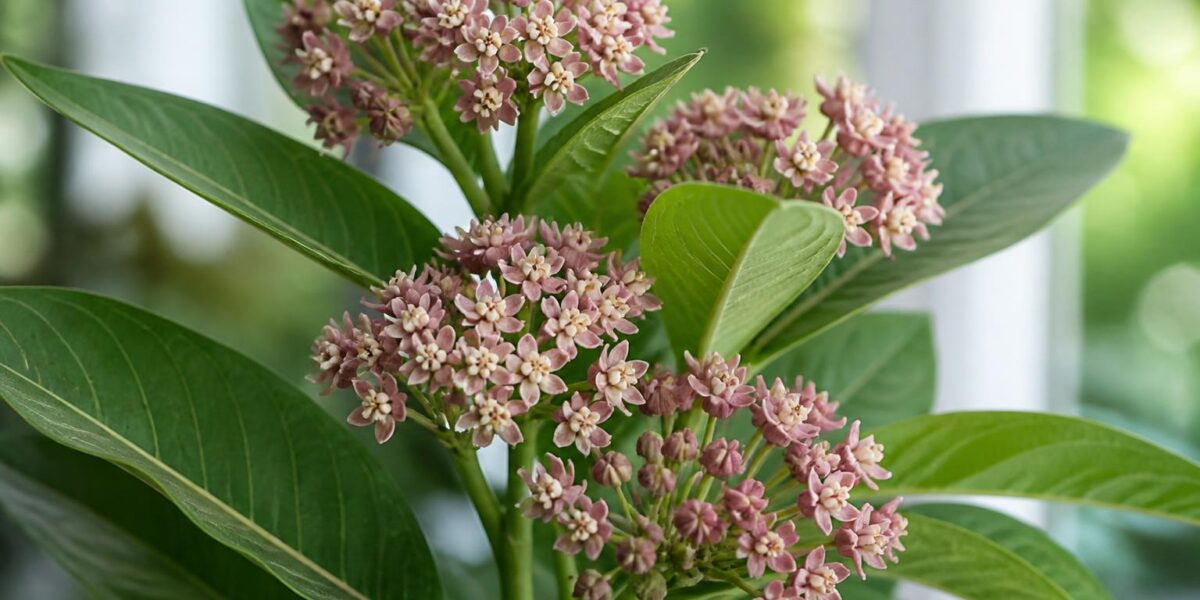
- Asclepias syriaca (common milkweed) — the tall pink-flowered native of meadows and field edges. Moderate cardenolide content.
- Asclepias tuberosa (butterfly weed) — orange-flowered, drought-tolerant, shorter. Lower cardenolide concentration than common milkweed but still toxic.
- Asclepias incarnata (swamp milkweed) — pink, prefers moist soils. Moderate cardenolide content.
- Asclepias curassavica (tropical milkweed) — bright orange and red, often sold at non-native-focused nurseries. Higher cardenolide content; also raises monarch-conservation concerns of its own and is increasingly discouraged in US plantings.
- Asclepias speciosa (showy milkweed) — western native. Moderate.
From the pet-safety angle, the practical answer is that none of these species is safe for a pet to chew. The genus-level warning applies. Differences between species matter to a clinician evaluating a known ingestion, not to a homeowner deciding whether to let their dog roam unsupervised in the butterfly bed.
Monarch-Friendly Garden Layout for Pet Households
You can absolutely keep milkweed and a dog or cat. The trick is layout. Plant your Asclepias in a dedicated bed or border that you can fence off, mulch densely, or position behind other taller perennials so that casual grazing is awkward. Beds along the back fence or in a side yard you do not use for off-leash play work well. Avoid planting milkweed along the edge of lawns where dogs run, near patio doors where indoor-outdoor cats lounge, or in any container at ground level that a curious pet can investigate face-first.
For households with cats, the additional risk is that cats sometimes nibble vegetation as a self-medication or boredom behavior. If your cat is the kind who chews on plants, do not plant milkweed where it has unsupervised access. Provide cat-safe alternatives indoors — see our cat-safe houseplants guide for ideas — so the chewing instinct has somewhere benign to land.
For dogs, the most common exposure scenario is during yard cleanup or weeding, when a homeowner pulls plants and leaves a pile. A pile of fresh-pulled milkweed in the corner of the yard is a magnet for the bored dog. Bag and remove plant material immediately rather than letting it sit overnight.
Look-Alike and Adjacent Toxic Plants
Milkweed has a few look-alikes worth flagging. Dogbane (Apocynum) is in the same broad family (Apocynaceae) and produces a similar milky sap with similar cardiac-glycoside chemistry; if you have something that looks like milkweed but is not on your monarch-friendly planting list, treat it the same. Indian hemp (also a dogbane) is another regional cousin. None of these are pet-safe.
The cardiac-glycoside category as a whole is worth orienting yourself to. Other plants in this severity neighborhood that you might already have at home: foxglove for cats, foxglove for dogs, lily of the valley for cats, and lily of the valley for dogs. If you are planning a native-pollinator garden, knowing which other ornamentals share the cardenolide chemistry helps you avoid stacking risk in one area.
One often-asked-about adjacent plant: monkshood / aconite. The toxicity mechanism is different (sodium-channel rather than sodium-potassium pump), but the severity tier is in the same conversation. See is aconite toxic to pets if you have any doubt about identification on a tall purple-flowered plant.
If You Want a Native Pollinator Bed Without the Risk
Milkweed is uniquely the monarch host, but it is not the only native-pollinator plant in the world. If you would like a native garden that is friendlier to a pet who chews, consider building most of the bed around safe natives and reserving milkweed for a dedicated, fenced butterfly station. Safe-for-pets natives in the same general bloom-time and pollinator-attractor category include Joe-Pye weed, goldenrod, and ironweed.
None of those will host monarch caterpillars, but all of them feed adult butterflies, native bees, and other pollinators, and none of them are on the ASPCA toxic list. A common compromise layout: a dense matrix of safe natives that fills most of the bed, with milkweed clustered in the back, behind a low fence, where the monarchs can find it but the dog cannot.
What “First Aid” Looks Like at Home
If you are on the phone with your vet or with poison control after a known ingestion, they may give you specific home-care instructions while you drive in. Do not improvise these. Do not give activated charcoal, hydrogen peroxide, milk, or any home remedy on your own initiative — the wrong intervention with a cardiac glycoside can make outcomes worse.
Things you can do that are always appropriate while you wait for instructions:
- Remove your pet from the area so no further exposure is possible.
- Wipe any visible sap off the muzzle, paws, and fur with a damp cloth (the sap is also a skin and eye irritant).
- Save a sample of the plant in a paper bag.
- Note the time of the suspected ingestion, the approximate quantity, and your pet’s body weight.
- Keep your pet calm and on a leash or in a carrier.
For broader help on building a pet-aware garden across all of these decisions, our pillar pages — including our overall cat-safe houseplants reference — give you ASPCA-aligned context for both indoor and outdoor planting choices.
Frequently Asked Questions
Is butterfly weed (Asclepias tuberosa) safer than common milkweed for my dog?
Butterfly weed has a lower cardenolide concentration than Asclepias syriaca, but it is still on the ASPCA toxic list and a determined dog can still get into clinical trouble. Treat it as a toxic plant and manage access. The species difference matters to a clinician, not to your management plan.
My cat brushed against the milkweed and got sap on her fur — is that an emergency?
External contact with sap is primarily a skin and eye irritant rather than a systemic-toxicity event. Wipe her down with a damp cloth, keep her from grooming the area for a couple of hours if you can, and watch for any redness or swelling on the skin or eyes. Call your vet if she shows facial swelling, persistent rubbing at the eyes, or signs of GI upset within the next several hours — those would suggest she ingested some during grooming.
Will keeping monarch caterpillars on my milkweed affect the toxicity for my pet?
No. The caterpillars sequester cardenolides for their own defense, but the plant remains just as toxic to your pet whether the caterpillars are present or not. The toxicity does not run out.
Can I compost milkweed clippings safely?
You can compost the clippings, but do not let your pet investigate the compost pile while milkweed is in active decomposition. Cardenolides break down over time but remain biologically active for weeks. A fenced compost bin is the easier solution than trying to time the breakdown.
What if I think my dog ate milkweed but he seems totally fine?
Call your vet or poison control anyway. Cardiac-glycoside toxicity has a delayed onset in some cases, and the right call to make pre-symptomatically can include monitoring at the clinic, decontamination, or simply documented baseline vital signs you can compare against later. The ASPCA APCC at 888-426-4435 and the Pet Poison Helpline at 855-764-7661 are both available 24 hours and will help you decide whether you need to drive in.


