
Last updated: May 16, 2026
In this article
- Boston Ivy and Pets: The Same Family as Virginia Creeper
- Identifying Boston Ivy
- Calcium Oxalate Raphides: The Same Mechanism as Aroids
- Cyanogenic Glycoside Content
- Symptoms in Dogs and Cats
- Immediate Steps After Suspected Ingestion
- Boston Ivy vs Other Climbing Plants
- Why Boston Ivy Is So Common in Older Gardens
- Indoor and Container Boston Ivy
- Garden Layout and Removal
- Adoption Considerations
- Frequently Asked Questions
Boston Ivy and Pets: The Same Family as Virginia Creeper
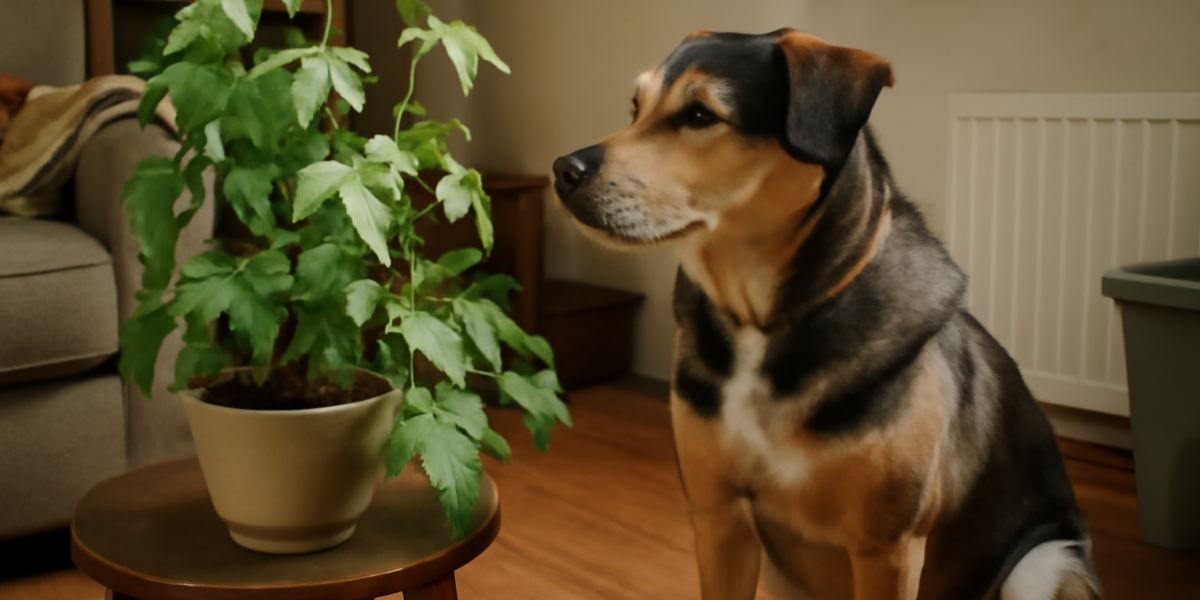
Boston ivy (Parthenocissus tricuspidata) is toxic to pets, in the mild-to-moderate severity tier. It is not actually a true ivy at all — that name belongs to the genus Hedera. Boston ivy shares its genus with virginia creeper, and the two plants share an almost identical toxic profile: calcium oxalate raphides in the leaves and stems, plus measurable amounts of cyanogenic glycosides in the foliage and unripe berries. If you have a dog or cat and are wondering whether boston ivy toxic pets situations are real, the answer is yes, and the management approach is similar to managing virginia creeper.
The plant is famous for clothing the brick walls of Ivy League universities, hence the name. Its dense overlapping leaves, bright autumn color, and self-clinging tendrils make it one of the most recognizable climbing plants in temperate gardens. The leaves are typically three-lobed, distinguishing them from virginia creeper’s five separate leaflets. If your pet has chewed boston ivy leaves or eaten the small dark berries, call your veterinarian, the ASPCA Animal Poison Control Center at 888-426-4435, or the Pet Poison Helpline at 855-764-7661.
Identifying Boston Ivy
The most reliable identification cue is the leaf shape: a single leaf with three distinct lobes, glossy green in summer turning brilliant red, orange, or purple in autumn. The leaves are alternate on the stem (one per node, not opposite) and the plant attaches to walls and trees using small adhesive pads at the tips of branched tendrils. Once these pads grip a surface, removing the plant without damaging the underlying paint or mortar is genuinely difficult — anyone who has tried to take down established Boston ivy knows this.
The berries are small, dark blue to nearly black at maturity, in loose clusters. They are not eaten by humans but are popular with birds, which is how the plant has spread far beyond its East Asian native range. Young leaves on a single stem can have varied lobing — three deep lobes is most common, but you may also see leaves with five lobes or even unlobed leaves on the same vine. The juvenile foliage tends to be more variable than the mature foliage.
Calcium Oxalate Raphides: The Same Mechanism as Aroids
The microscopic needle-shaped crystals stored in the leaf cells of Boston ivy are the same kind of crystals that make houseplants like pothos, philodendron, dieffenbachia, and peace lily so unfriendly to chewing pets. When a leaf is bitten, the crystals are released and embed in the soft tissue of the mouth, throat, and tongue. The result is immediate burning, drooling, and a strong instinct to spit out the offending plant matter. Most pets do not eat large amounts because of this self-limiting reaction.
The discomfort can persist for hours. Some pets develop swelling of the lips, tongue, or face, which is uncomfortable but rarely dangerous. Vomiting often follows. The crystals continue to irritate the digestive tract on their way through, sometimes producing diarrhea over the next twenty-four hours. Supportive care at home (rinse the mouth, offer a small amount of yogurt or cottage cheese to soothe the oxalate-related sensation) is sufficient for most cases, but call your vet to confirm.
Cyanogenic Glycoside Content
The other half of the toxic profile is cyanogenic glycosides in leaves and unripe berries. These compounds release small amounts of cyanide when chewed, contributing a low-grade systemic component to the toxicity. The amount per leaf or berry is small, and a healthy adult dog or cat eating a few leaves is very unlikely to develop systemic cyanide signs. Larger ingestions, particularly in small pets, occasionally produce signs like rapid breathing, weakness, lethargy, or bright-red gums.
This dual mechanism (oxalate plus cyanogenic) is why Boston ivy and virginia creeper sit in the moderate part of the mild-moderate severity tier. Most cases are local oral discomfort and self-limiting GI signs. A small subset progress further, and those cases benefit from professional evaluation.
Symptoms in Dogs and Cats
Within minutes of chewing, expect drooling, pawing at the mouth, head shaking, and lip licking. Vomiting often follows. Some pets develop facial swelling. Diarrhea may show up over the following day, sometimes with traces of blood in larger ingestions. Reduced appetite and lethargy are common. Severe cases (rare) may involve breathing changes, weakness, or color changes in the gums, all of which are emergency signs.
Cats sometimes react more dramatically than dogs at smaller doses because of their lower body weight and tendency toward more pronounced oxalate reactions. Kittens and small dogs are at higher risk than larger animals. If you witnessed your pet chewing on Boston ivy, call your vet for guidance even if symptoms have not fully developed yet.
Immediate Steps After Suspected Ingestion
Rinse your pet’s mouth with cool water if they will tolerate it. A damp cloth wiped along the gums works for cats. Do not force water down with a syringe — aspiration is a real concern. A small amount of plain yogurt, milk, or cottage cheese can sometimes help bind oxalate crystals and reduce the burning sensation. This is comfort, not cure. Call your veterinarian for guidance, especially if your pet is young, small, or has any preexisting health condition.
Bring a sample of the plant to your vet visit. Boston ivy is often confused with English ivy, and the toxic profiles differ. Snip a leafy stem with a few mature leaves and bring it along. Do not induce vomiting at home unless directed by a professional.
Boston Ivy vs Other Climbing Plants
The most common confusions are with virginia creeper, English ivy, and grape vine. Virginia creeper (Parthenocissus quinquefolia) is in the same genus and shares the same chemistry; the difference is leaf structure (five separate leaflets versus Boston ivy’s three lobes on one leaf). See our virginia creeper guide. English ivy (Hedera helix) is in a different family altogether and contains a different set of toxic compounds (saponins) — see English ivy in cats and English ivy in dogs. Grape vine (Vitis) has lobed single leaves like Boston ivy but produces grapes, not the small dark berries of Boston ivy. Grape vine is severely toxic to dogs via tartaric acid (see our grape vine and dogs piece).
The practical implication is that “ivy” as a category is not safe. Most plants with that common name (or that look ivy-like) are toxic to pets in some way. If you are auditing climbing plants in a pet household, Boston ivy and English ivy both come out, and so do virginia creeper and grape vine.
Why Boston Ivy Is So Common in Older Gardens
Boston ivy was popularized in the late nineteenth and early twentieth centuries as a way to soften stark brick architecture and provide insulation. Mature ivy walls do help with summer cooling and winter wind protection, and the autumn color is genuinely spectacular. The plant tolerates pollution, urban conditions, and a wide range of soils. None of that changes the toxicity question, but it explains why so many old buildings, fences, and gardens have it.
If you have moved into an older home with established Boston ivy, you do not necessarily need to remove it on day one. The risk to a typical pet is low if the leaves are out of reach (most mature walls have foliage starting several feet up). Risk rises during autumn when leaves drop in large quantities, during pruning when fresh leaves are at ground level, and in mixed plantings where the vine cascades down to a reachable height.
Indoor and Container Boston Ivy
Boston ivy is occasionally grown indoors as a trailing houseplant or in containers on patios. Indoor exposure risks are smaller in scale than outdoor walls but the chemistry is identical. Keep containers on high shelves out of pet reach, and consider whether the trailing-vine aesthetic could be achieved with safer alternatives. Spider plant, string of hearts (verify safety per your local poison-control resource), and several non-toxic ferns provide similar visual appeal — see cat-safe houseplants.
For households with kittens or puppies, the safer rule is no toxic vines indoors at all. Young animals chew, climb, and explore far more aggressively than adult pets, and the cost of an emergency visit far outweighs the aesthetic value of any one houseplant.
Garden Layout and Removal
If you decide to remove established Boston ivy, expect a multi-season project. The adhesive pads bond firmly to brick, mortar, and wood, and pulling the vine off can damage the surface beneath. The standard approach is to cut the main stems near the base in autumn, let the vine die back over winter, then carefully scrape off the dead pads in spring. Wear gloves — the cyanogenic compounds and oxalate crystals are mildly irritating to human skin too.
For replacement options that fill the same visual niche, look at trumpet honeysuckle (verify cultivar safety), climbing hydrangea, or native serviceberry trained against a trellis. Our pet-safe garden plants page collects more options, and the grape vine and cats piece covers another common climber to avoid.
Adoption Considerations
If you are bringing a new pet home, walking the property perimeter to identify climbing plants is one of the underrated parts of a good pet-prep checklist. Many homes have Boston ivy without the homeowner realizing what species it is — they call it “the ivy on the fence” and have never thought twice about it. Take five minutes with a phone camera and a plant-ID app and see what you actually have. Our adopt dogs and adopt cats hubs walk through broader home-prep checklists.
For pets already in the household, an annual yard audit catches things that have grown into reachable heights since last year’s check. Boston ivy can grow several feet in a single season, and what was overhead last summer may be mouth-height this summer.
Frequently Asked Questions
Is Boston ivy more or less toxic than English ivy?
They are toxic via different mechanisms. Boston ivy uses calcium oxalate raphides plus cyanogenic glycosides; English ivy uses saponins. Both are typically in the mild-to-moderate severity range for pets. Treat any chewing of either plant as a vet-call event, especially in small pets.
Can my dog get poisoned just by walking through Boston ivy?
Skin contact alone is unlikely to cause significant problems. The toxicity is from chewing or eating the plant. That said, pets that walk through ivy may pick up sap on their paws and lick it off later, so brushing the paws after exposure is a reasonable precaution.
What about the bright red autumn leaves?
The toxic compounds are present year-round. Autumn leaves are not safer than summer leaves, despite their dramatic appearance. If anything, the brittle dropped leaves are easier for pets to chew through.
My cat ate a Boston ivy berry. Should I rush to the ER?
A single berry in an adult cat is unlikely to be a life-threatening emergency, but it is still worth a call to a poison helpline for guidance. Watch for drooling, vomiting, lethargy, or any breathing changes, and head in if any of those develop.
Can I keep Boston ivy if I have well-trained pets?
Yes, but with realistic boundaries. Mature Boston ivy on walls is unlikely to be a daily exposure source if leaves remain above pet height. Risk goes up during pruning, autumn leaf drop, and in mixed plantings where the vine cascades to ground level. A “yes, with care” answer is reasonable for many households.


