
Last updated: May 16, 2026
In this article
- Are Juniper Bonsai Safe for Pets? The Short Answer
- What Juniper Bonsai Are
- Why Juniper Is Generally Considered Low-Risk
- Symptoms in Pets After Juniper Bonsai Exposure
- First Aid: What to Do at Home
- Veterinary Treatment
- Bonsai Toxicity: A General Rule
- Juniper Berries: A Specific Concern
- Comparing Juniper to Other Bonsai Species
- Preventing Juniper Bonsai Accidents
- Bonsai Soil, Wire, and Display Hazards
- Frequently Asked Questions
Are Juniper Bonsai Safe for Pets? The Short Answer
Juniper bonsai are generally low-risk for cats and dogs. The ASPCA Animal Poison Control Center does not list common juniper species (Juniperus) as toxic to either species, and most exposures result in no symptoms or mild stomach upset. The main practical hazard is the berry — juniper berries contain volatile oils and pinene compounds that can cause vomiting, diarrhea, drooling, and mild abdominal discomfort if a pet eats more than a small handful. The needle-like foliage is sharp enough to cause oral irritation if chewed but is not toxic in the systemic sense.
Crucially, a bonsai is a miniaturized version of a full-size tree, not a separate species. The toxicity profile of any bonsai is identical to that of the underlying species. A juniper bonsai grown from Juniperus procumbens, Juniperus chinensis, or any other Juniperus species shares the toxicity (or non-toxicity) of the parent tree. This is true for every bonsai you might encounter — the dwarfing process changes the size, not the chemistry.
What Juniper Bonsai Are
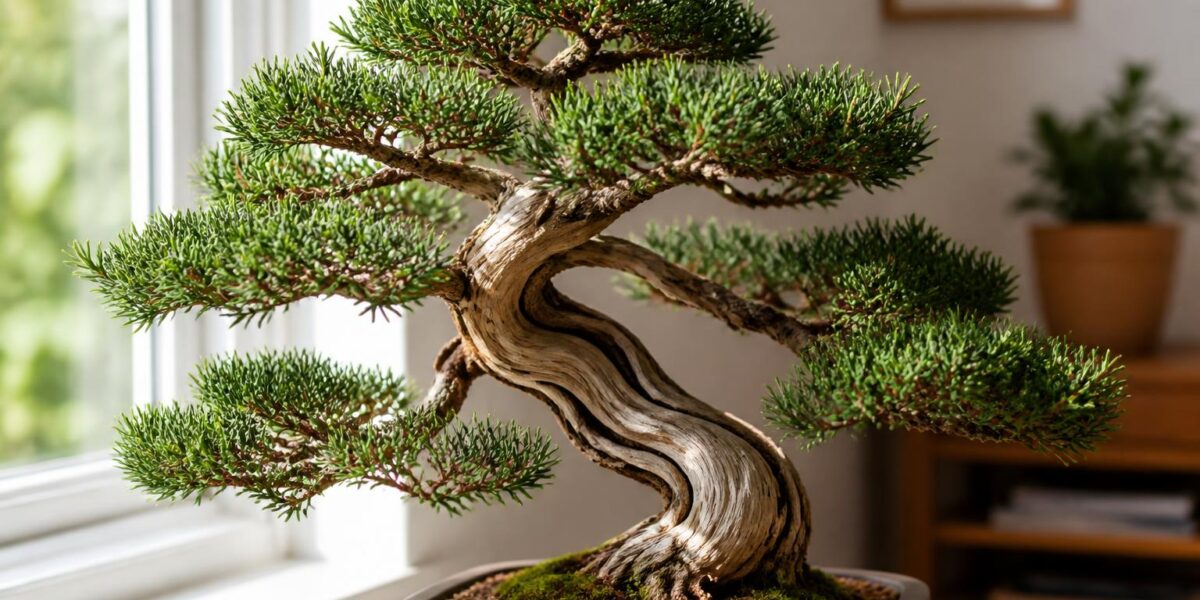
The Juniperus genus contains about 60 species of evergreen coniferous trees and shrubs in the cypress family. Common bonsai-trained species include Juniperus procumbens (Japanese garden juniper, the most popular beginner bonsai), Juniperus chinensis (Chinese juniper, often grafted as “shimpaku”), Juniperus communis (common juniper), and Juniperus virginiana (eastern red cedar). Bonsai cultivation involves shallow pots, regular pruning, and wire training to create a miniature tree shape; none of this alters the underlying plant’s chemistry.
Juniper bonsai are popular indoor decorative plants and outdoor specimen trees. They produce small, scaly or needle-like leaves and, on mature plants, berry-like cones in shades of green to blue-black. The berries take two to three years to ripen and are most commonly seen on outdoor specimens; indoor bonsai may not produce them at all. The same plant material — leaves, sap, berries — is what your pet might encounter.
Why Juniper Is Generally Considered Low-Risk
The ASPCA does not list general juniper toxicity for cats or dogs, which means there are no documented severe poisoning cases reaching their veterinary toxicology channels. Many livestock veterinarians note that ruminants can graze juniper foliage with minimal effects in moderate amounts. The plant does contain volatile oils — primarily alpha-pinene and other terpenes — that give juniper its characteristic resinous aroma. These compounds can act as GI irritants in concentrated doses, and they appear in higher concentrations in the berries than in the foliage.
Some Juniperus species, particularly Juniperus sabina (savin), produce a more concentrated essential oil that is genuinely toxic to mammals when consumed in large amounts. Savin is rarely used as a bonsai species; if you bought your bonsai from a reputable nursery or bonsai vendor, the species is almost certainly one of the lower-risk landscape varieties. If you are uncertain about the species, check the plant tag or ask the vendor.
Symptoms in Pets After Juniper Bonsai Exposure
Most cats and dogs that nibble juniper bonsai foliage show no symptoms at all. When mild signs do appear, expect drooling, mild vomiting, soft stool, and reduced appetite — usually self-limiting within a day. Some pets paw at the mouth or shake their head from the sharp needle-like leaves rather than from any chemical effect.
Berry ingestion is the most common cause of moderate symptoms. A pet that eats a handful of juniper berries may have more vigorous vomiting and diarrhea, sometimes with abdominal discomfort. Severe presentations — repeated forceful vomiting, blood in vomit or stool, profound lethargy, tremors, or any change in mental status — are uncommon and warrant prompt veterinary evaluation. Small dogs, puppies, kittens, and pets with pre-existing GI or kidney disease are more vulnerable to dehydration from any vomiting episode.
First Aid: What to Do at Home
Move the pet away from the bonsai and remove any remaining plant material from the mouth. Wipe the muzzle and paws with a damp cloth. Note the time of exposure, the parts eaten (foliage, berries, or both), and the approximate quantity. If the pet seems comfortable and you can identify the species as a typical landscape juniper (procumbens, chinensis, communis, virginiana), watch for symptoms over 12 to 24 hours and offer water as normal.
If symptoms appear and persist, or if the species is uncertain or the quantity was substantial, call your veterinarian or a 24/7 poison-control hotline: ASPCA Animal Poison Control at 888-426-4435 or the Pet Poison Helpline at 855-764-7661. Do not induce vomiting at home unless directed by a veterinarian. Hydrogen peroxide can cause aspiration pneumonia, esophageal injury, or hemorrhagic gastritis — particularly hazardous in small or brachycephalic breeds and contraindicated in cats.
Veterinary Treatment
For mild juniper bonsai exposure, treatment is supportive. Anti-nausea medication, a brief fast followed by bland diet, and 24-hour observation usually resolve the issue. The vet may decline to do anything beyond a phone consult if the exposure was small and the pet appears comfortable.
For larger berry ingestions or symptomatic pets, the workup may include activated charcoal, a baseline chemistry panel to rule out unusual complications, and IV fluids if dehydration develops. Recovery is typically complete within 24 to 48 hours. The treatment course is essentially the same for cats and dogs because the toxic mechanism — GI irritation from volatile oils — does not differ between species.
Bonsai Toxicity: A General Rule
The most important concept for any bonsai owner: a bonsai is the same plant as a full-grown specimen of the same species, just smaller and trained into a particular shape. The toxicity (or safety) of a bonsai is identical to the underlying species. A jade tree bonsai is as toxic as a full-size jade plant. An azalea bonsai is as life-threatening as a landscape azalea — every bit as catastrophic from grayanotoxin. A ficus bonsai contains the same irritant sap as a full-size ficus.
This makes bonsai species selection a genuine pet-safety decision. Juniper, Chinese elm, and pine bonsai are generally low-risk. Ficus, jade, schefflera, and azalea bonsai are toxic to varying degrees. When purchasing or receiving a bonsai as a gift, identify the species before deciding where to place it relative to your pets.
Juniper Berries: A Specific Concern
Juniper berries are technically modified seed cones, fleshy and blue to purple-black when ripe. They are used in human cuisine — gin distillation, game-meat seasoning — but the human food preparation does not transfer to pets. Berries contain higher concentrations of volatile oils than foliage and are the most common cause of moderate symptoms when ingested by curious dogs or outdoor cats.
For more on berry-specific risk, see juniper berries and cats and juniper berries and dogs. Most indoor juniper bonsai do not produce berries because the cultivation conditions inhibit fruiting; this is mostly an outdoor-bonsai concern. If your indoor bonsai does produce berries, prune them off if your pets have shown interest in chewing the plant.
Comparing Juniper to Other Bonsai Species
Juniper bonsai sit in the lower-risk category alongside Chinese elm (Ulmus parvifolia, ASPCA non-toxic) and pine bonsai (Pinus species, generally safe but pine needles can cause GI upset in large amounts). Higher-risk bonsai species include ficus (Ficus genus, irritant sap), jade tree (Crassula ovata), schefflera (Schefflera arboricola), and the genuinely dangerous azalea bonsai (Rhododendron, severe-tier grayanotoxin).
If you are deciding which bonsai is safest for a multi-pet home, juniper and Chinese elm are the standouts. The sibling B122 bonsai guides cover the alternatives in detail; cross-link to the pine needles and cats and pine needles and dogs articles for related risk on the other low-risk option. Avoid Norfolk pine (Araucaria heterophylla) — despite the name, it is not a true pine and IS toxic; see Norfolk pine and cats and Norfolk pine and dogs.
Preventing Juniper Bonsai Accidents
Place bonsai on stable surfaces out of pet reach — the shallow trays they grow in tip easily, and a pet that knocks over a bonsai may swallow soil, fertilizer pellets, or wire training material along with plant material. Choose bonsai pots and stands that are too heavy for a cat to topple. Outdoor bonsai should be kept in a fenced area or on raised tables that dogs cannot access.
For pet-safe alternatives in your indoor garden, see the cat-safe houseplants list. The pet-safe garden plants guide covers outdoor options that pose no toxic risk. Rescue-minded readers can browse cats waiting for homes and dogs available for adoption while you set up a pet-safe display area.
Bonsai Soil, Wire, and Display Hazards
The plant itself is only one part of a bonsai’s safety profile. The shallow ceramic tray, the akadama or pumice soil, the slow-release fertilizer pellets pressed into the soil surface, the copper or aluminum training wire wrapped around branches, and the moss top-dressing are all distinct objects a curious pet might investigate. A cat that knocks a juniper bonsai off a windowsill may end up with potting medium on the floor and a stunned plant rolling across the carpet — both of which become novelty chew targets.
Training wire is particularly worth flagging. Bonsai branches are shaped by wrapping copper or aluminum wire around them; over time the wire gets removed, but bits often fall to the soil surface. Ingested wire fragments can cause GI obstruction or laceration in dogs that swallow them. Inspect the soil surface periodically and pick out any loose wire ends. Slow-release fertilizer pellets, often visible as small green or brown granules pressed into the soil, are another common ingestion target — most are not severely toxic but can cause GI upset and may pose a hazard to small dogs in larger amounts.
Frequently Asked Questions
Are all juniper species safe for pets?
Most landscape and bonsai juniper species (Juniperus procumbens, chinensis, communis, virginiana) are generally low-risk. Juniperus sabina (savin juniper) is more concentrated in volatile oils and considered more toxic. If you cannot identify the species of your bonsai, check the nursery tag or ask the vendor.
What if my dog ate juniper berries?
A handful of juniper berries may cause vomiting, diarrhea, and mild abdominal discomfort. The risk scales with quantity and body weight. Call your vet for guidance, especially if your dog ate a substantial number. ASPCA Animal Poison Control (888-426-4435) and the Pet Poison Helpline (855-764-7661) are 24/7 resources.
Can my cat scratch on a juniper bonsai?
The needle-like foliage may irritate the mouth and paws if chewed or batted, and the wire training inside the trunk can pose injury risk if scratched. Place bonsai out of cat batting range to protect both the plant and your cat.
Is bonsai fertilizer dangerous to pets?
Some bonsai fertilizer pellets contain ingredients that may cause GI upset if eaten. The container and frequency of fertilizing varies by product. Keep fertilizer products in sealed bins and apply them when pets cannot access the bonsai during the few hours after fertilizing.
Should I worry about juniper essential oils?
Concentrated juniper essential oil — used in aromatherapy and some natural products — is more potent than the plant itself and can cause significant toxicity, especially in cats. Cats are particularly sensitive to many essential oils due to limited liver glucuronidation. Do not diffuse or apply juniper essential oil in a home with cats.


