
Last updated: May 16, 2026
In this article
- Are Lotus Plants Safe for Pets? The Quick Answer
- Meet the Lotus (Nelumbo) Genus
- Why Lotus Is Considered Non-Toxic
- What Could Still Go Wrong
- What to Do If Your Pet Eats a Lotus Plant
- Cats and Lotus
- Dogs and Lotus
- Growing Lotus in a Pet Home
- Pairing Lotus With Other Pet-Safe Plants
- When Lotus Isn’t the Right Fit
- Frequently Asked Questions
Are Lotus Plants Safe for Pets? The Quick Answer
Yes. Lotus plants — Nelumbo nucifera (the sacred Asian lotus) and Nelumbo lutea (the American lotus) — are considered non-toxic to cats and dogs per ASPCA listings for the Nelumbo genus. The flowers, leaves, stems, and famous edible rhizomes (“lotus root”) that show up in Asian cuisine are all on the safe column. If you have a backyard pond with lotuses or a large indoor water bowl growing one and your cat is sniffing the floating leaves, the lotus plants safe for pets question can be answered with a confident yes for the chemistry.
Non-toxic does not mean encouraged. Any plant matter ingested in volume can cause mild stomach upset, and the long underwater rhizomes are large enough to be a choking concern in small dogs. Pond exposure also adds general concerns about water quality and pond chemistry that are independent of the lotus itself. The risks are mild and short-lived, however, and far smaller than what you would face with truly toxic aquatic plants like water hyacinth or water lettuce. This guide covers what lotus is, why it earns the safe label, what symptoms to watch for if a pet samples a flower, and how to grow this magnificent plant in a pet home.
Meet the Lotus (Nelumbo) Genus
Nelumbo is a genus of just two species: Nelumbo nucifera, the sacred lotus of Asian art and religion, native from Iran east through India, China, Japan, and Australia; and Nelumbo lutea, the American lotus, native to eastern North America and Mexico. Both are aquatic perennials that grow from thick underwater rhizomes anchored in pond mud, sending leaves and flower stalks up to and above the water surface.
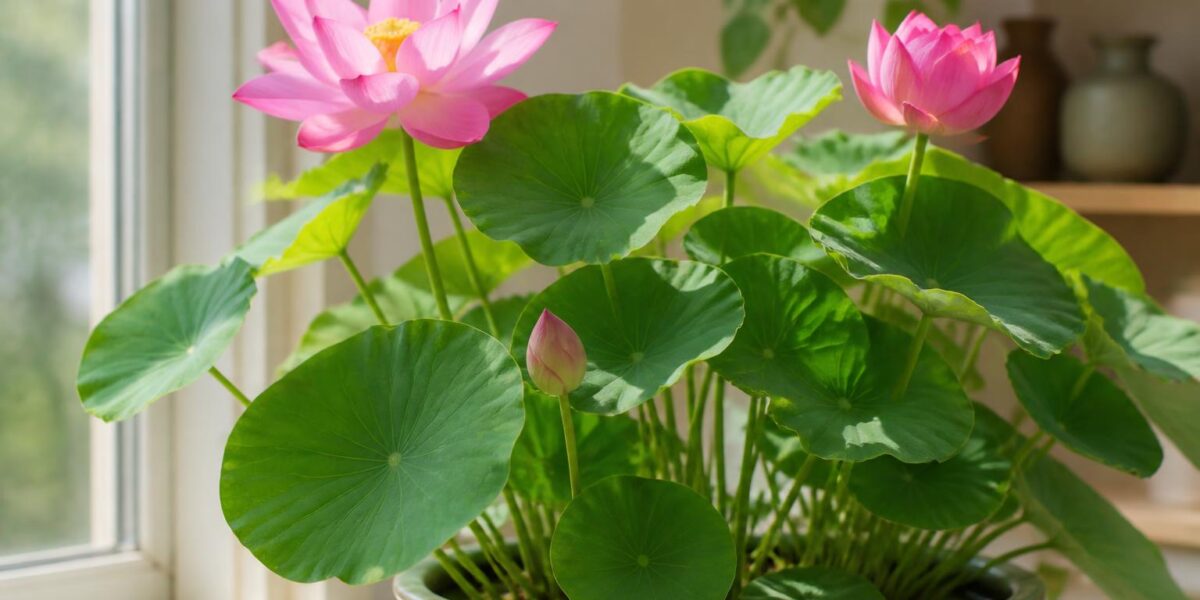
The leaves are large round disks — often two feet across in mature plants — held above the water on long stalks. They have a famous water-shedding quality: rain beads up and rolls off, leaving the leaf perfectly dry. The lotus effect, as botanists call it, has inspired self-cleaning paint and fabric coatings. The flowers are equally striking: huge cup-shaped blooms in pink, white, or yellow, often a foot across, sitting on tall stalks above the leaves. After flowering, the receptacle expands into the iconic lotus seed pod with its honeycomb of round seed chambers — a familiar image in dried flower arrangements.
Lotus is celebrated for its edibility. The rhizomes are sliced and stir-fried in East and Southeast Asian cuisine; the seeds are eaten raw, candied, or used in mooncakes; the young leaves are wrapped around rice for fragrant rice bundles; and even the stamens are dried for tea. None of this culinary heritage poses a meaningful risk to a curious pet that nibbles a leaf or stem.
Why Lotus Is Considered Non-Toxic
The ASPCA’s plant database lists Nelumbo (under common names including American lotus and water lotus) as non-toxic to cats and dogs. Lotus tissue contains no calcium oxalate raphides like water lettuce or the aroid family, no protoanemonin like marsh marigold, no cardiac glycosides, and no organosulfur compounds. There are mild plant alkaloids in the seeds and rhizomes that have traditional medicinal uses in Asian herbalism, but at typical pet-chew exposure volumes these do not produce poisoning.
The fact that humans have eaten lotus rhizome, seed, leaf, and stamen for thousands of years across multiple cuisines is a reasonable real-world signal that the plant’s chemistry is friendly. Pets do not metabolize plants exactly the way humans do — many plants safe for humans are toxic to dogs or cats, and vice versa — but lotus passes both the human-edibility test and the ASPCA listing.
By contrast, the toxic aquatic plants we cover separately — water hyacinth and water lettuce — contain calcium oxalate raphides and produce real symptoms when chewed. Lotus is in a completely different botanical family (Nelumbonaceae, with no close relatives among toxic aquatic plants) and the safety profile reflects that. We cover the umbrella aquatic-plant safety story in our pet-safe garden plants guide.
What Could Still Go Wrong
Non-toxic does not mean digestible. A handful of edge cases keep lotus in the “supervise, do not panic” category rather than the “encourage grazing” category:
- Volume eating. A pet that destroys a whole leaf or chews through a flower stalk may vomit once or have loose stool. The reaction is mechanical irritation, not poisoning.
- Choking on rhizomes. Lotus rhizomes are thick, fibrous, and can be many inches long. Pets that find a freshly dug or harvested rhizome may try to chew it; small dogs that swallow a piece could obstruct the esophagus or intestines.
- Pond mud and pond water. The plant itself is safe, but pond mud may contain bacteria, and pond water may contain algae blooms (some of which are toxic) or fertilizer additives. The lotus is rarely the culprit when a pet gets sick from a pond visit; the surrounding water environment is.
- Seed pod inhalation. The dried lotus seed pod from craft markets has dozens of small loose seeds. A puppy that finds and chews a seed pod may inhale or swallow several seeds; the seeds themselves are not toxic but are a choking and foreign-body risk.
- Pesticide residues. Pond plants finished in commercial nurseries may carry pesticide residues. Rinse new plants and isolate them for a few weeks before pets gain access.
Symptoms of mild plant ingestion in cats and dogs include drooling, single-episode vomiting, brief lip-smacking or pawing at the mouth, and occasional loose stool. Most cases self-resolve within twelve to twenty-four hours.
What to Do If Your Pet Eats a Lotus Plant
Stay calm and remove any remaining plant material from your pet’s mouth. Tidy up the chewed lotus so a return visit is impossible. Make a quick mental inventory: which parts were eaten (leaf, flower, seed pod, rhizome), roughly how much, and what time. That information helps a clinician triage by phone if you decide to call.
For a small chew in a healthy adult cat or dog, watch at home for the next twelve to twenty-four hours. Offer fresh water. Skip the next meal if your pet seems queasy and resume with a small bland portion (boiled chicken and rice for dogs, plain cooked chicken or a teaspoon of pumpkin for cats) when their appetite returns.
Call your veterinarian, the ASPCA Animal Poison Control Center at 888-426-4435, or the Pet Poison Helpline at 855-764-7661 if your pet is very young, very old, pregnant, has a known medical condition, ate a large amount, swallowed seed pods or rhizome chunks (foreign-body concern), or shows persistent vomiting, repeated diarrhea, lethargy, blood in stool, breathing changes, or signs of choking. Do not induce vomiting at home — that decision belongs to a clinician.
Cats and Lotus
Cats encounter lotus most often during pond patrols. The big floating leaves are attractive perches for adventurous cats, and cats sometimes step out onto a leaf to investigate the deeper pond — usually with predictable wet results. The leaf itself is not a toxicity issue; the swimming-in-cold-water issue is more about pet safety than plant chemistry.
Indoor cats that share space with a tabletop lotus bowl or container water garden may bat at the floating leaves or chew the stalk. Most cats lose interest quickly because the lotus does not have a particularly attractive smell or taste. If your cat is making a habit of chewing the leaves, redirect with cat grass or oat sprouts. Our cat-safe houseplants roundup has more options.
Bringing home a new cat? The adopt cats hub includes pet-proofing checklists that cover pond and water-feature safety alongside plant placement.
Dogs and Lotus
Dogs encounter lotus most often as pond-side investigators. A dog that wades into a pond and bites a leaf or stem is the typical exposure scenario. The non-toxic status of the plant means the bite itself is not a poisoning event, though the wet-dog clean-up afterward and the pond-water swallow are their own logistical issues.
Dogs that find harvested lotus rhizomes — perhaps on a kitchen counter mid-prep, or in a compost pile after a pond cleanout — may try to chew them. The rhizomes are fibrous and not particularly tasty, but a determined dog can swallow a piece. The non-toxic status holds, but the choking and obstruction risk is real for small dogs. Keep harvested rhizomes off accessible surfaces.
Considering a new dog? The adopt dogs hub has plant-and-pet logistics for new families, including pond fencing options and which water plants suit which household setups.
Growing Lotus in a Pet Home
Lotuses prefer full sun, warm summer temperatures, and still or very slow water. They grow from rhizomes planted in heavy clay soil at the bottom of a pond or wide container, with the soil topped by gravel to keep the substrate from clouding the water. Most mature lotuses need a depth of at least eighteen inches to several feet over the rhizome and a container at least two feet across.
The pet-friendly setup is mostly about the surrounding pond rather than the lotus itself. Fence outdoor ponds if a pet is a determined wader; cover the pond surface with low-profile netting if a curious cat or dog has an unsafe relationship with deep water; and place tabletop water gardens in heavy ceramic bowls that pets cannot tip. Choose pond plants that are all on the safe list (skip water hyacinth and water lettuce) so the entire water feature is non-toxic.
Skip systemic pond fertilizers that pets might swallow with a sip of water. Slow-release tablets pushed into the substrate of the lotus container are out of reach of pets and are gentler on the pond ecosystem. Algaecides should be avoided if pets drink pond water frequently.
Pairing Lotus With Other Pet-Safe Plants
Lotus is the centerpiece of a pet-safe pond. Pair it with safe submerged and floating companions: anacharis, hornwort, and vallisneria for underwater oxygenation; duckweed for floating cover (in moderation, since duckweed can blanket a small pond); and amazon sword or java fern for marginal interest in the shallows.
For other emergent pond plants, look at sibling B121 cattails and pickerelweed. Both are non-toxic and add vertical interest along the pond margin. From B112, the dedicated water lilies and cats guide covers the more complex Nymphaea story for those wondering whether to add traditional water lilies to the lotus pond.
What to skip in the same pond: water hyacinth and water lettuce. Both are toxic, and a single floating rosette can compromise the safety of an otherwise pet-friendly water feature.
When Lotus Isn’t the Right Fit
For most pet households, lotus is a comfortable yes. A few situations call for caution. Pets with a history of water aversion or panic in deep water should not be left unsupervised near a pond regardless of the plants in it; the water itself is the bigger concern. Pets with a history of obstructive foreign-body episodes (we are looking at you, certain Labradors and golden retrievers) should not have access to harvested lotus rhizomes or seed pods, both of which are bulky and chewable.
Households with reptiles, parrots, or rabbits should ask an exotic vet about lotus specifically — the ASPCA list is calibrated to dogs and cats. Some bird species find lotus seed pods tempting; the seeds themselves are not toxic but the pod structure can trap a small bird’s beak.
If lotus turns out to be impractical for your pond setup, do not feel obligated to keep it. Many pet-friendly pond designs use cattails, pickerelweed, and submerged oxygenators without ever planting a lotus. The plant is magnificent but optional.
Frequently Asked Questions
Are lotus seeds toxic to cats or dogs?
No. Lotus seeds are non-toxic and are eaten by humans across multiple Asian cuisines. The risk to pets is mechanical — the small round seeds can be a choking hazard for small dogs or cats, especially if a dried seed pod is chewed and seeds are scattered.
Can my dog eat lotus root from the kitchen?
A small bite of cooked lotus root will not poison a dog. It is non-toxic but starchy and not a regular dietary item; treat it like any other novel vegetable scrap (offer in tiny amounts, monitor for stomach upset). Raw lotus root is fibrous and a choking risk for small dogs.
What if my cat ate a lotus leaf or flower petal?
Watch for twelve to twenty-four hours. Mild vomiting or loose stool is possible after any large plant chew, but serious illness is not expected. Call your vet, the ASPCA APCC (888-426-4435), or the Pet Poison Helpline (855-764-7661) if symptoms persist or escalate.
Is the dried lotus pod from craft stores safe?
The pod tissue itself is non-toxic, but dried craft pods are sometimes treated with preservatives, dyes, or sealants that may not be food-safe. Keep dried craft pods out of pet reach as you would any decorative plant material.
Are American lotus and sacred lotus equally safe?
Yes. Both Nelumbo nucifera and Nelumbo lutea fall under the same Nelumbo genus listing on the ASPCA non-toxic database. The species are botanically very similar and share the same safety profile.


