
Last updated: May 16, 2026
In this article
- Is Mexican Bush Sage Toxic to Cats and Dogs?
- Meet Mexican Bush Sage
- Mexican Bush Sage Versus Other Sages
- The Essential Oil Mechanism
- Symptoms of Mexican Bush Sage Exposure in Pets
- What to Do if Your Pet Eats Mexican Bush Sage
- Mexican Bush Sage in the Garden
- Mexican Bush Sage Versus Other Mediterranean Herbs
- Cat-Specific Cautions in a Mexican Bush Sage Bed
- Adoption and Pet-Safe Living
- Frequently Asked Questions
Is Mexican Bush Sage Toxic to Cats and Dogs?
Mexican bush sage toxic pets is a question with a more cautious answer than most of the herb-and-Salvia guides we publish. Salvia leucantha — the showy ornamental Salvia from central and eastern Mexico, recognizable by its long arching flower spikes lined with fuzzy purple velvet bracts — is considered mildly toxic to pets, with the strongest cautions applying to cats. ASPCA-specific listings for Mexican bush sage are limited, but the close family relationship to common culinary sage (Salvia officinalis) — which we cover for both sage in cats and sage in dogs as mildly toxic — and the species’ aromatic foliage place this plant in the cautious group of garden Salvias.
The reason this article leans cautious despite Mexican bush sage being a popular ornamental: the foliage carries the typical Salvia genus essential oil mix dominated by camphor, eucalyptol (1,8-cineole), and small amounts of thujone, all of which sit in the broader category of monoterpene compounds that cats are particularly poor at metabolizing because of limited liver enzyme activity. Casual exposure to a chewed leaf is rarely an emergency, but bulk leaf ingestion in cats deserves attention. Dogs handle the same compounds better than cats but can still develop GI upset from significant ingestion.
Meet Mexican Bush Sage
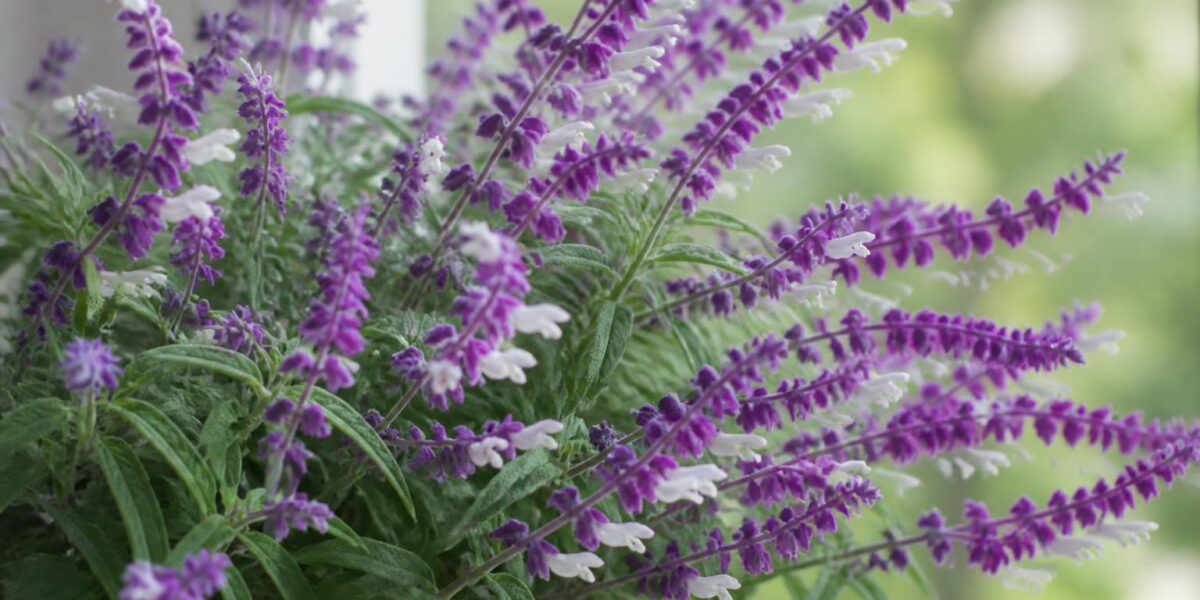
Mexican bush sage is a tender perennial in the genus Salvia, family Lamiaceae (the mint family), native to the highlands of central and eastern Mexico. The species name leucantha translates as “white-flowered,” which is accurate — the actual flower is the small white tube extending from the colored bract, and the showy purple velvet covering is the calyx (the protective bract that surrounds the bud). The plant grows three to four feet tall in a single season and produces dramatic arching flower spikes from late summer into autumn that are major hummingbird and bee magnets. Key characteristics:
- Tender perennial habit — hardy through about USDA zone 8, grown as an annual or summer perennial in colder climates.
- Long narrow gray-green leaves with white wooly undersides and a moderate aromatic scent when crushed.
- Arching flower spikes in late summer through autumn, with fuzzy purple velvet bracts (sometimes pink or white in cultivars) and small white or purple tubular flowers.
- Drought-tolerant once established — beloved for hot dry sites and Mediterranean garden styles.
- Common cultivars include ‘Midnight’ (deep purple bracts), ‘Santa Barbara’ (compact, more cold-hardy), and ‘Danielle’s Dream’ (pink bracts).
The plant is in the family Lamiaceae alongside sage, rosemary, lavender, thyme, oregano, mint, and lemon balm. Most Lamiaceae plants share aromatic essential oils with similar pet-safety profiles, and Mexican bush sage falls squarely in the Salvia-genus mild-toxicity tier rather than the safer basil-and-pineapple-sage tier.
Mexican Bush Sage Versus Other Sages
This is one of the most useful clarifications for pet owners. Several aromatic plants share the word “sage” and they have distinct pet-safety profiles:
- Common sage / culinary sage (Salvia officinalis) — the kitchen herb. Mildly toxic to pets per the umbrella articles linked above.
- Russian sage (Perovskia atriplicifolia / Salvia yangii) — the airy ornamental landscape plant. Mildly toxic by genus relationship; see our Russian sage guide.
- Clary sage (Salvia sclarea) — biennial Salvia with strong aromatherapy oil; mildly toxic for pets, see our clary sage guide.
- Mexican bush sage (Salvia leucantha) — the subject of this article. Mildly toxic by genus relationship.
- Pineapple sage (Salvia elegans) — fragrant ornamental and culinary; generally safe per available data. See our pineapple sage guide.
- Sagebrush (Artemisia tridentata) — North American native, totally different plant family despite the “sage” name.
For pet-safety purposes, anything in the Salvia genus shares similar essential-oil chemistry and similar mild-toxicity status. Mexican bush sage sits in the same tier as common culinary sage and Russian sage rather than the safer pineapple sage tier.
The Essential Oil Mechanism
Mexican bush sage foliage contains volatile essential oils dominated by camphor, eucalyptol (1,8-cineole), borneol, and other monoterpenes. These compounds are mildly irritating to the GI tract at fresh-plant doses and have known effects on the nervous system at concentrated essential-oil doses. Two pet-specific issues:
- Cats and essential oils. Cats lack adequate liver enzymes (specifically glucuronyl transferase) to efficiently metabolize many essential-oil compounds. Topical application of concentrated essential oils, ingestion of essential-oil-rich plants, and even diffuser exposure can cause toxicity in sensitive cats. Common signs are drooling, vomiting, lethargy, ataxia (wobbly gait), and tremors.
- Dogs and Lamiaceae herbs. Dogs handle these compounds better than cats, but bulk leaf ingestion can produce vomiting, diarrhea, and GI irritation. Chewing on the woody stems of older Mexican bush sage clumps can also splinter.
Our broader guide on essential oils toxic to cats covers the topical and diffuser side of this story in detail. For Mexican bush sage specifically, the practical translation is: a fresh plant in the garden is mildly cautious, a chewed leaf is rarely an emergency, but a habitual Salvia-grazing cat in a household with low Salvia tolerance deserves a closer look.
Symptoms of Mexican Bush Sage Exposure in Pets
Most pets that taste a single Mexican bush sage leaf will show no symptoms or very mild ones. Symptoms appearing within a few hours of fresh-plant ingestion may include:
- Drooling or repeated lip-licking
- One or two episodes of vomiting
- Soft stool or mild diarrhea
- Reduced appetite for the next meal
- Briefly subdued mood after a large mouthful
- Mild oral irritation from the hairy leaf surface
For cats specifically — and especially for cats with bulk ingestion or repeated exposure — additional concerning signs to watch for include wobbly gait, tremors, pupil dilation, marked lethargy, breathing difficulty, or signs of liver involvement (yellowed gums, persistent vomiting). These are uncommon from fresh-plant garden exposure but worth knowing because they would represent the more serious end of the cat-and-Salvia spectrum. What you should not see from a chewed Mexican bush sage leaf is collapse, persistent seizures, or blood in vomit. If any of those appear, the plant is unlikely to be the only thing your pet got into and you need urgent veterinary care.
What to Do if Your Pet Eats Mexican Bush Sage
For a chewed leaf or two, start with calm observation. Remove any chewed plant material from your pet’s reach, wipe their mouth with a damp cloth to clear residual leaf fragments, and offer a small drink of fresh water. Do not give milk, do not try to make your pet vomit at home, and do not give activated charcoal or human medications without veterinary guidance.
Call your own veterinarian if your pet is small, very young, very old, has existing health issues, ate a substantial amount of plant material, or shows symptoms that last more than a few hours. The cat-and-Salvia combination warrants a slightly lower threshold for calling the vet because of the cat-specific essential oil concerns. For after-hours guidance, the ASPCA Animal Poison Control Center is reachable at (888) 426-4435, and the Pet Poison Helpline is at (855) 764-7661. Both lines charge a consultation fee but can give you species-specific advice and a case number your regular vet can follow up with.
Bring a leaf, flower spike, or photo of the plant to any clinic visit, since species identification helps the team estimate concern level. The fuzzy purple velvet flower bracts of Mexican bush sage are highly distinctive and easy to identify in a quick photo, which puts the case in the mild-Salvia category rather than the more concerning “unknown plant” tier.
Mexican Bush Sage in the Garden
Mexican bush sage is one of the most popular ornamental Salvias in mild-winter gardens because of the dramatic late-season flower display. The arching three-to-four-foot flower spikes carry their fuzzy purple velvet bracts well into autumn, often coloring a garden bed when most other ornamentals have finished. Hummingbirds and large bees seek out the white tubular flowers, and the velvet bracts hold their color long after the flowers themselves drop. The plant tolerates heat, drought, poor soil, and full sun once established, which makes it a workhorse of low-water Mediterranean garden styles.
For pet-friendly siting, plant Mexican bush sage where pets cannot trample it during the second-half-of-summer growth surge — the foliage gets brittle and the stems can snap if a dog runs through the clump. Mass-planting Mexican bush sage along the main pet-traffic zone is workable because of the plant’s mild-toxicity status, but supervise pets that browse Salvia leaves enthusiastically. Pollinator-friendly Salvia alternatives with milder pet-safety profiles include pineapple sage, salvia ‘May Night’, and many native salvias.
The practical garden steps are: cut Mexican bush sage back to about six inches in late winter to encourage strong new growth, divide established clumps every three to four years in spring, and avoid mass-planting in a yard with cats that have a history of repeated Salvia leaf-chewing. Our broader list of pet-safe garden plants covers the wider landscape.
Mexican Bush Sage Versus Other Mediterranean Herbs
The mint family Lamiaceae is full of aromatic culinary and medicinal herbs that share the cat-side essential-oil concern. Mildly toxic Lamiaceae include common sage, Russian sage, clary sage, Mexican bush sage, and the broader thyme, oregano, marjoram, and tarragon group. Generally pet-safe Lamiaceae include basil (and its cultivars), pineapple sage, lemon balm, bee balm, spearmint, catnip, and catmint.
For broader herb-safety context, our companion guides cover rosemary in dogs and rosemary in cats, mint in cats and mint in dogs, thyme, oregano, basil, and bee balm in detail. The pattern across the family is that strongly aromatic high-essential-oil plants like Mexican bush sage, clary sage, rosemary, and thyme deserve more caution than milder-flavored relatives like basil, lemon balm, and pineapple sage.
Cat-Specific Cautions in a Mexican Bush Sage Bed
Because Mexican bush sage is mildly toxic to cats and the cat-specific essential oil sensitivity is the main concern for the plant, cat households deserve an extra layer of thought. Indoor-only cats are not at meaningful risk from a Mexican bush sage clump in the garden — the plant is rarely brought inside as a cut flower because of the heavy water demand on the long stems, and dried Mexican bush sage flower spikes (used as long-lasting craft material) lose most of their aromatic intensity.
For outdoor cats with garden access, the practical concern is a habitual Salvia-grazing cat that returns repeatedly to chew leaves. Most outdoor cats sample plants briefly and move on, and a one-time Mexican bush sage chew is a low-risk event. A cat with a known plant-chewing pattern that includes Salvia foliage, however, may benefit from being kept out of beds with multiple Salvia species. Bitter apple spray is unreliable on outdoor plants because rain washes it off, but a physical barrier of low fencing or planting Mexican bush sage in raised containers above casual cat reach can work.
Adoption and Pet-Safe Living
If you are reading this because you are pet-proofing in advance of bringing home a new companion, that is exactly the level of care a rescue animal deserves. Walk Me Home Rescue connects people with pets through our adopt cats and adopt dogs hubs, and a thoughtfully managed Salvia bed — with Mexican bush sage and other mildly-aromatic ornamentals planted out of the main pet-traffic zone — is one small but meaningful piece of a welcoming home.
Most adopters find that an established Mexican bush sage clump is worth keeping for the late-season pollinator value despite the mild-toxicity rating. Pair the plant with sensible siting, a calm approach to occasional grazing, and supervision for cats with a history of repeated Salvia chewing, and Mexican bush sage becomes a beautiful low-stress part of an ornamental garden. The species is one of the great late-season flower displays in mild-winter climates and earns its place when handled thoughtfully.
Frequently Asked Questions
Is Mexican bush sage toxic to cats?
Mexican bush sage (Salvia leucantha) is considered mildly toxic to cats based on its essential oil chemistry and its close relationship to common culinary sage. A casual chewed leaf usually causes only mild stomach upset, but cats lack the liver enzymes to efficiently metabolize the camphor and eucalyptol that dominate the plant’s essential oil profile. Watch for drooling, vomiting, lethargy, or wobbly gait after any meaningful ingestion and call your vet if symptoms persist.
Is Mexican bush sage toxic to dogs?
Mexican bush sage is also mildly toxic to dogs, though dogs handle the monoterpene compounds significantly better than cats. A chewed garden leaf is unlikely to cause more than mild stomach upset. Bulk ingestion (a small dog mowing through a whole clump) can produce more pronounced GI signs, and the woody stems of older clumps can splinter and irritate the mouth or throat.
Are Mexican bush sage flowers safe for hummingbirds and pollinators?
Yes, Mexican bush sage is a major hummingbird and bee plant — the late-season flower display is one of the most reliable pollinator buffets in mild-winter gardens. The mild-toxicity rating applies to mammalian pets like cats and dogs, not to nectar-feeding wildlife. Hummingbirds, large bees, and butterflies use the species without issue, and the plant is widely recommended for pollinator gardens.
Can I plant Mexican bush sage in a yard with a Salvia-chewing cat?
If your cat has a documented pattern of repeatedly chewing Salvia leaves in the garden, mass-planting Mexican bush sage alongside other Salvias is not the best choice. Look at safer Salvia alternatives like pineapple sage for similar pollinator value, or use raised containers and physical barriers to keep cats away from the planting bed. A cat that samples plants briefly and moves on is at much lower risk than a cat that grazes Salvia leaves repeatedly.
How do I tell Mexican bush sage from other purple-flowered Salvias?
The fuzzy purple velvet bracts on long arching flower spikes are highly distinctive — most other purple-flowered Salvias have shorter spikes with smaller flowers and no velvet texture. The leaves are long and narrow with white wooly undersides, and the plant has a moderate (not strong) aromatic scent when crushed. A clear photo of the flower spike usually settles the identification, and bringing a flower stalk to a garden center or extension office for confirmation is straightforward.


