
Last updated: May 16, 2026
In this article
- Quick Answer: Rubus Bramble Plants Are Safe for Cats and Dogs
- What Counts as a Rubus Bramble?
- ASPCA Position and Toxicity Profile
- Thorns and Mechanical Injury — the Real Bramble Hazard
- Wild vs. Cultivated Brambles
- Rubus Look-Alikes: What Else Could Your Pet Be Eating?
- Brambles the Plant vs. Bramble Berries the Food
- Yard Management for Bramble Patches
- Symptoms to Watch For
- If Your Pet Eats Bramble Plant Parts
- When to Call the Vet
- Frequently Asked Questions
Quick Answer: Rubus Bramble Plants Are Safe for Cats and Dogs
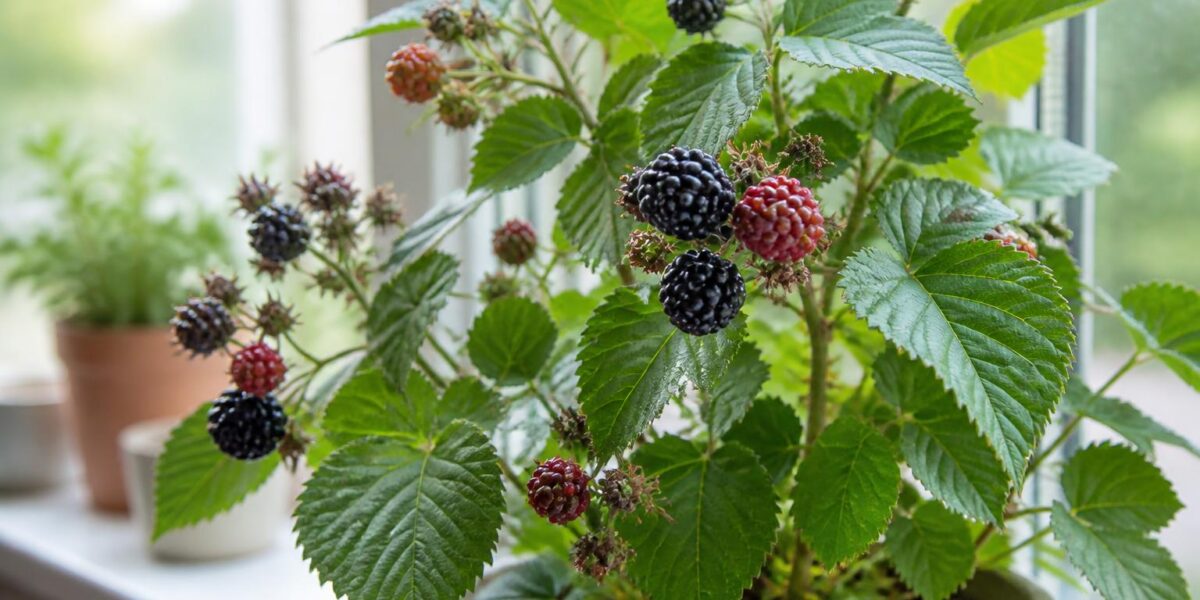
The Rubus genus — the umbrella that includes raspberry, blackberry, boysenberry, loganberry, dewberry, wineberry, thimbleberry, salmonberry, and dozens of other cultivated and wild brambles — is not listed as toxic to cats or dogs by the ASPCA Animal Poison Control Center. The leaves, woody canes, primocane shoots, and ripe fruit of all common Rubus species are considered non-toxic. If your pet wandered into a backyard bramble patch or grazed fallen berries from a wild thicket, you do not have a poisoning emergency.
What you do have, with most Rubus species, is a thorny mechanical-injury hazard. The Rubus genus is famous for armament, and most species carry hooked, stout, or bristly thorns at varying densities. The other realistic concerns are dietary indiscretion (a dog grazing too many ripe berries gets loose stool) and rare confusion with toxic look-alikes. The genus-level overview here works alongside the species-specific articles for raspberry plants, blackberry plants, and boysenberry plants.
What Counts as a Rubus Bramble?
The genus Rubus is enormous — taxonomists estimate hundreds to over a thousand microspecies depending on classification. For pet-owner purposes, the species you are most likely to encounter in cultivation or in the wild are:
- Red raspberry (Rubus idaeus) — backyard standard.
- Black raspberry (Rubus occidentalis) — North American native.
- Blackberry (Rubus fruticosus aggregate) — including Himalayan blackberry, the invasive Rubus armeniacus.
- Boysenberry (Rubus ursinus hybrid) — cross of blackberry, raspberry, and loganberry.
- Loganberry (Rubus × loganobaccus) — blackberry/raspberry cross.
- Dewberry (Rubus species, multiple) — trailing wild bramble, eastern North America.
- Wineberry (Rubus phoenicolasius) — invasive Asian raspberry; bristly red canes.
- Thimbleberry (Rubus parviflorus) — thornless or nearly so; western North America.
- Salmonberry (Rubus spectabilis) — Pacific Northwest native.
- Cloudberry (Rubus chamaemorus) — northern bog species.
All of the above share the same non-toxic profile per ASPCA. The differences from a pet-owner standpoint are physical — thorn density, cane height, fruit color, suckering aggressiveness — not chemical.
ASPCA Position and Toxicity Profile
The ASPCA does not list Rubus idaeus, Rubus fruticosus, Rubus occidentalis, or any cultivated bramble species as toxic to dogs, cats, or horses. The genus does not produce cyanogenic glycosides at toxicologically meaningful levels (unlike its Rosaceae cousin Prunus, which contains those compounds in cherry pits and apple seeds). It does not produce Solanaceae alkaloids, oxalates of concern, or cardiac glycosides.
The leaves contain tannins and natural acids, but at levels well below companion-animal toxicity thresholds. Raspberry leaf has a long history of human herbal use without documented animal poisoning. The standard caveat applies: non-toxic does not mean unlimited. Volume of plant matter or fruit can cause GI upset purely from fiber and sugar load.
Thorns and Mechanical Injury — the Real Bramble Hazard
The Rubus genus is defined for many people by its thorns. The mechanical risks for pets running into or chewing brambles are:
- Paw pad punctures — usually minor, occasionally infect.
- Gum and lip scratches from chewing canes — mostly heal on their own.
- Corneal scratches from face-first encounters with low canes — same-day vet appointment.
- Skin lacerations on chest and belly when running through dense thicket.
- Splinters from chewed dry pruning debris.
The eye involvement is the most serious by frequency-vs-severity tradeoff. Squinting, tearing, or pawing at one eye after a bramble encounter is always a same-day vet call. Surface scratches on paws and limbs typically heal with cleaning and observation.
Wild vs. Cultivated Brambles
Cultivated brambles (raspberry, blackberry, boysenberry, loganberry) tend to be planted in defined rows with managed thorn loads. Many modern cultivars are thornless. Wild brambles — particularly Himalayan blackberry in the western United States, wineberry in the East, and various dewberries everywhere — form dense, low, sprawling thickets that a dog can charge into without realizing what is underneath.
The chemical safety story is identical. The mechanical injury rate is dramatically higher with wild thickets because the dog cannot see what is coming until they are already in it. If you walk dogs in areas with wild bramble, particularly during fruit season when squirrels and birds are active in the patches, expect occasional thorn injuries.
Rubus Look-Alikes: What Else Could Your Pet Be Eating?
Brambles look generic, and not every “berry on a thorny vine” is a Rubus. Plants commonly confused with brambles in North America include:
- Pokeweed (Phytolacca americana) — TOXIC; berries look superficially blackberry-like but grow on a non-thorny upright stalk. See our pokeweed article.
- Elderberry (Sambucus species) — uncooked berries TOXIC; clusters resemble some bramble forms. See our elderberry article.
- Bittersweet nightshade (Solanum dulcamara) — TOXIC; vining habit can wrap around brambles. See our bittersweet nightshade article.
- Moonseed (Menispermum canadense) — TOXIC; vine with grape-like berries; the seed shape is the giveaway (crescent-moon, not round).
- Virginia creeper (Parthenocissus quinquefolia) — TOXIC; vine with five-leaflet leaves and dark berries.
If your pet has eaten an unidentified wild berry, treat it as a potentially toxic exposure and call ASPCA APCC at 888-426-4435 or the Pet Poison Helpline at 855-764-7661. “It looked like a blackberry” is not a positive identification.
Brambles the Plant vs. Bramble Berries the Food
This article covers the plant side — leaves, canes, prunings, the surrounding garden. The food side (“can my pet eat ripe bramble berries”) has species-specific articles: can dogs eat raspberries, can cats eat raspberries, can dogs eat blackberries, can cats eat blackberries. The general framing is that ripe bramble berries are moderate-OK for both species in modest quantities. Sugar and fiber load, not toxin content, is the limit.
Yard Management for Bramble Patches
If you grow brambles in the backyard, a few practices reduce pet incidents:
- Plant in a single trellised row rather than a sprawling thicket.
- Use thornless cultivars where available (Joan J raspberry, Triple Crown blackberry, Black Satin blackberry).
- Mow or pull suckers as soon as they appear in lawn areas.
- Install a low decorative fence (18 inches is enough for most dogs) around the patch.
- Pick up fallen ripe fruit during peak harvest if your dog is a grazer.
- Bag pruning debris and remove from the yard the same day you cut — dry cane is the most splinter-prone form.
If you have wild brambles in adjacent woodland, consider seasonal trail management to keep dog-walking corridors clear, especially during fruit season when wildlife activity in the patches is highest.
Symptoms to Watch For
True poisoning is not expected from Rubus exposure. The realistic post-bramble symptoms to watch for are:
- Persistent vomiting or diarrhea after a known fruit binge.
- Limping or licking a paw — possible thorn fragment.
- Squinting, tearing, or pawing at one eye — possible corneal scratch (same-day vet call).
- Drooling, gagging, or attempting to vomit after a known cane-chewing event — possible splinter.
- Any neurologic sign (wobbly gait, tremors) after eating unidentified berries — treat as potentially toxic look-alike, not as Rubus.
If Your Pet Eats Bramble Plant Parts
For a small chew of bramble leaves or canes — or a grazing session of ripe fallen fruit from a confirmed Rubus species — observation is enough. Rinse the mouth with water, check for thorn injuries, and watch over the next several hours.
For a large fruit binge, withhold the next meal, offer water, and watch overnight. Most dogs return to normal within a day.
For ingestion of unidentified wild berries that may not be Rubus, do not wait. Call your veterinarian or the ASPCA APCC at 888-426-4435 (Pet Poison Helpline 855-764-7661 also available 24/7). The chemistry of pokeweed, elderberry, bittersweet nightshade, moonseed, or Virginia creeper is very different from Rubus, and decontamination is most effective early.
When to Call the Vet
For confirmed Rubus exposure, contact your regular veterinarian if you notice persistent vomiting or diarrhea, suspected thorn injuries (especially eye involvement), or possible splinter symptoms. After hours, the ASPCA Animal Poison Control Center (888-426-4435) and the Pet Poison Helpline (855-764-7661) are both available 24/7 with a consultation fee. For unidentified-berry exposure, treat as more urgent and call sooner rather than later.
The keyword is “confirmed Rubus.” If you cannot positively identify the plant, do not assume safety. Bring a photo or a sample to the vet visit if possible — that helps the toxicology call go faster and more accurately.
Frequently Asked Questions
Are wild brambles as safe as cultivated raspberry and blackberry?
The chemical safety profile is the same — Rubus across the genus is not on the ASPCA toxic plant list. The mechanical risk (thorns, dense thickets) is higher for wild brambles, and the look-alike confusion risk is also higher in wild settings. Confirm species identification before assuming safety.
What is the most dangerous Rubus species for pets?
None of the common cultivated or wild Rubus species is chemically toxic. The “most dangerous” in mechanical terms are the densely thorny wild types (Himalayan blackberry, wild dewberry, wineberry) and any species growing as an impenetrable thicket where a dog cannot see the ground.
My dog ate berries from a thorny vine — should I worry about it being a bramble look-alike?
Yes, take that seriously. Pokeweed, bittersweet nightshade, moonseed, and Virginia creeper all grow as vining or sprawling plants and can be mistaken for brambles. Bring a photo or a clipped sample (gloves on) and call ASPCA APCC at 888-426-4435 if you cannot positively identify what your pet ate.
Are bramble flowers safe for pets?
Yes. Rubus flowers are non-toxic. They are a minor pet-attractant for grazers but unlikely to be eaten in any quantity that matters.
Can dogs eat boysenberry, loganberry, dewberry, or wineberry?
Yes, all are Rubus species and the ripe fruit is moderate-OK for dogs in modest quantities — same logic as raspberry and blackberry. See the species-specific food articles like can dogs eat raspberries for serving guidance, and the umbrella plant article at are boysenberry plants safe for pets for boysenberry specifically.


