
Last updated: May 16, 2026
In this article
- Are Saskatoon Plants Safe for Pets?
- Meet the Saskatoon Plant
- Why Saskatoon Plants Sit in a “Mostly Safe” Tier
- Cyanogenic-Glycoside Neighbours Worth Knowing
- What Could Go Wrong with a Saskatoon and a Pet
- Cats vs. Dogs: How the Risk Differs
- What To Do If Your Pet Eats Saskatoon Plant Material
- Sharing Saskatoon Berries with Pets on Purpose
- Garden Layout for a Pet Home
- Telling Saskatoon Apart from Look-alikes
- Veterinary Care Worth a Call
- Frequently Asked Questions
Are Saskatoon Plants Safe for Pets?
If a saskatoon shrub or juneberry tree is fruiting in your yard and a curious dog or cat lives in the same garden, asking whether saskatoon plants safe for pets is the right question to lead with. The short answer is mostly yes, with one important caveat. The ripe berries of saskatoon (Amelanchier alnifolia, also called serviceberry or juneberry) are generally safe for pets in small amounts and are widely consumed by humans across western North America. However, saskatoon belongs to the Rosaceae family, the same family as cherry, plum, peach, apricot, apple and almond, which means the seeds, leaves and bark contain small amounts of cyanogenic glycosides that release hydrogen cyanide when chewed in volume. The whole plant is best classified as low-toxicity for ripe fruit and mildly toxic for leaves, twigs and crushed seeds.
For most pet households, this lands somewhere between strawberry and cherry on the safety scale. A dog that snacks on a few windfall ripe berries is not in danger; the cyanogenic glycoside content of the fruit flesh is very low and the seeds inside an unbroken berry pass through largely intact. A pet that strips a branch of leaves, chews bark off a stem, or crunches through a large pile of seed-filled berries is at risk of mild cyanogenic GI signs. Like cherry, the headline rule is “fruit pulp generally safe, leaves and pits are not.” This guide explains what the plant is, where the cyanogenic neighbors live, and how to keep a saskatoon shrub and a pet sharing the same yard comfortably.
Meet the Saskatoon Plant
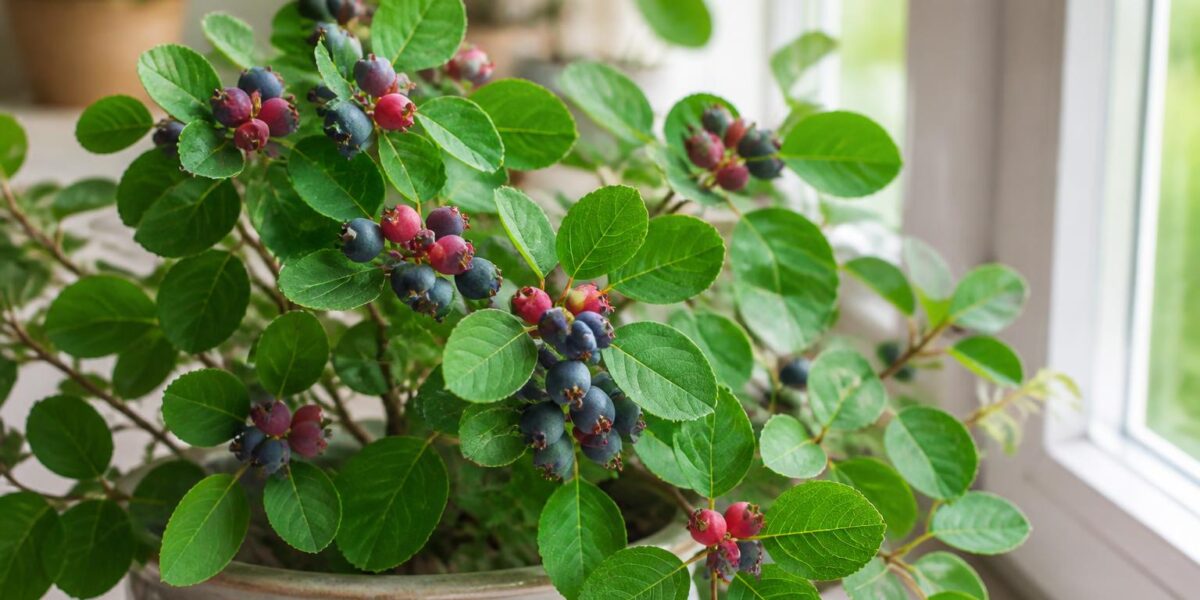
Saskatoon, scientifically Amelanchier alnifolia, is a deciduous shrub or small tree native to western Canada and the northern United States. Other regional common names include juneberry, serviceberry, shadblow, sugarplum and pigeonberry. The plant typically grows six to fifteen feet tall, produces masses of white spring flowers before the leaves emerge, and ripens dark purple-blue berries in early summer (hence “juneberry”). The fruit is sweeter than a blueberry and richer in iron, and it has been a staple food of First Nations peoples across the prairies for thousands of years.
The Amelanchier genus contains around twenty species. Amelanchier alnifolia is the typical commercial saskatoon. Amelanchier canadensis (shadblow serviceberry), Amelanchier laevis (smooth serviceberry), Amelanchier arborea (downy serviceberry) and several hybrids share similar fruit and chemistry. Cultivars selected for fruit size and yield include ‘Smoky’, ‘Northline’, ‘Thiessen’, ‘Honeywood’ and ‘Martin’.
The shrub form spreads by suckering and forms thickets in the wild; cultivated plants are often pruned to a single trunk or kept as a multi-stemmed shrub. The fruit looks deceptively similar to a blueberry but grows in clusters on a tree-form plant rather than a low groundcover, and the berry contains five small seeds rather than blueberry’s many tiny ones. Birds, dogs, deer and raccoons all forage saskatoon fruit, which is why home growers often net the plants during ripening.
Why Saskatoon Plants Sit in a “Mostly Safe” Tier
Saskatoon ripe berries are not on the ASPCA’s flagged-toxic plant list and are widely treated as safe for human and pet consumption in small amounts. Available veterinary toxicology references group ripe Amelanchier fruit with Vaccinium berries as low-concern. The fruit chemistry is dominated by sugars, organic acids, anthocyanins, vitamin C and small amounts of polyphenols, none of which are flagged compounds for cats or dogs.
The caveat lives in the rest of the plant. Saskatoon belongs to the Rosaceae family, and like cherry, plum and peach, the seeds, leaves, twigs and bark contain cyanogenic glycosides, primarily prunasin and amygdalin. When tissue is chewed and crushed, plant enzymes release small amounts of hydrogen cyanide. The concentration in saskatoon is generally lower than in true cherry, but it is not zero. For comparison, see our umbrella guides on cherry trees and cats, cherry trees and dogs and cherry pits and dogs for the more concentrated relative.
The seeds inside an unbroken berry do not release cyanide because the seed coat is intact. Crushed seeds, however, do. A dog that swallows a handful of berries whole experiences very different chemistry from a dog that crunches each berry between molars. Pets that eat large amounts of leaf material, bark or pruned twigs are at higher risk than pets that eat fruit.
Cyanogenic-Glycoside Neighbours Worth Knowing
If your yard has a saskatoon, it is worth knowing the other Rosaceae cyanogenic plants in the same family because the safety logic for all of them is the same: ripe fruit is fine, leaves and seeds are not. Cherry trees and cherry leaves are the most concentrated of this group; see our guides on cherry leaves and cats and cherry leaves and dogs for the contrast. Loquat trees fall in the same family with similar leaf and seed concerns; see loquat trees and pets.
Almond trees deserve a special mention because almond pits and bitter almonds are the highest cyanogenic glycoside concentration in the family. Sweet almonds are bred for low cyanogenic content but bitter almond varieties remain a concern. See almond trees and cats and almond trees and dogs for the umbrella guidance. Apple seeds, peach pits, apricot pits and plum pits all contain similar compounds and should never be left where pets can crunch them.
Saskatoon sits at the lower end of this family’s cyanogenic spectrum, somewhere near apple seed and well below cherry leaf. That makes it a manageable garden plant in a pet home, provided you keep a tidy garden and prevent leaf-and-twig browsing.
What Could Go Wrong with a Saskatoon and a Pet
The realistic risks fall into three categories. The first is over-grazing on ripe fruit, which is the same as any other berry plant: a soft stool or single vomit from a stomach disturbed by volume, with red-purple staining of the muzzle, paws and stool that can look alarming but is harmless pigment.
The second is cyanogenic exposure from leaves, twigs or crushed seeds. Mild signs include drooling, foaming at the mouth, vomiting, panting and restlessness. Moderate to severe signs, which require an emergency vet visit, include rapid breathing, bright red mucous membranes, weakness, staggering, dilated pupils, collapse and seizure. The most dangerous time is the spring growth flush, when leaves are tender and dogs are most likely to chew. Wilted leaves and pruned branches that have started to wilt actually contain higher available cyanide than fresh green leaves, so a pile of fresh prunings is more dangerous than a leaf still on the tree.
The third risk is mechanical. Saskatoon is thornless, but the multi-stemmed thicket form means dogs and cats can sometimes get tangled or scrape themselves on broken branches. Bird netting used to protect ripening fruit is also a real entanglement hazard for cats, dogs and birds; use solid mesh structures rather than loose drape netting if you have pets.
Cats vs. Dogs: How the Risk Differs
Dogs are far more likely than cats to interact with saskatoon. Dogs scavenge windfall ripe fruit, chew on pruned branches left in a brush pile, and occasionally nibble leaves. Larger dogs can reach the lower branches and strip leaves and twigs with intent during boredom or teething. The most common presentation in a vet clinic is a dog with a purple-stained muzzle, mild GI signs and a story of loose fruit access; the more serious presentations involve dogs that ate piles of leaves or pruned branches.
Cats are obligate carnivores and gain nothing nutritionally from fruit. Most cats ignore the shrub. The risk to cats is mostly limited to chewed new shoots in spring or accidental exposure if pruned branches are within reach. Indoor-outdoor cats almost never bother with saskatoon.
Pets with pre-existing GI sensitivity, kidney disease, liver disease or seizure conditions tolerate any cyanogenic-glycoside exposure poorly. Senior pets are more vulnerable than young healthy adults. Diabetic dogs should not graze freely on ripe berries. Pets on multiple medications deserve a closer eye after any plant exposure.
What To Do If Your Pet Eats Saskatoon Plant Material
The response depends on what was eaten. For ripe fruit only, in small to moderate amounts:
- Move the pet away from the shrub and pick up windfall fruit on the ground.
- Check the muzzle and offer fresh water.
- Watch for vomiting, soft or red-tinted stool, lethargy or pawing at the mouth over the next 24 hours.
- Skip food for one to two hours, then resume the regular diet.
For leaves, twigs, bark or large amounts of seed-crushed fruit, treat the situation more cautiously. Call your veterinarian immediately, especially if you observe any of the cyanogenic signs above (drooling, rapid breathing, weakness, bright red gums). You can also reach the ASPCA Animal Poison Control Center at 888-426-4435 or the Pet Poison Helpline at 855-764-7661 for urgent guidance. Do not try to make your pet vomit at home; cyanogenic exposure can present quickly and at-home emesis adds risk without benefit.
If your pet shows any moderate or severe sign, head to the nearest 24-hour emergency animal hospital. Bring a leaf and berry sample for identification. Saskatoon is not the most concentrated cyanogenic plant in a yard, but a vet team will treat the case based on what was actually eaten and the pet’s body weight, and a confirmed identification helps them choose the right monitoring plan.
Sharing Saskatoon Berries with Pets on Purpose
Ripe saskatoon berries can be shared as an occasional treat with healthy adult dogs in tiny portions. A few washed, ripe berries are a low-calorie, antioxidant-rich snack that most dogs accept happily. Avoid feeding under-ripe berries, leaves, twigs, jam, jelly and pie filling. Saskatoon syrup, often sold at farmers’ markets, contains added sugar and is not suitable for pets.
Cats should not be encouraged to eat saskatoon berries on purpose. The species is an obligate carnivore and does not benefit nutritionally from fruit. If a stray berry rolls and your cat investigates, a single ripe berry is not harmful, but it is not a healthy snack option.
Avoid saskatoon-containing baked goods entirely. These usually contain flour, sugar, butter, sometimes alcohol or chocolate, and other ingredients that turn a pet-safe berry into a problematic food. Stick to plain fresh fruit if you want to share.
Garden Layout for a Pet Home
The single most important step in keeping a saskatoon and a pet comfortable in the same yard is tidy pruning. Cut branches go straight to the brown bin or compost, never on a brush pile that a dog can browse. Wilting leaves are the highest-risk material on a saskatoon and the easiest to remove from a pet’s reach.
For a yard with a new puppy, a low fence around the shrub during the teething phase prevents leaf-and-bark chewing. Most dogs lose interest in the shrub once the novelty wears off, but the puppy phase is when most cyanogenic plant exposures occur. A regular garden walk-around at dusk to clean up windfall berries reduces the temptation overnight.
Pair saskatoon with sibling berry plants that have a simpler safety story. The closely related Vaccinium relatives are friendlier choices for high-traffic areas; see blueberry plants and pets for the umbrella guide. Other options include strawberry plants and pets and raspberry plants and pets. The pet-safe garden plants roundup pulls together a balanced planting plan.
Telling Saskatoon Apart from Look-alikes
Saskatoon berries look strikingly like blueberries but grow on a tree or large shrub rather than a low groundcover plant. The leaf is rounder, oval to elliptical with serrated upper edges, and emerges after the white spring flowers, distinguishing it from blueberry’s smaller waxy leaves. If you have a “blueberry-like” fruit growing on a six-foot shrub or small tree with a single trunk, you almost certainly have a saskatoon or serviceberry.
The look-alikes that matter most for pet safety are the more concentrated cyanogenic Rosaceae cousins. Wild cherry, choke cherry (Prunus virginiana) and pin cherry (Prunus pensylvanica) all carry similar dark fruit on similarly-sized trees and have considerably higher leaf cyanogenic content. If you cannot tell the difference, treat any unknown dark-fruited tree’s leaves as off-limits for pets until you have an identification.
Other dark-berried look-alikes include Aronia (chokeberry, generally safe but tannic) and pokeberry (Phytolacca americana, toxic). Always confirm a tree species before letting pets graze under it, especially in mixed woodland edge plantings.
Veterinary Care Worth a Call
A small handful of ripe saskatoon berries does not need a vet visit. Schedule one if your pet ate leaves, twigs or bark; ate a very large amount of berries; or shows any cyanogenic sign (drooling, rapid breathing, bright red gums, weakness). Bring a photo of the plant or a leaf-and-berry sample so the team can confirm Amelanchier identification and rule out cherry or chokecherry exposure.
The ASPCA APCC at 888-426-4435 and the Pet Poison Helpline at 855-764-7661 are both available 24/7 for guidance on plant exposures. Either line can advise on whether monitoring at home or referral to an emergency hospital is appropriate, and a documented case number travels to your regular vet for follow-up.
Frequently Asked Questions
Are saskatoon berries toxic to dogs?
Ripe saskatoon berries in small amounts are generally safe for healthy adult dogs. The leaves, twigs, bark and crushed seeds contain mild cyanogenic glycosides and should not be eaten in volume. Whole berries are far safer than crushed-seed berries.
What if my dog ate saskatoon leaves?
A few leaves are unlikely to cause serious harm in a healthy adult dog, but a large meal of leaves or wilted pruning material can cause cyanogenic GI signs. Watch for drooling, vomiting, rapid breathing or weakness and call your vet promptly if any appear.
Can cats eat saskatoon berries?
A single ripe berry will not harm a cat, but cats are obligate carnivores and do not benefit nutritionally from fruit. Cats should not eat the leaves under any circumstances.
Are wilted saskatoon prunings worse than fresh leaves?
Yes. Wilting leaves release more cyanide as the cell walls break down, similar to wilted cherry leaves. Always remove pruned branches immediately rather than leaving them in a pile pets can access.
How is saskatoon different from cherry in terms of pet safety?
Same family, similar chemistry, but lower concentration. Saskatoon berries are widely accepted as safe to share in small amounts; cherry fruit flesh is also safe but the leaves and pits are more concentrated. The garden management is the same: keep leaves, twigs and pits out of reach.
For more on building a calm garden alongside your animals, browse our adopt a cat hub and adopt a dog hub for setup guides, breed profiles and rehoming resources from Walk Me Home Rescue.


