
Last updated: May 16, 2026
In this article
- Vinca Minor Is Toxic to Dogs and Cats
- What Lesser Periwinkle Looks Like in Your Yard
- The Vinca Alkaloid Problem in Plain English
- Symptoms to Watch For After Periwinkle Ingestion
- What To Do If Your Pet Eats Vinca Minor
- How Periwinkle Compares to Other Ground-Cover Toxic Plants
- Removing Vinca Minor If You Have Pets
- The Madagascar Periwinkle Distinction
- Pet-Safer Ground-Cover Alternatives
- Frequently Asked Questions
Vinca Minor Is Toxic to Dogs and Cats
Vinca minor — the trailing evergreen ground cover sold as lesser periwinkle, creeping myrtle, or simply “myrtle” at every garden center in the country — is classified as toxic to dogs, cats, and horses by the ASPCA. The toxic compounds are vinca alkaloids, the same family of molecules that pharmacists hand out as the chemotherapy drugs vincristine and vinblastine. Those drugs work by binding tubulin and disrupting cell division, and that mechanism doesn’t care whether the dose was delivered through an IV in an oncology unit or through a Labrador puppy chewing a mouthful of glossy blue-flowered carpet on your shaded slope.
The clinical reality of pet ingestion is usually milder than the chemistry suggests, because pets rarely consume large enough quantities to deliver a chemotherapy-grade dose. But the severity tier you should keep in your head is moderate-to-severe. Mild GI upset is the floor. Tremors, low blood pressure, hypothermia, depression, and bone-marrow suppression with chronic or large exposures are all on the menu. If you watched your dog or cat chew Vinca minor, call your veterinarian, the ASPCA Animal Poison Control Center at 888-426-4435 (per-call fee), or Pet Poison Helpline at 855-764-7661 right away — don’t wait for symptoms.
What Lesser Periwinkle Looks Like in Your Yard
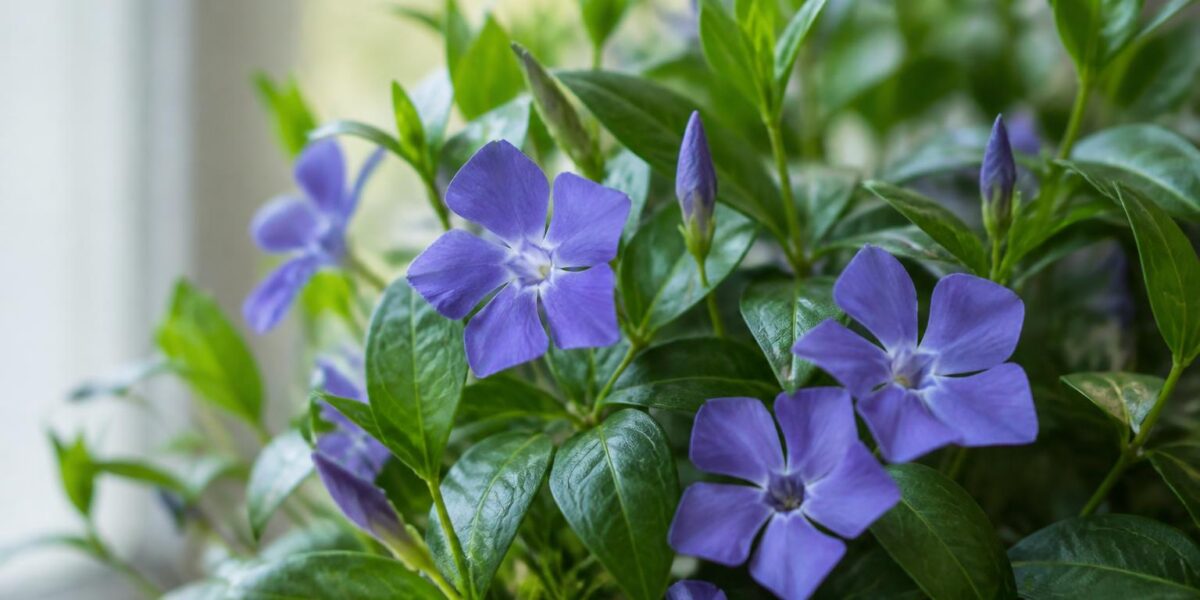
Vinca minor is the small-leaved periwinkle, the one most commonly planted in dry shade under trees, on slopes where lawn won’t grow, and along property edges where grass mowing isn’t worth the trouble. Leaves are dark glossy green, oval, about an inch long, arranged in opposite pairs along trailing stems that root wherever they touch soil. The flowers are five-petaled, pinwheel-shaped, blue-violet (occasionally white or burgundy in named cultivars), about three-quarters of an inch across, blooming heaviest in spring with sporadic bloom through summer.
The plant’s main horticultural appeal is precisely the trait that makes it a pet hazard: it is tough, evergreen, drought tolerant, deer resistant, and spreads aggressively into a dense weed-suppressing mat. In many North American regions Vinca minor is classified as an invasive species because it escapes garden plantings and out-competes native woodland understory. If you inherited a yard with periwinkle established under the trees, you have a ground cover that is both hard to remove and a documented chewing risk for any pet that goes outside unsupervised.
The Vinca Alkaloid Problem in Plain English
Vinca alkaloids are a family of complex indole alkaloids the periwinkle plant produces in every part — leaves, stems, roots, and the milky sap that bleeds from a broken stem. The two famous members are vincristine and vinblastine, which were isolated from the related Madagascar periwinkle (Catharanthus roseus, also toxic to pets) in the late 1950s and went on to revolutionize the treatment of childhood leukemia and Hodgkin lymphoma. Modern Vinca minor contains vincamine, vinpocetine precursors, and dozens of related alkaloids in lower concentrations than its tropical cousin, but all in the same chemical family with the same fundamental tubulin-binding mechanism.
What that mechanism does at a cellular level is jam mitosis. Tubulin is the protein that builds the spindle fibers that pull duplicated chromosomes apart during cell division. When vinca alkaloids bind tubulin, the spindle can’t form, the cell can’t divide, and rapidly dividing tissues — bone marrow, intestinal lining, hair follicles — take the brunt of the toxicity. In a pet, that translates to GI upset (vomiting, diarrhea, sometimes bloody) within hours of a meaningful exposure, neurological signs (depression, weakness, tremors, ataxia) over the following day, and the potential for delayed bone-marrow effects (low white-cell or platelet counts) with chronic or massive exposure.
Symptoms to Watch For After Periwinkle Ingestion
The most common scenario after a pet samples Vinca minor is a self-limiting bout of GI upset that resolves with supportive care. The less common but more serious scenario involves cardiovascular and neurological signs that warrant urgent veterinary attention. Either way, you should not try to wait it out at home without first calling a poison-control line.
Symptoms that may appear within the first few hours after ingestion:
- Drooling, lip-smacking, or pawing at the mouth (oral irritation from the alkaloids)
- Vomiting, sometimes with traces of green leaf material
- Diarrhea, occasionally with blood
- Loss of appetite and reluctance to drink
- Lethargy or unusual quietness
Symptoms that suggest a more concerning exposure — call your vet or a poison hotline immediately:
- Tremors, muscle twitching, or seizures
- Wobbliness, difficulty standing, or collapse
- Pale gums or unusually slow capillary refill
- Low body temperature (cool ears and paws to the touch)
- Rapid or irregular breathing
- Cardiac signs such as a noticeably slow or fast heart rate
What To Do If Your Pet Eats Vinca Minor
Step one is to remove your pet from the area and check what is still in the mouth — gently sweep out leaf fragments with a finger, and offer a sip of water to rinse residue. Do not induce vomiting at home unless a veterinarian or a licensed poison-control veterinarian on the phone tells you to. With vinca alkaloids the timing window for safe induced emesis is short, and home remedies (hydrogen peroxide, salt) cause their own complications when given without professional guidance.
Step two is to call. Your owner’s vet first if they’re open and reachable; otherwise an emergency veterinary hospital. The ASPCA Animal Poison Control Center at 888-426-4435 is staffed 24 hours a day by veterinary toxicologists (per-call consultation fee, but they will give your treating vet a case number to coordinate care). Pet Poison Helpline at 855-764-7661 is a similar resource. Take a photograph of the plant, an estimate of how much was eaten, and your pet’s body weight when you call — those three details drive the entire treatment plan.
Step three is to bring a sample of the plant. A short cutting in a plastic bag (with a flower if any are open) lets the vet confirm the species rather than guessing from your phone description. If you have any leftover packaging from when the plant was bought or any photos of the original landscape installation, bring those too.
How Periwinkle Compares to Other Ground-Cover Toxic Plants
Vinca minor sits in the moderate-to-severe band of ground-cover toxicity. It is not as immediately catastrophic as lily of the valley for cats or lily of the valley for dogs, both of which contain cardiac glycosides that can drop a pet’s heart rate to dangerous levels within hours. But it is meaningfully more toxic than the mint-family ground covers like catmint, which the ASPCA does not classify as toxic at all.
It is more toxic than its sibling species Vinca major (greater periwinkle) in concentration but the chemistry is the same — both are on the ASPCA toxic list and both deserve the same response if your pet eats them. Owners who have multiple ground covers in the same bed should learn to ID them by leaf size: V. minor leaves are about an inch long; V. major leaves are about twice that size with a slightly heart-shaped base.
Removing Vinca Minor If You Have Pets
If your dog grazes outside or your cat patrols a screened catio that abuts a periwinkle bed, the most reliable solution is to physically remove the plant from areas your pet can reach. Vinca minor’s surface roots and trailing stems make it possible to peel up established mats with a stiff garden rake and a flat shovel, working in sections after a soaking rain. Replace with a pet-safe alternative — mixed native sedges, woodland strawberry, or one of the carex species that thrives in dry shade.
If full removal isn’t realistic, hard physical exclusion is the second-best option. A short border fence, garden edging that creates a foot-high barrier, or repositioned pavers along a path can reroute pet traffic away from a periwinkle bed without requiring you to eradicate it. For cats specifically, a plant under a tree where the cat doesn’t normally roam is a different risk profile than a pot of Vinca on a sunny patio. Match the intervention to where the pet actually goes.
Avoid herbicide treatment as a quick fix. Glyphosate-treated foliage that wilts and falls becomes more attractive to a curious dog, not less, and the herbicide adds its own toxicity layer to whatever the pet was already at risk for. Mechanical removal followed by mulching is the cleaner approach.
The Madagascar Periwinkle Distinction
If you want to understand why veterinary toxicology takes Vinca seriously, the relevant context is Catharanthus roseus, the Madagascar periwinkle. That tropical relative is the original source of vincristine and vinblastine and is grown commercially as a chemotherapy feedstock. Pets that ingest Catharanthus roseus can develop the full chemotherapy syndrome: severe GI signs, bone-marrow suppression, profound weakness. Madagascar periwinkle is what most older toxicology textbooks mean when they list “periwinkle” as a serious threat.
Vinca minor and Vinca major contain related alkaloids at lower concentrations, which is why their clinical reality is usually milder. But “lower” does not mean “absent,” and the precautionary principle for any plant in the genus Vinca is to treat ingestion as a poison-control call rather than a wait-and-see. If your area’s nursery stock is labeled simply “periwinkle,” look at the leaf size and growth habit before assuming it’s the milder ground-cover species — Catharanthus is sometimes sold under the same trade name and is the one you really do not want a dog to eat.
Pet-Safer Ground-Cover Alternatives
If you are tearing out periwinkle and looking for replacements, the goal is dense weed-suppressing coverage that the ASPCA does not flag as toxic. Several options work well in the same dry-shade conditions periwinkle thrives in:
- Wild ginger (Asarum) — note this is the native woodland species and chemistry concerns are different from culinary ginger; check our coverage before planting
- Woodland strawberry (Fragaria vesca) — produces small fruits and is non-toxic to dogs and cats
- Carex (sedge) species — dense grass-like ground cover with excellent shade tolerance
- Foamflower (Tiarella) — native, shade-loving, white spring flowers
- Creeping sedum varieties for sunnier spots — the ASPCA-non-toxic list includes several
For mint-family lookalikes that share the trailing habit but without the alkaloid load, common mint, spearmint, and lemon balm are useful framing references — though note these are herbs, not strict ground covers, and large grazing volumes can still cause GI upset. The genuine non-toxic-and-spreading options are the carex/sedum/foamflower set.
Frequently Asked Questions
Is Vinca minor toxic to dogs?
Yes. Vinca minor (lesser periwinkle) is on the ASPCA toxic list for dogs, cats, and horses. The toxic compounds are vinca alkaloids in the same chemical family as vincristine and vinblastine chemotherapy drugs. Most pet ingestions cause GI upset; larger exposures can cause tremors, weakness, low blood pressure, and bone-marrow suppression.
Is Vinca minor toxic to cats?
Yes. Cats are equally affected by the vinca alkaloids in lesser periwinkle. Cats also tend to graze on accessible plants more selectively than dogs, but if a cat does chew Vinca minor leaves, the response is the same: call your veterinarian or a pet poison hotline rather than waiting to see what happens.
What should I do if my dog ate Vinca minor?
Remove your dog from the area, sweep any remaining leaf fragments out of the mouth, take a sample of the plant, and call your veterinarian or the ASPCA APCC at 888-426-4435 or Pet Poison Helpline at 855-764-7661. Do not induce vomiting at home unless a veterinary professional on the phone instructs you to.
How much Vinca minor is dangerous for a pet?
There is no published safe-amount threshold and no LD50 to quote — every exposure is dose-dependent on the pet’s body weight, the plant’s alkaloid concentration, and how much was actually swallowed versus chewed and dropped. Treat any meaningful chewing as a poison-control call. A dog who licked a leaf is a different situation than a dog who ate a mouthful of foliage.
Is Vinca minor the same as Madagascar periwinkle?
No. Vinca minor and Vinca major are temperate ground-cover species. Madagascar periwinkle is Catharanthus roseus, a tropical bedding annual with much higher alkaloid concentrations and more severe toxicity. Both are on the ASPCA toxic list but Catharanthus is the one most veterinary toxicology references mean when they list “periwinkle” as a serious threat. Always confirm the species when a nursery tag just says “periwinkle.”


