
Last updated: May 16, 2026
In this article
- The Quick Answer on Catmint Plants and Pets
- What Catmint Actually Is
- Why Catmint Sits in the Low-Risk Category
- What Could Still Go Wrong
- Symptoms to Watch For After a Nibble
- What to Do if Your Pet Eats Catmint
- Catmint Versus Catnip and the Rest of the Mint Family
- Placing Catmint in a Pet-Friendly Garden
- Caring for Catmint So It Stays Tidy
- Adoption and Pet-Safe Living
- Frequently Asked Questions
The Quick Answer on Catmint Plants and Pets
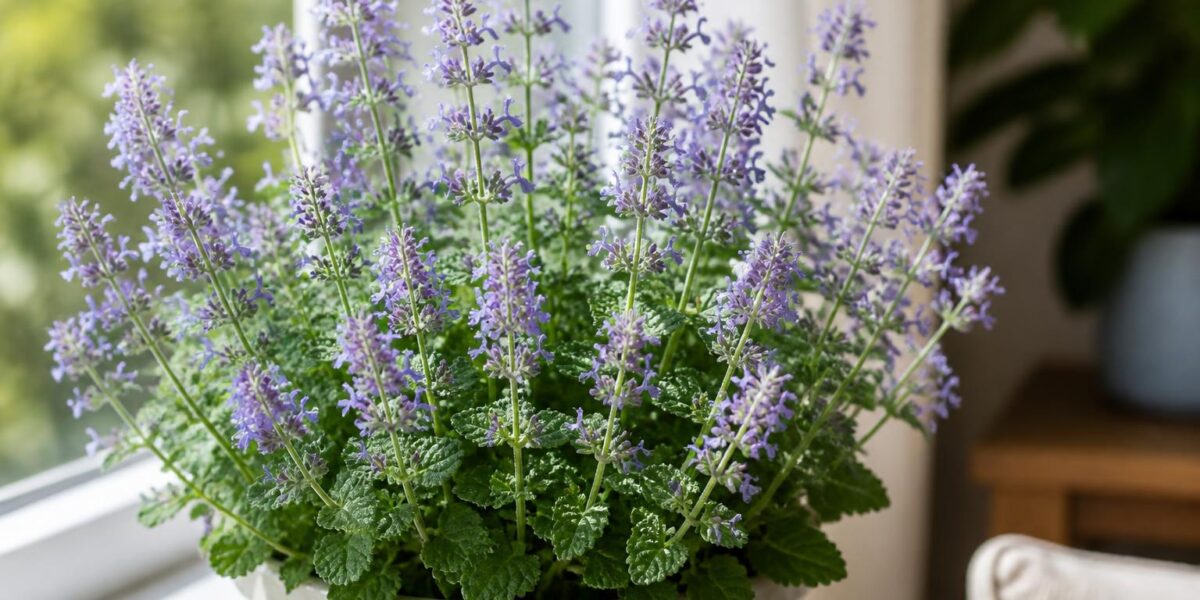
If your cat just trotted across the front border and stopped to chew the lavender-blue cushion plant by the path, take a breath. Catmint plants are safe for pets in the form most cats and dogs encounter them, which is the fresh perennial growing in cottage gardens, sunny borders, and pollinator beds. Catmint covers the ornamental Nepeta hybrids and species, most commonly Nepeta × faassenii and the popular cultivars ‘Walker’s Low’, ‘Six Hills Giant’, ‘Cat’s Pajamas’, and ‘Junior Walker’. The ASPCA does not list these on its toxic plant database for cats, dogs, or horses. Compared with the genuinely scary border perennials like foxglove, monkshood, or oleander, catmint sits in a much calmer category.
That comforting safety profile applies to plant material a curious pet would chew or graze. Catmint contains a small amount of nepetalactone, the same compound that drives the famous catnip response, but at lower concentrations than its cousin Nepeta cataria. Some sensitive cats will still show mild rolling or head-rubbing behavior around a catmint planting; others will walk past with no reaction. Concentrated essential oil from any Nepeta species deserves the same cautions as other Lamiaceae oils for feline households. The realistic outcome of a small graze is no symptoms at all or a brief, self-resolving episode of drooling or soft stool.
What Catmint Actually Is
Catmint is the umbrella common name for several ornamental Nepeta species and hybrids in the mint family Lamiaceae. The most widely grown garden catmint is Nepeta × faassenii, a sterile hybrid between Nepeta racemosa and Nepeta nepetella that produces dense mounds of gray-green foliage and clouds of lavender-blue flower spikes through summer. Popular cultivars include ‘Walker’s Low’ (despite the name, often two feet tall), ‘Six Hills Giant’ (taller and more vigorous), ‘Cat’s Pajamas’ (compact with deeper blue flowers), and ‘Blue Wonder’ (long-blooming dwarf form).
The plants share the classic mint-family signatures: square stems, opposite leaves, aromatic foliage, and tubular flowers attractive to bees, hummingbirds, and butterflies. Crushed leaves smell faintly minty with a slight herbal undertone, less sharply aromatic than true catnip and milder still than peppermint or oregano. Catmint is one of the most popular perennials in modern landscape design because it handles drought, heat, and neglect with grace.
Catmint is sometimes confused with its cousin catnip, which is covered in our companion guide on catnip and pets. Both are non-toxic, but catnip (Nepeta cataria) produces more nepetalactone and elicits stronger behavioral responses in sensitive cats. Catmint cultivars are bred for ornamental form and flower performance, with the cat-attracting effect treated as a charming side benefit rather than the main point.
Why Catmint Sits in the Low-Risk Category
Most plant safety lists put catmint alongside other Lamiaceae herbs and ornamentals that have been used in gardens for centuries without producing serious poisoning patterns in dogs or cats. The leaves do not contain calcium oxalate raphides like aroid family plants, cardiac glycosides like oleander, or grayanotoxins like azalea. Decades of cohabitation with house cats, garden dogs, and grazing rabbits have not produced poison control case patterns that flag the genus as a high-risk species.
The mild nepetalactone content in catmint cultivars produces the same gentle behavioral response as catnip in sensitive cats, just in a milder form. Some cats will roll, head-rub, or briefly play around the plant. Most will simply walk past, especially in dense plantings where the scent is too dispersed to focus a feline response. Our umbrella article on whether mint plants are toxic to cats walks through the broader Lamiaceae family caveat in more detail, and our companion piece on mint and dogs applies the same logic.
What Could Still Go Wrong
The realistic problems from a chewed catmint plant are mechanical and gastrointestinal. Any leafy material eaten in volume can cause vomiting or diarrhea simply because cats and dogs are not built to digest a salad of fibrous greens. Catmint leaves are slightly more fibrous than catnip, but a determined eater can still trigger a brief upset stomach. The nepetalactone behavioral response itself is harmless and self-limiting; cats enter a refractory period of about an hour after each episode.
The bigger flag is concentrated Nepeta essential oil. Catmint oil is sometimes used as a natural mosquito repellent, and a few drops licked off fur, a paw pad, or a bedding fabric is a much higher dose than a cat could ever get from a fresh leaf. That is the exposure pattern most likely to cause vomiting, drooling, weakness, or tremors. Read our deep dive on essential oils that are toxic to cats before adding any concentrated catmint product to a feline household.
If you grow catmint outdoors, also watch for pesticide residue on shop-bought transplants. Insecticide treatments are usually more dangerous to a chewing pet than the plant itself, so quarantine new starts for at least two weeks before letting curious mouths share the patio. Bee stings are another consideration during peak bloom, since catmint is a magnet for pollinators and a snapping puppy can end up with a swollen muzzle.
Symptoms to Watch For After a Nibble
Most pets that taste a catmint leaf will show no signs at all. If symptoms appear, they tend to be mild and short-lived, usually within a few hours of grazing. Possible signs include:
- Drooling or repeated lip-licking
- One or two episodes of vomiting
- Soft stool or mild diarrhea
- Reduced appetite for the next meal
- Briefly subdued mood after a large salad or behavioral response
What you should not see from a chewed catmint plant is severe weakness, tremors, seizures, collapse, blood in vomit or stool, breathing trouble, or pale gums. If any of those appear, the plant is unlikely to be the only thing your pet got into and you need urgent veterinary care regardless of which herb they sampled. Tremors and ataxia after a known essential oil exposure require an immediate call.
What to Do if Your Pet Eats Catmint
For ordinary catmint exposures, simply observe and provide water. If a sensitive cat shows the rolling or head-rubbing response, let the episode run its course and offer a quiet space afterward. Most behavioral episodes wrap up in fifteen minutes, and the cat enters a refractory period of about an hour during which the response cannot be triggered again.
For larger ingestions that produce vomiting or diarrhea, withhold food for a few hours, offer small amounts of water, and contact your veterinarian if anything lasts more than a day. Do not give milk, do not try to make your pet vomit at home, and do not give activated charcoal or human medications without veterinary guidance.
Call your own veterinarian if your pet is small, very young, very old, has existing health issues, ate a substantial portion of the plant, or shows symptoms that last more than a few hours. For after-hours guidance, the ASPCA Animal Poison Control Center is reachable at (888) 426-4435, and the Pet Poison Helpline is at (855) 764-7661. Both lines charge a consultation fee but can give you species-specific advice and a case number your regular vet can follow up with.
Catmint Versus Catnip and the Rest of the Mint Family
Catmint and catnip share the Nepeta genus and the same active compound, nepetalactone, but at different concentrations. Catnip (Nepeta cataria) is the species traditionally used for cat enrichment, with the strongest behavioral response. Catmint cultivars are ornamental hybrids selected for landscape form and floral display; the cat response is gentler. Read our companion guide on catnip and pets for the full nepetalactone story.
Other mint family members in this batch each have their own profiles. Spearmint is a non-toxic kitchen herb. Lemon balm is a non-toxic citrus-scented perennial. Bee balm is a non-toxic pollinator favorite. Peppermint earns a cat-specific cautionary article because of its higher menthol content. Other Lamiaceae herbs are covered in our pieces on rosemary, rosemary and cats, thyme and cats, and lavender and cats.
Placing Catmint in a Pet-Friendly Garden
Catmint thrives in full sun, well-drained soil, and tolerates drought once established. The pet-friendly approach is to plant it in mass at the front of a sunny border, along a path, or as a soft edge to a patio. The dense cushion habit looks beautiful and discourages most casual chewing simply because the plant has no obvious leaf to grab. Sensitive cats may still find a single stem to roll on, which is part of the fun.
If your cat is a heavy responder and has been flattening one corner of the planting, consider giving them a dedicated catnip patch in another part of the garden so the catmint can grow undisturbed. The catnip article in this batch covers grow tips for that purpose. Otherwise, simply prune broken stems and let the plant fill back in; catmint is remarkably resilient and recovers quickly from feline enthusiasm.
For a fully pet-friendly border, pair catmint with other ASPCA non-toxic perennials and shrubs from our pet-safe garden plants list. Avoid the genuinely toxic ornamentals that often share a sunny border, including foxglove, monkshood, and oleander. Catmint is one of the safer building blocks in any pollinator-and-pet-friendly design.
Caring for Catmint So It Stays Tidy
A healthy catmint plant is a tidy catmint plant, and tidy plants are easier for households with curious pets. Cut the plant back by half after the first flush of bloom in early summer to encourage a fresh second wave of flowers and to keep the cushion shape compact. Most catmint cultivars rebloom reliably with this midseason haircut and continue flowering into early fall.
Cut the plants back to a few inches above ground in late fall after the foliage browns, and rake up the debris promptly so it does not become a winter snack pile for a foraging dog. Divide clumps every three or four years in early spring to keep the center vigorous, replanting the strong outer sections and composting the woody middle. Healthy, well-pruned plants produce less broken plant litter for pets to find on the soil surface.
Adoption and Pet-Safe Living
If you are reading this because you are pet-proofing in advance of bringing home a new companion, that is exactly the level of care a rescue animal deserves. Walk Me Home Rescue connects people with pets through our adopt cats and adopt dogs hubs, and a thoughtfully chosen perennial border is one small but meaningful piece of a welcoming home.
Most adopters find that catmint earns its place in the garden quickly. The plant is non-toxic, drought-tolerant, pollinator-friendly, and gives sensitive cats a milder version of the catnip experience as part of the daily yard tour. Pair it with the other ASPCA non-toxic favorites from this batch, including catnip, spearmint, and lemon balm, and you have a feline-tested mint border that benefits everyone in the household.
Frequently Asked Questions
Is catmint safe for cats specifically?
Catmint is generally considered non-toxic to cats per the ASPCA and major plant safety references. Sensitive cats may show a mild rolling or head-rubbing response from the small amount of nepetalactone in the leaves, similar to but gentler than the catnip response. The behavioral effect is harmless and self-limiting. Concentrated catmint essential oil products should still be kept out of feline reach because of the broader cat-side oil sensitivity.
Can dogs eat catmint leaves or flowers?
An occasional nibble of fresh catmint is unlikely to cause more than mild stomach upset in most dogs. Dogs do not show the nepetalactone behavioral response that cats do; the compound is feline-specific. Larger ingestions may produce vomiting, soft stool, or briefly reduced appetite. Skip the next meal if your dog seems queasy, offer plenty of water, and call your veterinarian if symptoms last more than a few hours.
What is the difference between catmint and catnip?
Catnip (Nepeta cataria) produces more nepetalactone and elicits stronger behavioral responses in sensitive cats. Catmint (Nepeta × faassenii and other ornamental hybrids) produces less nepetalactone and was bred primarily for landscape form and flower display. Both are non-toxic. Catnip is the better choice for cat enrichment; catmint is the better choice for a long-blooming, drought-tolerant garden plant that occasionally entertains a passing cat.
Are ‘Walker’s Low’ and other named catmint cultivars equally safe?
Yes. Cultivars like ‘Walker’s Low’, ‘Six Hills Giant’, ‘Cat’s Pajamas’, ‘Junior Walker’, and ‘Blue Wonder’ are still Nepeta × faassenii or closely related hybrids under the hood, with the same chemistry. Cultivar selection is about height, bloom time, flower color, and habit, not safety profile. The same low-risk framing applies across the cultivar range.
Where should I plant catmint in a yard with pets?
A sunny front border, path edge, or patio cushion planting keeps catmint visible and accessible to passing cats without giving any one animal too much access to a single plant. The dense cushion habit recovers quickly from feline rolling. Avoid spraying the bed with insecticide, sweep up trimmings after each cut-back, and keep concentrated catmint essential oil products in a closed cabinet.


