
Last updated: May 16, 2026
In this article
- The Short Answer on Peppermint for Cats
- Menthol and Pulegone: The Compounds That Matter
- Fresh Leaf vs Concentrated Forms: A Different Risk
- Peppermint Essential Oil Is a Hard No
- Peppermint Candy, Gum, and the Xylitol Trap
- Peppermint Tea: A Gentler But Not Recommended Option
- Peppermint Plants in the Garden and Home
- What to Do If Your Cat Eats Peppermint Candy or Gum
- Symptoms of Peppermint Exposure to Watch
- Cats With Specific Health Conditions
- Better Herbal Alternatives
- Frequently Asked Questions
The Short Answer on Peppermint for Cats
Can cats eat peppermint? Better not. A single nibble of fresh peppermint leaf is unlikely to cause significant harm to a healthy adult cat, but the broader peppermint world — essential oil, candies, gum, herbal supplements, and concentrated tea — is not appropriate for cats. Peppermint (Mentha piperita) contains menthol and pulegone, both of which can be toxic to cats in concentrated forms. Cats also lack key liver enzymes that help mammals process certain plant terpenes, which means even small amounts of concentrated peppermint products linger longer in feline systems than in human or canine systems.
The practical guidance is simple. Do not put peppermint in your cat’s food. Do not let her get into peppermint candies or gum. Do not use peppermint essential oil on her, near her, or in a diffuser she shares space with. If she nibbles a fresh leaf in the garden, monitor her, but do not panic. The real danger is the concentrated forms, not the occasional curious leaf chew.
Menthol and Pulegone: The Compounds That Matter
Menthol is the cooling compound that gives peppermint its characteristic sensation, the sharp icy feeling on your tongue. In low doses from fresh leaves it is unremarkable; in concentrated essential oil form it is a potent compound that affects nerve endings, cardiovascular tone, and liver enzymes. Cats, with their reduced glucuronidation pathway, clear menthol more slowly than humans, which means the same dose hangs around longer and at higher tissue concentrations.
Pulegone is the more concerning compound. It appears in higher concentrations in pennyroyal mint and in lower but real amounts in peppermint. Pulegone is hepatotoxic — it damages the liver — at sufficient doses. In humans, pulegone toxicity has caused fatalities at high oil intakes. In cats, the threshold is presumably lower because of slower clearance, though formal feline dose-response data is limited. The combination of these two compounds is why “skip peppermint products” is the safer general rule for cats.
Fresh Leaf vs Concentrated Forms: A Different Risk
The difference between a fresh peppermint leaf and a drop of peppermint essential oil is roughly the difference between a pinch of cinnamon and a tablespoon of cinnamon extract — same plant, very different doses. A single fresh leaf weighs a fraction of a gram and contains diluted essential oils embedded in plant tissue. A drop of peppermint oil represents the concentrated essence of dozens of leaves.
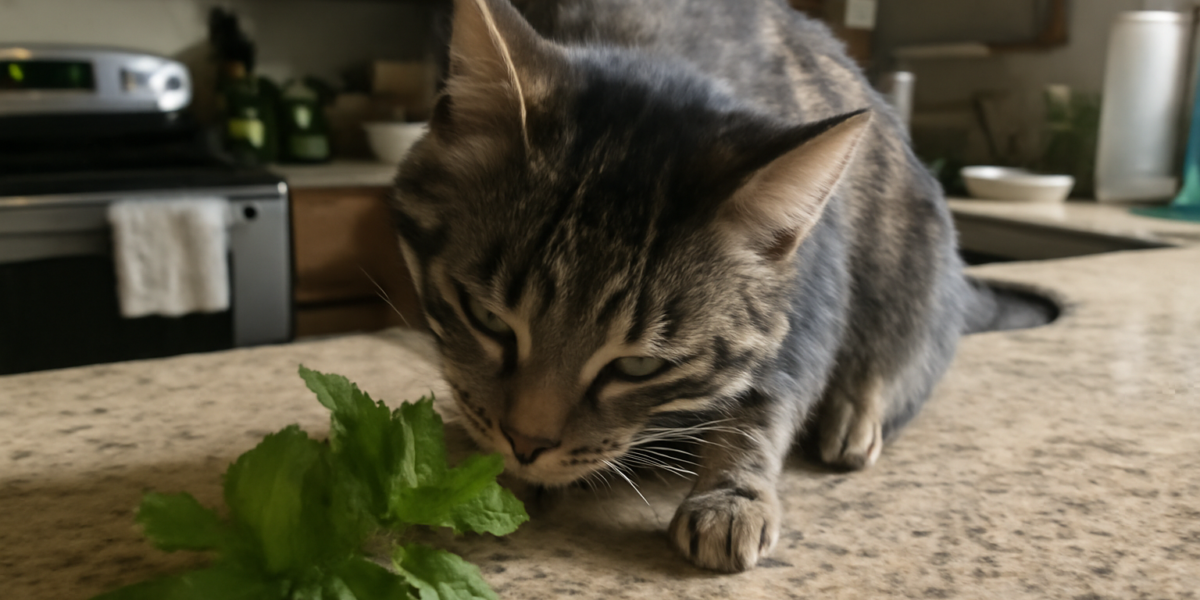
For a healthy adult cat, a single nibble of a fresh peppermint leaf is most likely to be uneventful. Some cats vomit briefly from any new plant matter. A few cats find peppermint stimulating in the way other felines respond to catnip (which is in the same broad mint family). Most cats sniff once and walk away. The fresh-leaf scenario is not what owners need to worry about. The concentrated scenarios are.
Peppermint Essential Oil Is a Hard No
Peppermint essential oil should never come into contact with your cat. Topical application can cause skin irritation, drooling, vomiting, weakness, and in serious exposures, neurological signs and liver injury. Even essential oils labeled as “natural” or “pet safe” by some marketers are not safe at typical undiluted home concentrations for cats. The cat liver does not process these terpenes the way human or dog livers do.
Diffuser exposure is also a concern. Peppermint essential oil dispersed in the air settles on a cat’s fur and is then ingested through grooming. In poorly ventilated rooms, cats can develop respiratory irritation, watery eyes, lethargy, and digestive upset from chronic diffuser exposure. If you use diffusers in your home, choose oils that are confirmed safe for cats by your veterinarian, ensure your cat can leave the room freely, and keep the diffuser in a well-ventilated space — or skip diffusers entirely in cat households, which is the simplest answer.
Peppermint Candy, Gum, and the Xylitol Trap
Peppermint candy is unsuitable for cats for two reasons. The first is the sugar content of regular candy, which is empty calories cats do not need and may contribute to weight gain or destabilize a diabetic cat. The second, far more dangerous reason, is xylitol — a sugar substitute used in many sugar-free mints, gums, and candies. Xylitol is well-documented as toxic to dogs, causing severe insulin release and hypoglycemia; the picture in cats is less clear but worth taking seriously.
The honest summary on cats and xylitol is that the data is sparser than for dogs, but most veterinary toxicologists treat xylitol as a substance to keep away from cats by default. Sugar-free peppermint gum, sugar-free mints, and any “diet” or “low-sugar” peppermint product is therefore off-limits. Regular peppermint candy is also off-limits because of the menthol concentration and sugar load. The safest approach is to keep all peppermint candies and gums out of cat-accessible spaces.
Peppermint Tea: A Gentler But Not Recommended Option
A single teaspoon of cooled, mildly brewed peppermint tea is the gentlest peppermint exposure for a cat. Some cat owners offer it occasionally for digestive support based on traditional herbal practice. The honest answer is that the evidence base for this in cats is weak, and most cats reject the taste anyway. If you want to try it once, brew the tea weakly (one teaspoon of dried peppermint leaf in a cup of water for two minutes, no more), let it cool fully, and offer one teaspoon. Most cats will not drink it.
This is a one-time tasting at most. Repeated use is not appropriate without veterinary guidance, and there are better tools for digestive issues in cats than peppermint tea. If your cat has chronic GI symptoms, schedule a veterinary visit instead of self-treating with herbs. Vomiting, diarrhea, and appetite changes can signal everything from a hairball problem to inflammatory bowel disease, and proper diagnosis matters.
Peppermint Plants in the Garden and Home
Live peppermint plants in pots or garden beds are minor concerns. Cats may chew on the leaves out of curiosity or in the way they chew on grass. Most plant nibbling in cats is self-limiting and harmless. The plants are not on serious feline toxic plant lists, and the dose involved in casual chewing is too small for systemic effects in healthy cats.
That said, some cats develop a stimulating reaction to mint plants similar to a milder catnip response. They may roll, drool, or paw at the plant. This is usually harmless but can lead to overconsumption if the same plant is available daily. If your cat shows obsessive interest in your peppermint plant, move it out of reach. For a related herb, our chamomile safety guide covers another commonly grown culinary plant with its own cautions.
What to Do If Your Cat Eats Peppermint Candy or Gum
If your cat eats peppermint candy or gum, identify the product. Sugar-free or “diet” products are the highest priority — call your veterinarian or the ASPCA Animal Poison Control Center immediately and bring the package. Even if xylitol toxicity in cats is less defined than in dogs, your veterinary team can guide monitoring and bloodwork.
For regular sugar-containing peppermint candy, the most likely outcome is mild gastrointestinal upset. Watch for vomiting, drooling, lethargy, and any signs of weakness. Diabetic cats need closer monitoring after a sugar exposure, and your veterinarian may recommend checking blood glucose. For gum specifically, the additional concern is that the wad of gum itself can cause an obstruction in a small intestine; if you notice persistent vomiting or unwillingness to eat, your cat needs to be seen.
Symptoms of Peppermint Exposure to Watch
The signs that should prompt a veterinary call after any peppermint exposure include persistent vomiting, drooling beyond a brief response, weakness, ataxia (wobbly walking), tremors, decreased appetite lasting more than twenty-four hours, breathing changes, jaundice (yellowing of gums or skin), and unexplained lethargy. Liver-toxic events from concentrated mint products tend to develop over hours to days, so a cat who seems fine immediately after exposure may show signs later.
Skin irritation from topical exposure includes redness, itching, hair loss, or blistering at the contact site. If your cat got peppermint oil on her fur, bathe her with a gentle pet shampoo (not human shampoo), rinse thoroughly, and call your veterinarian. Do not assume the oil will simply evaporate; cats groom continuously and will ingest residue.
Cats With Specific Health Conditions
Cats with liver disease, IBD, chronic kidney disease, or any chronic illness should be kept away from all peppermint products beyond an accidental fresh-leaf nibble. Their compromised systems handle compounds more slowly and react to smaller doses. The same caution applies to kittens, senior cats, pregnant queens, and cats on multiple medications.
Cats with feline asthma are particularly sensitive to airborne irritants, including diffused essential oils. Peppermint oil diffusers in households with asthmatic cats can trigger respiratory flares. Use cat-safe air-quality choices, which generally means no essential oil diffusion at all in those homes.
Better Herbal Alternatives
If you are interested in herbs for cats, the safest options have a long history of feline use. Catnip (Nepeta cataria), valerian, and silvervine are well-established cat herbs that produce predictable behavioral responses without toxicity concerns at normal doses. Cat grass (typically wheat, oat, or barley grass) provides safe chewing enrichment. Chamomile in a weak tea form has its own cautions but is generally safer for cats than peppermint.
If your interest in peppermint is for “fresh breath” reasons, the answer for cats is dental care, not mint. Regular tooth brushing with a cat-formulated toothpaste, dental treats approved by your veterinarian, and routine dental cleanings at the vet are the only real solutions to feline halitosis. Mint candies do not exist for cats, and homemade attempts are not safe.
Frequently Asked Questions
Why do some cats love mint plants?
Some cats respond to peppermint, spearmint, and related plants with a mild euphoric reaction similar to a weakened catnip response. The compounds responsible are different from catnip’s nepetalactone but produce overlapping behavioral effects. This is not the same as the plant being good for them; it is just that they enjoy it briefly.
Is peppermint safe in cat dental products?
Some pet-formulated dental products contain trace peppermint flavoring. These have been formulated with cat safety in mind and are different from giving your cat a peppermint candy. Use only products approved for cats by your veterinarian.
My cat licked peppermint ice cream. What should I do?
Watch for vomiting and diarrhea over the next day. The dairy in ice cream often causes more digestive trouble than the peppermint flavoring. If the ice cream contained chocolate (mint chocolate chip), call your veterinarian — chocolate is more concerning than the mint, and our chocolate toxicity guide explains why.
Are peppermint flea sprays safe for cats?
No. Many “natural” flea sprays use peppermint or other essential oils as active ingredients and are dangerously concentrated for cats. Use only flea products specifically labeled for cats and approved by your veterinarian.
Can I diffuse peppermint oil if my cat is in another room?
The safer answer is to skip peppermint diffusion entirely in cat households. Even closed doors do not seal cleanly, and cats may enter the diffuser room unexpectedly. If you use a diffuser, choose cat-safe options validated by your veterinarian.


