
Last updated: May 16, 2026
In this article
- The Quick Answer on Peppermint Plants and Cats
- What Peppermint Actually Is
- Why the Plant Itself Is Considered Low-Risk
- Why the Essential Oil Is the Real Risk
- Symptoms to Watch For After Exposure
- What to Do if Your Cat Eats Peppermint
- Peppermint Versus the Rest of the Mint Family
- Placing Peppermint Around a Cat-Friendly Home
- Caring for Peppermint So It Stays Tidy
- Adoption and Pet-Safe Living
- Frequently Asked Questions
The Quick Answer on Peppermint Plants and Cats
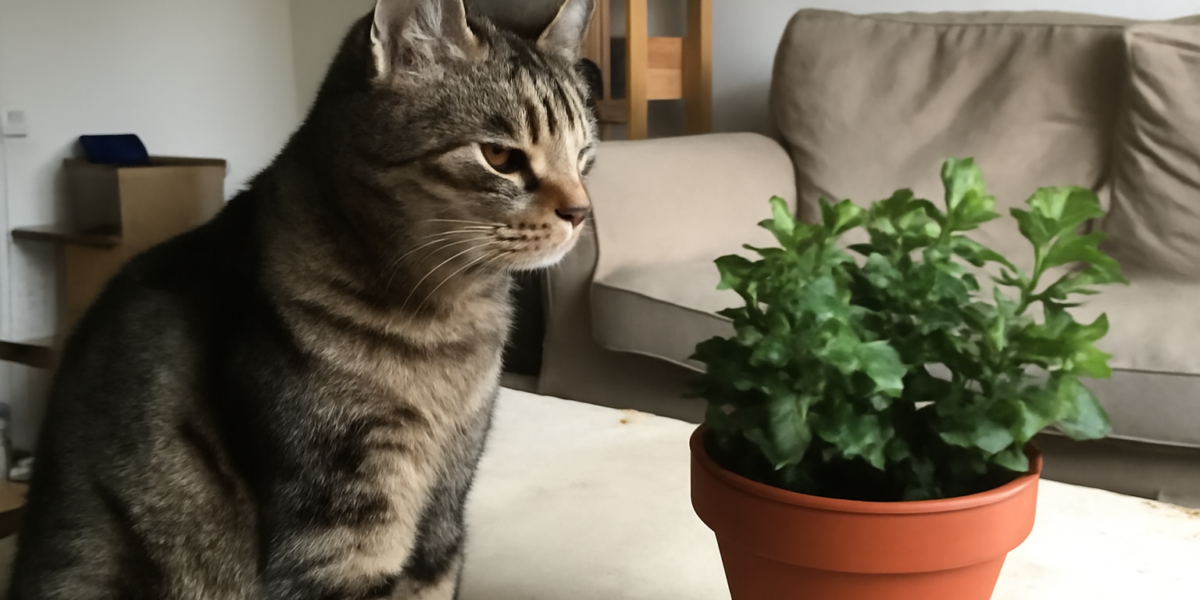
If your cat has just sniffed or chewed a peppermint plant on the windowsill, take a breath. The fresh plant itself is not classified as a serious feline poison, but the question of whether peppermint plants are toxic to cats needs a careful, two-part answer because there is a real difference between the living plant and the concentrated essential oil sold in the human aisle. The ASPCA does not list Mentha × piperita on its toxic plant database for cats, dogs, or horses. A small fresh-leaf nibble is unlikely to cause more than mild drooling or a brief stomach upset.
The cautionary half of the story is the essential oil. Peppermint essential oil is concentrated menthol, menthone, and related compounds, and cats lack some of the liver enzymes (specifically certain glucuronyl transferase pathways) that dogs and humans use to clear plant essential oils. Concentrated peppermint oil applied to fur, licked off a paw, inhaled from a strong diffuser, or swallowed from a stash of human pain-relief rubs poses a much greater risk than a fresh leaf. Severe exposures can cause vomiting, weakness, tremors, or breathing trouble. This is the exposure pattern that drives most cat-related peppermint cases on poison control hotlines, and it is the reason peppermint earns a cat-specific cautionary article rather than a simple safe-for-pets label.
What Peppermint Actually Is
Mentha × piperita is a hybrid between spearmint (Mentha spicata) and water mint (Mentha aquatica), with stronger menthol content than either parent. The plant has the classic mint-family signatures: square stems, opposite leaves with serrated edges, aggressive underground runners, and small lavender flower spikes that attract pollinators in mid to late summer. Crushed leaves smell sharply cooling and almost medicinal compared with the sweeter, gummier scent of pure spearmint.
You will see peppermint sold as the species form, as cultivars like ‘Chocolate Mint’ (with cocoa-tinted leaves) and ‘Variegated Peppermint’ (with cream-edged foliage), and as essential oil derived from steam-distilled leaves. The plant itself is widely grown in herb gardens, kitchen pots, and as ground cover in moist shade. The essential oil is far more concentrated, often 100 to 1000 times the menthol content of fresh leaves, and shows up in everything from candy and gum to muscle rubs, decongestant balms, breath sprays, lip balms, room sprays, and DIY pest deterrents.
Peppermint is sometimes confused with its milder cousin spearmint, which is covered in our companion guide on spearmint and pets. The two plants look very similar but have different chemistry, and the safety conversation is genuinely different for each. Pennyroyal (Mentha pulegium), a third member of the genus, is the most concerning because it has high pulegone content; pennyroyal should not be planted in any pet household.
Why the Plant Itself Is Considered Low-Risk
The fresh peppermint plant does not contain calcium oxalate raphides like aroid family plants, cardiac glycosides like oleander, or grayanotoxins like azalea. Decades of cohabitation with house cats, garden cats, and grazing rabbits have not produced poison control case patterns that flag the living plant as a high-risk feline species. Most cats simply walk past peppermint or take a small bite and move on, with no symptoms or only briefly mild ones.
Our umbrella article on whether mint plants are toxic to cats walks through the full mint family caveat in more detail. The honest summary is that the plants themselves are mostly fine in foraging amounts, but extracted essential oils, herbal tinctures meant for humans, and concentrated balms are not safe for casual feline exposure. The risk profile rises sharply with dose and concentration, and peppermint sits a step ahead of spearmint on that gradient because of its higher menthol content.
Why the Essential Oil Is the Real Risk
Peppermint essential oil is one of the more concerning oils for feline households. Cats process plant essential oils more slowly than dogs or humans, and the metabolites can build up in the bloodstream after even modest exposures. A few drops licked off fur during a grooming session, an open bottle that tips onto carpet, or a strong diffuser running in a closed room can all push a cat into clinically significant exposure. Symptoms include drooling, vomiting, ataxia (an unsteady walk), weakness, tremors, low body temperature, and in rare severe cases, seizures or breathing trouble.
Peppermint oil is also a contact irritant on cat skin and mucous membranes. The same product that soothes a human muscle ache can cause redness, swelling, and chemical burns when applied to a cat’s paw or coat. Topical application is never appropriate for cats, even at the diluted strengths sometimes recommended on social media. Read our deep dive on essential oils that are toxic to cats for the full list of high-risk oils, peppermint included.
Diffusers add an additional respiratory pathway. Cats with asthma or other lower-airway conditions are especially sensitive to aerosolized oil, and even healthy cats can develop coughing, sneezing, or watery eyes in a heavily diffused room. If you must run a peppermint diffuser, use it only in spaces your cat cannot enter, with the door closed, and ventilate well before the cat returns.
Symptoms to Watch For After Exposure
Most cats that taste a fresh peppermint leaf will show no signs at all. If symptoms appear from fresh-plant ingestion, they tend to be mild and short-lived. Possible signs include:
- Drooling or repeated lip-licking
- One or two episodes of vomiting
- Soft stool or mild diarrhea
- Reduced appetite for the next meal
Symptoms after concentrated essential oil exposure are more concerning and warrant urgent veterinary attention. Watch for:
- Persistent vomiting or repeated retching
- Wobbly walking, weakness, or collapse
- Tremors or muscle twitching
- Low body temperature or shivering
- Difficulty breathing, coughing, or wheezing
- Pale gums or unusual lethargy
Any neurological signs after a known oil exposure should trigger an immediate call to a veterinarian or poison hotline. The earlier the team can support a cat through an oil exposure, the better the outcome.
What to Do if Your Cat Eats Peppermint
For fresh-plant exposures, start with calm observation. Remove any chewed sprigs from your cat’s reach, wipe the mouth with a damp cloth to clear residual sap, and offer a small drink of fresh water. Do not give milk, do not try to make your cat vomit at home, and do not give activated charcoal or human medications without veterinary guidance.
For essential oil exposures, treat the situation as urgent. Wash any oil off skin and fur with a mild, fragrance-free dish detergent and lukewarm water, taking care to keep soapy water out of eyes. Move your cat to a well-ventilated room away from any active diffuser. Do not try to make the cat vomit, and do not give activated charcoal at home; both can complicate veterinary treatment.
Call your own veterinarian for any peppermint oil exposure or for fresh-plant exposures with persistent symptoms. For after-hours guidance, the ASPCA Animal Poison Control Center is reachable at (888) 426-4435, and the Pet Poison Helpline is at (855) 764-7661. Both lines charge a consultation fee but can give you cat-specific advice and a case number your regular vet can follow up with. Bring the bottle, label, or a photo of the plant to any clinic visit so the team can confirm the exposure source.
Peppermint Versus the Rest of the Mint Family
The mint family is genuinely large and the safety story varies. Spearmint and lemon balm are the gentlest, with much lower menthol content. Bee balm sits in a similar low-risk category. Catnip and catmint are not only safe but actively pleasurable for many cats thanks to nepetalactone. Other Lamiaceae herbs cover their own ground in our pieces on rosemary, rosemary and cats, thyme and cats, and lavender and cats.
The pattern across the family is consistent: the fresh plants are mostly fine in foraging amounts, the concentrated essential oils are where caution kicks in, and cats are more vulnerable than dogs because of how their livers handle these compounds. Peppermint sits a step ahead of spearmint and lemon balm on the menthol gradient, which is why it earns its own cat-specific article on this site.
Placing Peppermint Around a Cat-Friendly Home
If you keep peppermint as a kitchen herb, the best location is a windowsill or hanging shelf the cat cannot reach, with no spilled water tray that might attract licking. Most cats will not actively seek out the plant, but a curious kitten or a cat with pica behavior might chew anything new. Container-grown peppermint is much easier to control than a colony in the open garden.
If you grow peppermint outdoors, plant it in a buried pot rim or contained raised bed to keep the runners from colonizing the lawn or the cat’s favorite napping patch. Sweep up trimmings after every harvest, and never leave a pile of bruised mint cuttings within reach of an outdoor cat. Wilted leaves release more aromatic oil than the standing plant and are slightly more concentrated.
The bigger pet-proofing project for cat households is the human bathroom and medicine cabinet. Lip balms, muscle rubs, decongestant balms, breath sprays, and pure essential oil bottles all need to live behind a closed door. A counter-surfing cat who licks a tube of menthol chest rub is a much more common emergency than a cat who chews a plant.
Caring for Peppermint So It Stays Tidy
A healthy peppermint plant is a tidy peppermint plant, and tidy plants are easier for households with curious cats. Cut the plant back by half in midsummer to prevent flopping and to encourage a flush of fresh leaves for cooking. Pinch off flower buds if you want to keep the foliage harvest going through fall, since flowering pushes the plant into seed production and tougher leaves.
Water consistently in the ground and check container plants every couple of days during hot weather. Peppermint wilts quickly when stressed but bounces back fast with a deep watering. Divide clumps every two or three years to keep the center vigorous and to share starts with friends. A vigorous, well-pruned plant produces less broken plant litter for cats to find on the soil surface.
Adoption and Pet-Safe Living
If you are reading this because you are pet-proofing in advance of bringing home a new feline companion, that is exactly the level of care a rescue cat deserves. Walk Me Home Rescue connects people with cats through our adopt cats hub, and a thoughtfully chosen herb collection is one small but meaningful piece of a welcoming home.
Most cat adopters find that the bigger pet-proofing wins are not in the herb pots but in the bathroom cabinet. Move every essential oil bottle and menthol balm into a closed cupboard, switch to fragrance-free cleaning sprays, and reserve diffuser use for rooms the cat cannot enter. Leave the peppermint pot on a high windowsill for cooking, and the fresh herb side of this story stays comfortably low-risk while the oil side stays safely out of reach.
Frequently Asked Questions
Is the peppermint plant itself dangerous if my cat takes one bite?
One bite of fresh peppermint is unlikely to cause more than briefly mild stomach upset in most cats, and many cats show no symptoms at all. The plant is not on the ASPCA toxic list. Watch for vomiting, drooling, or diarrhea over the next several hours and call your veterinarian if anything persists. The much bigger concern is concentrated peppermint essential oil, not the living plant.
Can I diffuse peppermint essential oil if my cat is in another room?
Even with the door closed, aerosolized oil drifts and settles on surfaces your cat eventually touches. Cats with asthma or any lower-airway condition are particularly vulnerable. The safer answer for any feline household is to skip peppermint diffusion entirely or run it only in a tightly sealed room your cat never enters, ventilating well before they have access. When in doubt, leave the diffuser off.
What if my cat licked menthol chest rub off my skin?
Treat that as an essential oil exposure and call your veterinarian or a poison hotline immediately. Concentrated menthol products are formulated for human use and the dose your cat picked up could be enough to cause vomiting, drooling, or weakness. Wash any visible product off your cat’s mouth with a damp cloth, do not try to induce vomiting, and bring the tube to any clinic visit so the team can read the exact ingredients.
Are peppermint-flavored cat treats safe?
Commercial cat treats labeled as peppermint-flavored use food-grade flavorings at very low concentrations, not essential oil. They are generally safe in the recommended serving size. The risk shows up when human peppermint products (gum, candy, lip balm) get into a cat’s mouth, because those concentrations are much higher and can include xylitol or other ingredients that are independently dangerous.
Can I grow peppermint outdoors if I have an outdoor cat?
Yes, peppermint plants in the garden are a low-risk concern for an outdoor cat in foraging amounts. Plant in a buried pot rim or contained bed, sweep up trimmings, and avoid foliar pesticide treatments. The fresh plant is much less concerning than concentrated essential oil products, and most outdoor cats either ignore mint entirely or take a single nibble before moving on to more interesting prey.


