
Last updated: May 16, 2026
In this article
- The Reassuring Answer Up Front
- What Watercress Actually Is — and the Naming Confusion
- The ASPCA Position on Watercress
- The Mustard-Family Pungency, Honestly
- What Garden Encounter Actually Looks Like
- Watercress vs Tropaeolum — The Chemistry Difference
- Mechanical Caveats Worth Knowing
- Watercress in a Pet-Friendly Edible Garden
- What to Watch For After a Watercress Encounter
- If You Need a Phone Number
- Frequently Asked Questions
The Reassuring Answer Up Front
Watercress plants are safe for pets in the everyday garden sense. Nasturtium officinale — the peppery aquatic green grown in shallow streams and recirculating water beds — is not listed on the ASPCA’s database of plants toxic to dogs, cats, or horses. If your dog snuffled a clump growing alongside a creek or your cat batted at a sprig in a kitchen hydroponic setup, you are not facing a poisoning emergency. Watercress is safe for pets at the level of any normal kitchen-garden encounter.
The honest caveat is one most owners notice right away from the taste — watercress is in the mustard family (Brassicaceae) and carries a sharp peppery isothiocyanate flavor that can cause mild oral or gastric irritation in animals that eat a lot of it raw. In garden quantities — a curious chew, a tooth-mark on a stem — this does nothing meaningful. In repeated large servings to a sensitive pet, it can produce mild GI upset. That puts watercress in the same broad category as arugula and the milder mustard relatives: generally safe, occasionally peppery enough to be self-deterrent, never genuinely toxic.
What Watercress Actually Is — and the Naming Confusion
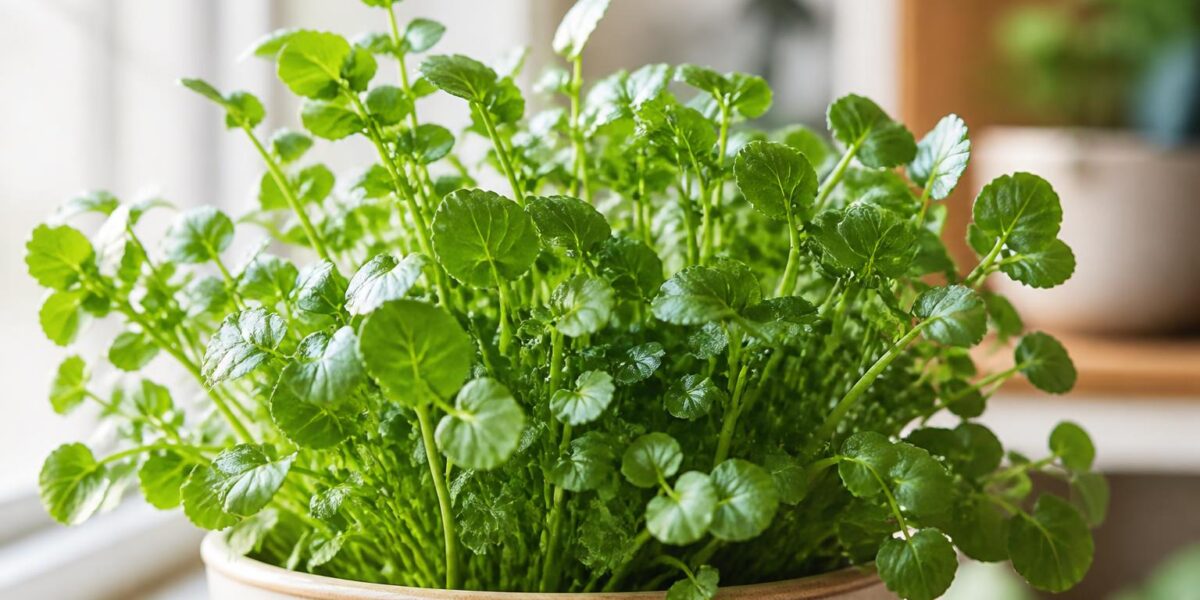
Watercress is Nasturtium officinale, an aquatic perennial in the Brassicaceae (mustard) family. It grows naturally in cold spring-fed streams across much of the temperate world and is increasingly grown in commercial hydroponic systems for the salad market. The plant trails along the water surface, sending roots down and producing small round leaves and white flowers. Crushed leaves smell faintly of mustard and taste sharply peppery.
The naming gets confusing fast. The genus name “Nasturtium” is also the common name of an unrelated ornamental flower, Tropaeolum majus — the trailing or climbing plant with circular leaves and orange, yellow, or red edible flowers grown across cottage gardens worldwide. Both plants share the common name “nasturtium” because both have a peppery taste, but they are in different families entirely. Tropaeolum is in the Tropaeolaceae family and is also generally considered safe for pets, with a separate writeup at our nasturtium plants article. When you ask “is nasturtium safe for my pet?”, the answer is yes whichever plant you mean, but the chemistries and growth habits are very different.
The ASPCA Position on Watercress
Watercress (Nasturtium officinale) is not specifically listed on the ASPCA Animal Poison Control Center’s database of plants toxic to dogs, cats, or horses. Within the broader Brassicaceae family, ASPCA does flag mustard species (Brassica nigra and several relatives) for the higher glucosinolate content, but the dedicated watercress entry is absent. Veterinary toxicologists treat watercress as in the same neighborhood as arugula and the milder peppery greens — generally safe, occasionally enough peppery oil to deter a pet from eating too much.
Within the safe-Brassicaceae roster on our site, sister articles include arugula (sharing the peppery mustard chemistry but at a lower water content), bok choy, and collard greens (for the milder cabbage end of the family). The cautionary cousin is mustard plants, which carry significantly higher pungent-oil concentrations and warrant more genuine caution.
The Mustard-Family Pungency, Honestly
Watercress contains glucosinolates — sulfur-containing compounds that, when crushed by chewing, are converted by enzymes into isothiocyanates and other breakdown products. These breakdown products are responsible for the sharp peppery flavor that makes watercress distinctive. Phenethyl isothiocyanate (PEITC) is the dominant compound in watercress. In humans, it has been studied as a potential cancer-preventive antioxidant; in pets, it is not toxic at culinary doses but can be locally irritating to mucous membranes if a lot of crushed leaf material lingers in the mouth.
The practical translation for pets is that a curious mouthful does nothing. A large repeated serving might produce mild oral discomfort (lip-licking, brief drool) or mild GI upset (one soft stool, possibly a single episode of vomiting). The peppery flavor is naturally self-limiting — most pets, especially cats, taste-test once and decline to continue. If your pet does eat a large quantity, watch for mild symptoms over 24 hours and offer fresh water; nothing more aggressive is usually needed.
What Garden Encounter Actually Looks Like
The real-world watercress encounter for a pet falls into a few patterns. A dog walking near a creek or pond noses at a clump growing along the bank — typical outcome is one bite, a head-shake at the peppery taste, and no further interest. A cat brushes past a kitchen-counter hydroponic setup and gets a sniff of the cool succulent stems — typical outcome is nothing, since cats find pungent mustard-family chemistry quite off-putting. A backyard gardener with a watercress trough notices the dog chewing on the floating leaves — typical outcome is one episode of soft stool the next day, no further symptoms.
The slightly less common scenario is a pet who eats a substantial amount of plant material — say, an entire fistful of watercress out of a hydroponic trough — and presents with mild GI upset. This is not a poisoning case. Offer water, withhold one meal if the pet seems uninterested in food, and observe over 24 hours. Healthy adult dogs and cats clear the volume without intervention.
Watercress vs Tropaeolum — The Chemistry Difference
Both plants share the common name “nasturtium” and both carry peppery flavors, but the chemistries that produce that pungency are different. Watercress (Nasturtium officinale) uses glucosinolate-derived isothiocyanates — the same chemistry as horseradish, mustard, and wasabi. Tropaeolum (the ornamental nasturtium) uses glucotropaeolin, a different mustard-oil glucoside that breaks down to benzyl isothiocyanate. The end result is similar in flavor; the source compounds differ.
For pets, both plants are generally safe. Tropaeolum nasturtium leaves and flowers are commonly added to human salads and are not flagged by ASPCA. Watercress is also not flagged by ASPCA. Owners often grow both — Tropaeolum in containers and beds, watercress in a creek or hydroponic setup — and there is no reason to remove either from a pet-active garden. The one practical reminder: when discussing a “nasturtium ingestion” with a veterinarian or poison-control hotline, clarify which plant. The chemistries and growth habits are different enough that a precise ID helps the toxicologist.
Mechanical Caveats Worth Knowing
Watercress is mechanically forgiving — soft stems, small tender leaves, no thorns or stinging hairs. The main mechanical concern is the aquatic context. A dog who plunges into a creek to chew watercress is at far greater risk from the water itself (cold, current, contamination from agricultural runoff or wildlife pathogens) than from the plant. Wild watercress in some North American streams can host parasites and bacterial contamination that affect both humans and pets if eaten raw — a separate-from-toxicity concern that owners should know about.
Cultivated watercress grown in clean hydroponic systems or recirculating water tanks at home or commercially does not carry the wild-stream contamination risk. If your pet eats from a clean home setup, the only practical concern is the small amount of peppery isothiocyanate. If your pet eats from a wild stream, talk to your veterinarian about parasite prevention — that conversation is independent of plant toxicity.
Watercress in a Pet-Friendly Edible Garden
Most pet households grow watercress in one of three ways: a dedicated hydroponic counter unit indoors, a recirculating shallow trough outside, or a wet corner alongside a small pond or stream. All three are workable in pet households. The cultivation considerations are mechanical and water-management — keeping dogs out of the trough or pond is more about water safety than plant safety. The cat-safe houseplants guide walks through indoor companions that complement an indoor watercress setup.
For owners who already grow ornamental Tropaeolum in their pet-friendly border (the trailing climbing nasturtium with edible orange and red flowers), adding watercress to the kitchen garden makes a complementary pair — both peppery, both edible by humans, both generally safe by pets. The visual contrast between the showy bright Tropaeolum flowers and the cool subdued watercress is striking, and neither plant requires defensive fencing in a pet-active home. Owners who grew up with the common name overlap sometimes hesitate to put both in the same garden; the answer is that you can.
What to Watch For After a Watercress Encounter
Realistic, low-probability outcomes after a pet eats fresh watercress foliage from a clean garden source include:
- Brief lip-licking or head-shaking at the peppery taste (resolves in minutes)
- One episode of soft stool within 24 hours (resolves on its own)
- One episode of vomiting from a large ingestion (resolves on its own)
- Brief drooling from the isothiocyanate flavor (resolves in minutes)
What you should not see are persistent vomiting, weakness, tremors, dilated pupils, blood in stool, or any neurological signs. Watercress does not produce those. If you see them after what you believed was watercress ingestion, look hard for alternative causes — wild parasites in stream water, contamination from agricultural runoff, or a different plant the pet also encountered. Watercress alone is not a meaningful pet-toxicity source.
If You Need a Phone Number
For owners who want professional reassurance, start with your own veterinarian. If unavailable, the ASPCA Animal Poison Control Center at 888-426-4435 (per-call fee) and the Pet Poison Helpline at 855-764-7661 (per-call fee) are staffed by veterinary toxicologists 24/7. Both will tell you whether monitoring at home is sufficient or whether your specific situation deserves a clinic visit.
Bring or photograph the plant when you call. Watercress is visually distinctive — small round leaves trailing along water with white four-petaled flowers in season — but seedlings can resemble several other Brassicaceae or aquatic species. If you grow both ornamental Tropaeolum (cottage-garden nasturtium) and Nasturtium officinale watercress, clarify which plant the pet ate; the chemistries differ. If the watercress was wild-foraged from a stream rather than home-cultivated, mention the source so the toxicologist can include parasite-screening considerations.
Frequently Asked Questions
Is watercress toxic to dogs?
No. Nasturtium officinale is not on the ASPCA’s list of plants toxic to dogs. A dog who chews watercress typically has no symptoms or, at worst, one episode of soft stool. The peppery isothiocyanate flavor is naturally self-deterring, so most dogs don’t continue eating after the first taste. If your dog ate from a wild stream rather than a home hydroponic setup, the parasite risk from the water is a separate conversation worth having with your veterinarian.
Is watercress safe for cats?
Yes, watercress is not listed by the ASPCA as toxic to cats. Most cats find the pungent mustard-family flavor strongly off-putting and won’t chew much past a single taste. Indoor cats with access to a kitchen-counter hydroponic watercress unit generally ignore it after one investigation. There is no toxin-specific risk; the worst realistic outcome is one episode of vomiting from a curious chew.
Is watercress the same as the orange-flowering nasturtium I grow in my garden?
No. Watercress is Nasturtium officinale, an aquatic perennial in the mustard family. The orange-flowering “nasturtium” is Tropaeolum majus, in an entirely different family. Both share the common name “nasturtium” because both have a peppery flavor, and both are generally considered safe for pets per ASPCA. The plants look completely different — Tropaeolum has round green leaves and showy orange or red flowers; watercress has small round leaves and small white flowers and grows in or near water.
What if my dog drank from a stream and ate wild watercress?
The plant itself is not toxic; the bigger concern is the water. Wild streams in some regions host parasites (giardia, liver flukes) and bacterial contamination that can affect dogs. Watch for diarrhea, vomiting, or lethargy in the days following the swim, and mention the wild stream exposure to your veterinarian if any of those signs appear. The watercress is the least of the worry; the water is.
Can I grow watercress hydroponically near where my cat lounges?
Yes. A clean home hydroponic watercress system is no chemical risk to cats. The practical issues are physical — cats sometimes drink from the standing water (which is fine for the cat but disturbs the system) and may chew on tender stems hanging over the edge. Place the unit somewhere stable and accept that occasional kitten-investigation is harmless. The peppery flavor is a built-in deterrent for repeated chewing.


