
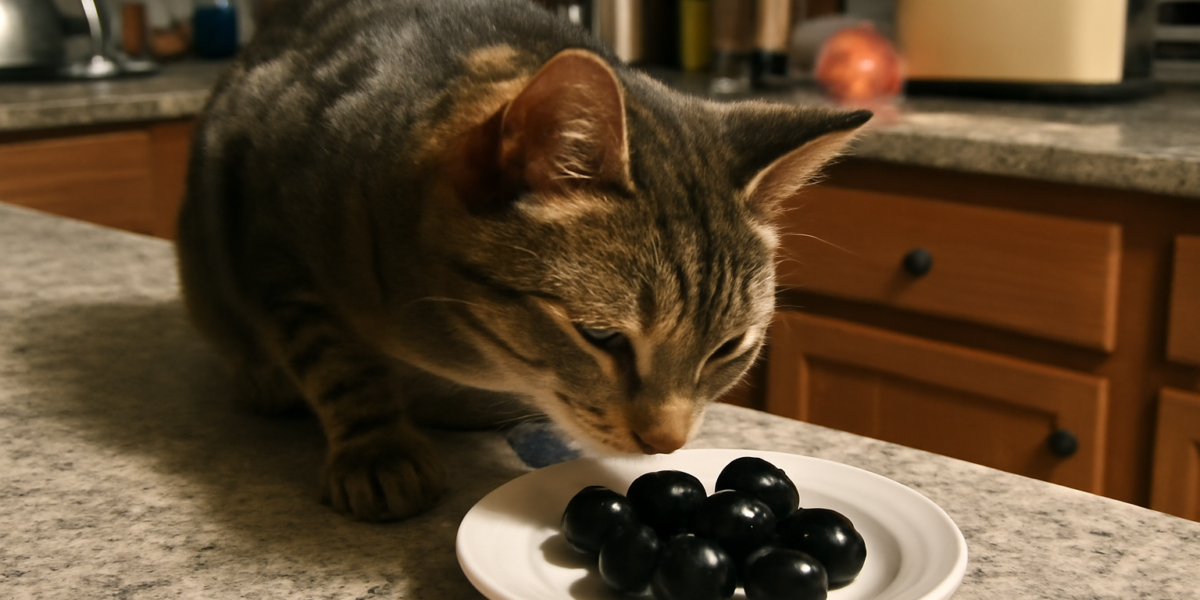
Are Black Olives Safe for Cats?
Yes, cats can eat black olives in small amounts, but they should only be offered as an occasional treat rather than a regular part of your cat’s diet. Plain, unseasoned black olives are not toxic to cats, and many felines are surprisingly attracted to them. However, the high sodium content in most commercially available olives is the primary concern for cat owners.
In this article
A single canned black olive can contain 30 to 40 milligrams of sodium, which is significant when you consider that an average adult cat only needs about 21 milligrams of sodium per day as a bare minimum and should not regularly exceed 42 milligrams from treats alone. Feeding too many olives too often can contribute to excessive sodium intake, which may stress your cat’s kidneys over time.
Why Do Cats Love Olives?
If your cat goes wild for olives, you are not alone. Many cat owners report that their felines beg for, roll on, or rub against olives with an intensity that rivals their reaction to catnip. The reason likely comes down to chemistry.
Olives contain compounds called isoprenoids, which are structurally similar to the active chemical in catnip, nepetalactone. When cats smell or taste olives, these compounds may trigger the same euphoric response that catnip produces. This reaction is genetic and not all cats experience it, but those that do can become quite enthusiastic about olive time.
Green olives tend to provoke a stronger reaction than black olives in some cats, but both varieties contain these aromatic compounds. This attraction is harmless and does not indicate any nutritional deficiency or behavioral problem.
Nutritional Profile of Black Olives for Cats
Black olives offer very little nutritional value to cats. As obligate carnivores, cats derive their essential nutrients from animal-based proteins and fats. The nutrients found in olives, while beneficial for humans, are largely unnecessary in a feline diet.
That said, black olives do contain small amounts of iron, vitamin E, and healthy monounsaturated fats. The fat content is actually what makes olives calorie-dense relative to their size. A single large black olive contains about 5 calories, which might seem trivial but adds up quickly for a 10-pound cat whose daily caloric needs may be only 200 to 250 calories.
The fiber in olives is minimal and unlikely to cause digestive issues in tiny amounts. However, cats do not need plant-based fiber the way humans do, and their digestive systems are not designed to process large quantities of plant matter efficiently.
How to Safely Offer Black Olives to Your Cat
If you decide to share a black olive with your cat, follow these guidelines to keep the experience safe and enjoyable:
- Choose plain, unseasoned olives: Avoid olives stuffed with garlic, pimentos, blue cheese, or other fillings. Garlic is toxic to cats, and cheese adds unnecessary fat and lactose.
- Rinse canned olives thoroughly: This removes a significant portion of the surface brine and reduces sodium content. Even after rinsing, some sodium remains, so portions should stay small.
- Remove the pit: Olive pits are a choking hazard and can cause intestinal blockage if swallowed. Always pit olives before offering them to your cat.
- Cut into small pieces: Dice the olive into pieces no larger than a pea. This makes it easier for your cat to chew and reduces the risk of choking.
- Limit to one or two pieces: One small olive or a few tiny pieces once a week is plenty. This is a treat, not a meal component.
Fresh olives from an olive bar tend to have less sodium than heavily brined canned varieties. If you have access to fresh, low-sodium black olives, these are a slightly better option for your cat.
Sodium Risks and Cats With Health Conditions
Sodium is the biggest concern when it comes to cats and black olives. While healthy cats can handle small amounts of extra sodium without immediate problems, cats with certain health conditions should avoid olives entirely.
Cats with kidney disease are particularly vulnerable to sodium overload. Their kidneys are already compromised and cannot efficiently filter excess sodium from the bloodstream. Even a small increase in dietary sodium can worsen hypertension and accelerate kidney damage in these cats.
Heart disease is another condition where sodium restriction matters. Cats with hypertrophic cardiomyopathy or other cardiac conditions are often placed on low-sodium diets by their veterinarians. An olive treat could undermine these dietary restrictions.
If your cat has any chronic health condition, consult your veterinarian before offering olives or any human food as a treat. Even seemingly harmless snacks can interfere with carefully managed dietary plans.
Black Olives vs. Green Olives for Cats
Both black and green olives are technically safe for cats in small quantities, but there are differences worth noting. Green olives are typically harvested earlier and tend to have a more bitter, pungent flavor. They are also usually higher in sodium because they spend more time in brine during processing.
Black olives, which are harvested when riper, have a milder, slightly sweeter taste. Canned black olives that have been processed with lye and iron solutions (used to darken the color uniformly) tend to be lower in sodium than traditionally brined green olives, though they still contain meaningful amounts.
From a safety standpoint, neither variety has a clear advantage. The most important factors are choosing plain, pitted olives and keeping portions minimal. If your cat seems to prefer one type over the other, go with their preference as long as you follow the same safe serving guidelines.
Signs of Too Much Sodium in Cats
Knowing the symptoms of sodium overload can help you act quickly if your cat accidentally eats several olives or gets into the olive jar. Mild sodium excess typically presents as increased thirst and more frequent urination. Your cat may drink noticeably more water than usual and visit the litter box more often.
More significant sodium intake can cause vomiting, diarrhea, lethargy, and loss of appetite. In severe cases, which are unlikely from olives alone but possible if combined with other high-sodium foods, you might see tremors, seizures, or difficulty walking.
If your cat shows any concerning symptoms after eating olives, provide fresh water and monitor them closely. Contact your veterinarian if symptoms persist beyond a few hours or if your cat seems disoriented or unusually lethargic. Prompt veterinary attention is essential if you suspect significant sodium poisoning.
Frequently Asked Questions
Can cats eat olive oil?
A tiny amount of olive oil, about a quarter teaspoon, is generally safe for cats and is sometimes used as a natural remedy for hairballs. However, olive oil is calorie-dense and too much can cause diarrhea. It should not be a regular addition to your cat’s diet without your veterinarian’s guidance.
Why does my cat rub on olives like they are catnip?
Olives contain isoprenoids that are chemically similar to nepetalactone, the active compound in catnip. Cats with the genetic sensitivity to catnip often react to olives in a similar way, rolling around, rubbing their face on the olive, and displaying signs of euphoria. This behavior is completely normal and harmless.
Can kittens eat black olives?
It is best to avoid giving olives to kittens. Their smaller body size makes them more susceptible to sodium’s effects, and their developing kidneys are less efficient at processing excess minerals. Stick to kitten-formulated food and treats approved by your veterinarian until your cat reaches adulthood.
Are stuffed olives dangerous for cats?
Many stuffed olives contain ingredients that are harmful to cats. Garlic-stuffed olives are outright toxic, and cheese-stuffed varieties add lactose that many cats cannot digest. Pimento-stuffed olives are less concerning but still carry extra sodium. Always offer plain olives only.
How many olives can a cat eat per week?
One small black olive per week, cut into small pieces and thoroughly rinsed, is a reasonable limit for a healthy adult cat. Some cats may tolerate two, but there is no nutritional reason to push the amount higher. If your cat enjoys the flavor of other safe treats, rotating options keeps sodium intake in check while satisfying their curiosity. You can also explore our cat resources for more dietary guidance.


