
Last updated: April 10, 2026
In this article
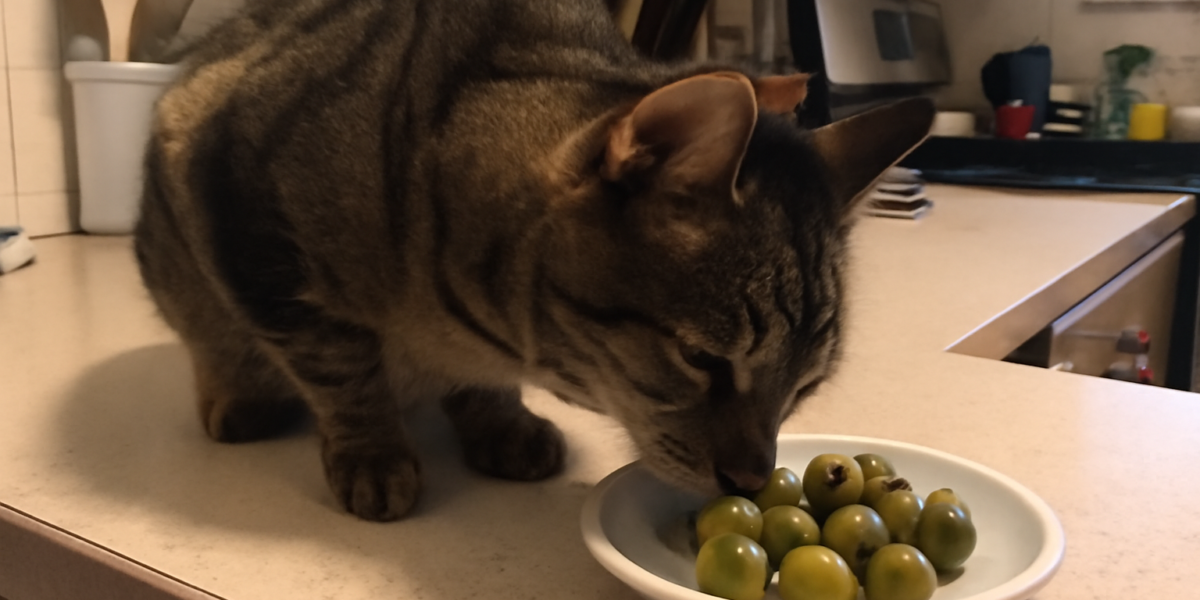
If you have ever opened a jar of olives and found your cat suddenly appearing from nowhere, head-butting your hand and acting like you have just uncovered the world’s most irresistible treasure, you are not alone. Many cat owners are surprised to discover that their feline companions go absolutely wild for olives — rubbing on them, rolling in them, and desperately trying to eat them. This unexpected obsession raises the obvious question: can cats eat olives, and why do some cats seem so inexplicably drawn to them? The answers involve some fascinating feline biology, and the good news is that olives are not toxic to cats, though they are far from an ideal treat.
Quick Answer: Olives are not toxic to cats, but they are not recommended as a regular treat. The flesh of plain olives is safe in very small amounts, but olives are high in sodium, fat, and calories. The pit is a choking hazard and must always be removed. Stuffed or marinated olives should be avoided entirely.
Why Do Some Cats Love Olives?
The reason many cats go crazy for olives is one of the most interesting bits of feline food science. Olives — particularly green olives — contain a compound called isoprenoid, which is structurally similar to nepetalactone, the active compound in catnip. This chemical similarity means that olives can trigger a response in cats that mirrors the catnip response: rolling, rubbing, purring, drooling, and general euphoria.
The isoprenoid compounds in olives bind to the same olfactory receptors that nepetalactone targets, activating the same neural pathways that produce the characteristic catnip response. This explains why some cats react to olives with the same intensity they show toward catnip — the same brain circuits are being stimulated. Pimentos (the red peppers often stuffed inside green olives) do not seem to be the attractant; it is the olive flesh itself that drives the reaction.
Not all cats respond to olives, just as not all cats respond to catnip. The genetic predisposition that determines catnip sensitivity likely plays a role in olive sensitivity as well, though this specific connection has not been thoroughly researched. Anecdotally, many cat owners report that cats who are strongly reactive to catnip also tend to react to olives, while catnip-immune cats often ignore olives — supporting the theory of a shared neural mechanism.
The response is primarily triggered by the smell of olives rather than the taste. Cats who are attracted to olives will often rub their faces on olive brine, roll on an olive-scented surface, or go into ecstatic rolling when they encounter olive oil. This behavior is consistent with a pheromone-like response rather than a food-seeking behavior, though many olive-loving cats will also eagerly eat the olive itself if given the opportunity.
Olive wood can also trigger this response in some cats. Cat toys made from olive wood have become popular for precisely this reason — they provide the attractant scent in a safe, chewable form without the nutritional concerns of feeding actual olives. If your cat loves olives, an olive wood toy may be a safer way to indulge their interest.
Are Olives Safe for Cats to Eat?
The flesh of plain, pitted olives is not toxic to cats. Neither green olives nor black olives contain compounds that are poisonous to felines. In this narrow sense, olives are safe. However, several characteristics of olives make them a less-than-ideal treat for cats, and there are important distinctions between different types of olives and preparations.
Sodium content. This is the most significant nutritional concern with olives for cats. Commercially processed olives are cured in brine — a salt solution — and as a result contain very high levels of sodium. A single large green olive contains approximately 60 to 100 milligrams of sodium, and some varieties contain even more. For perspective, the recommended daily sodium intake for a cat is approximately 42 milligrams per kilogram of body weight. A 10-pound cat (4.5 kilograms) has a daily sodium allowance of roughly 190 milligrams, meaning a single olive could provide a third to half of the entire daily sodium limit. Excessive sodium intake in cats can lead to increased thirst, increased urination, and in severe cases, sodium ion poisoning — which causes vomiting, diarrhea, tremors, seizures, and potentially death.
Fat content. Olives are relatively high in fat, primarily monounsaturated oleic acid. A single large olive contains about 1 to 1.5 grams of fat. While this may seem modest, it is significant relative to a cat’s small body size and caloric needs. Regular consumption of high-fat treats can contribute to obesity and increase the risk of pancreatitis in susceptible cats.
Caloric density. Each olive contains approximately 5 to 10 calories. For a cat eating 200 calories per day, even a few olives represent a meaningful percentage of total caloric intake with no nutritional justification.
The pit. Olive pits are a choking hazard and can also cause intestinal obstruction if swallowed. Always remove the pit before offering any olive to a cat. Cracked or broken pit fragments can have sharp edges that could damage the mouth, throat, or digestive tract. Never assume your cat will spit out the pit — many cats swallow food without adequate chewing.
Types of Olives and Their Safety for Cats
Not all olives are created equal when it comes to feline safety. The type and preparation of the olive significantly affects the risk profile.
Plain green olives (pitted). These are the lowest-risk option if you want to give your cat a taste. Choose olives with the lowest available sodium content and rinse them under running water to reduce surface salt. Cut the olive into very small pieces to prevent choking. Even so, limit consumption to a tiny piece — no more than a quarter of an olive — and only as a rare treat.
Plain black olives (pitted). Black olives (ripe olives) tend to have slightly lower sodium content than green olives, though they are still salty by feline standards. Canned black olives are typically milder than jarred green olives. The same precautions apply — pitted, rinsed, and cut into small pieces.
Stuffed olives. Olives stuffed with pimentos are generally safe in the same small amounts as plain olives, though the additional ingredient adds minimal nutritional value. However, olives stuffed with garlic, blue cheese, almonds, jalapenos, or anchovies introduce additional concerns. Garlic-stuffed olives are particularly dangerous because garlic is toxic to cats. Blue cheese may contain mold compounds problematic for cats. Always check what an olive is stuffed with before offering any to your cat, and when in doubt, avoid stuffed olives entirely. For more on unsafe foods, read about why dog food is not appropriate for cats.
Marinated or seasoned olives. Olives marinated in oil, garlic, herbs, chili flakes, or vinegar should not be given to cats. The marinades often contain garlic and onion, both of which are toxic to cats. The added oil increases the fat content, and various seasonings may cause gastrointestinal irritation. Even if the specific marinade ingredients are not toxic, the combination of high sodium, high fat, and unfamiliar seasonings is not appropriate for feline consumption.
Olive oil. A tiny amount of plain olive oil (less than a quarter teaspoon) is not harmful and is sometimes used as a home remedy for hairballs or mild constipation in cats. However, olive oil is extremely calorie-dense (about 40 calories per teaspoon), and regular use can contribute to weight gain. If your cat needs help with hairballs or constipation, veterinarian-approved remedies are more effective and reliable.
Kalamata and other specialty olives. Kalamata olives and other premium varieties are typically cured differently than standard commercial olives and may have different sodium levels. They are often softer and more flavorful, which may make them more appealing to cats but does not make them any more appropriate as a treat. The same guidelines apply — tiny amounts, pitted, rinsed, and infrequent.
Health Concerns with Cats Eating Olives
Beyond the immediate nutritional issues, there are several broader health concerns to consider when evaluating olives as a cat treat.
Kidney stress. Cats are prone to kidney disease, particularly as they age. Chronic kidney disease (CKD) affects an estimated 30 to 40 percent of cats over the age of 15. High-sodium foods place additional stress on the kidneys by increasing the volume of fluid that must be filtered. For cats with existing kidney disease — even in early stages that have not yet been diagnosed — the sodium in olives can accelerate disease progression. For any cat over the age of 7, which is when kidney function often begins to decline, high-sodium treats like olives should be especially limited.
Hypertension. High blood pressure is common in older cats, often as a secondary condition to kidney disease or hyperthyroidism. Excess dietary sodium can exacerbate hypertension, leading to damage to the eyes, brain, heart, and kidneys. If your cat has been diagnosed with or is at risk for hypertension, olives should be avoided entirely.
Weight management. The combination of fat and calories in olives, while modest per individual olive, can add up if olives are given regularly. Given that feline obesity is a serious and growing health concern, even seemingly minor caloric additions should be considered in the context of total daily intake.
Gastrointestinal sensitivity. Some cats have sensitive digestive systems that do not tolerate foods outside their regular diet. The fat, sodium, and unfamiliar compounds in olives can cause vomiting, diarrhea, or loss of appetite in these cats. If your cat has a history of digestive sensitivity, olives are best avoided.
Dental concerns. The firm texture of olives, particularly unripe green olives, could potentially pose a dental risk for cats with existing dental problems. Cats with resorptive lesions, gingivitis, or loose teeth may experience pain or injury when biting into firm olive flesh. For more information about other safe food options, see our article on catnip for cats.
How to Safely Give Your Cat an Olive
If your cat is olive-obsessed and you want to offer an occasional taste, following proper preparation guidelines minimizes the risks.
Choose wisely. Select plain, pitted olives with the lowest sodium content available. Black olives tend to be milder than green. Avoid stuffed, marinated, or seasoned varieties entirely.
Rinse thoroughly. Running the olive under cold water for 15 to 20 seconds removes a significant amount of surface salt. You can also soak olives in fresh water for 10 minutes to draw out additional sodium, though this will not eliminate the salt that has penetrated into the flesh during curing.
Remove the pit completely. Even in pre-pitted olives, check for pit fragments that may remain. Run your finger through the inside of the olive to feel for any hard pieces.
Cut into small pieces. Cut the olive into pieces no larger than a pea for a standard-sized cat. This reduces choking risk and also limits the amount consumed per piece, allowing you to control portion size more precisely.
Limit the amount. A quarter of a single olive is an appropriate maximum serving for a cat. This translates to one or two small pieces. Offer olives no more than once or twice per month.
Observe for reactions. After offering olive for the first time, watch for any signs of digestive upset (vomiting, diarrhea, loss of appetite) over the following 24 hours. If any occur, olives are not a good fit for your individual cat.
Frequently Asked Questions
Why does my cat roll around after smelling olives?
The rolling, rubbing, and general euphoric behavior cats display around olives is caused by isoprenoid compounds in olives that are structurally similar to nepetalactone — the active compound in catnip. These compounds activate the same olfactory receptors and neural pathways, producing a behavioral response virtually identical to the catnip reaction. This is why olive-loving cats often behave exactly like they do during a catnip session: rolling on the ground, rubbing their face on the olive or olive-scented surface, purring intensely, and sometimes drooling. The response is harmless and typically lasts 5 to 15 minutes, just like a catnip response.
Are olive pits dangerous for cats?
Yes, olive pits are a genuine safety hazard for cats. The pit is hard, smooth, and just the right size to become lodged in a cat’s throat, causing choking. If swallowed, an olive pit can cause intestinal obstruction — a serious emergency that may require surgical removal. Even partial fragments of olive pits can have sharp edges that could scratch or puncture the esophagus or intestinal lining. Always remove the pit completely before offering any olive to your cat, and check pre-pitted olives for remaining fragments.
Can cats eat olive oil?
A tiny amount of olive oil — less than a quarter teaspoon — is not harmful to cats and is sometimes used as a home remedy for mild constipation or hairballs. The oil lubricates the digestive tract and may help hairballs pass more easily. However, olive oil is extremely calorie-dense at about 120 calories per tablespoon, and even small amounts can contribute to weight gain if used regularly. It can also cause diarrhea in some cats. If you want to use olive oil for digestive support, consult your veterinarian first for proper dosing and to rule out underlying conditions that need medical treatment.
Are kalamata olives safer for cats than regular olives?
Kalamata olives are not inherently safer or more dangerous than other olive varieties for cats. They do tend to have a softer texture and different flavor profile, but their sodium and fat content is comparable to other cured olives. In some preparations, kalamata olives are packed in oil rather than brine, which reduces sodium but increases fat content. The same guidelines apply regardless of olive variety: tiny amounts, pitted, rinsed, and infrequent. No olive variety is nutritionally appropriate as a regular cat treat.
Should I be concerned if my cat ate several olives?
If your cat ate several olives, the main concern is the sodium load. Monitor your cat for signs of excessive thirst, increased urination, vomiting, diarrhea, or lethargy. Ensure plenty of fresh water is available to help the kidneys process the excess sodium. If the olives contained pits, watch for signs of choking, gagging, or intestinal obstruction (vomiting, loss of appetite, abdominal pain, straining to defecate). Most healthy cats will handle a few olives without serious consequences, but if your cat shows any concerning symptoms or has pre-existing kidney or heart conditions, contact your veterinarian promptly.
Can I use olive wood toys for my cat?
Olive wood toys are a wonderful option for cats who are attracted to olives. The wood retains some of the scent compounds that trigger the feline olive response, providing sensory enrichment without the nutritional concerns of feeding actual olives. Olive wood is hard and durable, standing up well to chewing, and it does not splinter easily like some other woods. Choose toys specifically made for cats — they should be smooth, free of sharp edges, and sized appropriately to prevent swallowing. Olive wood chew sticks can also provide dental benefits by helping remove plaque as the cat gnaws on them.


