
Last updated: May 4, 2026
In this article
Can Cats Eat Salami? Why This Cured Meat Belongs Off Your Cat’s Menu
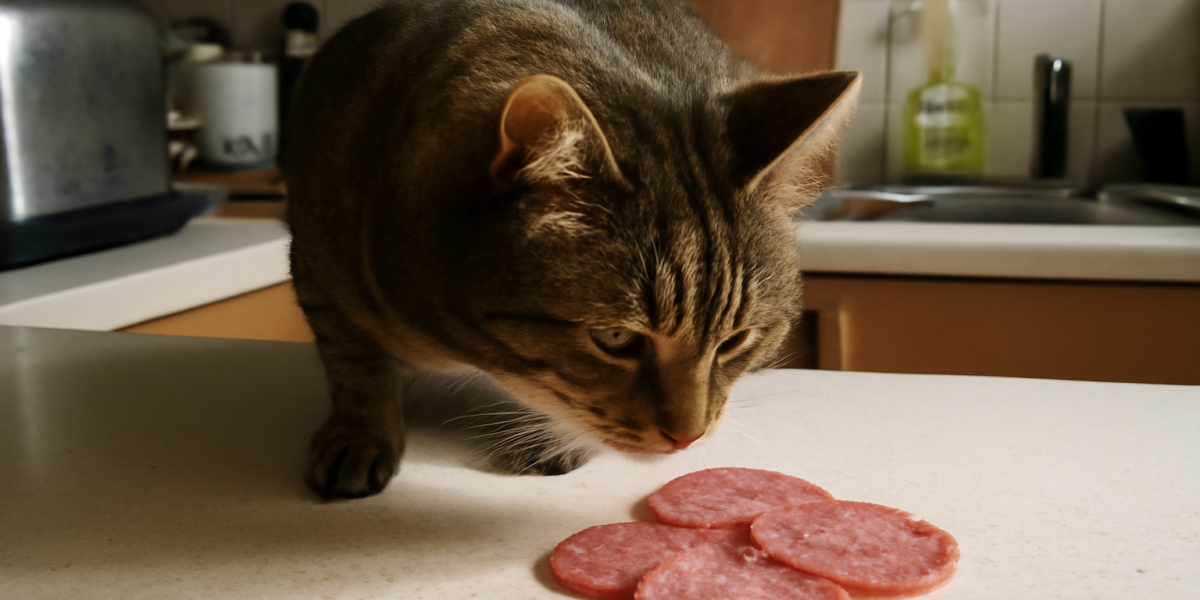
The internet has made “cats can have a little salami” into a beloved meme, but the reality is more nuanced than the joke suggests. While a tiny piece of salami on rare occasions is unlikely to cause an emergency, salami is not a safe or healthy treat for cats and should be avoided as part of their regular diet. The high sodium content, saturated fat, spices, and preservatives in salami can cause both immediate digestive issues and long-term health problems in felines.
Cats are obligate carnivores who thrive on meat-based diets, so it’s understandable why they’re drawn to the smell and taste of cured meats like salami. However, there’s a significant difference between the lean, minimally processed protein that cats need and the heavily processed, salt-cured, spice-laden product that is salami. Let’s look at the specific reasons this popular deli meat should stay on your charcuterie board and out of your cat’s bowl.
Why Salami Is Problematic for Cats
Salami is a cured sausage made from ground meat (typically pork, sometimes beef) that undergoes a fermentation and air-drying process. During production, the meat is mixed with significant amounts of salt, fat, garlic, black pepper, and various other spices. Some varieties also include wine, fennel seeds, chili flakes, or paprika. Let’s break down why each of these components is a concern for cats.
Excessive sodium: This is the primary danger. A single slice of salami can contain 200 to 300 milligrams of sodium, while a 10-pound cat needs only about 42 milligrams of sodium per day. Even a small piece of salami can push a cat well beyond their safe daily sodium intake. Cats are particularly susceptible to sodium-related health issues because of their small body size and their kidneys’ limited capacity to process excess salt. Chronic sodium overconsumption can contribute to high blood pressure, kidney damage, and heart disease.
High fat content: Salami typically contains 25 to 35 percent fat by weight. While cats need some dietary fat, the saturated fat in cured meats is not the type they benefit from. A high-fat treat can cause immediate gastrointestinal upset including vomiting and diarrhea, and over time can contribute to obesity and pancreatitis.
Garlic and onion: Many salami recipes include garlic powder or granulated garlic as a key flavoring agent. Garlic is toxic to cats, and they are more sensitive to it than dogs. Even small amounts can damage red blood cells and lead to Heinz body anemia, a condition where damaged red blood cells are prematurely destroyed. Cats who regularly consume small amounts of garlic may develop chronic anemia over time. Both garlic and onion are among the most dangerous foods toxic to cats.
Nitrates and nitrites: These preservatives are standard in commercial salami production. They help prevent bacterial growth and give the meat its characteristic pink color. In cats, excessive nitrate consumption can interfere with oxygen transport in the blood, potentially causing a condition called methemoglobinemia.
Spices: The various spices in salami, including black pepper, paprika, cayenne, and fennel, can irritate a cat’s digestive tract. Cats have more sensitive stomachs than humans, and spicy or heavily seasoned foods commonly cause vomiting and diarrhea.
What Happens If Your Cat Eats Salami
The consequences of salami consumption depend on the amount eaten and your cat’s size and health status. Here’s what you might expect in different scenarios.
A tiny piece (less than a fingernail-sized bite): A single small taste of salami is unlikely to cause noticeable symptoms in a healthy adult cat. You may not need to do anything beyond monitoring your cat for a few hours. Make sure fresh water is available, as the salt will make them thirsty.
A few slices: This amount is more concerning and may cause gastrointestinal symptoms within a few hours. Watch for vomiting, diarrhea, excessive thirst, and lethargy. The high sodium content may also cause noticeable increases in urination. If symptoms persist for more than 12 hours, contact your veterinarian.
A large amount (several slices or more): If your cat has consumed a significant quantity of salami, particularly if the salami contains garlic, contact your veterinarian immediately. The sodium load alone could be dangerous for a small cat, and the garlic content compounds the risk. Your vet may recommend bringing your cat in for evaluation, fluid therapy to help flush the excess sodium, and blood work to check for signs of anemia.
Cats with pre-existing conditions are at heightened risk. Cats with kidney disease, which is extremely common in older cats, cannot efficiently process excess sodium and may experience a rapid worsening of their condition. Cats with heart disease, diabetes, or obesity are also at increased risk of complications from salami consumption.
Safer Meat Alternatives for Cats
Since cats are meat-eaters by nature, it’s perfectly reasonable to want to share protein-based treats with them. The key is choosing options that are lean, plainly prepared, and free from harmful additives. Here are some excellent alternatives to salami.
Plain cooked chicken: Boneless, skinless chicken breast cooked without any seasoning is one of the safest and most popular meat treats for cats. Boil or bake it plain, let it cool, and shred or dice it into small pieces. Most cats find chicken irresistible.
Cooked turkey: Like chicken, plain cooked turkey is a lean, healthy treat for cats. Avoid processed turkey deli meat, which has the same sodium and preservative issues as salami. Instead, cook plain turkey breast at home.
Cooked ham in tiny amounts: While ham is also a processed meat and not ideal, a very small amount of low-sodium, plain baked ham is less dangerous than salami because it typically contains fewer spices and no garlic. However, it’s still not an ideal choice due to its sodium content.
Freeze-dried meat treats: Commercial freeze-dried cat treats made from a single protein source, such as chicken, turkey, salmon, or duck, are an excellent option. They’re minimally processed, highly palatable, and formulated with feline nutrition in mind.
Cooked fish: Small amounts of plain cooked salmon, tuna, or whitefish can be a special treat for cats. Avoid canned tuna packed in oil or with added salt. If using canned fish, choose varieties packed in water with no added sodium.
Understanding Your Cat’s Protein Needs
Cats require a diet that is significantly higher in protein than what dogs or humans need. Protein should make up at least 26 percent of an adult cat’s diet, and many veterinary nutritionists recommend even higher percentages. This high protein requirement is why cats are so attracted to meat-based foods, including cured meats like salami.
However, not all protein is created equal from a feline health perspective. Cats need high-quality, bioavailable protein from animal sources. The protein in salami, while technically animal-derived, comes packaged with so many harmful additives that any nutritional benefit is far outweighed by the risks.
A high-quality commercial cat food provides all the protein your cat needs in a balanced formula that also includes essential vitamins, minerals, taurine, and fatty acids. Treats, including meat treats, should make up no more than 10 percent of your cat’s daily caloric intake. For an average indoor cat consuming about 200 calories per day, that means only about 20 calories should come from treats.
If you’re concerned that your cat isn’t getting enough protein from their regular food, talk to your veterinarian about switching to a higher-protein formula rather than supplementing with human foods. There are many excellent high-protein cat foods available that are specifically formulated to meet feline nutritional requirements.
When to Call the Vet
While a tiny taste of salami is rarely an emergency, there are situations that warrant a call to your veterinarian. Contact your vet if your cat has eaten more than a small bite of salami, especially if the salami contains garlic or onion. Call immediately if your cat is showing symptoms such as repeated vomiting, diarrhea, extreme lethargy, pale gums, rapid breathing, or loss of appetite that lasts more than 24 hours. Cats with pre-existing kidney disease, heart disease, or any chronic health condition should be seen by a vet after consuming any amount of high-sodium food.
If your cat ate salami and you’re unsure whether to be concerned, it’s always better to call your vet’s office and ask than to wait and see. Most veterinary clinics are happy to provide phone guidance about whether a visit is necessary based on the specific circumstances.
Frequently Asked Questions
Is a little salami really that bad for cats?
A single tiny piece on a rare occasion is unlikely to cause a medical emergency in a healthy adult cat. However, “a little salami” is not a harmless treat. Even small amounts expose your cat to excessive sodium, potentially toxic garlic, and unnecessary fat. The risks outweigh any enjoyment your cat gets from the treat, especially when there are so many safer alternatives available. The popular internet meme about cats and salami is humorous, but it shouldn’t be taken as veterinary advice.
My cat stole a piece of salami off my plate. What should I do?
If your cat grabbed a single small piece of salami, don’t panic. Make sure your cat has access to plenty of fresh water and monitor them for the next 12 to 24 hours. Watch for vomiting, diarrhea, excessive thirst, lethargy, or loss of appetite. If your cat seems fine after 24 hours, they’ve likely processed the salami without issue. Going forward, keep cured meats covered or out of reach to prevent future incidents. If your cat shows any concerning symptoms, contact your veterinarian.
Are there any types of salami or cured meat that are safe for cats?
No commercially produced salami or cured meat is truly safe for cats. All varieties, whether they’re Genoa salami, hard salami, sopressata, or any other type, contain high levels of sodium and fat, and most include garlic or other seasonings that are harmful to cats. Even “uncured” or “natural” salami products still use celery powder or other natural nitrate sources and are high in salt. If you want to give your cat a meat treat, stick to plain, unseasoned, freshly cooked lean meats rather than any type of cured or processed product.
Can kittens eat salami?
Absolutely not. Kittens are even more vulnerable to the dangers of salami than adult cats. Their small body size means that the sodium and fat in even a tiny piece of salami represents a proportionally much larger dose. Their developing kidneys and digestive systems are less equipped to handle the excess salt and spices. Kittens should eat only kitten-specific food and treats that are formulated for their unique nutritional needs during this critical growth period.


