
Last updated: May 4, 2026
In this article
Can Cats Eat Sweet Corn?
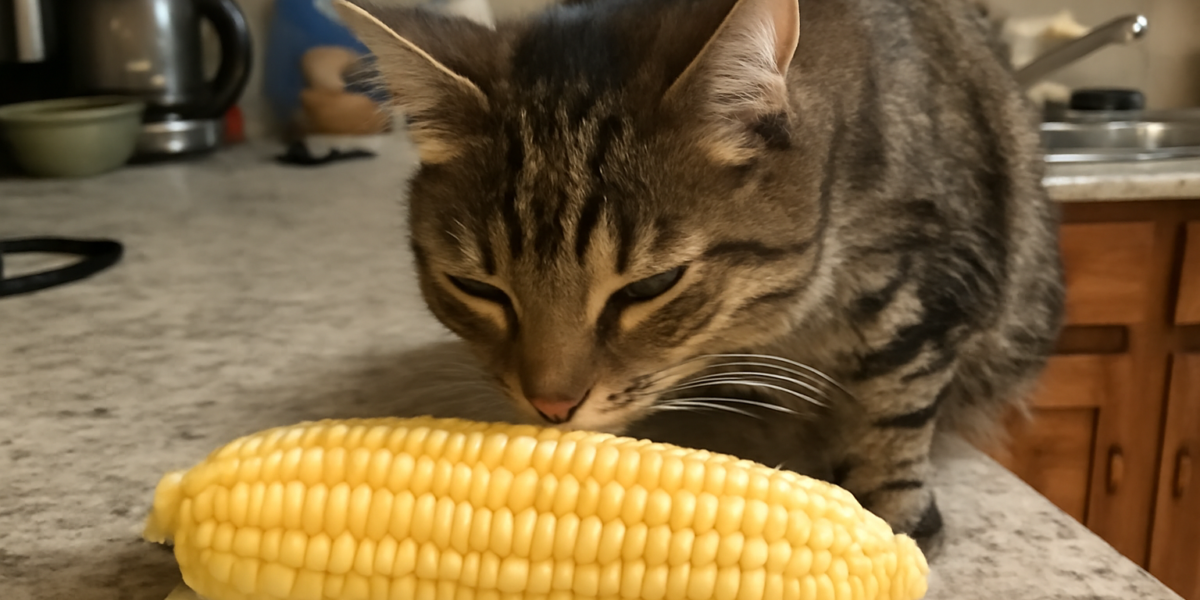
Yes, cats can eat sweet corn in small amounts as an occasional treat. Plain, cooked sweet corn kernels are not toxic to cats and are unlikely to cause harm when served in moderation. However, corn offers very little nutritional value for cats. As obligate carnivores, cats thrive on animal protein and have limited ability to digest plant-based carbohydrates. Sweet corn should be considered a rare treat, not a dietary staple.
Many cats are curious about sweet corn, drawn by its texture and the buttery smell that often accompanies it at the dinner table. While a few kernels are harmless for most healthy cats, there are important considerations around preparation, portions, and which cats should avoid corn altogether.
Why Corn Is Not Ideal for Cats
To understand why sweet corn is a limited-value food for cats, it helps to know how feline digestion works.
Cats Are Obligate Carnivores
Cats evolved to get their nutrition from animal-based protein and fat. Their digestive systems are designed to process meat efficiently, with shorter digestive tracts and fewer carbohydrate-digesting enzymes compared to omnivores like dogs or humans. Sweet corn is primarily carbohydrates and plant fiber, neither of which cats are well equipped to use.
Limited Nutritional Benefit
While sweet corn contains some vitamin B, vitamin C, and small amounts of protein, cats get these nutrients much more effectively from their regular meat-based diet. The carbohydrate content in corn provides calories but no essential nutrition that a cat cannot get from a balanced cat food.
Digestibility Concerns
Corn kernels have a tough outer cellulose hull that cats may not fully break down during digestion. You may notice undigested corn kernels in your cat’s stool. While this is not harmful, it confirms that your cat is not absorbing much from the corn. Larger amounts of corn can cause gas, bloating, and loose stools.
How to Safely Serve Sweet Corn to Your Cat
If you want to share a few kernels with your cat, follow these guidelines:
- Cook the corn first. Raw corn kernels are harder for cats to chew and digest. Boiled, steamed, or microwaved corn (without butter, salt, or seasoning) is best.
- Remove kernels from the cob. Never give your cat corn on the cob. The cob itself is a serious choking hazard and can cause intestinal blockage if swallowed in pieces.
- Serve plain. No butter, salt, pepper, garlic, onion powder, or any other seasoning. Many seasonings commonly used on corn are harmful or toxic to cats.
- Offer just a few kernels. Five to ten kernels is more than enough as a treat. This keeps calories low and minimizes digestive stress.
- Avoid canned corn. Canned sweet corn typically contains added sodium and sometimes sugar. If canned corn is your only option, rinse it thoroughly under running water before offering a few kernels.
When Sweet Corn Is Not Safe for Cats
While plain corn is not toxic, there are situations where you should avoid giving it to your cat:
- Cats with corn allergies: Corn is one of the more common food allergens for cats. If your cat has been diagnosed with a corn allergy or shows signs of food sensitivity (itchy skin, chronic ear infections, vomiting, diarrhea), avoid corn entirely.
- Cats with diabetes: Sweet corn is relatively high in sugar and carbohydrates. Cats with diabetes need a controlled, low-carbohydrate diet. Adding corn could affect blood sugar management.
- Overweight cats: The extra carbohydrate calories from corn are not helpful for cats that need to lose weight. Stick to their prescribed diet.
- Cats with IBD or sensitive stomachs: The fiber and plant material in corn may aggravate existing digestive conditions.
- Cats on prescription diets: If your veterinarian has prescribed a specific diet, do not add outside foods without approval.
If you are unsure whether corn is appropriate for your cat, a quick call to your veterinarian can provide personalized guidance based on your cat’s health history.
Signs of Trouble After Eating Corn
Most cats handle a few kernels of plain corn without any issues. However, watch for these signs if your cat eats corn for the first time or eats more than a small amount:
- Vomiting: Could indicate intolerance or that the corn was not adequately chewed.
- Diarrhea or loose stools: Common with excess fiber or carbohydrate intake.
- Gas and bloating: The fermentable carbohydrates in corn can produce gas.
- Choking: If your cat swallowed kernels whole or ate pieces of cob. Signs include gagging, pawing at the mouth, drooling, and difficulty breathing.
- Allergic reaction: Itching, hives, swollen face, vomiting, or diarrhea that seems disproportionate to the amount eaten.
If your cat shows signs of choking or an allergic reaction, seek veterinary help immediately. Mild digestive upset from a small amount of corn should resolve within 24 hours. Persistent symptoms warrant a call to your vet.
Corn in Commercial Cat Food
You may have noticed corn listed as an ingredient in some commercial cat foods. This is a topic of debate among veterinarians and cat owners. Corn is used in pet food primarily as a carbohydrate source, a binder for kibble, and sometimes as a supplemental protein source (corn gluten meal).
Processed corn in cat food is treated differently than whole sweet corn kernels. It is ground into fine meal or flour, making it more digestible than whole kernels. Whether corn belongs in cat food is a conversation to have with your veterinarian, especially if your cat has specific dietary needs or sensitivities.
High-quality cat foods that list a named animal protein (like chicken, turkey, or salmon) as the first ingredient and use corn minimally or not at all tend to be better aligned with a cat’s natural nutritional needs.
Better Treat Alternatives for Cats
If you are looking for healthy treat options that offer more nutritional value for your cat than corn, consider these alternatives:
- Small pieces of cooked chicken or turkey: Plain, unseasoned, and a perfect high-protein treat.
- Cooked salmon: Rich in omega-3s and a cat favorite. Read our guide on safe salmon preparation for cats.
- Commercial cat treats: Formulated specifically for feline nutrition and portion-controlled.
- Freeze-dried meat treats: Single-ingredient treats made from chicken, salmon, or other meats.
For more about what cats can safely eat, check out our articles on nutritional yeast for cats and parmesan cheese safety. If you recently adopted a cat, establishing healthy treat habits from the beginning sets the foundation for good nutrition throughout their life.
Frequently Asked Questions
Can cats eat corn on the cob?
No. Corn cobs are a serious choking hazard and can cause intestinal obstruction if pieces are swallowed. The cob does not break down in the digestive tract and can require surgical removal. Always remove kernels from the cob before offering corn to your cat.
Can cats eat popcorn?
A single piece of plain, air-popped popcorn without butter, salt, or seasoning is unlikely to harm your cat. However, popcorn is a choking hazard, especially for cats who tend to swallow food without chewing. Buttered, salted, or flavored popcorn should never be given to cats. Overall, popcorn is best avoided as a cat treat.
Is corn toxic to cats?
No, corn is not toxic to cats. It is a non-toxic food that cats can eat in small amounts without poisoning risk. The concern with corn is nutritional rather than toxicological. It provides minimal benefit to cats and can cause digestive upset in larger quantities or in cats with sensitivities.
How often can I give my cat sweet corn?
Once a week or less is a reasonable frequency for a small portion of plain, cooked sweet corn. Treats of all types should make up no more than 10 percent of your cat’s daily calories. Given that corn offers little nutritional value for cats, less frequent is generally better.
My cat ate a lot of buttered corn. Should I be concerned?
Butter adds fat and potentially sodium, while seasonings like salt, garlic powder, or onion powder are harmful to cats. If your cat ate a significant amount of buttered or seasoned corn, monitor for vomiting, diarrhea, and lethargy. Garlic and onion are toxic to cats, so if the corn contained either seasoning, contact your veterinarian. For plain buttered corn, the high fat content may cause temporary digestive upset but is unlikely to cause serious problems.


