
Last updated: May 16, 2026
In this article
- Quick Answer: Tiny Tastes for Healthy Adults Only
- What Brie Actually Is
- The Lactose Problem in Soft Cheese
- Fat Content and Pancreatitis Risk
- Sodium and the Older Dog
- The Rind Question
- Brie Versus Other Cheeses for Dogs
- Serving Brie Safely
- Brie on the Cheese Board
- Tracking Your Dog’s Dairy Tolerance
- Frequently Asked Questions
Quick Answer: Tiny Tastes for Healthy Adults Only
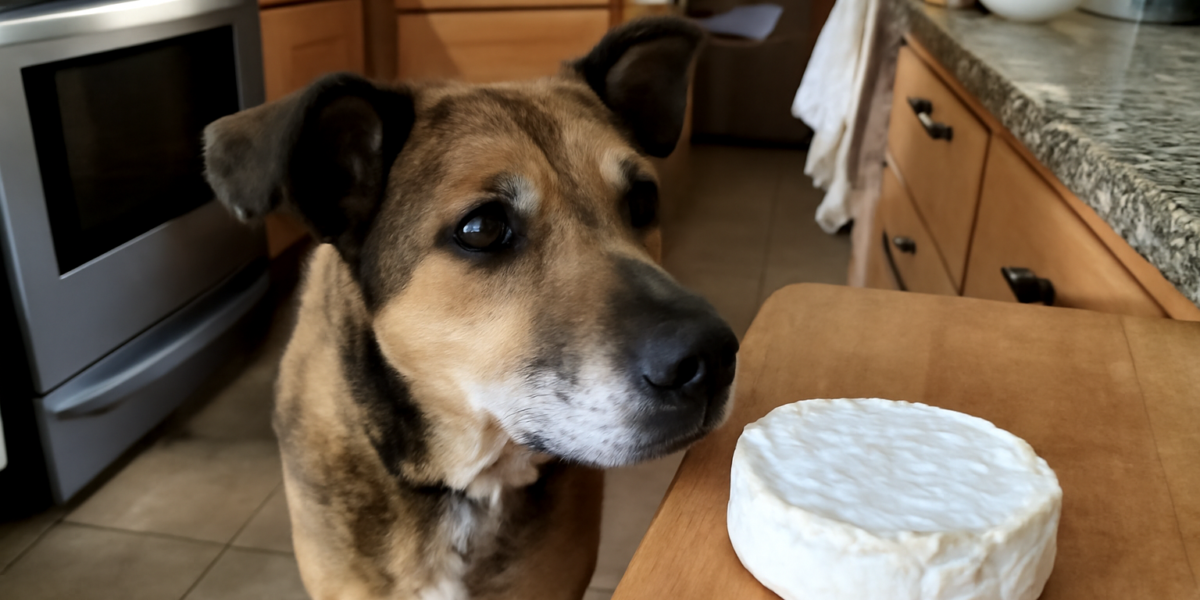
Yes, a healthy adult dog can have a crumb-size taste of plain brie occasionally without harm, but brie is not a recommended treat. It is high in fat (around 28%), contains moderate lactose, and packs more salt than most owners realize. Soft cheeses like brie present three overlapping risks: digestive upset from lactose, weight gain and pancreatitis risk from fat, and sodium load that matters for older dogs or dogs with heart and kidney conditions.
If your dog grabbed a chunk off the cheese board, this article walks you through what to watch for. If you’re thinking about brie as a routine training treat, the answer is: pick something else. Cottage cheese or plain unsweetened yogurt give you more useful nutrition with less fat.
What Brie Actually Is
Brie is a soft, bloomy-rind cheese made from cow’s milk (occasionally goat’s milk). The rind is an edible layer of penicillium candidum mold cultivated to ripen the cheese. Inside, the paste is buttery, mildly tangy, and increasingly soft as the cheese ages. A typical 1-ounce serving contains roughly:
- 95 calories
- 6 grams of protein
- 8 grams of fat
- 0.5 grams of lactose
- 180 mg of sodium
- Calcium, phosphorus, vitamin B12, and vitamin A
For a 30-pound dog, an ounce of brie represents a meaningful chunk of the daily fat budget. The “treats should be 10% or less of daily calories” rule turns 30 pounds into roughly 70 calories of treats per day, and a single ounce of brie blows past that. This is why brie is positioned as a crumb-size taste, not a routine snack.
The Lactose Problem in Soft Cheese
Adult dogs produce only trace amounts of lactase, the enzyme that breaks down lactose. Most adult dogs are functionally lactose-intolerant to varying degrees. Soft cheeses retain more lactose than aged hard cheeses because aging breaks lactose down over months. Brie sits in the middle of the spectrum: less lactose than fresh ricotta or cream cheese, more than aged parmesan or aged cheddar.
Symptoms of lactose intolerance show up 30 minutes to 12 hours after exposure:
- Loose stool or diarrhea
- Gas and bloating
- Abdominal cramping (your dog may seem restless or whine)
- Occasional vomiting
The dose at which symptoms appear varies dog-to-dog. Some Labradors handle a tablespoon of brie without issue; some Yorkies get diarrhea from a single crumb. If you’re testing brie on a dog for the first time, give a tiny amount and wait 24 hours before deciding it’s tolerable.
Fat Content and Pancreatitis Risk
Brie’s 28% fat by weight makes it a “rich” cheese. For most healthy adult dogs, an occasional small piece is fine. For fat-sensitive dogs, even small amounts can be enough to trigger acute pancreatitis — an inflammation of the pancreas that ranges from mild GI upset to a hospital-stay emergency.
Dogs at higher pancreatitis risk include:
- Miniature Schnauzers (well-documented genetic predisposition)
- Yorkshire Terriers, Cocker Spaniels
- Overweight or obese dogs
- Dogs with prior pancreatitis episodes
- Dogs with diabetes, hypothyroidism, or hyperadrenocorticism
- Senior dogs over 10 years old
If your dog falls into any of these categories, brie is not a treat to keep in the rotation. Even a “harmless” piece of soft cheese can tip a fat-sensitive dog into a flare. For deeper guidance on managing diet for at-risk dogs, see our pancreatitis in dogs guide.
Symptoms of pancreatitis to watch for after a fatty meal:
- Vomiting (sometimes repeatedly)
- Loss of appetite
- “Praying” stretch posture (front legs down, hindquarters up — abdominal pain)
- Lethargy and reluctance to walk
- Diarrhea, sometimes with blood
- Fever
Sodium and the Older Dog
An ounce of brie contains around 180 mg of sodium. For a healthy adult dog, this is below the daily threshold but still adds up if brie is eaten alongside other salty foods. For dogs with cardiac disease (especially mitral valve disease in small breeds), chronic kidney disease, or hypertension, every milligram of sodium matters and brie should be off the table.
Senior dogs often have subclinical kidney or heart issues that haven’t shown obvious symptoms yet. If your dog is over 8 and hasn’t had bloodwork in the past year, consider getting a senior panel before adding any salty foods to the diet. Bloodwork beats guesswork.
The Rind Question
The white bloomy rind on brie is technically edible and made from food-safe penicillium candidum mold. For dogs, the rind is not toxic, but it is denser and harder to digest than the soft paste inside. Some dogs swallow the rind and pass it without issue; others develop GI upset. Mold-sensitive dogs may also react to the rind microflora.
If your dog eats brie at all, give the inside paste, not the rind. Discard rind trimmings in a covered trash can — counter-surfing dogs love cheese rinds and can swallow large pieces whole. Mold from old, forgotten brie that’s been sitting too long is a different problem altogether: tremorgenic mycotoxins from spoiled dairy can cause neurological signs (tremors, seizures) and is a vet emergency. Throw out brie that has gone past its date or developed unusual surface molds.
Brie Versus Other Cheeses for Dogs
If you want to give cheese as a treat, some options work better than brie:
- Cottage cheese: lower fat (4-5% in low-fat versions), higher protein, gentler on most dogs. Often used by vets as a bland-diet protein.
- Plain mozzarella, low-moisture: moderate fat, mild flavor, low sodium.
- Aged cheddar in tiny pieces: lower lactose because of aging, but watch sodium.
- Plain yogurt (Greek, no sweeteners): probiotic benefit and lower fat than soft cheese.
Cheeses to avoid entirely: blue cheeses (roquefortine C from the mold can be toxic in larger amounts), processed cheese spreads (high sodium, additives), flavored cheeses with garlic or onion, and any cheese with herbs that include onion powder or garlic powder. Read labels — many pre-portioned cheese sticks include “natural flavors” that can be problematic.
For our cat counterpart article, see can cats eat cheese. Cats face similar lactose-intolerance issues, and the same “tiny taste only” rule applies.
Serving Brie Safely
If you’ve decided your healthy adult dog can have brie occasionally, a sensible approach:
- Offer plain brie only — no fig spread, jam, herbs, or pepper.
- Use a piece roughly the size of a pencil eraser.
- Skip the rind.
- Limit to a couple of times per month, not daily.
- Skip on days when other treats have been generous.
- Stop giving brie if your dog shows any GI signs after — there are kinder cheeses.
Use brie as a hide-the-pill vehicle only if your dog has tolerated it before. For a first-time medication wrap, plain cream cheese or peanut butter (xylitol-free) are more predictable.
Brie on the Cheese Board
Most brie exposures happen during entertaining: holiday cheese boards, brunch spreads, or wine-and-cheese gatherings. Brie often arrives baked in puff pastry or topped with fig jam, walnuts, or honey — none of which improve the situation for dogs. Baked brie in pastry adds butter and refined flour; fig jam adds sugar; walnuts can carry tremorgenic mold; honey adds calories.
Cheese boards also tend to include other items that pair badly with dogs: grapes (toxic — see grape toxicity in dogs), dried fruit including raisins (toxic — see raisins), salami and prosciutto (very high sodium and nitrates), olives in brine (high sodium), and fancy crackers with seeds, garlic, or onion. The cheese board as a whole is one of the most multi-hazard spreads a dog encounters socially.
Practical guest-day rules:
- Place cheese boards on high counters or tables, never coffee tables.
- Brief guests — including kids — that the dog gets nothing from the platter.
- Pick up dropped pieces immediately; even small chunks coated with fig jam are a problem.
- If you’re hosting and your dog is excitable, set them up in a quiet room with a long-lasting treat instead of letting them work the room.
- After the gathering, check the floor for dropped pieces before letting the dog roam — grape and raisin exposure often happens during cleanup, not the meal itself.
Tracking Your Dog’s Dairy Tolerance
Dairy tolerance varies dog-to-dog and even shifts with age. A dog who handled cheese fine at three years old may develop intolerance at eight. If you’re going to use cheese as an occasional treat at all, keeping a simple tolerance journal helps avoid surprises:
- Log the cheese type, amount, and date
- Note any GI signs in the next 24 hours (loose stool, gas, vomiting)
- Reassess every six months — sensitivity often creeps in
- Stop entirely if you see two reactions in a row from the same cheese
For the tolerance test itself, give a piece roughly the size of a pencil eraser, then wait a full 24 hours before deciding. Many lactose reactions show up around the 12-hour mark, well after the initial offering. If your dog seems fine that evening but has loose stool the next morning, the cheese was the likely cause.
Frequently Asked Questions
My dog ate a whole wedge of brie. What do I do?
For a healthy adult dog of average size, expect GI upset (loose stool, gas, possibly vomiting) over the next 24-48 hours. Provide free water, hold off on the next meal for 6-12 hours, and feed a bland diet (boiled chicken and rice) when feeding resumes. For small dogs, fat-sensitive breeds, or dogs with prior pancreatitis, call the Pet Poison Helpline at 855-764-7661 or your vet — the fat dose may justify a precautionary visit.
Is goat milk brie safer than cow milk brie?
Goat milk has slightly less lactose than cow milk, but the difference for dogs is small. Goat brie still carries the same fat and sodium load. It’s modestly more digestible for some lactose-sensitive dogs but not a free pass.
Can puppies have brie?
Puppies should not have brie. Their digestive systems are still developing, they’re more prone to GI upset, and they need balanced puppy nutrition without the calorie disruption of fatty cheese. Save cheese experiments for adulthood.
What about lactose-free brie?
Lactose-free versions help with the lactose issue but do nothing for fat or sodium. The “lactose-free” label can give a false sense of safety. Treat lactose-free brie the same as regular brie for dogs.
Can dogs eat brie if they tolerate other dairy fine?
Tolerating yogurt or cottage cheese doesn’t automatically mean brie will be fine — the fat content is much higher in soft cheese. Test with a tiny piece and wait 24 hours before deciding. Many dogs who handle low-fat dairy still get GI upset from soft cheese.
How is brie different from camembert for dogs?
Camembert is essentially the same category of bloomy-rind cow’s milk cheese with similar fat and lactose. The same crumb-size, healthy-adults-only rule applies. Camembert tends to be slightly more pungent as it ages, but the safety profile for dogs is unchanged.


