
Last updated: May 16, 2026
In this article
- The Reassuring Answer Up Front
- What Agastache Actually Is
- The ASPCA Position on Agastache
- The Mint-Family Chemistry, Briefly
- Why Pollinator Gardeners Plant Agastache
- Mechanical and Sap Caveats Worth Knowing
- Differentiating Agastache From Less-Safe Look-Alikes
- Garden Care, Briefly
- What to Watch For (Realistic, Low-Probability)
- If You Need a Phone Number
- Frequently Asked Questions
The Reassuring Answer Up Front
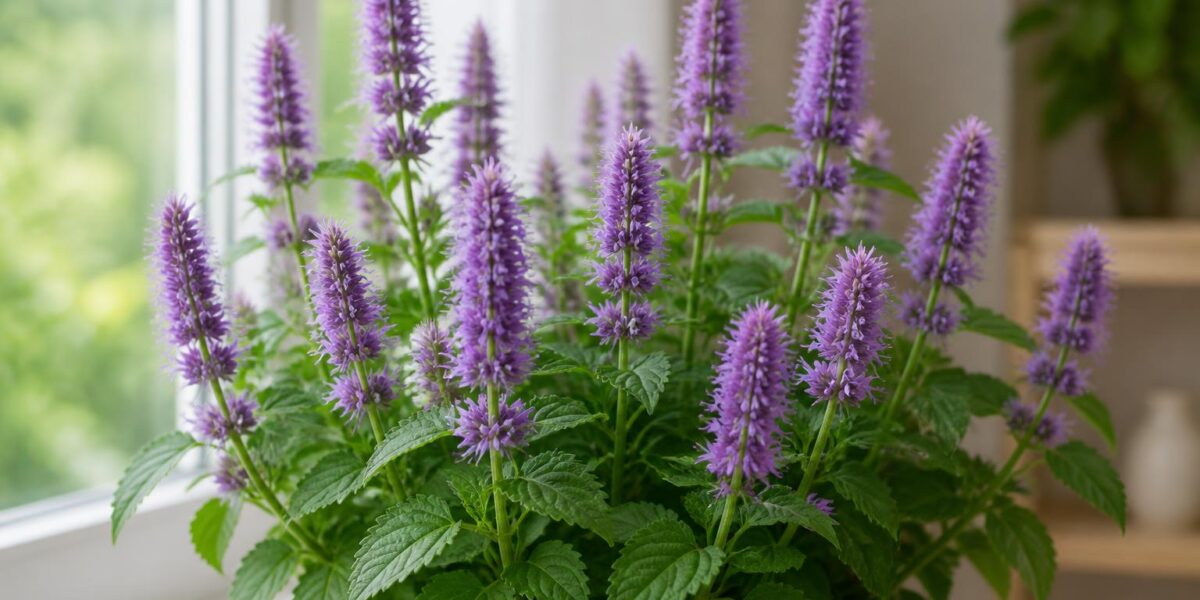
Agastache plants are safe for pets in the everyday garden sense. The genus — which includes anise hyssop (Agastache foeniculum), giant hyssop, and the showy hummingbird-mint cultivars in apricot, rose, and lavender — is not listed on the ASPCA’s database of plants toxic to dogs, cats, or horses. If your dog grazed a bloom spike or your cat sniffed the licorice-scented foliage, you are not facing a poisoning emergency.
Agastache belongs to the mint family (Lamiaceae), and like most herbal mint-family relatives planted as ornamentals (catmint, bee balm, lemon balm, anise hyssop itself), it carries an aromatic oil profile that pets generally find unpalatable rather than dangerous. The plant is one of the best pollinator perennials on the market — bees, hummingbirds, and butterflies adore it — and it earns a place in pet-friendly borders without significant caveats.
What Agastache Actually Is
Agastache is a genus of about 22 species in the Lamiaceae mint family. Anise hyssop (A. foeniculum) is the species most often labeled “agastache” at the garden center, but the showier hummingbird mints — A. cana, A. rupestris, and a long parade of named hybrids like ‘Blue Fortune’, ‘Black Adder’, ‘Kudos Coral’, and the ‘Acapulco’ series — all share the same general safety profile. Foliage smells distinctly of licorice or sweet anise when crushed, which is the giveaway that helps owners identify a stray seedling.
The plants form upright clumps 2 to 4 feet tall, send up dense spikes of small tubular flowers from midsummer through fall, and tolerate drought, lean soil, and neglect. The licorice scent comes from a mix of essential oils dominated by methylchavicol (estragole) and limonene — molecules that, in concentrated essential-oil form, deserve respect, but in fresh foliage are at low enough levels that incidental contact is not a meaningful pet poisoning risk.
The ASPCA Position on Agastache
The ASPCA does not list Agastache foeniculum or any other Agastache species on its toxic-plant database. Veterinary toxicology framing for plants not on that list is “not specifically listed by ASPCA as toxic — generally considered safe with mechanical or sap caveats.” Agastache fits that framing well. There are no published clinical cases of significant Agastache poisoning in dogs or cats, and the family-level chemistry doesn’t predict a hidden problem the way some Apocynaceae or Solanaceae plants do.
This puts Agastache in good company on a pet-safe roster alongside bee balm, catmint, and pineapple sage — all Lamiaceae pollinator favorites that don’t carry the heavier essential-oil load found in true sages or some thymes. For the more cautionary end of the same family, see our coverage of Russian sage, Mexican bush sage, and clary sage, where higher essential-oil concentrations shift the calculus.
The Mint-Family Chemistry, Briefly
Lamiaceae plants are the world’s aromatic herb family — mint, basil, thyme, rosemary, lavender, sage, oregano. They share a broad chemistry of essential oils whose specific profile depends on the species. Agastache leans on methylchavicol (a phenylpropene also found in tarragon and basil) plus smaller amounts of limonene, linalool, and pulegone in some species. Concentrated essential oil distilled from Agastache, like any concentrated EO, is not safe to apply to or feed to pets — that’s a separate conversation from the garden plant.
The fresh leaf, however, holds those oils at a fraction of a percent by weight. A dog or cat would have to eat an enormous amount of foliage to encounter a meaningful dose, and the strong licorice flavor stops most pets long before that happens. Compare with thyme, where thymol concentrations are higher and ASPCA places thyme on the toxic-umbrella list, or with pennyroyal, where pulegone is genuinely dangerous. Agastache simply doesn’t carry that chemical load.
Why Pollinator Gardeners Plant Agastache
Agastache earns its place in pet-friendly pollinator borders through pure usefulness. Bumblebees and honeybees work the spikes from morning to evening. Ruby-throated hummingbirds in the eastern US treat the orange and red hybrids as a primary nectar source for fall migration. Monarchs, sulphurs, and skippers visit constantly. Goldfinches and chickadees pick at the seed in winter if you leave the spent stalks standing.
It pairs well with other safe perennials in our verified pet-friendly roster: coneflower, coreopsis, gaillardia, perennial helianthus, and bee balm. A border built around those Asteraceae and Lamiaceae bones gives you bloom from June through October without putting toxic plants in reach of a curious dog or cat. For owners thinking about indoor companion plants, the cat-safe houseplants guide walks through indoor pollinator-substitute options.
Mechanical and Sap Caveats Worth Knowing
Agastache foliage is slightly hairy and the bloom spikes carry small dry calyces that can prick a soft mouth or nose if a pet really crashes through them. This is mechanical, not chemical, and it doesn’t rise to a clinical concern in real-world contact. The crushed leaf releases its licorice oil in mild quantity, which can be enough to make a pet sneeze or shake its head briefly without further consequence.
If your pet is one of the rare individuals who actually likes the licorice flavor and grazes Agastache repeatedly, watch for the same generic signs you’d watch for with any non-food plant ingestion: brief drool, soft stool, or one episode of vomiting. None of that is poisoning — it’s the natural response to plant material in the gut. A pet who develops persistent symptoms after Agastache contact almost certainly ate something else, and an accurate identification of the actual culprit becomes important.
Differentiating Agastache From Less-Safe Look-Alikes
Agastache spikes superficially resemble several other Lamiaceae perennials — Russian sage, Salvia, hyssop (Hyssopus officinalis, a different genus), and lavender. The licorice scent is the dead giveaway for Agastache; crush a leaf between your fingers and you’ll know within seconds. Russian sage smells more medicinal-camphorous, lavender smells like classic lavender, and Salvia smells like culinary sage. Among these, Russian sage and several true sages carry enough essential-oil load that ASPCA flags them, while Agastache, lavender (English), and bee balm sit on the safe side.
For owners who want the visual elegance of Russian-sage-style spikes without the chemistry concern, Agastache is the direct substitute. The ‘Blue Fortune’ cultivar, in particular, gives you a violet-blue spire that reads as a Russian sage from a distance. Plant it where you would have planted Perovskia and your border looks the same; your pets stay safer. Our Russian sage toxicity guide walks through the contrast for owners who already have Perovskia in the ground.
Garden Care, Briefly
Agastache wants full sun and lean, well-drained soil. It rots in heavy wet clay over winter, which is the most common reason gardeners “lose” their Agastache — not pet damage. The plant is short-lived in the strict botanical sense (3-5 years for most cultivars) but reseeds modestly to maintain a stand. Cut it back hard in late winter and let it resprout from the crown.
For pet households specifically, plant Agastache where dogs run rather than where they nest. The light hairy stems are not great for pets to lie on, and the bloom spikes attract enough bees that a sleeping dog can get a sting if the dog rolls into a foraging bumble. Place it at the back of a border or alongside a path, and keep the front of the border for tougher, lower-growing safe perennials like creeping phlox, sedum, or low geraniums.
What to Watch For (Realistic, Low-Probability)
Even though Agastache is safe, no plant is a guaranteed zero-event. Possible but uncommon outcomes after pet contact include:
- Brief drooling or head-shaking after crushed-leaf contact (resolves within minutes)
- One episode of vomiting after a large foliage ingestion (resolves within hours)
- Mild diarrhea from large foliage ingestion (resolves within 24 hours)
- Sneezing or watery eyes from pollen contact during peak bloom (resolves with no intervention)
What you should not see are tremors, weakness, irregular breathing, dilated pupils, or persistent vomiting. Any of those points to a different plant or a different cause, and your veterinarian needs to be involved.
If You Need a Phone Number
For owners who want professional reassurance even on a non-toxic ingestion, the path is the same as for any plant question: call your own veterinarian first, then the ASPCA Animal Poison Control Center at 888-426-4435 (per-call fee) or the Pet Poison Helpline at 855-764-7661 (per-call fee). Both hotlines are staffed by veterinary toxicologists 24/7 and will tell you whether monitoring at home is sufficient or whether your specific situation deserves a clinic visit.
Bring or photograph the plant. The licorice scent is a very strong identifier for Agastache and helps the toxicologist rule out look-alikes immediately. If you have a mixed pollinator border and aren’t certain whether your dog grazed Agastache or a less-friendly neighbor, the photo confirmation matters.
Frequently Asked Questions
Is anise hyssop toxic to dogs?
No. Agastache foeniculum (anise hyssop) is not on the ASPCA’s list of plants toxic to dogs. The licorice-scented foliage is generally unpalatable to dogs, and incidental chewing typically causes no symptoms beyond, at most, a brief drool or one episode of mild GI upset. Concentrated Agastache essential oil is a separate question and should not be applied to or fed to pets without veterinary guidance.
Is Agastache safe for cats?
Yes, Agastache is not listed by the ASPCA as toxic to cats. Cats often show no interest at all in the licorice-scented foliage. As with any non-food plant, large ingestions could cause mild self-limiting GI upset, but the genus does not contain compounds known to cause significant feline toxicity.
Will hummingbirds and bees actually use Agastache in my pet-safe garden?
Yes — Agastache is one of the most reliable hummingbird and bee plants you can grow in temperate North America. Bumblebees, honeybees, and native sweat bees work the spikes constantly. Ruby-throated hummingbirds in the eastern US use the red and orange cultivars heavily during fall migration. Place it where your pets don’t habitually nap, since a sleeping pet can get a sting from a foraging bee.
How is Agastache different from Russian sage?
Visually they can look similar (both have tall lavender-blue spires), but they’re in different genera. Russian sage is Perovskia, with higher concentrations of essential oils and ASPCA-listed toxic concerns. Agastache is in a different genus with much milder chemistry and is not on the ASPCA toxic list. The fastest field test is scent — Agastache smells like licorice, Russian sage smells medicinal-camphorous.
My dog likes the licorice taste and keeps grazing my Agastache. Should I be worried?
Probably not, but moderate it. Agastache is not toxic, but no plant is meant to be a routine snack. If your dog repeatedly eats large amounts, you may see soft stool or occasional vomiting. Train them off the plant the same way you would with any non-food browsing, and bring it up at your next vet visit if the behavior is persistent.


