
Last updated: May 16, 2026
In this article
- The Quick Answer: Cattleya Orchids Are Non-Toxic to Cats and Dogs
- Where Cattleya Sits on the ASPCA Non-Toxic List
- Corsage Orchid Hazards That Are Not the Plant
- What Happens If a Pet Eats a Cattleya Bloom
- Pesticide Residues and Other Production Concerns
- Bark Mix, Cork, and Mounted Plants
- Where Cattleya Fits Among Pet-Safe Orchids
- Setting Up a Pet-Friendly Cattleya Display
- If a Pet Has Already Eaten Plant Material
- Curiosity-Proofing Without Banishing the Orchid
- Vet Calls: What the Triage Sounds Like
- Frequently Asked Questions
The Quick Answer: Cattleya Orchids Are Non-Toxic to Cats and Dogs
If you have a cattleya in bloom and a cat or dog who suddenly takes an interest in the showy ruffled flower, you can exhale. Cattleya orchids are listed as non-toxic to cats and dogs by the ASPCA Animal Poison Control Center. The whole plant — flowers, leaves, pseudobulbs, sheaths, and roots — does not contain any compound documented to poison companion animals. That non-toxic status is shared by every other major orchid genus, because the entire Orchidaceae family sits on the safe list.
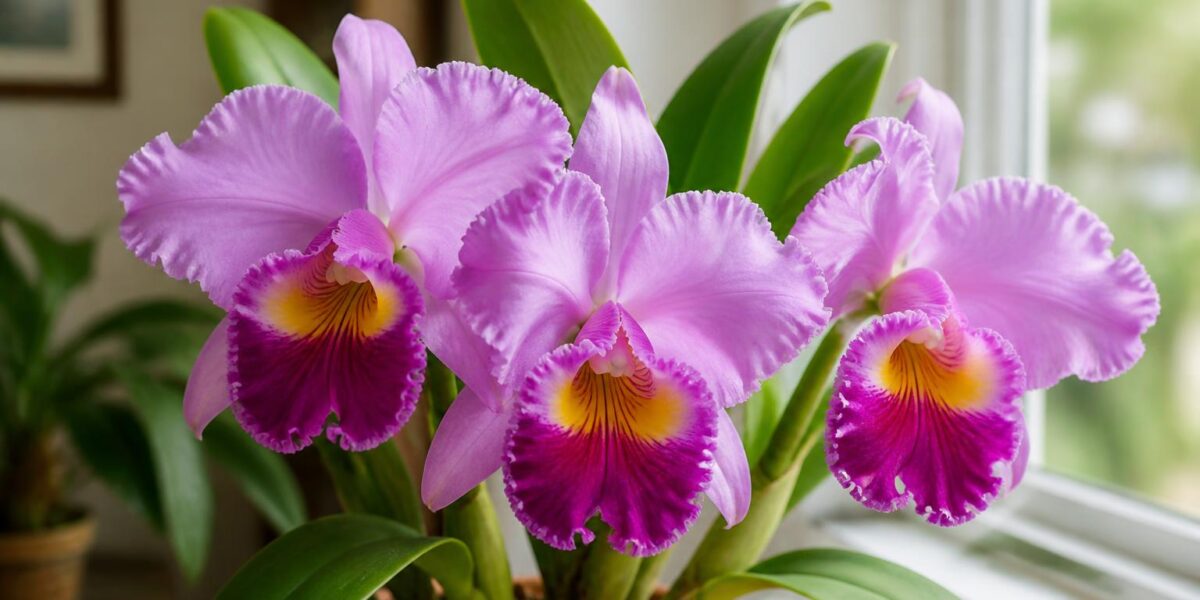
Cattleya is the orchid most people have actually worn rather than just admired. The classic mid-twentieth century corsage was almost always a single Cattleya bloom pinned to a satin ribbon, which is why florists still call the genus the “corsage orchid.” That history matters here in two ways: cattleya plants frequently end up as bouquet centerpieces with hidden hazards (pins, wires, foam) that are riskier than the orchid itself, and the heady fragrance of mature blooms occasionally tempts cats into a bite-test of the flower. Understanding why cattleya orchids are safe for pets — and which secondary risks deserve real attention — keeps the plant in your life without drama.
Where Cattleya Sits on the ASPCA Non-Toxic List
The ASPCA Animal Poison Control Center categorizes plants based on documented toxicity to cats, dogs, and horses. Cattleya appears on the non-toxic side, alongside Phalaenopsis, Dendrobium, Cymbidium, Oncidium, Vanda, Miltonia, and Paphiopedilum. There are no cardiac glycosides like those in lilies of the valley, no calcium oxalate raphides like those in dieffenbachia or peace lily, no glycoalkaloids like those in solanum vines, no proteolytic latex like the ficin in weeping fig, and no cycasin like the lethal compound in sago palm. The flower head, the velvet-textured petals, and the thick succulent pseudobulbs are all biochemically benign at household exposure levels.
Some cattleya hybrids have a faint perfume often described as cinnamon, vanilla, or freshly cut citrus. Those aroma compounds are safe — they are the same general families of esters and terpenes found in many edible plants — and they pose no inhalation hazard to pets. For broader cross-genus context, see the umbrella piece are orchids safe for dogs. Cat-side readers can also visit are orchids toxic to cats, where despite the slug the conclusion confirms the same non-toxic outcome.
Corsage Orchid Hazards That Are Not the Plant
The Cattleya plant itself is safe, but the social context in which Cattleya flowers appear is unusually risky. Three accessories cause more problems for pets than the orchid ever would.
Corsage and boutonniere pins
Traditional corsages are anchored with long, sharp pins, sometimes pearl-tipped. A pin that drops onto a carpet or sofa cushion is invisible. A puppy or kitten that swallows or steps on a pin is a foreign-body and puncture-injury emergency. After any corsage event, count pins out loud as you remove them and check the floor where the corsage was stored or unwrapped.
Floral wire and tape
Cattleya blooms are heavy. Florists support them with green floral wire and floral tape inserted up the stem. After the corsage is dismantled and a curious dog steals the discarded flower, the wire goes with it. Wire ingestion is a surgical emergency. Throw used corsages in a sealed bin, not the kitchen trash, until the pet-proof part of trash management is confirmed.
Floral foam
Wedding and event arrangements built around cattleya often sit in green floral foam (a phenolic resin) hidden inside the vase. The foam is not biologically toxic in small chewed amounts, but it absorbs water poorly in the gut and can cause obstruction or persistent vomiting. Discard foam blocks securely.
None of these hazards are unique to cattleya, but the corsage tradition makes the genus more often associated with pinned, wired, and foam-mounted presentations than other orchids.
What Happens If a Pet Eats a Cattleya Bloom
For most cats and dogs, very little. A single chewed petal usually leaves no trace. A whole bloom or a whole spike, especially with the leathery pseudobulb included, can produce mild and self-limiting effects:
- One or two episodes of vomiting in the first few hours
- Soft stool or short-lived diarrhea the next day
- Brief drooling immediately after the meal as the mouth reacts to fibrous tissue
- A skipped meal that is normal again by the following feeding
These are mechanical-fiber reactions, not signs of poisoning. They typically clear without treatment. Persistent symptoms past about twelve hours, forceful or bloody vomiting, lethargy, abdominal pain, or refusal to drink are signals to escalate to a veterinary call regardless of how non-toxic the plant is.
Pesticide Residues and Other Production Concerns
Most cattleya plants reach the consumer through a long supply chain. Production growers spray for thrips, mites, scale, and assorted leaf-spot fungi, and many of those compounds are systemic, meaning they sit inside leaf and pseudobulb tissue for weeks after the plant arrives in your home. Cats that lick freshly misted leaves and dogs that chew older pseudobulbs are the most exposed.
Wipe the leaves with a damp cloth when the plant arrives, water generously through the bark medium during the first watering, and quarantine new orchids on a high shelf for two to four weeks. If your home has a determined leaf-chewer, choose plants from a hobby grower or specialty greenhouse rather than supermarket shelves; production-grade chemistry tends to be heavier on big-box stock.
Bark Mix, Cork, and Mounted Plants
Cattleyas come potted in chunky fir bark or sometimes mounted on cork or tree-fern slabs. Both presentation styles introduce mechanical risks for chewing pets. Bark chunks are choking and obstruction hazards if dogs raid the pot. Cork plaques can splinter when chewed. Tree-fern is a fibrous material that can lodge between teeth.
The orchid itself remains the safe part. The medium is the part to keep out of reach. Heavy ceramic outer pots, elevated shelving, and mounted plants hung from a wall hook well above pet height all solve the same problem in different ways. Pick what fits your home; do not pick the floor.
Where Cattleya Fits Among Pet-Safe Orchids
From a toxicology standpoint Cattleya is identical to every other major indoor orchid genus. The differences are cultural. Cattleyas need brighter light than Phalaenopsis, a wet-then-dry watering rhythm closer to that of Cymbidium, and a recognizable rest period that smaller hybrid moth orchids skip. They flower less continuously than Phalaenopsis but produce dramatic blooms when they do, often with strong fragrance.
For households committed to a pet-safe collection, you can mix Cattleya, Phalaenopsis, Dendrobium, and Oncidium without changing the safety equation. The companion guides at phalaenopsis orchids safe for pets, dendrobium orchids safe for pets, and oncidium orchids safe for pets follow the same template if you want to compare care notes.
Setting Up a Pet-Friendly Cattleya Display
A few practical placement choices keep the plant in good shape and keep curiosity at bay.
- Pick a south or east window with bright, filtered light. Cattleyas tend to be tall when in spike, which incidentally lifts blooms above paw range.
- Stake the flower spike. Heavy blooms tip easily, and a tipping plant is the single most attractive object in the room to a bored adolescent cat.
- Use a heavy outer pot to prevent toppling. A clear inner nursery pot works fine for orchid roots; the outer pot just needs weight.
- Avoid leaf-shine sprays and “bloom booster” foliar mists in households with reliable lickers. None of those products are tested for pet safety.
- Repot every two years in fresh, sealed-bag orchid bark — never garden soil — and pick up scattered chunks afterward.
If a Pet Has Already Eaten Plant Material
Because the plant is non-toxic, you are not in a poisoning emergency. Remove remaining plant material from reach. Offer fresh water but do not force it. Watch for vomiting, diarrhea, drooling, or unusual quietness across the next twenty-four hours.
Lower your threshold to call if your pet is very small, very young, very old, or has a chronic illness. A two-pound kitten that swallowed a whole bloom has consumed a much larger share of body weight than a forty-pound dog eating the same flower. When in doubt, contact:
- Your regular veterinary practice during business hours
- ASPCA Animal Poison Control Center at 888-426-4435 (consultation fee may apply)
- Pet Poison Helpline at 855-764-7661 (consultation fee may apply)
- Your nearest emergency veterinary hospital after hours if symptoms are severe
Do not induce vomiting at home without specific instructions from a veterinarian. Hydrogen peroxide given to cats without supervision can cause stomach lining damage on top of the original problem.
Curiosity-Proofing Without Banishing the Orchid
Cattleyas reward attention. Their blooms last several weeks and the fragrance can fill a room. Most pets test the new arrival once and lose interest. The few persistent chewers usually need an environmental redirect rather than discipline. Cats with a leaf habit often crave fiber and texture; a separate pot of pet grass solves the underlying impulse. Dogs that grab fallen petals during play usually settle with a quick training session and a chew toy of similar size.
Build out the rest of the home with reliably safe greenery from cat-safe houseplants and pair the indoor collection with cat-safe flowers for cut arrangements. New cat and dog owners can also browse our adopt a cat and adopt a dog hubs for matching advice and household setup tips.
Vet Calls: What the Triage Sounds Like
If you do call a clinic about a Cattleya ingestion, the triage nurse will ask species, weight, what part was eaten, how much, when, and what symptoms have appeared. Because Cattleya is non-toxic, most of these calls end with home-monitoring advice. A clinic visit is usually only recommended when the pet has eaten a large volume relative to body weight, has another underlying condition, or is showing signs that suggest a different problem (like the pin, wire, or foam from a corsage rather than the flower itself).
Bring a leaf, a flower, or a clear photo of the plant if you do go in. Identification matters because Cattleya is sometimes confused with anthurium, peace lily, or bromeliad blooms in retail displays. Anthurium and peace lily contain calcium oxalates and produce mouth and throat irritation; the bromeliad family is non-toxic. A quick ID rules out the wrong-plant scenario.
Frequently Asked Questions
My cat licked a Cattleya petal — does she need treatment?
No. The petal is non-toxic. Watch for any persistent drooling or vomiting over the next several hours, but a single lick or chew is not a medical event.
Are Cattleya pseudobulbs (the thick canes) safe for dogs to chew?
They are non-toxic. The mechanical risk is the bigger issue — fibrous tissue can splinter and scrape gums, or a chunk can wedge in the gut. Discourage chewing and trim any splintered area cleanly.
Are corsages with Cattleya flowers safe to take home if I have a dog?
The flower is safe. The pin, wire, and tape used to assemble the corsage are not. Dispose of the entire corsage in a sealed bin where the dog cannot reach it.
Is Cattleya pollen dangerous like lily pollen?
No. Orchid pollen comes in solid waxy pollinia and is not airborne. The pollen risk that affects cats is unique to true lilies (Lilium and Hemerocallis), not orchids.
Can I compost spent Cattleya flowers in a worm bin or pet-accessible compost?
Yes — the flower tissue is non-toxic. Be cautious about pesticide residues if the plant was a recent supermarket purchase; let it sit in a closed compost bin for a few weeks before any pet has access, which is good general practice anyway.


