
Last updated: May 16, 2026
In this article
- The Direct Answer: Weeping Fig Is Toxic to Cats
- What Makes Ficus Benjamina Toxic: Ficin and Psoralens
- Symptoms in Cats: What to Watch For
- What to Do If Your Cat Chewed a Weeping Fig
- Where Weeping Fig Sits on the Severity Scale
- Look-Alike Plants: Avoiding Misidentification
- Why Cats Chew Weeping Fig in the First Place
- Living with a Weeping Fig in a Cat Household
- What the Vet Will Do If You Visit
- Prevention Beyond the Plant
- Frequently Asked Questions
The Direct Answer: Weeping Fig Is Toxic to Cats
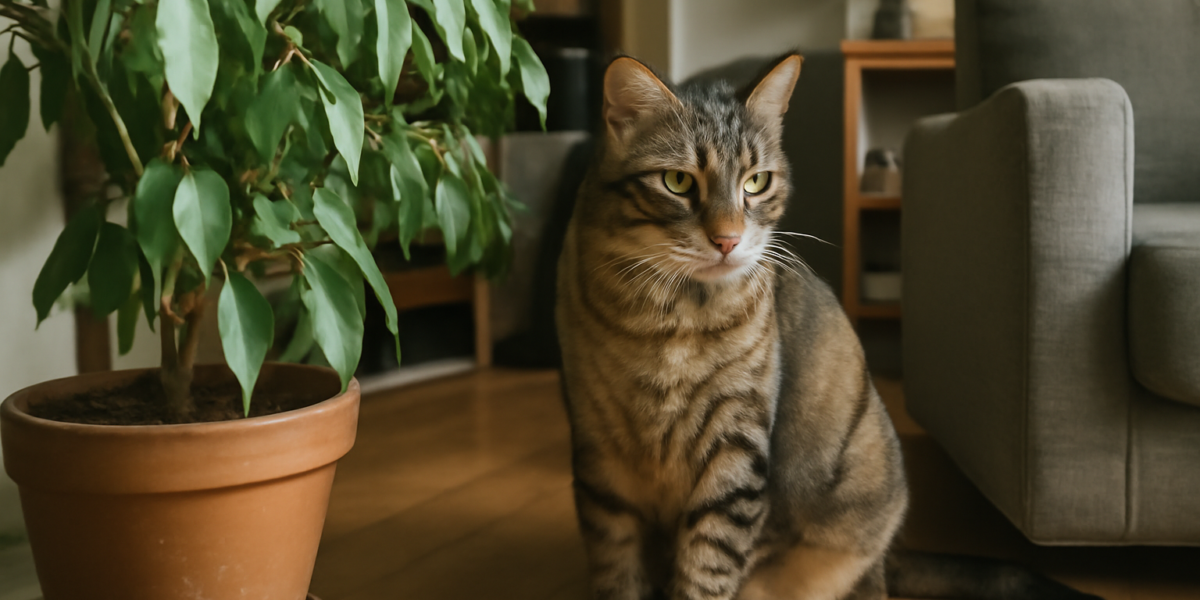
Weeping fig (Ficus benjamina) is toxic to cats per the ASPCA Animal Poison Control Center. The toxicity sits in the milky white sap that oozes from any cut, broken leaf, or scraped bark. That sap contains a proteolytic enzyme called ficin and a class of compounds called psoralens, both of which irritate the mucous membranes of the mouth, throat, and gastrointestinal tract on contact. Skin exposure to the same sap can also cause contact dermatitis. Severity is generally mild to moderate — most cats develop drooling, mouth pawing, vomiting, or diarrhea after a chewing incident — but the irritation can be uncomfortable enough to warrant veterinary attention, and the contact dermatitis on whiskers, paws, or face can persist if the sap is not rinsed away.
The plant is one of the most common indoor trees in homes, offices, and shopping malls thanks to its glossy weeping foliage and tolerance of low light. That ubiquity means cats encounter it more often than the average toxic plant, and accidental chewing is a frequent source of mild poison-control calls. Knowing exactly why weeping fig is toxic to cats — and where on the severity scale it sits — helps you respond calmly when you find a chewed leaf on the floor.
What Makes Ficus Benjamina Toxic: Ficin and Psoralens
Two distinct chemistries are at work in weeping fig sap. Ficin is a proteolytic enzyme — a protein that cleaves other proteins. It is concentrated in the milky latex of Ficus species and acts as a chemical defense against insect chewers. When ficin contacts the soft tissues of a mammal’s mouth or gut, it begins breaking down surface proteins, which translates into burning, irritation, and inflammation. The same enzyme is harvested commercially from a related fig (Ficus glabrata) and used as a meat tenderizer, which gives a clue to its biological action.
Psoralens are a separate class of compound called furocoumarins. They are photo-reactive — meaning they become more biologically active when exposed to ultraviolet light — and they account for the distinctive sun-triggered skin reactions that some humans develop after contact with fig sap. Psoralens cause inflammation on their own and amplify reactions when sunlight hits exposed skin or mucous membranes shortly after contact.
Together, ficin and psoralens make weeping fig sap genuinely irritating. The reaction is not a systemic poisoning that targets a specific organ — there is no cardiac involvement like foxglove, no kidney involvement like lilies, no liver involvement like sago palm. It is a direct chemical irritation of whatever surface the sap touches. That makes severity mostly a function of contact volume and contact location.
Symptoms in Cats: What to Watch For
A cat that has chewed a weeping fig leaf or stem typically shows symptoms within minutes to an hour of contact. The signs cluster around the mouth and gut.
- Drooling, often with white frothy saliva
- Pawing at the mouth or face
- Lip-smacking or repeated swallowing
- Vomiting, sometimes with visible plant material
- Diarrhea, sometimes mild and short-lived
- Loss of appetite for a meal or two
- Reluctance to eat dry food because of mouth tenderness
Skin and eye contact with the sap can produce a separate set of signs:
- Localized redness on the face or paws where sap landed
- Squinting or excessive blinking if sap reached the eye
- Persistent grooming of one body area
- Mild swelling of lips or eyelids
Severe reactions — repeated forceful vomiting, lethargy, refusal to drink, or signs of distress — are uncommon but warrant immediate veterinary contact. Cats with pre-existing dental disease can have more pronounced mouth pain because the irritated tissue compounds existing soreness.
What to Do If Your Cat Chewed a Weeping Fig
The first hour after chewing is the most useful window. Steps in order:
- Remove the cat from the plant and remove any visible plant pieces from the mouth gently if the cat tolerates it. Do not force the issue if the cat resists.
- Offer fresh water. Drinking flushes residual sap from the mouth and dilutes anything swallowed.
- Wipe any visible sap from face, paws, or fur using a damp cloth. The white milky residue stains and continues to irritate skin until removed.
- Watch closely for the next several hours. Note time of contact, what part of the plant was chewed, and approximately how much.
- Call your veterinarian if drooling lasts more than thirty minutes, vomiting happens more than once, or any sign of breathing difficulty appears.
Do not induce vomiting at home. Hydrogen peroxide is dangerous in cats and can compound the existing irritation. If a clinic recommends emesis, that is done with veterinary supervision using a different agent.
If you cannot reach your regular vet, the standard backup contacts are:
- ASPCA Animal Poison Control Center at 888-426-4435 (consultation fee may apply)
- Pet Poison Helpline at 855-764-7661 (consultation fee may apply)
- Your nearest emergency veterinary hospital after hours for severe symptoms
Where Weeping Fig Sits on the Severity Scale
Weeping fig is a mild to moderate toxicant for cats. It is not in the same category as true lilies (which can cause acute kidney failure in cats from minimal exposure), sago palm (cycasin causes liver failure), or oleander (cardiac glycosides). Weeping fig poisoning is irritating, uncomfortable, and occasionally vet-visit-worthy, but it is not life-threatening at typical household exposure volumes.
That said, severity scales differently for very small cats, kittens, geriatric cats, and cats with underlying disease. A six-week-old kitten that chews a leaf has eaten a much larger fraction of body weight than a fully grown adult cat eating the same leaf. Kittens, seniors, and cats with chronic gastrointestinal disease deserve a lower threshold to call a vet.
The contact dermatitis side of weeping fig exposure is sometimes underappreciated. A cat that walks across a freshly trimmed branch or a sap-stained countertop can pick up sap on the paw pads and then transfer it to the face during grooming. The resulting facial inflammation can persist for days even after the original GI signs have resolved. Bathing the affected area with a cat-safe gentle cleanser usually shortens the course.
Look-Alike Plants: Avoiding Misidentification
Several common plants share names or visual features with weeping fig, and confusion can lead to inappropriate concern or, worse, missed actual poisonings.
- Weeping willow (Salix): completely unrelated, in a different family. Willow bark contains salicylates (the natural source of aspirin chemistry) but the leaves and twigs are generally not associated with significant cat poisoning. Do not confuse “weeping fig” with “weeping willow” when reading toxicology references.
- Fiddle-leaf fig (Ficus lyrata): same genus, same ficin and psoralen chemistry. Toxic to cats in the same way. See are fiddle-leaf figs toxic to cats.
- Rubber tree (Ficus elastica): same genus, same chemistry, same irritation profile. See are rubber tree toxic to cats and are rubber plants toxic to cats.
- Creeping fig (Ficus pumila): same genus, same chemistry. Often grown as a trailing houseplant or wall climber.
- Audrey ficus (Ficus benghalensis ‘Audrey’): a banyan-fig cultivar with the same ficin sap.
- Mistletoe fig (Ficus deltoidea): same Ficus chemistry, despite the misleading “mistletoe” common name. Not actual mistletoe.
The whole Ficus genus shares the ficin-and-psoralen pattern. Treat any milky-sapped fig species as the same general level of irritation hazard.
Why Cats Chew Weeping Fig in the First Place
Cats do not seek out weeping fig the way they seek catnip. The chewing is usually opportunistic — a leaf within reach, a fallen branch on the floor, a freshly trimmed cutting on a counter. Some cats also develop a leaf-chewing habit independent of the plant species, which means any houseplant within reach will eventually get a test bite. Weeping fig drops a lot of leaves naturally, especially after stress (relocation, draft, watering changes), and those fallen leaves are floor-level invitations.
The most reliable prevention is access reduction. Place weeping figs out of reach where possible — a tall corner, an elevated plant stand, a room the cat does not freely access. Sweep up dropped leaves immediately. Trim sap-leaking branches outside or in a sink and rinse the cut surface before bringing pruning back inside.
Living with a Weeping Fig in a Cat Household
Many cat households keep weeping fig successfully by combining placement with redirection. The placement side is straightforward: tall plant stands, room dividers, or designated plant rooms reduce casual access. The redirection side recognizes that habitual leaf-chewing cats need an alternative outlet for their fiber-and-texture craving. A separate pot of pet grass on a windowsill answers that craving without sacrificing your plant.
If access reduction is not feasible, consider whether the plant is the right choice for your home. There are several similar-looking large indoor trees that are non-toxic per ASPCA, including parlor palm (Chamaedorea elegans), areca palm (Dypsis lutescens), and ponytail palm (Beaucarnea recurvata). All three offer the architectural look of a tree without the ficin chemistry. For broader pet-safe alternatives, see cat-safe houseplants.
What the Vet Will Do If You Visit
For a cat with mild weeping-fig signs, treatment is supportive rather than aggressive. The veterinarian will examine the mouth for sap residue and tissue damage, check hydration status, and ask about the timeline. Treatment may include a brief course of anti-emetic medication if vomiting persists, fluid therapy if dehydration is a concern, and pain control if mouth tenderness is significant. Activated charcoal is rarely used because the irritation is local and topical rather than a systemic toxin needing absorption blockade.
Severe reactions — which are uncommon — may need IV fluids, anti-inflammatory support, and overnight monitoring. Most cats with garden-variety weeping fig exposure are fully recovered within twenty-four hours of contact.
Prevention Beyond the Plant
If you keep a weeping fig and a cat in the same home, a few habits cut accidental exposure substantially.
- Sweep up dropped leaves daily. Weeping fig is a notorious leaf-dropper after any disturbance.
- Trim and prune outside or in a sink, rinse the cut surface before bringing pruning back, and bag pruned branches before disposal.
- Use a heavy outer pot to prevent toppling — falling soil and fragmented branches make a mess that draws curious cats.
- Wash your hands after handling the plant before touching cat food, water bowls, or the cat itself.
- Wipe the cat’s face and paws gently if you suspect any sap contact.
For a holistic look at the home environment, browse cat-safe flowers for arrangement alternatives. New cat owners can visit our adopt a cat hub for setup advice alongside available pets.
Frequently Asked Questions
How much weeping fig is dangerous to a cat?
There is no precise threshold. A small chewed leaf usually causes mild self-limiting symptoms. A larger ingestion or multiple leaves over time can cause more pronounced symptoms. Small cats and kittens are at higher relative risk than full-grown cats.
My cat chewed a weeping fig leaf and is drooling — should I rush to the emergency vet?
Drooling alone, lasting under an hour, is usually consistent with mild irritation. Watch for vomiting, lethargy, or breathing difficulty. If drooling persists past an hour or escalates to other symptoms, call the vet.
Is the white sap from weeping fig dangerous if it touches my cat’s skin?
It can cause contact dermatitis — redness, itching, mild swelling. Wipe the area with a damp cloth and rinse. If skin reaction persists or worsens, see the vet.
Are dried fallen weeping fig leaves still toxic?
Yes, though typically less than fresh leaves with active sap. The compounds remain present in dried tissue. Sweep up fallen leaves immediately rather than letting them accumulate.
Are all Ficus plants equally toxic to cats?
The whole Ficus genus shares ficin-and-psoralen chemistry. Fiddle-leaf fig, rubber tree, creeping fig, audrey ficus, and mistletoe fig are all comparably irritating. Severity is similar across the genus. Cross-reference our fiddle-leaf fig cat guide for the closest-match species.


