
Last updated: May 16, 2026
In this article
Are Rubber Plants Toxic to Cats? A Complete Safety Guide
Quick Answer: Yes, rubber plants are toxic to cats. The rubber plant (Ficus elastica) produces a milky latex sap that contains irritating compounds called ficin and ficusin. If your cat has chewed on or ingested a rubber plant, contact your veterinarian for guidance.
The rubber plant (Ficus elastica) is a classic houseplant that has been popular for decades. With its large, glossy, dark green or burgundy leaves and sturdy upright growth, it brings a bold, tropical statement to any room. It is also relatively easy to care for, tolerating moderate light and infrequent watering. However, rubber plants belong to the Ficus genus — the same plant family that includes fiddle leaf figs and weeping figs — and all members of this group produce a milky white sap that is irritating and mildly toxic to cats. Understanding the nature of this toxicity and knowing how to respond to exposure is essential for any cat owner who keeps or encounters rubber plants.
Why Are Rubber Plants Toxic to Cats?
Rubber plants produce a thick, milky latex sap that contains several irritating compounds. The most significant of these are ficin (a proteolytic enzyme) and ficusin (also known as psoralen, a furocoumarin compound). These substances serve as the plant’s natural defense against herbivores and pathogens.
Ficin is a digestive enzyme that breaks down proteins. When it contacts the soft tissues of a cat’s mouth, throat, and gastrointestinal tract, it causes irritation and inflammation by chemically degrading the mucosal lining. This produces a burning sensation, redness, and swelling at the point of contact.
Ficusin (psoralen) is a photosensitizing compound that, in addition to direct irritation, can make skin and mucous membranes more sensitive to ultraviolet light. While the photosensitivity effect is more relevant to dermal contact in humans, the direct irritant properties of ficusin contribute to the overall toxic effect on cats that ingest the sap.
The latex sap is most abundant when the plant tissue is damaged — when a leaf is torn, a stem is broken, or a branch is pruned. A cat that bites into a rubber plant leaf immediately encounters a rush of milky sap containing both ficin and ficusin. The sap also exudes from natural damage points such as leaf scars and growth nodes, and can drip onto surfaces below the plant where a cat might contact it with paws and then ingest it during grooming.
The ASPCA classifies Ficus elastica (rubber plant, rubber tree, Indian rubber plant) as toxic to cats and dogs. Other Ficus species, including Ficus lyrata (fiddle leaf fig) and Ficus benjamina (weeping fig), carry the same toxicity profile.
Symptoms of Rubber Plant Poisoning in Cats
Symptoms of rubber plant toxicity typically develop within minutes to a few hours of exposure, depending on whether the cat ingested plant material, chewed on a leaf, or simply contacted the sap with its skin or paws.
- Excessive drooling — one of the first signs, caused by oral irritation from the latex sap
- Oral irritation and pawing at the mouth — the cat may rub its face, paw at its lips, or shake its head
- Vomiting — triggered by gastrointestinal irritation as the sap reaches the stomach
- Diarrhea — may develop within hours as the irritant moves through the digestive tract
- Loss of appetite — the cat may refuse food due to mouth pain and nausea
- Skin irritation — redness, swelling, or mild dermatitis on areas of skin that contacted the sap, particularly the lips, chin, and paws
- Lethargy — reduced energy and general malaise following GI upset
- Swelling of the mouth and throat — in more significant exposures, visible puffiness of the tongue, lips, or throat area
Most cases of rubber plant exposure in cats produce mild to moderate symptoms. The taste of the latex sap is unpleasant enough that cats typically stop chewing quickly after the first bite, which limits the amount consumed. However, kittens and young cats with strong exploratory drives may persist longer than adults, increasing the risk of more significant ingestion. Any difficulty breathing, severe facial swelling, or prolonged vomiting should prompt immediate emergency veterinary care.
What to Do If Your Cat Eats a Rubber Plant
A measured, prompt response can minimize the effects of rubber plant exposure.
- Separate your cat from the plant. Move the rubber plant out of reach and check the damage to estimate how much your cat consumed. Look for bite marks, torn leaves, and sap on the plant and surrounding area.
- Check for sap on your cat’s fur and skin. Rubber plant sap is white, thick, and sticky. If you see it on your cat’s paws, face, or fur, gently wipe the affected areas with a damp cloth or warm water to prevent further ingestion during grooming.
- Rinse the mouth gently. If your cat allows it, use a syringe of cool water to flush the mouth and help remove sap from the oral tissues.
- Contact your veterinarian. Provide details about the amount and part of the plant consumed, the time of exposure, and any symptoms you have observed. Your vet will determine whether an in-clinic visit is necessary.
- Offer fresh water. Encourage hydration to help dilute any ingested sap and soothe the gastrointestinal tract.
- Monitor for worsening symptoms. Watch for progression from mild drooling to vomiting, and from vomiting to lethargy or breathing changes. Report any escalation to your vet immediately.
Do not attempt to induce vomiting at home unless specifically instructed by your veterinarian. For more guidance on cat safety, visit our cat care section.
Veterinary Treatment for Rubber Plant Poisoning
Treatment for rubber plant toxicity in cats is supportive, focused on managing irritation, controlling symptoms, and preventing dehydration. There is no specific antidote for ficin or ficusin exposure.
For mild cases, treatment may consist primarily of pain management and monitoring. The veterinarian may prescribe oral anti-inflammatory medication to reduce mouth and throat swelling. Sucralfate can coat and protect the irritated mucosal lining of the esophagus and stomach. If skin irritation is present, a gentle antiseptic wash may be applied, and the vet may recommend an Elizabethan collar temporarily to prevent the cat from licking the affected area.
Moderate to significant ingestions may require more aggressive intervention. Antiemetic medications (such as maropitant) control persistent vomiting. Subcutaneous or intravenous fluids address dehydration from fluid losses and support the body during recovery. If the cat is refusing food, the vet may provide nutritional support or appetite stimulants once vomiting is controlled.
Blood work is not typically necessary for mild rubber plant exposures but may be performed if the cat is showing signs of systemic illness, prolonged lethargy, or if the amount ingested was substantial. Liver and kidney values are checked as a baseline to rule out organ involvement, though systemic toxicity from Ficus sap alone is uncommon.
The prognosis for rubber plant poisoning in cats is excellent in the vast majority of cases. Most cats recover fully within 24 to 48 hours with appropriate care. Severe cases requiring hospitalization are rare and typically involve unusually large ingestions or cats with pre-existing gastrointestinal conditions.
How to Keep Cats Safe from Rubber Plants
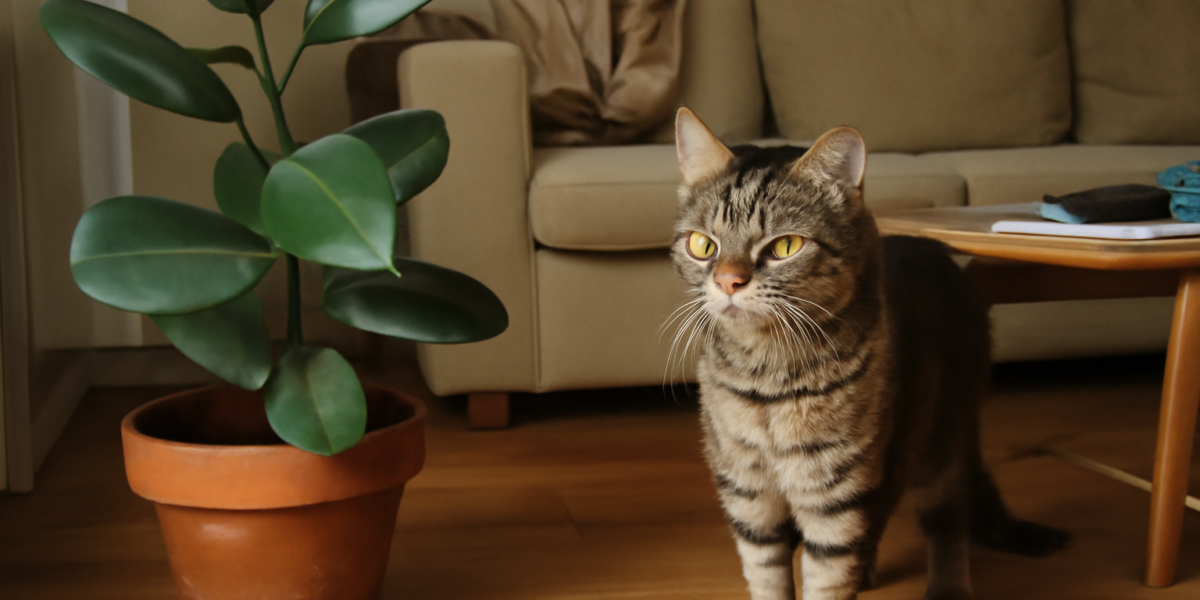
Rubber plants’ large, shiny leaves can attract feline attention, and the plant’s typical placement as a floor-standing specimen puts it right in a cat’s zone of activity.
- Relocate rubber plants to cat-free rooms. A room with a closed door is the most reliable barrier. Bathrooms, home offices, or spare bedrooms can work well for both the plant and the cat’s safety.
- Use elevated plant stands. While not foolproof for athletic cats, a tall, narrow plant stand can make the rubber plant harder to reach. Combine with deterrents for added protection.
- Apply deterrents around the plant. Citrus sprays (which many cats dislike), double-sided tape around the pot, or commercial pet-safe bitter sprays on the lower leaves can discourage investigation.
- Prune carefully and clean up sap. When pruning or repotting a rubber plant, do so in an area the cat cannot access. The pruning process releases large amounts of latex sap. Wipe up any drips immediately and dispose of cuttings in sealed bags.
- Provide safe plant alternatives. Give your cat access to cat grass, catnip, or other safe plants to satisfy the urge to chew on greenery.
- Consider replacing the rubber plant. If your cat is a persistent plant chewer and you cannot guarantee separation, a non-toxic alternative is the responsible choice.
Cat-Safe Alternatives to Rubber Plants
If you love the bold, glossy-leaved tropical aesthetic of rubber plants, these non-toxic alternatives can deliver a similar look without the risk.
- Cast iron plant (Aspidistra elatior) — large, dark, glossy leaves similar to rubber plant foliage; extremely tough and non-toxic to cats
- Parlor palm (Chamaedorea elegans) — a lush tropical plant with graceful fronds; completely cat-safe and tolerant of indoor conditions
- Prayer plant (Maranta leuconeura) — colorful patterned leaves that add visual interest; non-toxic and compact enough for tabletops or shelves
- Calathea varieties (Goeppertia) — stunning patterned foliage with a tropical feel; safe for cats and available in many species
- Ponytail palm (Beaucarnea recurvata) — a bold architectural plant with a thick trunk and cascading leaves; non-toxic
- Money tree (Pachira aquatica) — glossy, palm-like leaves on a braided trunk; non-toxic to cats
- Areca palm (Dypsis lutescens) — feathery, tropical fronds that fill a space beautifully; safe for cats
- Polka dot plant (Hypoestes phyllostachya) — colorful spotted foliage that is non-toxic and adds personality to any room
Verify any new plant against the ASPCA toxic plant database before bringing it home. For more information on keeping your cat safe around plants, see our toxic plants resource.
Frequently Asked Questions
Is the rubber tree plant the same as the rubber plant?
In common usage, “rubber tree” and “rubber plant” typically refer to the same species: Ficus elastica. Both names are used interchangeably for the popular houseplant with large, glossy leaves. The name “rubber tree” comes from the fact that this plant was historically a source of natural latex (though commercial rubber production now uses a different species, Hevea brasiliensis). Regardless of which name you encounter, Ficus elastica is toxic to cats and the same precautions apply.
Are variegated rubber plants also toxic to cats?
Yes. Variegated varieties of Ficus elastica, such as “Tineke,” “Ruby,” and “Shivereana,” contain the same latex sap with ficin and ficusin as the standard green variety. The variegation (patterns of white, cream, pink, or red in the leaves) is caused by differences in chlorophyll distribution and does not affect the plant’s toxic compound profile. All rubber plant cultivars should be treated as equally toxic to cats.
Can the sap from a rubber plant cause skin irritation in cats?
Yes. Direct skin contact with rubber plant sap can cause contact dermatitis in cats, presenting as redness, swelling, and mild irritation in the affected area. The most common sites are the face (around the lips and chin), the paws, and any area where sap drips onto the fur. Skin irritation from sap contact is generally less serious than oral ingestion but should still be addressed promptly by wiping the area with a damp cloth. If redness persists or the area seems painful, consult your veterinarian.
How much rubber plant does a cat need to eat to get sick?
There is no precisely established toxic dose for Ficus elastica in cats, as individual sensitivity varies. However, even a few bites of a leaf can produce drooling and oral irritation in most cats, since the sap is released immediately upon tissue damage. Significant ingestion — chewing and swallowing multiple leaves or portions of a stem — increases the risk of vomiting, diarrhea, and lethargy. The unpleasant taste of the sap usually prevents cats from eating large quantities, but young kittens and cats with pica (compulsive eating of non-food items) may consume more than typical and face higher risk.
My cat knocked over my rubber plant but did not eat it — should I worry?
If the plant was damaged during the fall (broken stems, torn leaves), latex sap may have been released onto the pot, saucer, floor, or your cat’s fur. Even if the cat did not bite the plant, walking through spilled sap and then grooming the paws creates an ingestion pathway. Check your cat for sap on the paws, face, or body and wipe any visible residue with a damp cloth. Clean the floor and surrounding area thoroughly. Monitor your cat for drooling, decreased appetite, or vomiting over the next few hours. If no symptoms appear, the exposure was likely minimal.


