
Last updated: May 16, 2026
In this article
- Is Flowering Tobacco Toxic to Cats and Dogs?
- Meet the Flowering Tobacco Family
- The Nicotine Mechanism in Pets
- Severity by Species and Size
- Symptoms of Flowering Tobacco Poisoning
- What to Do If Your Pet Eats Flowering Tobacco
- Solanaceae Family Connection
- Severe-Tier Garden Plant Comparisons
- Can You Grow Flowering Tobacco Safely With Pets?
- How to Recognize Flowering Tobacco
- Frequently Asked Questions
Is Flowering Tobacco Toxic to Cats and Dogs?
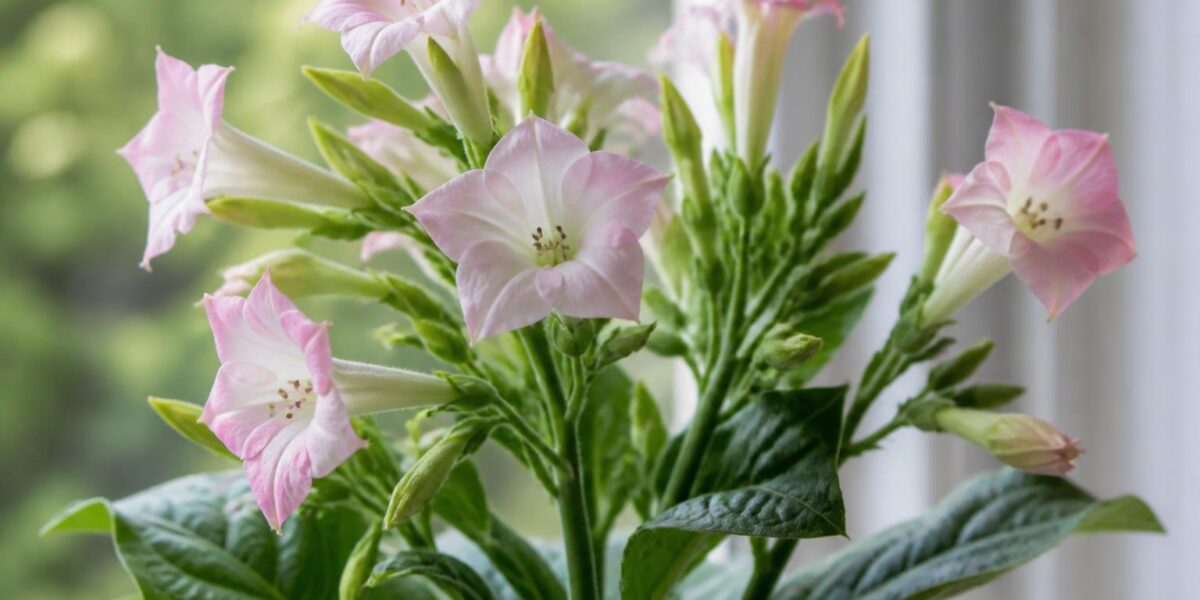
Flowering tobacco toxic pets is the unfortunate reality. Nicotiana species — including the popular ornamental jasmine tobacco (N. alata), the tall woodland tobacco (N. sylvestris), and the cigarette-tobacco plant (N. tabacum) — contain nicotine and related pyridine alkaloids that are toxic to both cats and dogs. The ASPCA lists Nicotiana as toxic to cats, dogs, and horses. Severity ranges from moderate GI signs at smaller doses to serious neurological effects at larger ingestions, with cats and small dogs most vulnerable because of body weight.
If your pet has chewed flowering tobacco leaves, flowers, or stems, treat it as a real emergency: call your veterinarian, the ASPCA Animal Poison Control Center (888-426-4435), or the Pet Poison Helpline (855-764-7661) immediately. Do not wait for symptoms. Nicotine poisoning can progress quickly, and early intervention is far easier than late intervention. This guide explains what flowering tobacco is, what nicotine does to pets, and how to garden with these old-fashioned cottage favorites if you keep pets.
Meet the Flowering Tobacco Family
The genus Nicotiana contains around 70 species, all native to the Americas and Australia, all in the family Solanaceae — the same family as deadly nightshade, eggplant, tomato, and chili pepper. The ornamental species sold for gardens include:
- Jasmine tobacco (Nicotiana alata) — the most popular ornamental, with white star-shape flowers that release a heavy jasmine fragrance at dusk. Sold as bedding annuals.
- Woodland tobacco (Nicotiana sylvestris) — a dramatic 5-foot architectural plant with drooping clusters of long white trumpet flowers.
- Flowering tobacco hybrids — modern series like Sensation and Domino offer compact bedding sizes in white, pink, lime green, red, and bicolor.
- Cigarette tobacco (Nicotiana tabacum) — sometimes grown as a curiosity plant; the leaves are processed for cigarettes and contain the highest nicotine concentration of any cultivated species.
- Native flowering tobaccos like N. attenuata grow wild in parts of the American West.
All flowering tobaccos share the same chemistry profile, with nicotine concentrations varying by species. Even ornamental jasmine tobacco contains enough alkaloid to cause poisoning if eaten in moderate amounts.
The Nicotine Mechanism in Pets
Nicotine is a fast-acting alkaloid that binds to nicotinic acetylcholine receptors throughout the nervous system. In pets, this triggers a biphasic response:
- Initial stimulation: increased salivation, vomiting, hyperactivity, rapid breathing, dilated pupils, tremors, elevated heart rate.
- Followed by depression: weakness, slow heart rate, low blood pressure, lethargy, possible respiratory depression in severe cases.
- Severe cases: seizures, collapse, life-threatening cardiac or respiratory effects.
Onset is typically within 15 minutes to an hour of ingestion. The toxic dose varies by species and body size, but cats and small dogs reach problem-territory at much smaller amounts than large dogs. Cigarette and cigar butts, nicotine gum, vape liquid, and patches are even more concentrated forms of the same toxin and represent a separate household hazard worth knowing about.
Severity by Species and Size
Several factors influence how badly a Nicotiana ingestion will hit:
- Body weight. A toxic dose is calculated by milligrams per kilogram of body weight, so a 4-kilogram cat reaches that dose far faster than a 30-kilogram dog from the same number of leaves.
- Plant species. Cigarette tobacco (N. tabacum) has higher nicotine content than ornamental N. alata, but all are toxic.
- Plant part. Leaves and stems contain higher concentrations than flowers, but flowers are not safe.
- Time since ingestion. Earlier veterinary intervention is dramatically more effective.
- Stomach contents. Pets that ate recently may absorb less than those on an empty stomach.
Cats are notable for their sensitivity to many plant alkaloids and metabolize toxins more slowly than dogs because of limited hepatic glucuronyl transferase activity. They are also smaller. Both factors put cats at higher risk from flowering-tobacco exposure than similarly-sized but more robust species.
Symptoms of Flowering Tobacco Poisoning
Watch for these signs after suspected ingestion:
- Excessive drooling or salivation
- Vomiting (often early and dramatic)
- Diarrhea
- Pupils that look unusually large or small
- Rapid breathing or panting
- Trembling, twitching, or full-body tremors
- Weakness, wobbly gait, or collapse
- Hyperactivity or unusual restlessness, sometimes followed by lethargy
- Rapid then slow heart rate
- Seizures (severe cases)
- Loss of consciousness (severe cases)
The biphasic pattern — initial excitement followed by depression — is a classic nicotinic-toxicity fingerprint. Any of these signs after a chewed Nicotiana plant warrants immediate veterinary attention.
What to Do If Your Pet Eats Flowering Tobacco
This is a time-sensitive scenario. Move quickly and methodically:
- Remove any plant material from your pet’s mouth and out of reach without putting your fingers at risk if your pet is stressed.
- Note the species, part eaten (leaf, flower, stem), and approximate amount. A photo of the plant helps the vet.
- Call your regular veterinarian, the closest emergency clinic, the ASPCA Animal Poison Control Center (888-426-4435), or the Pet Poison Helpline (855-764-7661) immediately.
- Do not induce vomiting at home unless specifically instructed by a veterinarian. Inappropriately timed vomiting in a pet that is becoming neurologically affected can cause aspiration.
- Travel to the clinic if directed. Bring the plant or a photo, plus any noted symptoms and the timeline.
Veterinary treatment may include induced emesis if recent ingestion, activated charcoal to bind alkaloids, IV fluids to support circulation and elimination, anti-seizure medication if needed, and respiratory or cardiac support in severe cases. Most pets treated promptly recover well; delayed treatment is harder.
Solanaceae Family Connection
Flowering tobacco shares the Solanaceae family with several other plants pet owners should know:
- Tomato plants for cats and tomato plants for dogs — solanine in green parts is toxic.
- Eggplant plants — solanine in foliage; ripe fruit safer for dogs in moderation.
- Chili pepper plants — capsaicin and solanine.
- Deadly nightshade (Atropa belladonna) — atropine and other tropane alkaloids; severely toxic.
- Jimsonweed and angel’s trumpet (Datura and Brugmansia) — tropane alkaloids; severely toxic.
Flowering tobacco’s nicotine alkaloid profile is different from solanine, but the family connection is a useful pattern: Solanaceae plants tend to be problematic for pets, and flowering tobacco is one of the worse-known offenders along with jimsonweed.
Severe-Tier Garden Plant Comparisons
If you’re shopping for cottage-garden plants, knowing which ones are in flowering tobacco’s severity tier helps with planning. Other severely toxic ornamentals include:
- Oleander — cardiac glycosides, life-threatening.
- Foxglove — cardiac glycosides, life-threatening.
- Lily of the valley — cardiac glycosides.
- True lilies — kidney failure in cats.
- Sago palm — severe liver toxicity.
- Castor bean — ricin, life-threatening.
Flowering tobacco is in the same general “severe risk if eaten” category, though the mechanism is different. None of these belong in households where pets have unsupervised garden access. If you love the dusk-fragrance effect of flowering tobacco, consider the safer alternatives in our pet-safe garden plants list.
Can You Grow Flowering Tobacco Safely With Pets?
Honest answer: it’s hard to make work in a household with curious pets. The plants are tall, fragrant, and visually attractive, all of which draw exploration. If you’re determined to grow flowering tobacco, take serious precautions:
- Plant in fully fenced or hardscaped areas that pets cannot access — front yard with no pet access, raised garden behind fencing, or terrace pots out of reach.
- Avoid letting flowering tobacco self-seed. The species reseed enthusiastically; volunteer seedlings can pop up in pet-accessible areas next year.
- Skip flowering tobacco in containers near patios where pets relax — even a tip-over could put leaves in reach.
- Educate everyone in the household about which plants are which. A guest tossing a fallen tobacco flower into a pet-accessible area is a real risk.
- Consider switching to similar-looking but safer night-fragrant flowers like petunias (mildly safer) or moonflowers (note: moonflower seeds are also toxic, so this is not a perfect swap — check before buying).
For most pet households, the safest decision is to skip Nicotiana entirely. The fragrance is lovely but the risk profile is high enough that one bad day with a determined puppy or curious cat could lead to an emergency vet visit.
How to Recognize Flowering Tobacco
If you’ve inherited a garden or moved into a rental and want to identify Nicotiana before letting pets out:
- Tall stems 2 to 5 feet, often with sticky-hairy texture.
- Large soft pointed leaves arranged alternately along the stem; lower leaves can be quite large (8 to 12 inches in some species).
- Trumpet-shape flowers with five lobes, opening into a flat star or remaining tubular. Colors include white, pink, red, lime green, and rose.
- Strong fragrance at dusk and night — particularly in N. alata and N. sylvestris.
- Sticky stems and leaves caused by glandular trichomes; leaves often feel slightly tacky.
If you’re unsure, photograph and consult a plant ID app or local extension service before assuming the garden is pet-safe. Removing flowering tobacco involves digging up the entire plant; pulling tops only invites resprouting and seed dispersal. If you’re adopting through adopt a dog or adopt a cat, take the opportunity to do a quick yard audit before bringing home a new pet.
Frequently Asked Questions
How much flowering tobacco is toxic to a dog?
The toxic dose depends on body weight, species (ornamental vs. cigarette tobacco), and plant part eaten, but symptoms can appear from relatively small amounts. There is no “safe” amount — any chewed Nicotiana plant warrants a call to a veterinarian or poison control.
Are tobacco flowers as toxic as the leaves?
Leaves and stems usually contain higher nicotine concentrations than flowers, but flowers are not safe. Treat any plant part — flower, leaf, stem, or seed — as a poisoning concern.
My cat ate a Nicotiana leaf. What should I do?
Call your veterinarian or the ASPCA Animal Poison Control Center (888-426-4435) immediately. Cats are particularly vulnerable to nicotine alkaloids. Do not wait for symptoms; early intervention is far more effective than late.
Is flowering tobacco the same as the tobacco in cigarettes?
It’s the same genus and same chemistry, although ornamental jasmine tobacco (N. alata) typically has lower nicotine content than commercial cigarette tobacco (N. tabacum). All Nicotiana species are toxic to pets and all should be considered hazardous.
Are flowering tobacco seeds toxic too?
Yes. The seeds, like the leaves and stems, contain nicotine alkaloids. Pets that dig up seedlings or eat dropped seeds from a flowering plant face the same risks as those that chew the leaves directly.


