
Last updated: May 16, 2026
In this article
- The Short Answer on Kentia Palm and Pets
- What Kentia Palm Actually Is
- Why Kentia Palm Earns Its Non-Toxic Listing
- The Mechanical Hazard Worth Knowing
- What Can Still Go Wrong
- What to Do If Your Pet Ate Kentia Palm
- Why Kentia Palm Is a Good Pick for Pet Households
- Distinguishing Kentia Palm From True Toxic Palms
- Other Pet-Safe Indoor Palm Options
- Buying and Bringing Home a New Kentia Palm
- Day-to-Day With Kentia Palm and Pets
- When a Vet Call Is Still Warranted
- The Bigger Picture for Pet Households
- Frequently Asked Questions
The Short Answer on Kentia Palm and Pets
Kentia palm is safe for pets. Howea forsteriana, the tall, elegant feathery palm sold in offices, hotel lobbies, and pet households around the world, is listed by the ASPCA as non-toxic to both dogs and cats. If your dog or cat grabs one of the long fronds and chews on it, the worst you should expect is mild stomach upset from the volume of plant fiber rather than any specific toxic chemistry. There is no calcium oxalate, no ficin, no cardenolide, no cyanogenic glycoside, and no alkaloid of veterinary concern in this plant.
That makes kentia palm one of the easier large foliage plants to recommend for a pet household. Searches for kentia palm safe for pets all return the reassuring answer: this is a clean, non-toxic species. The remaining concerns are the same general ones that apply to every shop-bought houseplant — pesticide residue from the nursery, mechanical issues from chewing fibrous fronds, and pot stability when a tall plant lives near an active pet. None of those concerns require giving up the plant; they just require some setup in the first couple of weeks.
What Kentia Palm Actually Is
Howea forsteriana is a true palm in the family Arecaceae, native to a single small Pacific island called Lord Howe Island, off the east coast of Australia. The species has been a staple indoor palm in Europe and the United States since the late nineteenth century, when its tolerance of low light, dry indoor air, and infrequent watering made it the centerpiece of Victorian conservatories. The species is the parent of the indoor-palm aesthetic that has dominated for over a hundred years.
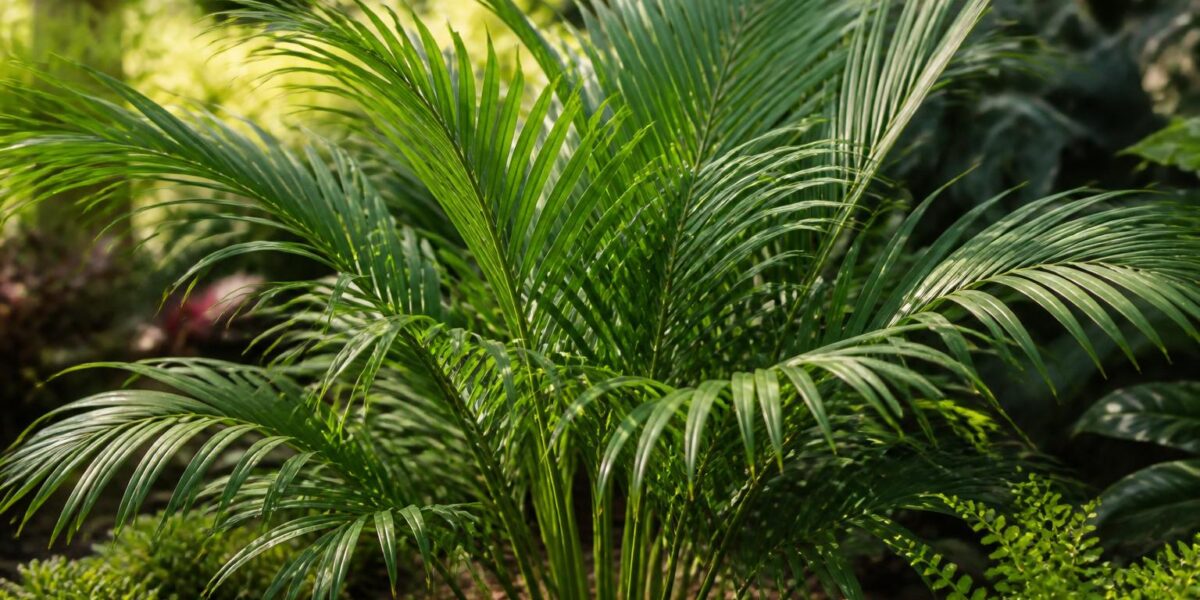
The plant produces tall single trunks topped with arching pinnate fronds — the classic feathery palm silhouette. Mature indoor specimens reach two to three meters and tolerate corner positions where light is minimal. The closely related Howea belmoreana, the curly palm or sentry palm, is sometimes sold under the same kentia palm label and shares the same care requirements and the same non-toxic profile.
You will see Howea forsteriana sold under several common names: kentia palm, thatch palm, paradise palm, and sentry palm (the last one is more accurately Howea belmoreana but the labeling is fuzzy in the trade). All refer to plants in the Howea genus and all are pet-safe.
Why Kentia Palm Earns Its Non-Toxic Listing
The ASPCA lists Howea forsteriana as non-toxic to dogs, cats, and horses. Veterinary toxicology references do not document any systemic toxin in the plant. The fronds contain no calcium oxalate raphides (unlike monstera, pothos, or philodendron), no cardiac glycosides, no cyanogenic glycosides, and no ficin (unlike the rubber tree, fiddle-leaf fig, or weeping fig). The sap is mild and not known to cause meaningful contact dermatitis.
That places kentia palm in the same clean category as areca palm, parlor palm, ponytail palm, and bamboo palm. All of those are commonly grouped together in pet-safe houseplant lists and all of them carry the same favorable risk profile. Kentia palm has the additional advantage of being one of the toughest in low-light conditions, which is why it dominates office and lobby plantings where many of the other safe palms struggle.
The Mechanical Hazard Worth Knowing
The interesting wrinkle with any large palm is mechanical, not chemical. The long fronds are intensely interesting to cats — they look like grass, they sway in air currents, and they trigger the same chase-and-chew instinct that cats apply to spider plants. A cat who chews kentia palm fronds repeatedly can occasionally swallow long fibrous strands.
Long, stringy plant material is the same general category of obstruction risk as ribbon, dental floss, and tinsel. The fiber can lodge in the gut and bunch up the intestine in a way that causes a “linear foreign body” obstruction. This is not common with kentia palm specifically because the fronds are tougher and less easily torn into long strips than something like ponytail palm leaves, but it is a real possibility for households with persistent leaf-chewers. If you see a strand of plant material protruding from the mouth or anus, do not pull on it; call your vet immediately.
The mechanical risk is much lower for dogs because most dogs do not engage in the kind of repetitive, fine-motor leaf-chewing that cats do. Dogs who do chew the plant typically eat a few mouthfuls and stop, which means the fiber comes out the next day in stool without causing problems.
What Can Still Go Wrong
Even with a clean non-toxic plant, three categories of problem can crop up. The first is volume — a pet who eats a large quantity of any plant matter can vomit or have diarrhea simply from the mass of fiber in the gut. The second is pesticide residue: shop-bought houseplants are often treated with systemic insecticides like imidacloprid, and the residue persists for weeks on the leaves and in the soil. The third is soil amendments: systemic insecticide granules mixed into nursery potting soil can poison a soil-eating pet even when the leaves themselves are clean.
Manage these risks the same way you would for any new plant. Quarantine the plant for one to two weeks before pets can reach it. Wipe the fronds with a damp cloth on day one and again a week later. Repot into your own soil mix if your dog or cat is a known dirt-eater. Remove plastic tags and decorative pebbles. The combination of patience and a wipe-down handles ninety percent of the residue risk.
The fourth, less obvious concern is the pot itself. Kentia palms are tall and the fronds catch a lot of air movement, which gives the plant a high center of gravity. A heavy ceramic pot is the right choice; a plastic nursery pot is the wrong one. A leaping cat or a swinging dog tail can topple a tall palm in a light pot, and the soil scatter and the broken pot are a bigger problem than the plant itself.
What to Do If Your Pet Ate Kentia Palm
If your cat or dog ate a few mouthfuls of kentia palm and is otherwise acting normally, the right response is observation. Watch for vomiting, diarrhea, or unusual lethargy over the next twelve to twenty-four hours. Most pets show no reaction at all. Some have one or two episodes of vomiting and return to normal.
Call your veterinarian or the ASPCA Animal Poison Control Center at 888-426-4435 if you see persistent vomiting, diarrhea past twenty-four hours, weakness, refusal to drink, or any string protruding from a body opening. The Pet Poison Helpline at 855-764-7661 is the second hotline. Do not pull on a protruding string of plant matter; that is the single situation in which a wait-and-see approach can become dangerous quickly, and the vet may need to image the abdomen or remove the obstruction surgically. Do not induce vomiting at home for a non-toxic ingestion.
Why Kentia Palm Is a Good Pick for Pet Households
Beyond the clean toxicity profile, kentia palm is one of the most forgiving large foliage plants for indoor cultivation. It tolerates low light, dry indoor air, infrequent watering, and a wide range of temperatures. It grows slowly, which means a medium-sized specimen stays the right size for years. It produces no fruit, no flowers, and no fragrance indoors, so there is nothing dropping onto the floor that a pet might investigate.
The plant also tolerates the occasional knock from a curious pet. The trunk is woody and stable, and the fronds bounce back from chewing within weeks. New fronds emerge from the central crown, so even significant frond loss recovers fully over time. Few houseplants combine this level of toughness with a completely non-toxic profile.
Distinguishing Kentia Palm From True Toxic Palms
The naming chaos with palms is real. Several “palms” are not in the palm family at all, and a few palms in the true Arecaceae family are genuinely toxic. The deadly outlier is sago palm (Cycas revoluta), which is actually a cycad rather than a palm and is severely toxic to dogs and cats — see sago palm and cats and sago palm and dogs for the contrast. The fishtail palm (Caryota mitis) is a true palm but contains soluble calcium oxalates that make it a meaningful oral irritant.
The other true palms commonly sold for indoor use — kentia, areca, parlor, lady, majesty, bamboo, cat palm — are all non-toxic per ASPCA. The “betel nut palm” Areca catechu is a separate, toxic species not generally sold as an indoor ornamental but found outdoors in tropical regions; see betel nut palm and pets. If you are shopping for a tall indoor palm and you want pet safety as a baseline, ask the seller for the botanical name and verify it before purchase.
Other Pet-Safe Indoor Palm Options
If the kentia palm look appeals to you, several other ASPCA non-toxic palms pair well with it or substitute for it. Areca palm brings the same feathery silhouette in a slightly bushier form. Parlor palm works at smaller sizes for side tables and shelves. Lady palm gives a clumping, bamboo-like alternative. Majesty palm brings tall arching fronds at a more affordable price point.
The full cat-safe houseplants guide covers light, watering, and pet-friendliness for each. The pet-safe garden plants roundup is the outdoor counterpart for patios or yards.
Buying and Bringing Home a New Kentia Palm
On day one, a few small steps make long-term coexistence easy. Quarantine the new plant on a high stand the pets cannot reach for at least a week. Rinse and wipe the fronds under cool water and dry them gently. Discard plastic tags. Cover the soil with smooth river rocks or a layer of horticultural sand to discourage digging, since systemic insecticide granules sometimes mix into nursery soil. If you have a dirt-eating dog, consider repotting into your own soil mix.
Once the plant has settled and you are confident no pesticide residue remains, place it in its permanent spot. Heavy ceramic pots are the right choice because the plant has a high center of gravity once the canopy is full, and a tail-strike or a leaping cat can knock over a lighter pot. Position the plant where the fronds do not dangle into a major pet pathway — a corner placement is usually ideal.
Day-to-Day With Kentia Palm and Pets
Once the plant is in place, the routine is light. Water sparingly, allowing the top few centimeters of soil to dry between waterings. Wipe the fronds once every couple of months. Watch the cat: if she develops a sustained chewing habit on the fronds, that is the moment to either move the plant out of reach or trim the lowest fronds shorter to remove the temptation.
For dogs, the plant is essentially set-and-forget once it is out of immediate face range. A kentia palm in a corner is rarely on a dog’s patrol route. If you have a young puppy who investigates everything, place the pot inside a heavier outer planter to make tipping more difficult, and supervise the first few days of coexistence.
When a Vet Call Is Still Warranted
Even with a non-toxic plant, certain situations warrant a vet call. Persistent vomiting, diarrhea past twenty-four hours, lethargy, refusal to drink, blood in vomit or stool, or visible string protruding from the mouth or anus warrant an immediate call. So does any unusual symptom in a pet with a chronic condition, since dehydration from even mild GI upset can stress underlying disease.
For a brand-new puppy or kitten that has eaten any plant material, including kentia palm, a quick phone call to the vet is a reasonable precaution. Smaller body masses respond more strongly to even minor irritants. Most calls take less than ten minutes and end with reassurance.
The Bigger Picture for Pet Households
Building a houseplant collection that fits a pet household is a series of small decisions: which plants to buy, where to place them, how to handle a curious pet’s first investigative bite. Non-toxic anchors like kentia palm, areca palm, and Boston fern are the foundation. From there, you can add toxic plants you really want behind closed doors or on high shelves the pets cannot reach.
If you are bringing home a new pet soon, our cat adoption hub and dog adoption hub include household-prep guides that walk you through plants, foods, cords, and chemicals to address before the pet arrives.
Frequently Asked Questions
Is kentia palm a real palm?
Yes. Howea forsteriana is a true palm in the family Arecaceae, unlike ponytail palm (which is a succulent in the asparagus family) or sago palm (which is a cycad). True palm and ASPCA non-toxic together make kentia palm a particularly clean choice.
My cat keeps chewing the long fronds. Is that dangerous?
The fronds themselves are non-toxic, but persistent chewing can lead to swallowing long fibers that occasionally cause a string-like gut obstruction. If your cat is a sustained leaf-chewer, trim the lowest fronds to a shorter length or move the plant out of reach. Watch for any plant string protruding from the mouth or anus and call the vet if you see one.
Are sentry palms and kentia palms the same plant?
They are closely related. Kentia palm is Howea forsteriana; sentry palm is properly Howea belmoreana, a sibling species with a slightly more curled frond. The two are often labeled interchangeably in nurseries and share the same non-toxic profile.
Can my dog drink the runoff water from a kentia palm pot?
Plain runoff is not a toxic concern but is not clean. Empty the saucer between waterings. The bigger worry is fertilized or systemic-insecticide-treated water, which should always be kept away from pets.
Will my kentia palm survive a chewing pet?
Yes, in nearly all cases. Kentia palm regrows lost fronds from the central crown over months. As long as the trunk and the central growth point are intact, the plant will recover even from significant frond loss.


