
Last updated: May 16, 2026
In this article
- Lemon Thyme and Pets: The Honest Answer
- What Lemon Thyme Is
- What ASPCA Says About Thyme and Pets
- Symptoms to Watch For
- Plant Versus Sprinkle: Why Dietary Use Is Different
- What to Do If Your Pet Eats Lemon Thyme
- Lemon Thyme in the Garden and Indoors
- Lemon Thyme Versus Other Thymes
- Look-Alike Confusions
- Pet-Safer Kitchen Herb Alternatives
- When to Call the Vet
- The Bottom Line on Lemon Thyme
- Frequently Asked Questions
Lemon Thyme and Pets: The Honest Answer
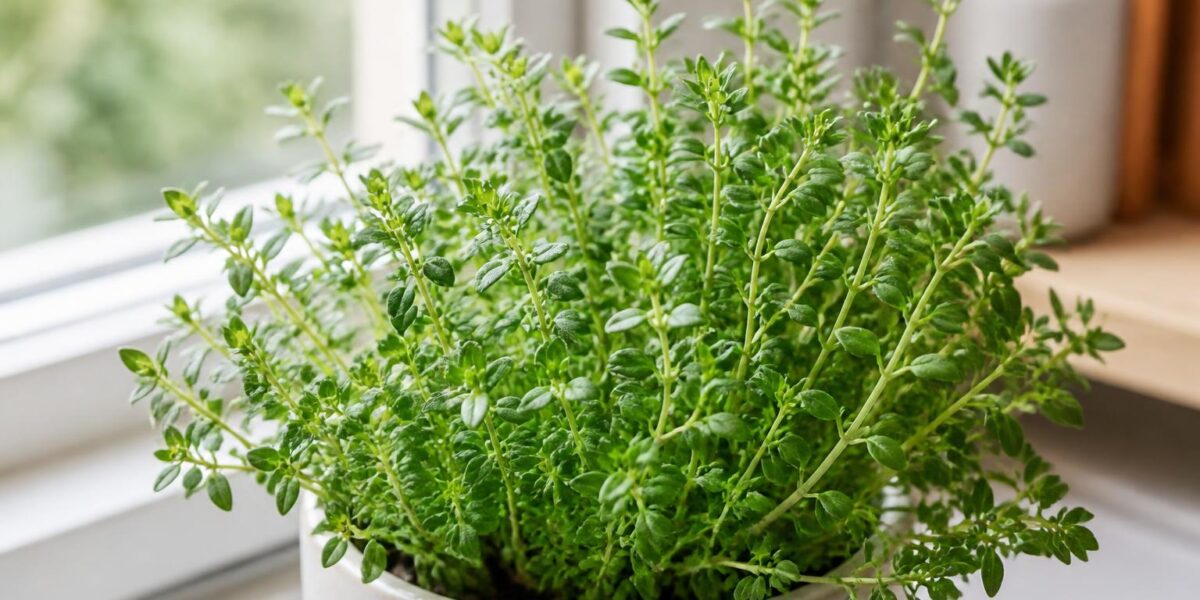
If you have searched whether are lemon thyme plants safe for pets, you are probably eyeing the bright variegated thyme on your kitchen windowsill or trying to plan a herb bed where the dog walks. The honest answer is that lemon thyme is not on the safe-for-pets list. The American Society for the Prevention of Cruelty to Animals (ASPCA) lists thyme (Thymus vulgaris) as toxic to dogs and cats, and lemon thyme (Thymus × citriodorus) is a thyme cultivar that shares the same essential-oil chemistry. The reaction is generally mild, but the plant belongs in the toxic-to-pets group, not in the safe column.
This guide walks through what lemon thyme is botanically, why the live plant can upset a pet who chews the leaves, how a pinch of dried thyme on dinner is different from a curious cat plowing through a whole pot, and the steps to take if your animal eats the plant. The aim is a calm, accurate picture so you know when to relax and when to call a vet.
What Lemon Thyme Is
Lemon thyme is a perennial Mediterranean herb in the mint family (Lamiaceae). Botanists usually classify it as Thymus × citriodorus, treating it as a hybrid of common thyme (T. vulgaris) and either large thyme (T. pulegioides) or wild thyme depending on the cultivar. The hybrid is what gives the plant its lemon-and-thyme dual fragrance — a citrus-tinged version of standard thyme oil that is highly prized in cooking and tea.
You will find it in garden centers as “lemon thyme,” “golden lemon thyme,” “variegated lemon thyme,” or sometimes “silver queen thyme.” The plant grows in low spreading mounds with tiny oval leaves, often variegated with cream, gold, or silver, and produces small pink or lavender flowers in summer. It is a popular Mediterranean-bed companion alongside oregano, sage, lavender, rosemary, and marjoram — and it is worth knowing that several of those are also on the ASPCA toxic list while a few are not.
What ASPCA Says About Thyme and Pets
The ASPCA lists thyme (Thymus vulgaris) as toxic to dogs and cats. The reported clinical signs are vomiting, diarrhea, depression, and gastrointestinal upset. Lemon thyme is the same genus and shares the same volatile-oil chemistry, just with the addition of citral and geraniol that produce the lemon note. There is no separate “lemon thyme is safe” listing — the toxicity follows the genus.
The toxic principle is thymol-rich essential oil. Thymol is the dominant phenolic monoterpene in thyme leaves, and concentrated thyme oil is widely used in human dental rinses and antiseptic preparations. In plant-strength chewing doses, thymol and the related compound carvacrol irritate the GI lining and can produce the typical ASPCA-listed picture of vomiting and diarrhea. Lemon thyme adds citral and geraniol, which are also mildly irritating to pets in concentrated form.
For broader cat- and dog-side context on thyme in general, see are thyme plants toxic to cats and are thyme plants toxic to dogs.
Symptoms to Watch For
The clinical picture in pets that have nibbled lemon thyme is usually mild and self-limiting. Most exposures produce gastrointestinal upset that resolves within a day, but severity depends on how much was eaten, the size of the pet, and individual sensitivity. Watch for:
- Vomiting — often within an hour or two of ingestion
- Diarrhea — sometimes loose, sometimes watery
- Drooling — a sign of oral irritation from the oils
- Loss of appetite — pets often skip a meal after a stomach upset
- Lethargy — feeling under the weather but still responsive
- Mild abdominal discomfort — restlessness, posture changes, reluctance to be picked up
- Depression or unusual quietness — noted by the ASPCA among reported clinical signs
Severe reactions are uncommon with the leaf, but cats are more sensitive than dogs to phenolic oils, and very small pets that consume a large amount in one sitting can experience more pronounced GI signs. Signs that justify an immediate vet call include repeated vomiting, bloody stool, dehydration, sustained lethargy, or any neurological signs such as wobbliness or tremors.
Plant Versus Sprinkle: Why Dietary Use Is Different
One of the most common questions from concerned owners is whether the pinch of dried thyme they put on roasted vegetables is now a poisoning risk. The realistic answer is no. Culinary use of dried thyme in normal recipe quantities is generally not a concern. The dose is tiny, the dried leaf is far less aromatic than the fresh plant, and the herb is mixed into food rather than chewed straight.
The pet-toxicity concern is the live plant or large quantities of fresh leaves. A cat who decides to graze on the kitchen-windowsill pot for ten minutes, or a dog who chews most of a fresh thyme plant from the herb bed, is consuming a much higher dose than your dinner contributes. That is the scenario the ASPCA listing is built around. Concentrated thyme essential oil — used in some natural cleaning products, mouthwashes, and aromatherapy preparations — is yet another step up. Even a few drops can cause serious irritation in a small pet.
What to Do If Your Pet Eats Lemon Thyme
Stay calm and follow these steps:
- Remove the plant. Move your pet to a different room and pick up any chewed material. Take a quick photo of the plant.
- Estimate the amount. A leaf or two, a stem, or much of the pot? Be honest — vets prefer an over-estimate.
- Wipe the mouth gently. If your pet allows, run a damp cloth around the gums and tongue to remove residual leaf bits and oils.
- Offer water. Free access to fresh water helps with mouth comfort and gentle GI flushing, but do not force-drink.
- Call for advice. Reach your regular veterinarian first. After hours, call the ASPCA Animal Poison Control Center at 888-426-4435 (a per-call consultation fee applies) or the Pet Poison Helpline at 855-764-7661. Both lines are staffed by veterinary toxicologists 24/7.
- Do not induce vomiting at home. Home remedies such as hydrogen peroxide can cause more harm than the original ingestion, particularly in cats. Only induce vomiting under direct professional guidance.
Most pets recover at home with rest, bland food, and a short period of close observation. Veterinary care, when needed, focuses on antiemetics, fluids if dehydration develops, and a brief observation period.
Lemon Thyme in the Garden and Indoors
Lemon thyme is a tough, drought-tolerant perennial that thrives in full sun and gritty, well-drained soil. The variegated cultivars are popular as low groundcover in herb beds, ornamental rock gardens, and patio containers. That puts it within easy reach of dogs that brush past low plants and cats that stalk along garden borders.
Practical containment options for households with curious pets include hanging baskets out of reach, dedicated herb-window cabinets behind glass, fenced-off raised beds outdoors, and supervised garden time only. Bitter-spray deterrents work for some dogs but rarely deter cats. The most reliable answer is physical separation.
Lemon Thyme Versus Other Thymes
Several thymes are sold for the kitchen and the garden. Knowing the species splits helps you stay accurate when you talk to a vet:
- Lemon thyme (Thymus × citriodorus) — the focus of this article; toxic per ASPCA umbrella.
- Common thyme (Thymus vulgaris) — the species named in the official ASPCA listing.
- Creeping thyme (T. serpyllum, T. praecox) — same genus, treated under the ASPCA umbrella; the low groundcover species.
- Wild thyme (T. pulegioides) — same genus, same toxicity classification.
- Spanish thyme — a label that can mean common thyme or Cuban oregano (Plectranthus amboinicus); see are Cuban oregano plants toxic to pets for the look-alike.
If your pet has chewed a thyme plant and you are not sure which species, photograph the plant before calling poison control — the genus and any cross-genus look-alikes matter for triage.
Look-Alike Confusions
Lemon thyme overlaps in name and appearance with several other plants:
- Lemon balm (Melissa officinalis) — also lemon-scented but a different genus; not on the ASPCA toxic list. See are lemon balm safe for pets.
- Lemon verbena (Aloysia citrodora) — verbena family; not specifically ASPCA-listed.
- Lemon basil (Ocimum × citriodorum) — basil family; basil is generally considered safe; see are basil plants safe for pets.
- Lemongrass — completely different plant family (grass); some sources list mild GI risk in cats.
If your “lemon” herb is in a hanging basket and you are not sure which one, check the tag. The species determines the toxicology.
Pet-Safer Kitchen Herb Alternatives
If you want a pet-friendly herb garden without thyme, several culinary herbs are not flagged toxic by ASPCA:
- Basil — generally regarded as safe in normal exposures; see are basil plants safe for pets.
- Rosemary in dogs — generally low-risk in small exposures; see are rosemary safe for dogs.
- Spearmint — generally safer than peppermint or pennyroyal; see are spearmint plants safe for pets.
- Lemon balm — see are lemon balm safe for pets.
- Catmint — see are catmint plants safe for pets.
None is a free pass — large ingestion of any plant can cause GI upset — but these are not on the ASPCA toxic list and most pets tolerate brushing past them in a garden without incident.
When to Call the Vet
Call your veterinarian or a poison helpline if any of the following apply:
- Your pet ate a large amount of fresh thyme leaves or stems
- Your pet was exposed to concentrated thyme essential oil — topical, inhaled, or ingested
- Your pet is small, very young, very old, or has chronic GI, kidney, or liver disease
- Symptoms last more than 24 hours
- Vomiting becomes repeated or contains blood
- You see neurological signs — wobbliness, tremors, weakness, or collapse
Even when the situation is mild, a brief phone call gives professional confirmation and creates a record in your pet’s chart in case the situation escalates.
The Bottom Line on Lemon Thyme
Lemon thyme is a fragrant kitchen-herb cultivar of the same thyme genus that ASPCA classifies as toxic to dogs and cats. The risk profile is mild GI upset and oral irritation rather than life-threatening poisoning, but the live plant is not safe to leave within reach of a pet who chews greenery. Dietary sprinkles in human food are a different scenario from a cat grazing a windowsill pot. If your pet has eaten the live plant, monitor closely, contact a vet for tailored advice, and lean on poison-control hotlines if you need real-time guidance. For broader pet-safe gardening reading, see our cat-safe houseplants and dog-safe houseplants guide.
Frequently Asked Questions
Is lemon thyme safe for dogs to eat?
The live plant is not safe in chewing-quantity doses — ASPCA lists thyme as toxic to dogs, with vomiting, diarrhea, and depression reported. A pinch of dried thyme on cooked food in normal recipe amounts is generally tolerated by most dogs without incident, but the plant itself is not a safe browse target.
Will my cat die if it eats lemon thyme?
Death from a single lemon thyme ingestion is highly unlikely. Toxicity is mild and most cats recover fully with monitoring. The realistic worry is GI upset and dehydration if vomiting is sustained. Cats are more sensitive than dogs to phenolic oils, so if your cat ate a meaningful amount, call your vet.
Can I cook with lemon thyme if I have a dog?
Yes. Cooking with lemon thyme in normal culinary amounts is fine in a household with pets. Just keep the live plant out of reach, avoid feeding pets food heavily seasoned with concentrated thyme oils, and never give pets fresh sprigs as a chew toy or snack.
Is lemon thyme essential oil more dangerous than the plant?
Yes. Concentrated thyme oil contains many times the thymol concentration of the leaf and can cause serious skin, mouth, or GI irritation in pets. Cats are particularly sensitive because they lack the liver enzymes needed to process several plant phenolics. Never apply thyme essential oil to a pet, and keep diffusers out of rooms cats use heavily.
What is the difference between lemon thyme and lemon balm for pets?
Lemon thyme is Thymus × citriodorus, a thyme hybrid; toxic per ASPCA umbrella. Lemon balm is Melissa officinalis, a different mint-family genus; not on the ASPCA toxic list. The names sound alike but the pet-safety classification is different. If you want a citrus-scented herb that is friendlier in a pet household, lemon balm is the better choice.


