
Last updated: May 16, 2026
In this article
- The Reassuring Answer Up Front
- What Liatris Actually Is
- The ASPCA Position on Liatris
- The Chemistry, Briefly
- Why Pollinator Gardeners Plant Liatris
- The Corm Question
- Mechanical and Practical Caveats
- Differentiating Liatris From Look-Alikes
- Garden Care for Pet Households
- Pet-Safe Pollinator Border Design with Liatris
- What to Watch For (Realistic, Low-Probability)
- If You Need a Phone Number
- Frequently Asked Questions
The Reassuring Answer Up Front
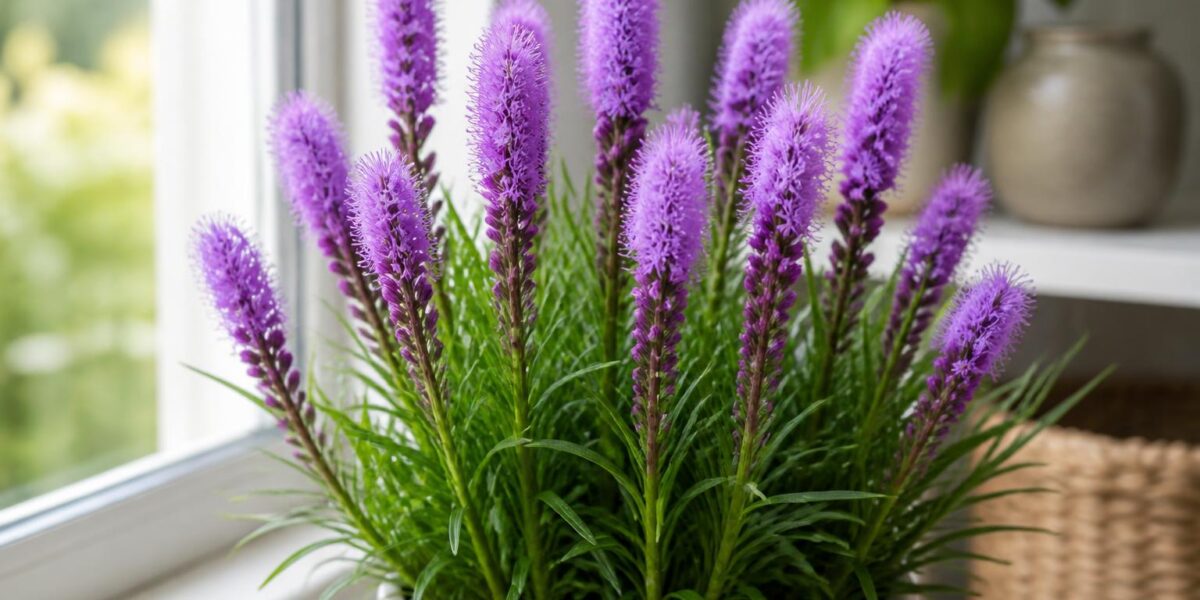
Liatris plants — commonly called blazing star, gayfeather, or button snakeroot — are safe for pets in the everyday garden sense. The genus Liatris, which includes L. spicata (the most common cut-flower species), L. ligulistylis (the monarch favorite), L. aspera, and a handful of other native North American species, is not listed on the ASPCA’s database of plants toxic to dogs, cats, or horses. If your dog brushed past a stand chasing a butterfly or your cat sniffed a fallen bloom spike, this is not a poisoning emergency.
Liatris is a textbook pet-friendly pollinator perennial. Its summer-long bloom spikes draw monarchs, swallowtails, fritillaries, native bees, and hummingbirds through the heat of July and August when many other border plants are looking tired. The clumped corm-based crown stays put rather than spreading aggressively, the foliage is slim and unappealing to most grazing pets, and the genus has no documented chemical toxicity to dogs or cats.
What Liatris Actually Is
Liatris is a genus of about 40 native North American perennials in the daisy family Asteraceae. Unlike most Asteraceae, where the bloom opens as a flat disc surrounded by ray petals, Liatris produces tall slim spikes of small purple, pink, or white tufted flowers that open from the top of the spike downward — the opposite direction of most spike-bloomers. The plant grows from a flattened corm at the soil line, sends up grass-like basal foliage in spring, and pushes a 2-to-5-foot bloom spike in midsummer.
The most familiar species is Liatris spicata, the workhorse of the cut-flower industry and the species you’ll find in any garden center’s perennial section. L. ligulistylis is the species the monarchs favor for nectaring during fall migration. L. aspera, L. punctata, and L. pycnostachya are regional natives with similar bloom forms. All are interchangeable from a pet-safety standpoint — none of the Liatris species are on the ASPCA toxic list.
The ASPCA Position on Liatris
The ASPCA’s toxic-plant database does not list any Liatris species as toxic to dogs, cats, or horses. Veterinary toxicology framing for unlisted plants is the standard “not specifically listed by ASPCA as toxic — generally considered safe with mechanical or sap caveats.” Liatris fits that framing comfortably. There are no published clinical patterns of Liatris poisoning in pets, and the chemistry of the genus doesn’t predict hidden toxicity the way some Apocynaceae or some Solanaceae plants do.
This puts Liatris in good company on the safe-perennial roster alongside coneflower, coreopsis, gaillardia, perennial Helianthus, and bee balm. The Asteraceae family contains some toxic members — chrysanthemum, Shasta daisy, Rudbeckia black-eyed Susan — but Liatris is firmly on the safe side at the genus level, and ASPCA’s species-by-species classification reflects that.
The Chemistry, Briefly
Liatris contains the usual Asteraceae secondary metabolites at low concentrations — small amounts of sesquiterpene lactones, modest phenolic and coumarin content, and the inulin-type carbohydrate in the corms. The corm carbohydrates are the same kind found in Jerusalem artichoke and chicory roots; they are nutritionally inert in pets in incidental amounts. Native peoples used several Liatris species in traditional medicine for various conditions, which speaks to mild bioactivity, not to clinical toxicity.
The leaf-hair load is minimal compared to Echinacea or Rudbeckia, so the mechanical-irritation caveat we apply to some other Asteraceae is also not really a factor here. Liatris foliage is grass-like and smooth, and the plant tends to be unappealing to grazers. Deer browse it occasionally; most household pets ignore it.
Why Pollinator Gardeners Plant Liatris
Liatris earns a place in pet-friendly pollinator gardens through pure utility. The bloom spike opens over a 2-to-3-week period — long enough that any single planting feeds visiting pollinators across multiple weather windows. Monarchs nectaring on L. ligulistylis during fall migration is one of the most photographed pollinator spectacles in the upper Midwest. Bumblebees, sweat bees, leaf-cutter bees, and small native solitary bees use the species heavily. Goldfinches will work the seedheads in winter.
The plant fits well in most pet-friendly garden compositions: tall enough to hold its own at mid-border, narrow enough to slip between fuller perennials, structurally graceful enough to look good even after the bloom finishes. Pair it with coneflower, coreopsis, gaillardia, bee balm, and Agastache for a continuous June-through-October bloom procession that keeps your pollinators fed without putting toxic plants near your pets.
The Corm Question
Liatris grows from a flattened corm — a starchy underground storage organ — that gardeners sometimes plant directly in fall as bare bulbs. The corms are about the size and shape of a flattened almond and look superficially similar to the bulbs of toxic plants like daffodils or bluebells. If a curious puppy or cat finds a freshly planted Liatris corm in a garden bed, the corm is not toxic — but bulbs of other species sold in the same fall-bulb shipment (daffodil, hyacinth, bluebell, fritillaria) often are.
This is a labeling and storage problem, not a Liatris problem. Keep all unplanted bulbs in clearly labeled containers out of pet reach. If you find a chewed corm or bulb in your garden and aren’t sure which plant it came from, save what’s left and call your vet. Identifying bulbs after they’ve been chewed is harder than identifying intact ones.
Mechanical and Practical Caveats
The few practical Liatris caveats for pet households are mechanical, not chemical:
- Bee traffic during peak bloom. The spike is so densely visited by pollinators that a sleeping or rolling pet can take a sting from a foraging bee. Place Liatris where pets don’t habitually nap.
- Cut bloom spikes in vases. Cut Liatris is a florist staple and the cut stems can drop pollen and small floret debris on tabletops. Pets eating dropped material are not at chemical risk, but a cat eating any large amount of plant material can have brief vomiting.
- Vase water. Some florist Liatris arrives with floral preservative in the water. The preservative is not safe for pets to drink. Empty vase water out of pet reach.
None of these is severe. A reasonable pet household with Liatris in the border and maybe a vase of cut Liatris on the dining room table has a vanishingly small risk of any plant-related incident.
Differentiating Liatris From Look-Alikes
Liatris is distinctive enough that confusion with other plants is uncommon. The closest visual look-alikes are some of the tall Veronica spike-bloomers, foxtail amaranth, and certain Salvia spire forms. Field marks for Liatris: grass-like basal foliage, bottle-brush bloom spike, blooms open from the top of the spike downward (this is the most reliable identifier in the genus), and the plant resprouts each year from a flattened corm rather than a spreading rhizome.
If you have a tall purple-spike perennial in your garden and you’re not sure whether it’s Liatris or something else, a photo to your local extension office or a plant ID app will resolve it quickly. The top-down bloom progression is so unusual that even non-botanists recognize Liatris once they’ve seen one in bloom. For owners considering substitutes for less-safe spike perennials, see our coverage of Agastache and the Russian sage comparison in Russian sage toxicity.
Garden Care for Pet Households
Liatris wants full sun, average to lean soil, and good drainage. It tolerates drought well once established and dislikes wet winter feet. The corm sits just below the soil surface and is hardy through most of the eastern and midwestern US. In a pet household, the practical garden-care points are:
- Plant the corm with the flat side down and the slight bump (the growing point) facing up. Mark the spot so you don’t dig it up by accident.
- Allow established clumps to colonize modestly. The plant doesn’t run aggressively; it forms larger crowns over time.
- Cut spent bloom spikes after seedhead drop, or leave them for goldfinch foraging into winter.
- If your dog tends to dig in beds, fence young plantings until the corms have rooted in (first season).
The plant is generally pest-free and disease-resistant. The few fungal issues that can affect Liatris (rust, leaf spot in wet seasons) are not pet-relevant.
Pet-Safe Pollinator Border Design with Liatris
For a pollinator border designed around pet safety, Liatris fits as a mid-back vertical accent. A composition that works well in zones 4-7:
- Back: tall perennial Helianthus or Joe-Pye Weed
- Mid-back: Liatris ligulistylis or L. spicata for purple verticals
- Mid-border: coneflower, bee balm, Agastache
- Front: coreopsis, gaillardia, low geraniums
- Edge: creeping phlox, sedum, low thymes (note: see our creeping thyme article for the specific Lamiaceae caveats on culinary thyme genus)
The composition gives you bloom from June through October, all from plants on the ASPCA-safe roster, with structural variety and bee-and-butterfly value. The full cat-safe planting guide walks through indoor counterparts for the same design principles.
What to Watch For (Realistic, Low-Probability)
Even with a safe plant, large ingestions of any non-food plant material can cause mild GI upset. Possible outcomes include:
- One episode of vomiting after a large foliage ingestion (resolves within hours)
- Soft stool for 24 hours after ingestion, resolving on its own
- Brief drool or head-shake after a curious mouth-and-spike encounter
- Mild GI signs after eating florist preservative water — call your vet if this happens
What you should not see are tremors, weakness, irregular pulse, dilated pupils, or sustained vomiting. Any of those points to a different plant or cause and warrants a vet call.
If You Need a Phone Number
The standard hotline path applies: call your own veterinarian first; then the ASPCA Animal Poison Control Center at 888-426-4435 (per-call fee) or the Pet Poison Helpline at 855-764-7661 (per-call fee). Both are staffed by veterinary toxicologists 24/7. A photo of the plant helps; the distinctive bottle-brush bloom spike is easy to identify even in cell-phone photos.
If your pet ate something from a mixed bouquet of cut flowers and you’re not sure which species, save the bouquet. Florist arrangements often include lilies, which are dramatically more dangerous to cats than any garden perennial — never assume a cut-flower exposure is benign without knowing what was in the vase.
Frequently Asked Questions
Is Liatris toxic to dogs?
No. Liatris (blazing star, gayfeather) is not on the ASPCA’s list of plants toxic to dogs. Mild GI upset is possible after large foliage ingestions, but chemical poisoning is not a meaningful concern with the genus. Most dogs ignore the foliage entirely.
Is Liatris safe for cats?
Yes, Liatris is not listed by the ASPCA as toxic to cats. The grass-like foliage rarely interests cats, and the genus does not contain compounds known to cause feline poisoning. As with any non-food plant, large ingestions could cause brief self-limiting vomiting.
Are Liatris corms safe if my puppy digs one up?
Yes — Liatris corms are not toxic. The concern when a pet digs up a freshly planted bulb or corm is identification: many fall-planted bulbs (daffodil, hyacinth, bluebell, fritillaria) ARE toxic, and a chewed bulb is harder to identify than an intact one. If you can confirm the corm is Liatris, you can relax. If you cannot, save the chewed material and call your veterinarian.
Will Liatris attract enough bees to be a sting risk for my dog?
Possibly during peak bloom. A dense Liatris stand can be visited by dozens of bumblebees and butterflies at once, and a sleeping dog who rolls into the planting can be stung. Place Liatris where dogs run rather than where they nap, and the sting risk drops to negligible.
What’s a pet-safe substitute for Russian sage in a pollinator border?
Liatris is one of several good substitutes. Anise hyssop (Agastache foeniculum) gives you tall lavender-blue spires similar to Russian sage’s silhouette. Liatris gives you taller purple-magenta verticals. Both are pollinator favorites and both are off the ASPCA toxic list, unlike Russian sage which is flagged.


