
Last updated: May 16, 2026
In this article
- Mandevilla and Pets: A Mild-to-Moderate Tropical Vine
- What Is in Mandevilla Sap?
- The Apocynaceae Family Context
- Identifying Mandevilla and Dipladenia
- Symptoms in Dogs and Cats
- What to Do Right Now
- Garden Layout for Pet Households
- Mandevilla vs Other Tropical Vines
- Indoor and Overwintering Considerations
- Adoption Considerations
- Frequently Asked Questions
Mandevilla and Pets: A Mild-to-Moderate Tropical Vine
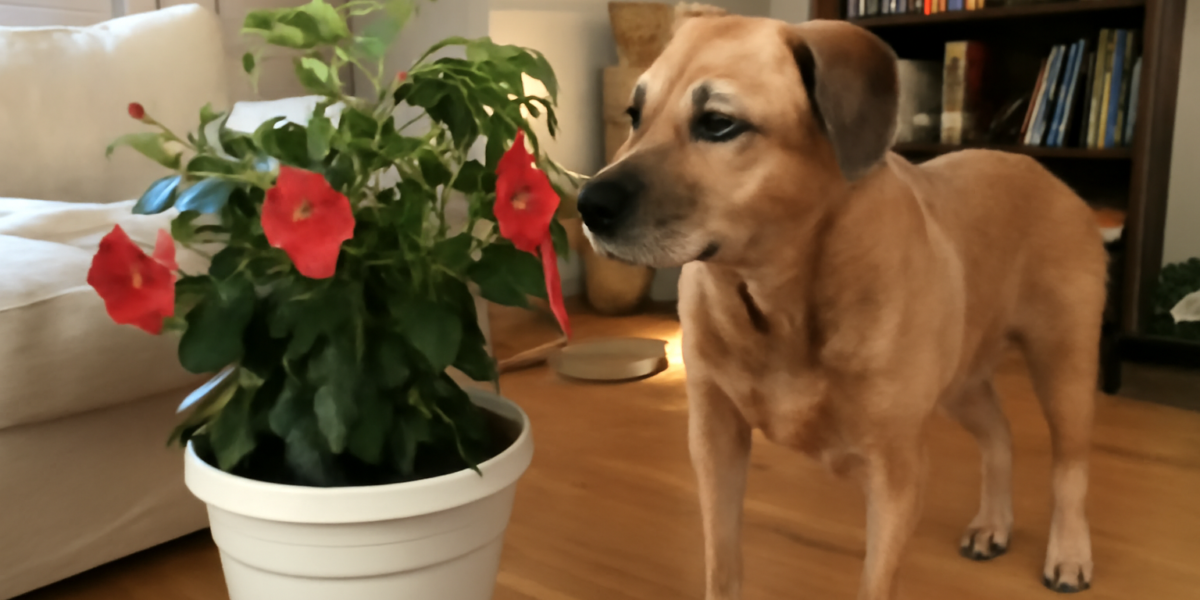
Mandevilla — commonly sold under both Mandevilla and Dipladenia labels in nurseries — is toxic to pets in the mild-to-moderate severity tier. The plant is a tropical climbing vine known for showy trumpet-shaped flowers in pink, red, white, or yellow, and it has become enormously popular as a patio container plant in the warm-season trade. The toxicity comes from compounds in the milky white sap that the plant produces in stems, leaves, and broken vines. Mandevilla toxic pets cases typically show up as oral irritation, GI upset, and in larger ingestions, mild cardiac signs.
The reason this article uses cautious framing is that mandevilla belongs to the Apocynaceae family — the same plant family as oleander, allamanda, dogbane, and milkweed. That family is known for cardiac glycoside-like compounds, the most famous of which (in oleander and foxglove) can cause life-threatening heart rhythm disturbances. Mandevilla’s compounds are far less potent than oleander’s, and the documented toxicity in pets is firmly in the mild-to-moderate range. Still, the family connection means that very large ingestions deserve more concern than typical foliage plants. If your pet has chewed mandevilla leaves, stems, or flowers, call your veterinarian, the ASPCA Animal Poison Control Center at 888-426-4435, or the Pet Poison Helpline at 855-764-7661.
What Is in Mandevilla Sap?
The milky white sap that oozes from broken stems and leaves contains a mixture of compounds, including cardiac-glycoside-like substances similar (in chemical class but lower in potency) to those found in oleander. These compounds can interfere with cardiac muscle function in large doses by affecting the sodium-potassium pump in heart cells. The sap also contains general irritant compounds that produce immediate burning on mucous membrane contact, similar to the experience pets have with milkweed or dogbane sap.
For typical exposure — a curious pet who has chewed a few leaves or licked at sap from a broken stem — the practical effect is local oral irritation, drooling, and possibly vomiting. For large ingestions of stems, leaves, or flowers, the cardiac-glycoside concern becomes real. Signs of cardiac involvement include weakness, lethargy, slow or irregular heart rate, and in severe cases collapse.
The Apocynaceae Family Context
To put mandevilla in context, here is the rough toxicity gradient within the Apocynaceae family that pet owners should know about. Oleander (Nerium oleander) is the most dangerous — see oleander in cats and oleander in dogs. Allamanda is mid-range — see our allamanda guide. Mandevilla and dipladenia sit in the milder-but-watch-it position. Various ornamental milkweeds (which monarch butterflies depend on) are also in the family, with toxicity that varies by species. Other ornamental vines in this family include brunfelsia (a different family but similar caution-worthy reputation).
The practical takeaway is that anything in the Apocynaceae family that produces milky sap deserves a respectful approach in a pet household. None of these plants should be planted within easy chewing range of a curious dog or cat, and any chewing event warrants a vet call.
Identifying Mandevilla and Dipladenia
The two common names are sometimes used interchangeably and sometimes to distinguish growth habit. Modern taxonomy folds dipladenia into the broader Mandevilla genus, but at the nursery you may still see both labels. Mandevilla sanderi and its hybrids are the climbing kinds with longer vines and larger flowers. Mandevilla ‘Sundaville’ and related cultivars labeled “Dipladenia” are bushier, more compact, and often sold for hanging baskets. Both have the same milky sap and share the same toxic chemistry.
The leaves are oblong, glossy, and dark green with a leathery texture. The flowers are unmistakable: trumpet-shaped, five-petaled, in pink (most common), red, white, or yellow. Many cultivars produce flowers nearly continuously through the warm season. The plants are tender perennials in their native tropics and are typically grown as annuals or overwintered indoors in cooler climates.
Symptoms in Dogs and Cats
Initial signs after chewing mandevilla typically include drooling, pawing at the mouth, head shaking, and sometimes vomiting. The milky sap is bitter and irritating, so most pets stop chewing quickly. Lip and tongue swelling can occur. GI signs (vomiting, diarrhea, reduced appetite) can persist for twelve to twenty-four hours. In larger ingestions, cardiac signs may develop: weakness, lethargy, slow or irregular heart rate, pale gums, and in severe cases collapse.
Cats are sometimes more sensitive than dogs to cardiac-glycoside-class compounds, although this varies by individual. Kittens and small dogs are more vulnerable to a given dose because of body weight. If your pet has chewed substantial amounts of mandevilla — more than a few mouthfuls — head to a vet promptly even if they look fine initially. Cardiac signs can be delayed several hours.
What to Do Right Now
If you have just witnessed your pet chewing mandevilla, rinse their mouth with cool water if they will tolerate it. A damp cloth wiped along the gums works for cats. Offer a small amount of plain yogurt or cottage cheese to soothe the local irritation. Save a sample of the chewed plant — including stems, leaves, and any flower fragments — and bring it to your vet visit. This is one of those plants where exact identification matters because the response calculus depends on whether your vet is dealing with a low-potency family member like mandevilla or a higher-potency one like oleander.
Do not induce vomiting at home. The cardiac-glycoside risk, even at low doses, makes professional supervision more important than for purely-irritant plants. Your vet will decide on decontamination based on the timing, the amount eaten, and your pet’s clinical status.
Garden Layout for Pet Households
Mandevilla is most commonly grown in patio containers, hanging baskets, and on small trellises near outdoor seating. The flowering displays are spectacular and the plants tolerate heat and humidity well, which is why they are everywhere in summer landscaping. For pet households, the practical layout question is whether the plant is within easy chewing reach. Hanging baskets at human eye level are usually out of reach for most dogs and adult cats, although climbing cats and tall dogs (great danes, saint bernards) may still reach them.
If you love mandevilla but want to keep it, consider hanging it high enough that fallen leaves and broken stems are easy to clean up immediately. Sweep the patio after pruning. Do not let trimmings sit in compost piles where pets might investigate. If you have a known plant-chewer, the safer call is to swap mandevilla for a non-toxic alternative — see our pet-safe garden plants roundup.
Mandevilla vs Other Tropical Vines
Mandevilla often gets confused with other tropical climbing vines. Bougainvillea is a genuinely lower-toxicity option for similar visual impact in warm climates — see our bougainvillea guide. Allamanda, also called golden trumpet, is in the same Apocynaceae family and shares the same caution-worthy chemistry — see our allamanda piece. Jasmine (true Jasminum, not the various unrelated “false jasmines”) is moderately toxic — see jasmine and cats. Trumpet vine (Campsis radicans) is a separate climbing plant with its own mild toxicity profile.
The shorthand for warm-climate vine selection in pet households: avoid the Apocynaceae family (mandevilla, allamanda, oleander). Bougainvillea is a reasonable alternative for tropical color. Various non-toxic tropical alternatives exist if you are willing to look beyond the most popular nursery offerings.
Indoor and Overwintering Considerations
In cooler climates, mandevilla is often overwintered indoors as a houseplant. Indoor exposure risks rise in winter because the plant is now inside the pet’s everyday environment, and a curious cat or dog may have access for the first time. Place the plant in a room with a closed door or up high where the pet cannot reach. Trimmed leaves and pruning debris should go directly into a closed bin, not the compost or open trash where pets can fish them out.
If the indoor location is not workable, consider giving the plant away or treating it as an annual rather than overwintering. A pet emergency caused by a hobby plant is the kind of thing every owner regrets in retrospect.
Adoption Considerations
If you are preparing your home for a new dog or cat, an audit of patio and indoor plants is worth doing before adoption day. Mandevilla is one of the most common warm-season patio plants and many homes have it without the owner thinking of it as a “toxic plant” in the same way they think of oleander. The Apocynaceae family connection is the cue that should put it on your audit list. Visit adopt dogs or adopt cats for broader prep guidance.
For pets already in the household, take a quick walk around the patio with this article in hand. Mandevilla is one of those plants you have probably walked past many times without thinking. A quick layout adjustment now is much easier than an emergency vet trip later. Cat-safe flowers covers some non-toxic alternatives for ornamental impact.
Frequently Asked Questions
How toxic is mandevilla compared to oleander?
Significantly less. Both plants are in the Apocynaceae family and contain cardiac-glycoside-class compounds, but oleander’s are far more potent. Mandevilla is in the mild-to-moderate range while oleander is in the severe-to-life-threatening range. Treat both with respect, but do not panic over a small mandevilla nibble the way you would over oleander.
Is dipladenia the same plant as mandevilla?
Modern taxonomy folds dipladenia into the broader Mandevilla genus. Nursery labels still distinguish them — usually “Dipladenia” labels indicate bushier, more compact cultivars, while “Mandevilla” labels indicate longer climbing vines. Toxicity is the same for both.
My dog brushed against mandevilla and got sap on his paw. Is that a problem?
Skin contact alone is unlikely to cause significant problems beyond mild irritation in some pets. The bigger concern is the dog later licking the sap off the paw. Wipe the paw with a damp cloth and watch for any oral signs.
Are the flowers as toxic as the leaves?
The cardiac-glycoside-class compounds are present throughout the plant, including in the flowers. Treat any plant material as potential exposure. The vivid colors are particularly attractive to playful kittens and curious dogs, which is part of why this plant deserves respect in a pet household.
What are some safer flowering vines for pet households?
Bougainvillea is a common warm-climate alternative. Climbing hydrangea is a temperate-climate option. Various non-toxic flowering shrubs and ground covers can fill the same aesthetic role without the family-related caution. See our pet-safe garden plants roundup for more ideas.


